
Venice — History & Facts
In this stillness lies an awakening, an invitation to witness the soft breath of life reflected on the water's surface. Look to the center of the piece, where a serene canal glimmers under the gentle caress of sunlight. The warm hues of ochre and gold merge seamlessly with cool shades of blue, creating a delicate balance between warmth and nostalgia. Notice how the brushstrokes dance lightly across the canvas, suggesting movement while anchoring the viewer's gaze on the elegant gondolas that glide gracefully through the shimmering reflections. Burr’s depiction transcends mere scenery; it encapsulates a moment of tranquility amidst the bustling beauty of Venice.
The juxtaposition between the detailed architecture and the fluidity of the water evokes a sense of harmony and contrast. The stillness of the boats, almost suspended in time, carries an emotional weight, hinting at stories untold beneath the surface. Each ripple in the water becomes a metaphor for life's fleeting moments, suggesting an awakening to the world’s ephemeral beauty. In 1900, George Elbert Burr was amidst a flourishing career in the American Impressionist movement, painting primarily in New England and abroad.
This period marked a transition in his work as he moved towards impressionistic renderings influenced by his travels through Europe. The canvas reflects his growth as he sought to capture not just scenes but the very essence of life — a testament to the vibrant interplay between light and emotion that defined the turn of the century in art.
More Artworks by George Elbert Burr
Browse all →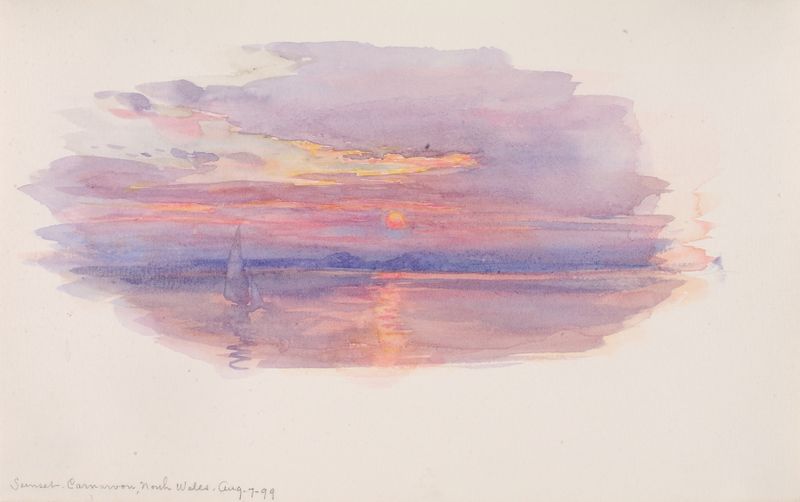
Sunset, Caernarvon, North Wales
George Elbert Burr
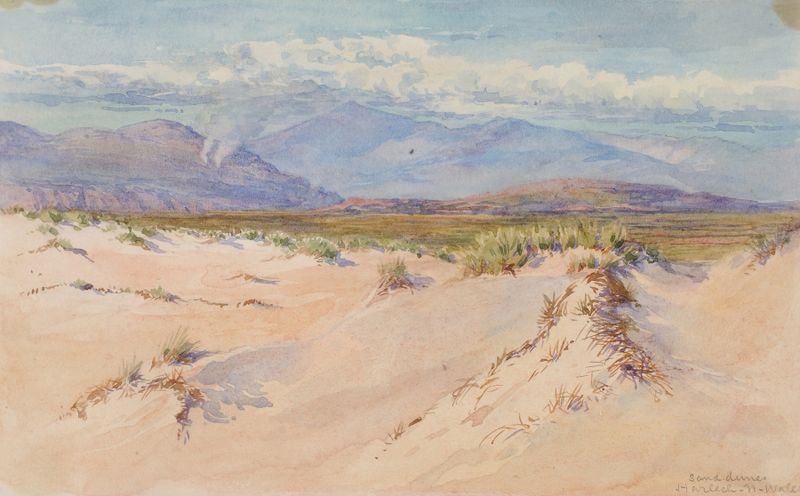
Sand Dunes, Harlech, North Wales
George Elbert Burr

From Pincio, Rome
George Elbert Burr

The Wye near Ross
George Elbert Burr

Venice
George Elbert Burr
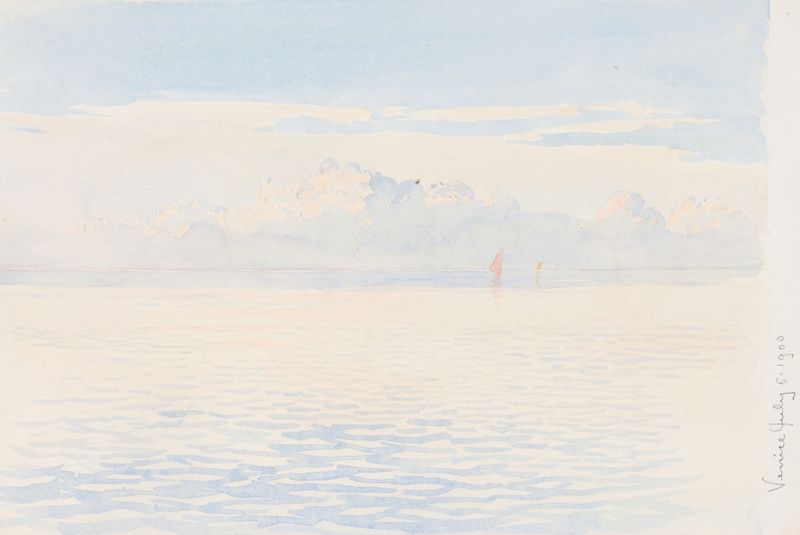
Venice II
George Elbert Burr

Shore at Pwllheli, N. Wales
George Elbert Burr

The Wye at Wilton Castle (Wales)
George Elbert Burr

Criccieth, N. Wales II
George Elbert Burr

Old Bridge near Bettws-y-Coed, North Wales
George Elbert Burr





