Sandgrube mit Blick auf Pötzleinsdorf — History & Analysis
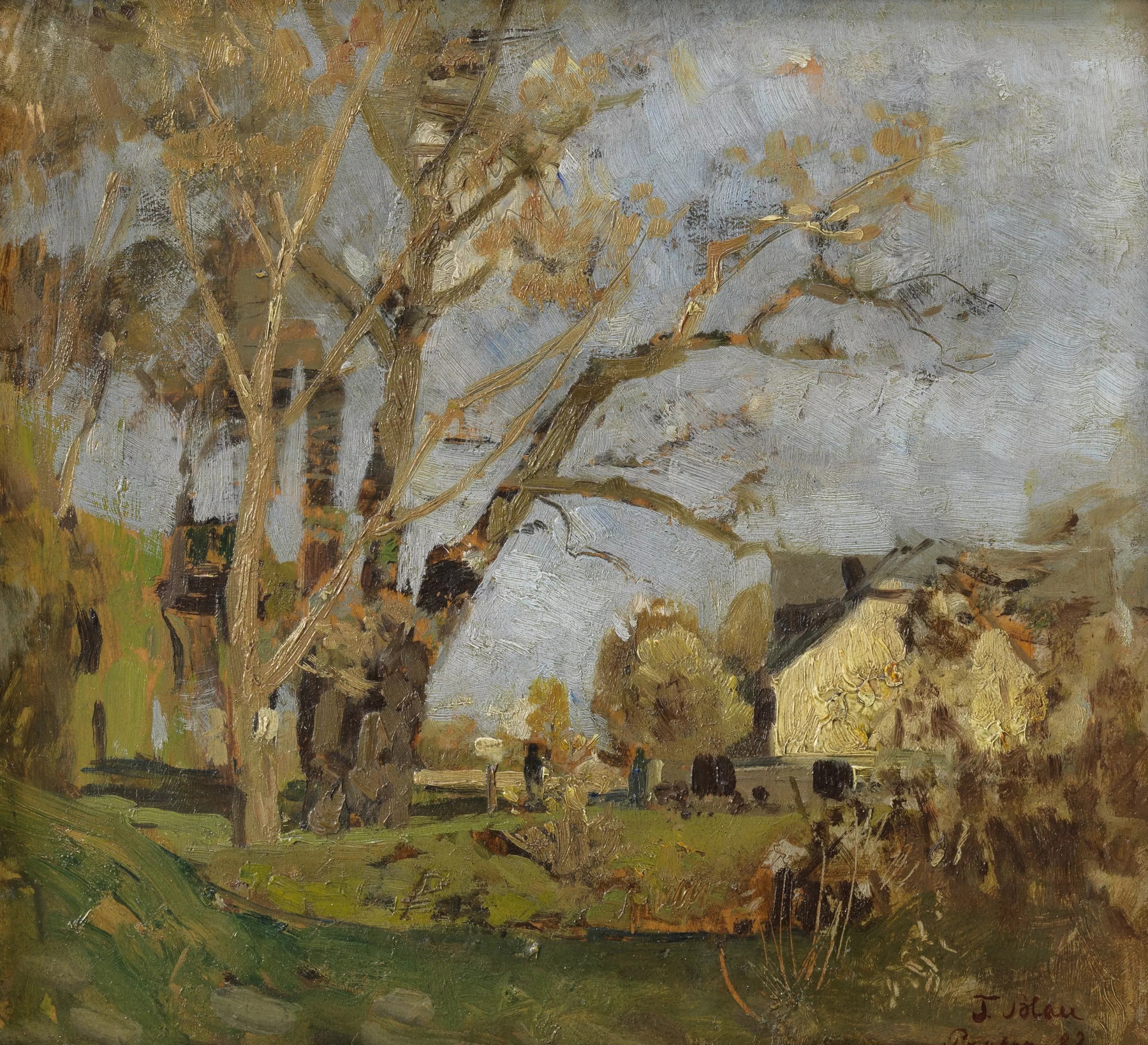
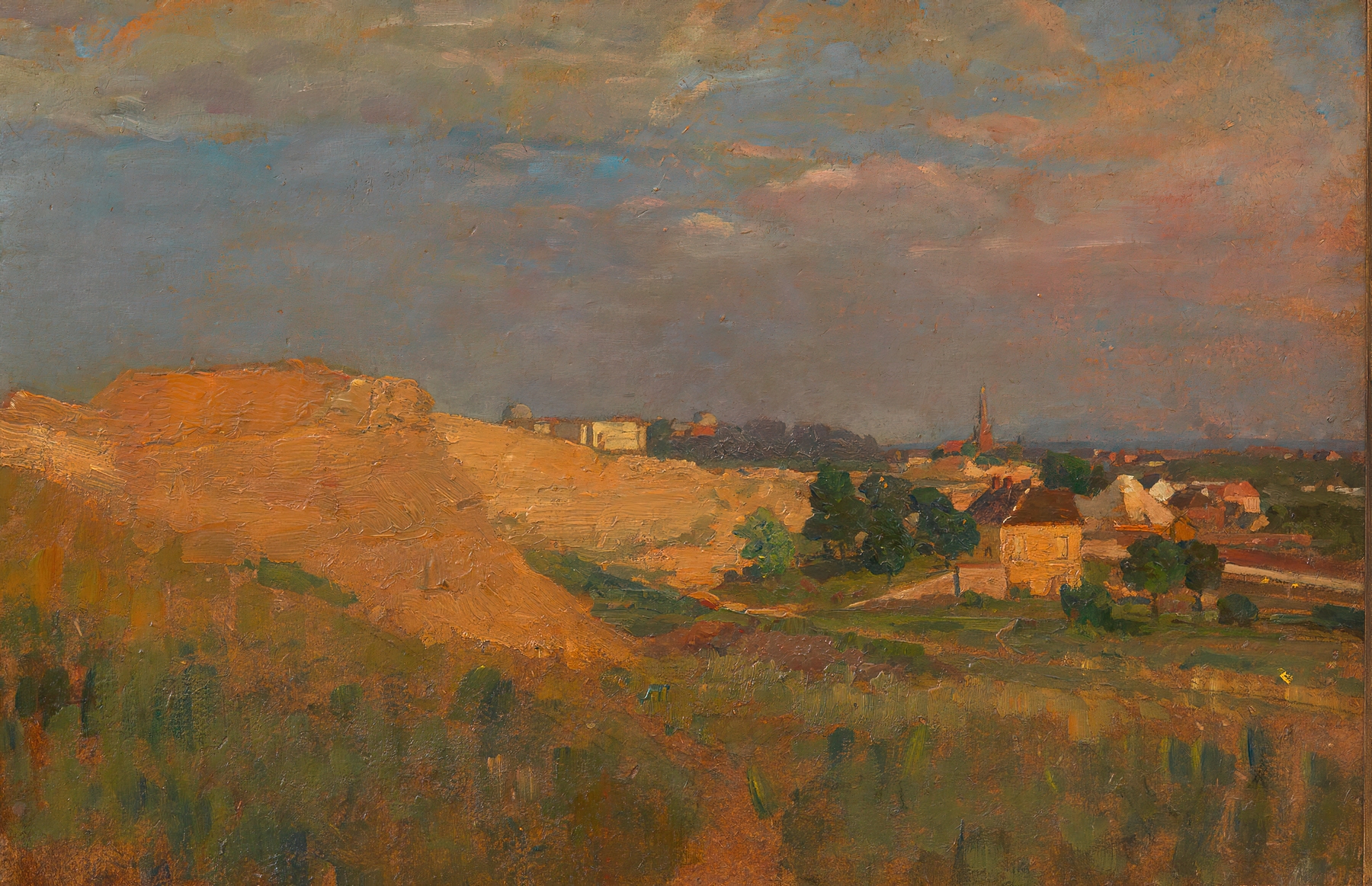
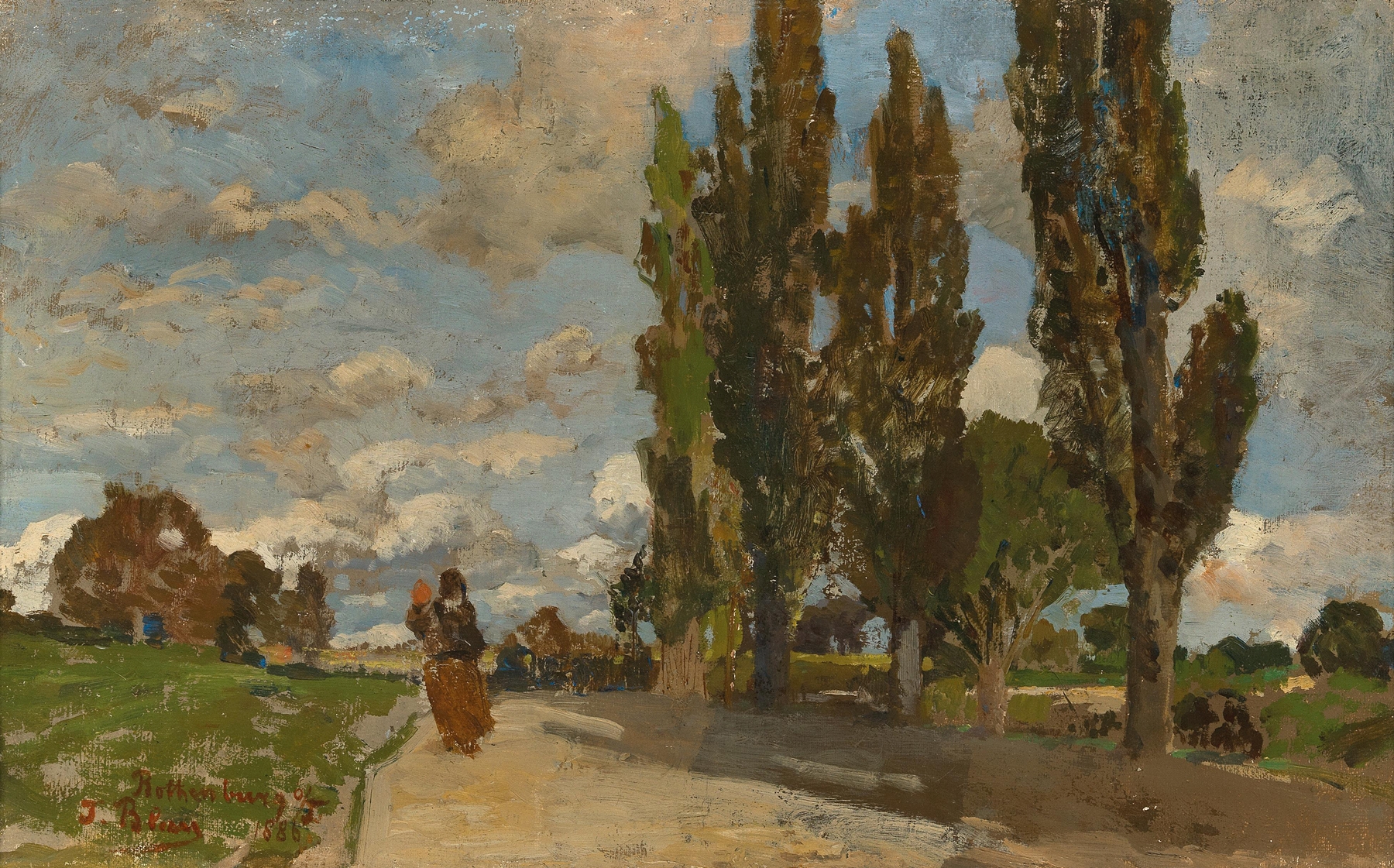
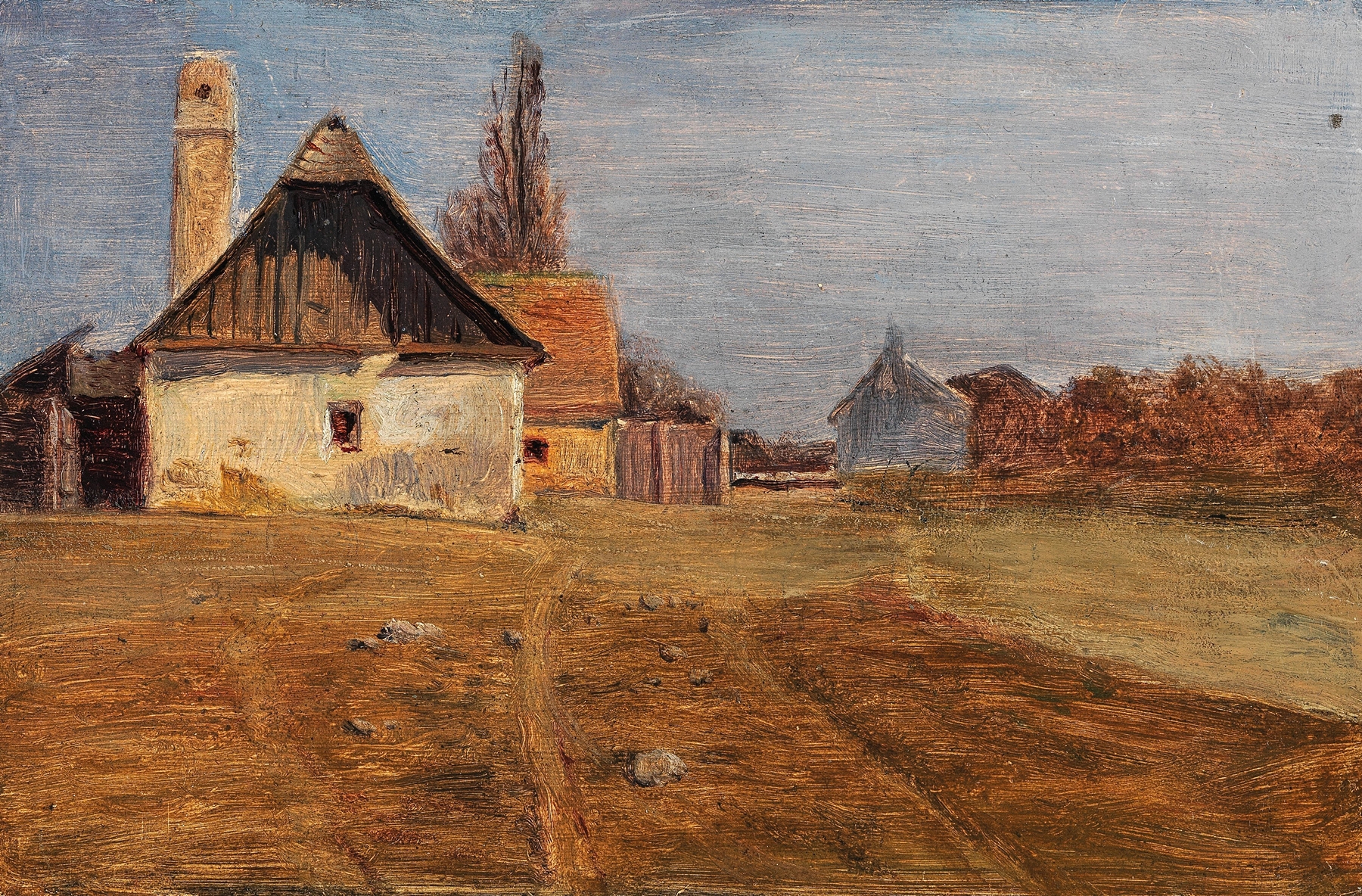
Could a single brushstroke hold eternity? In Sandgrube mit Blick auf Pötzleinsdorf, the canvas becomes a portal through which the viewer experiences both the fleeting and the eternal, revealing the delicate interplay between nature and human perception. Look closely at the gentle undulations of the landscape. Focus on the vibrant greens that stretch across the foreground, where vivid strokes of paint evoke the softness of grass swaying in the breeze.
Notice how the light cascades over the distant hills, illuminating the farmhouse nestled within the trees, creating a sense of warmth and inviting tranquility. The composition masterfully draws the eye toward the horizon, where the sky blurs into a soft gradient of blues and whites, evoking both serenity and vastness. Each brushstroke resonates with the tension between the ephemeral quality of nature and the permanence of art. The juxtaposition of the rich, textured earth against the fluidity of the sky suggests a moment caught between time—where the lush greenery offers life while the clouds hint at its eventual transience.
This balance between light and shadow symbolizes awareness and revelation, pulling the viewer into an intimate dialogue with the landscape. Tina Blau painted this work in the early years of the 20th century, during a period of experimentation and change in the art world. Working primarily in Vienna, she was part of the burgeoning Austrian landscape movement, which sought to explore and express the natural beauty surrounding the city. At this time, she was refining her technique and embracing the Impressionist influence that would define her artistic voice, ultimately capturing the essence of her surroundings in a way that resonates with both immediacy and depth.