
Sandweg — History & Facts
Could beauty survive in a century of chaos? In Sandweg, the artist beckons us to explore the delicate balance between tranquility and turmoil, inviting contemplation on the resilience of truth amidst strife. Look to the foreground, where a winding path gently curves through lush greenery. The vibrant strokes of emerald and gold create a warm embrace, while dappled sunlight dances on the ground, illuminating the way forward. Notice how the soft contours of the landscape draw the eye toward the horizon, where trees stand sentinel against an expansive sky, their branches swaying as if whispering secrets.
The color palette harmonizes with the tranquil scene, enhancing a sense of peace that belies the potential chaos beyond the borders of this idyllic sanctuary. Yet, within this serene canvas lies an undercurrent of tension. The soft glow of the sunlight contrasts sharply with the shadows lurking in the peripheries, suggesting the duality of existence—the coexistence of beauty and despair. The winding path can be seen as both a journey and a choice, perhaps hinting at the struggle for truth in a world that often obscures it.
Each element, from the gentle curves of the path to the sturdy trees, speaks of resilience, offering a hopeful narrative in the face of uncertainty. In 1874, Theodor Von Hörmann painted this piece while living in Vienna, a city grappling with the rapid changes of the modern industrial age. This period was marked by political unrest and social upheaval, yet it was also a time of artistic exploration and innovation. As European society faced transformations, the artist channeled his observations of nature into a work that reflects an unwavering belief in the potential for beauty to endure, serving as a quiet rebellion against the chaos of his time.
More Artworks by Theodor Von Hörmann
Browse all →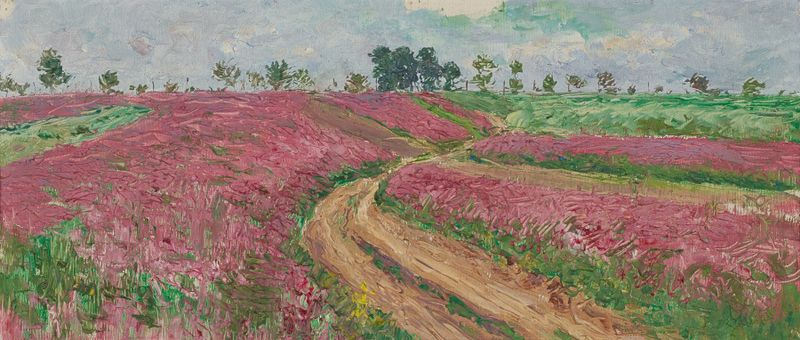
Esparsettenfeld Bei Znaim Ii
Theodor Von Hörmann

Blick Auf Paris
Theodor Von Hörmann

A Watering Place in Kis Bagh
Theodor Von Hörmann

Auf Der Ligethi Puszta
Theodor Von Hörmann
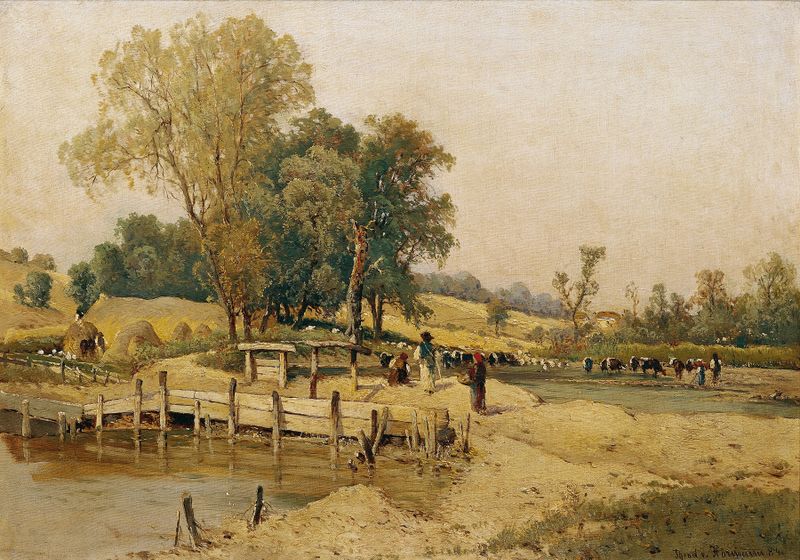
Ungarische Landschaft Mit Viehtränke
Theodor Von Hörmann
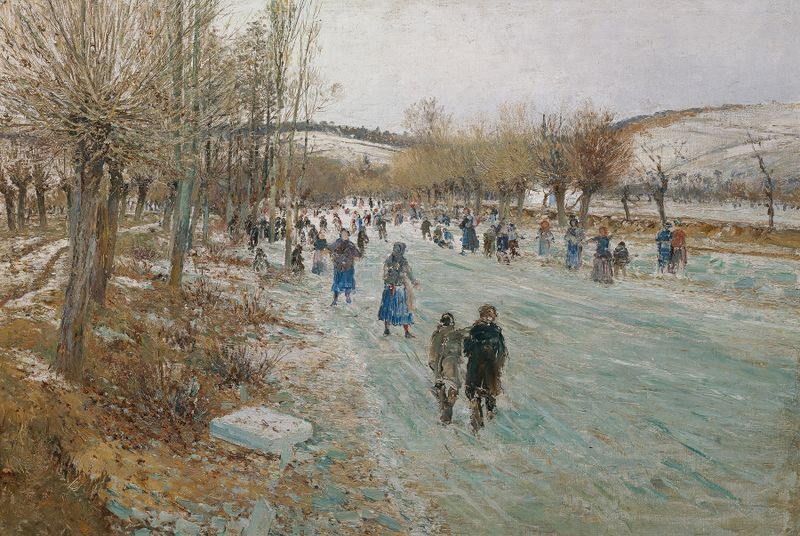
Eisläufer Auf Der Thaya Bei Lundenburg
Theodor Von Hörmann
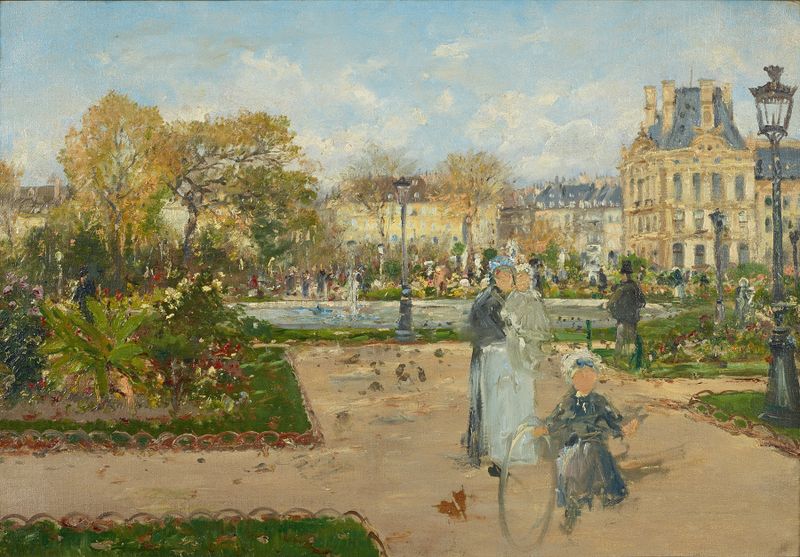
In Den Tuilerien
Theodor Von Hörmann

A Winter Day, Scene near St. Pölten
Theodor Von Hörmann

Znaim Im Schnee Ii
Theodor Von Hörmann
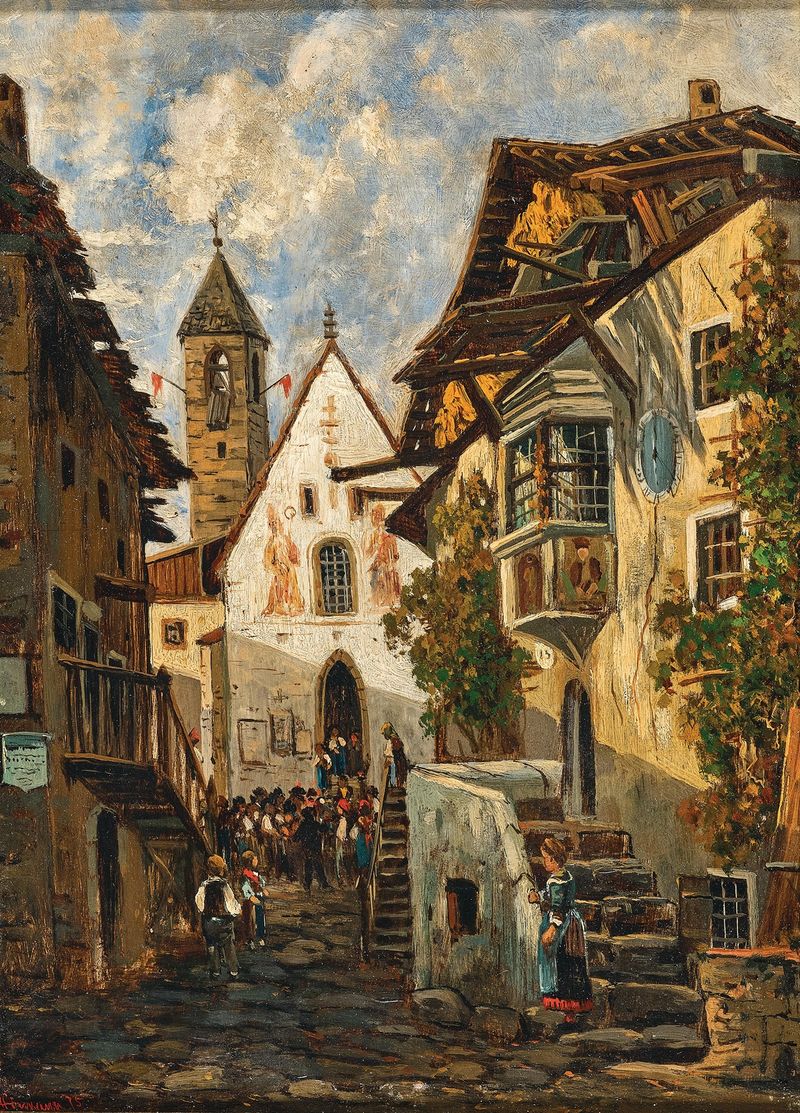
Dorfmotiv von Albeins bei Brixen, Tirol
Theodor Von Hörmann





