
Scene from Byron’s “Manfred” — History & Facts
Could a single brushstroke hold eternity? In the stillness of Scene from Byron’s “Manfred,” silence speaks volumes, echoing throughout the vast landscape and the emotional depths of the figures depicted. Look to the left at the figure of Manfred, cloaked in shadow and contemplation, his gaze cast toward the distant mountains that loom with a sense of foreboding. Notice how the artist employs a muted palette of greens and browns, creating a tranquil yet somber atmosphere. The sweeping skies, dappled with soft sunlight, contrast against the rugged terrain, inviting the viewer's eyes to traverse the emotional and physical landscape of despair. The painting captures a moment filled with internal conflict—Manfred’s solitude speaks to the universal human struggle of grappling with one’s own fate.
The looming cliffs silently bear witness to his turmoil, embodying both his isolation and longing for redemption. Light dances across the scene, illuminating the tension between the serenity of nature and the chaos within the soul, hinting at the weight of existential despair. In 1833, the artist was immersed in the Romantic movement, seeking to portray the sublime power of nature and the complexities of the human experience. Living in New York at a time when the country was expanding and redefining its identity, Cole was inspired by literary works, including Lord Byron’s dramatic poem, which resonated with themes of introspection and tragedy.
This piece reflects a pivotal moment in Cole's career, cementing his role as a visionary interpreter of both landscape and emotion.
More Artworks by Thomas Cole
Browse all →
View from Mount Holyoke, Northampton, Massachusetts, after a Thunderstorm—The Oxbow
Thomas Cole
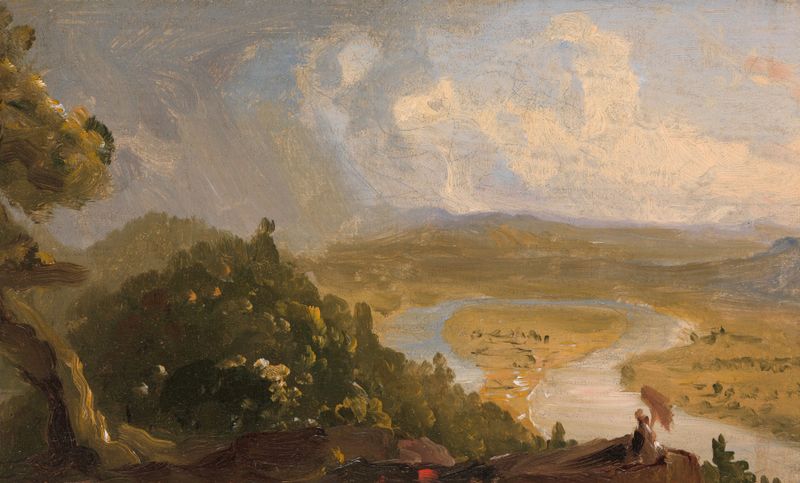
Sketch for View from Mount Holyoke, Northampton, Massachusetts, after a Thunderstorm (The Oxbow)
Thomas Cole
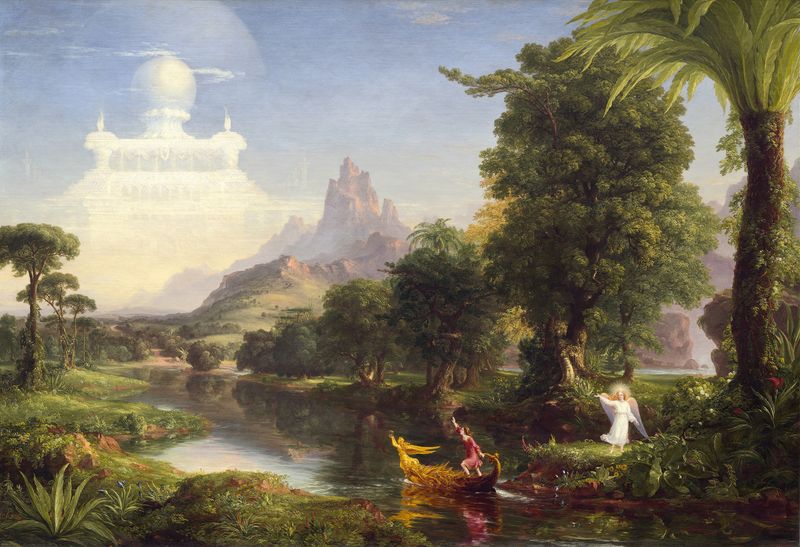
The Voyage of Life – Youth
Thomas Cole
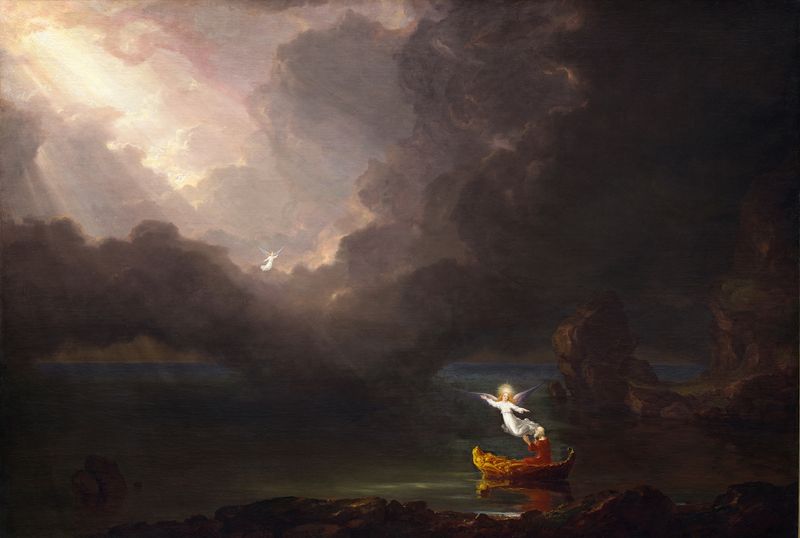
The Voyage of Life – Old Age
Thomas Cole
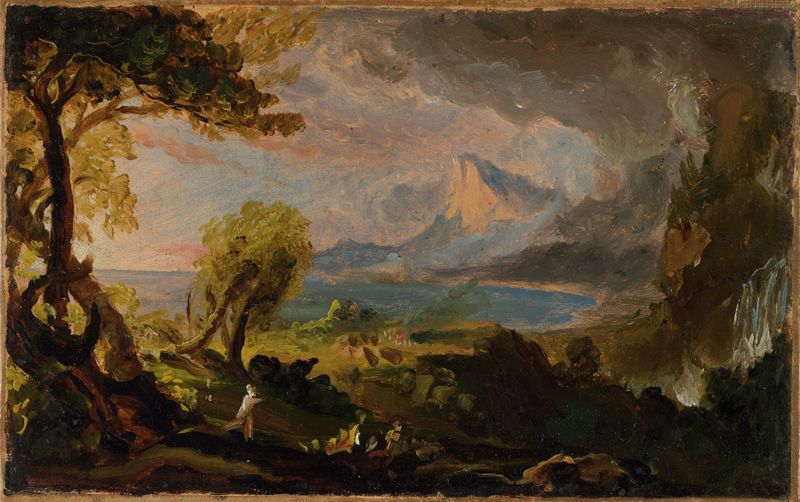
The Course of Empire–The Savage State
Thomas Cole

Landscape
Thomas Cole

New England Scenery
Thomas Cole

Sunrise in the Catskills
Thomas Cole
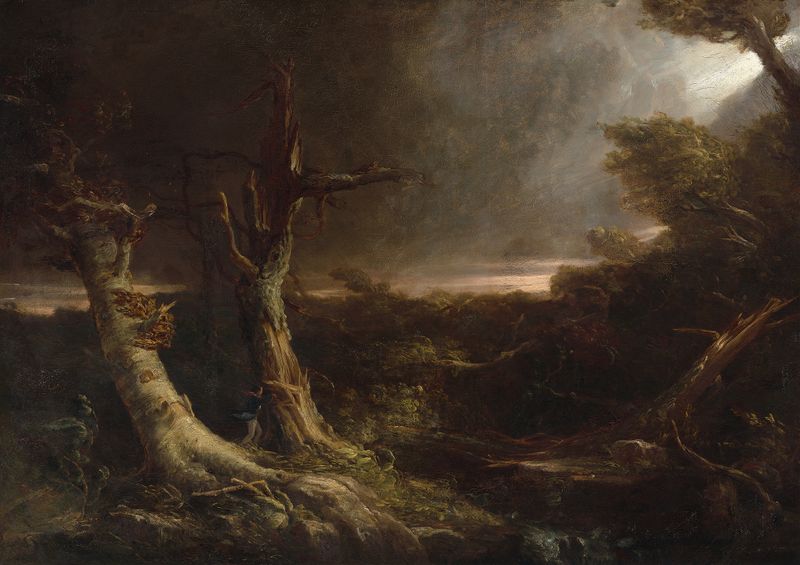
Tornado in an American Forest
Thomas Cole
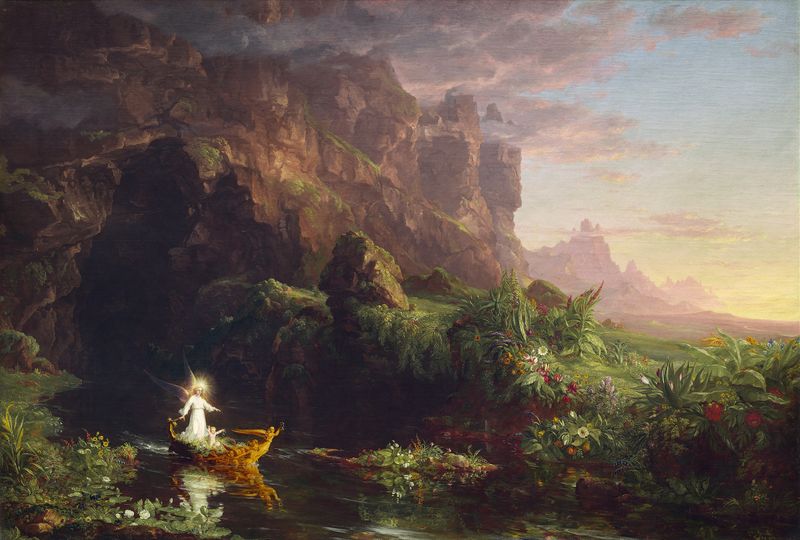
The Voyage of Life – Childhood
Thomas Cole





