
Scenes from the Lives of the Desert Fathers (Thebaid) — History & Facts
In the early fifteenth century, a young friar known as Fra Angelico painted a vision of monastic life that has fascinated viewers for centuries: Scenes from the Lives of the Desert Fathers (Thebaid). What makes this work remarkable is its encyclopedic sweep—dozens of tiny narratives, each capturing a legendary moment from the lives of early Christian hermits who sought solitude in Egypt’s Thebaid desert. Rather than focusing on a single saint or miracle, Fra Angelico weaves together an entire tapestry of devotion, hardship, and miraculous events, offering what some scholars consider the first "panoramic" landscape in Western art. In this bustling wilderness, monks bake bread in caves, draw water from wells, and pray beneath palm trees.
At the heart of the scene, Saint Anthony receives visitors, while nearby, Paul the Hermit is fed by a raven. Each vignette is rendered with careful attention: the winding paths connect the holy men, suggesting a spiritual journey as much as a physical one. The rocky hills and delicate trees recall the landscapes of Ambrogio Lorenzetti, but Fra Angelico infuses the setting with a quiet sense of order and grace.
The gestures—hands raised in prayer, bread broken and shared—speak of humility and community, even in isolation. The precise origins of Scenes from the Lives of the Desert Fathers (Thebaid) remain uncertain, though it is generally dated to around 1420, early in Fra Angelico’s career. The medium is still debated, but it is thought to be tempera on panel, a common technique in Florence at the time. The painting was likely created for a monastic audience, perhaps for the Dominican community at Fiesole, where Fra Angelico lived and worked.
Over the centuries, it has been admired for its narrative richness and luminous color, and today it is housed in the Museo di San Marco in Florence, a fitting home for a work that celebrates the spiritual ideals of monastic life.
More Artworks by Fra Angelico

Condemnation of St Lawrence by the Emperor Valerian
Fra Angelico
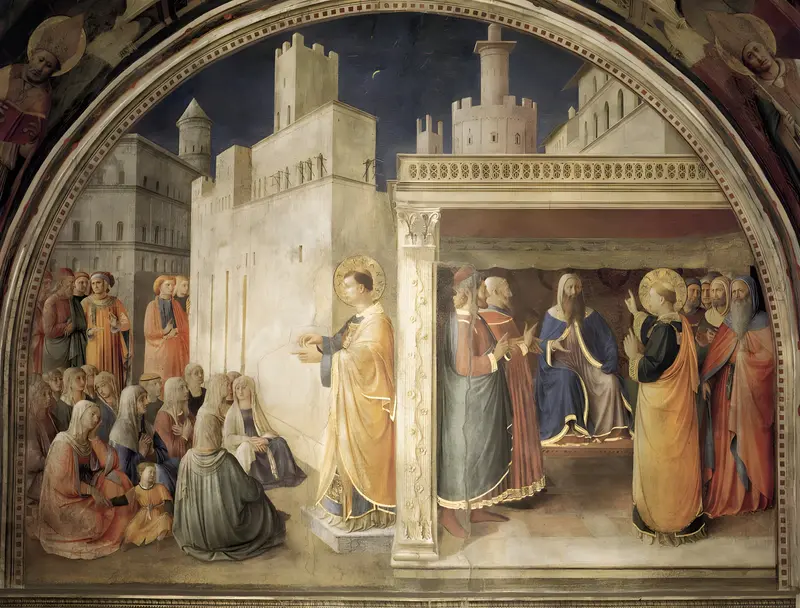
Lunette of the north wall
Fra Angelico
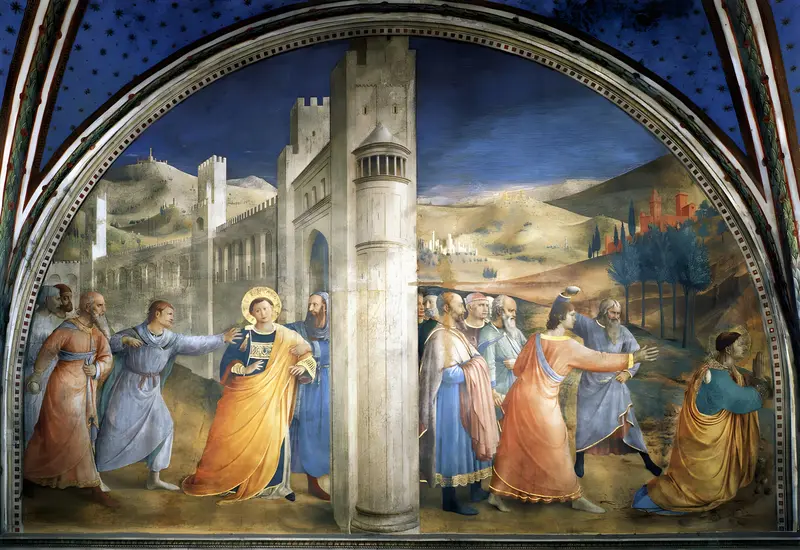
Lunette of the east wall in Niccoline Chapel
Fra Angelico
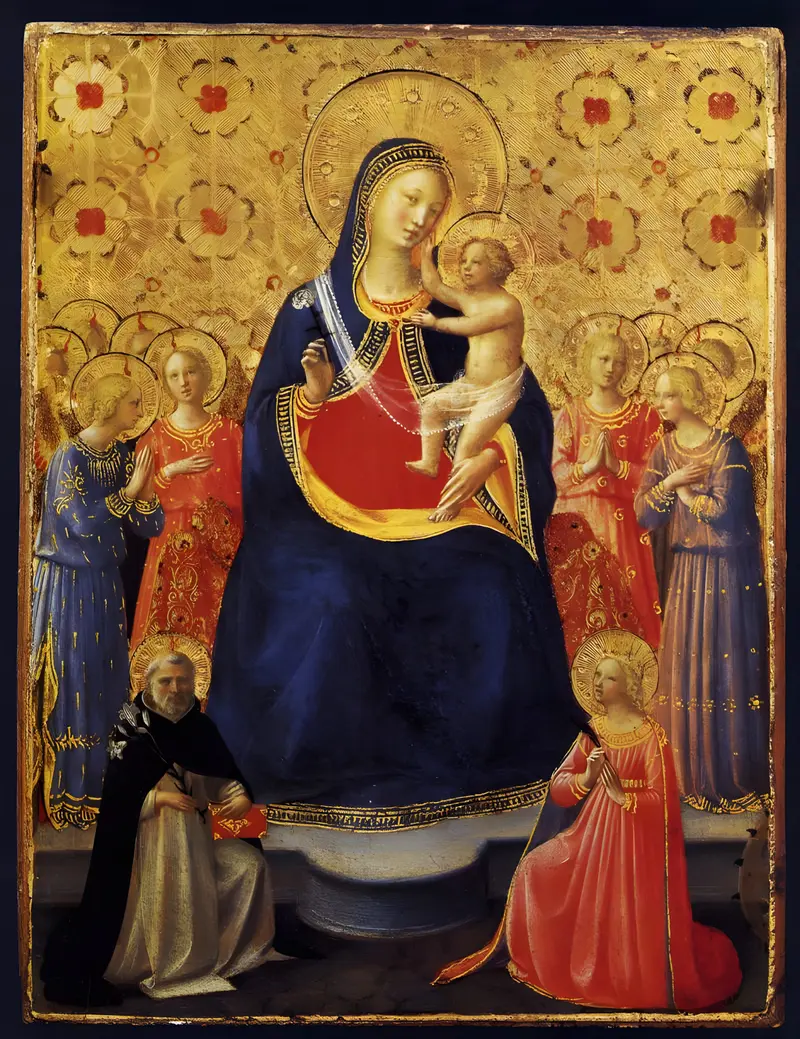
Madonna and Child Enthroned with Nine Angels and Saints Dominic and Catherine of Alexandria
Fra Angelico
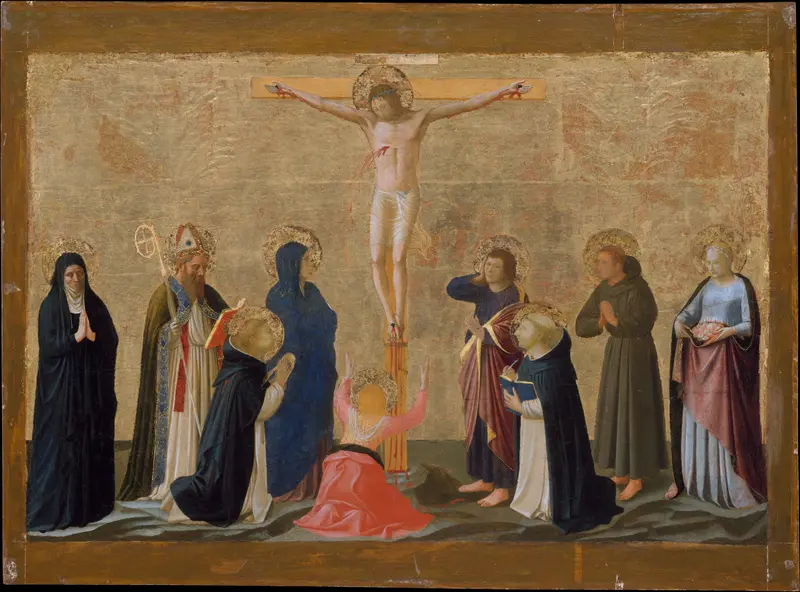
The Crucifixion
Fra Angelico
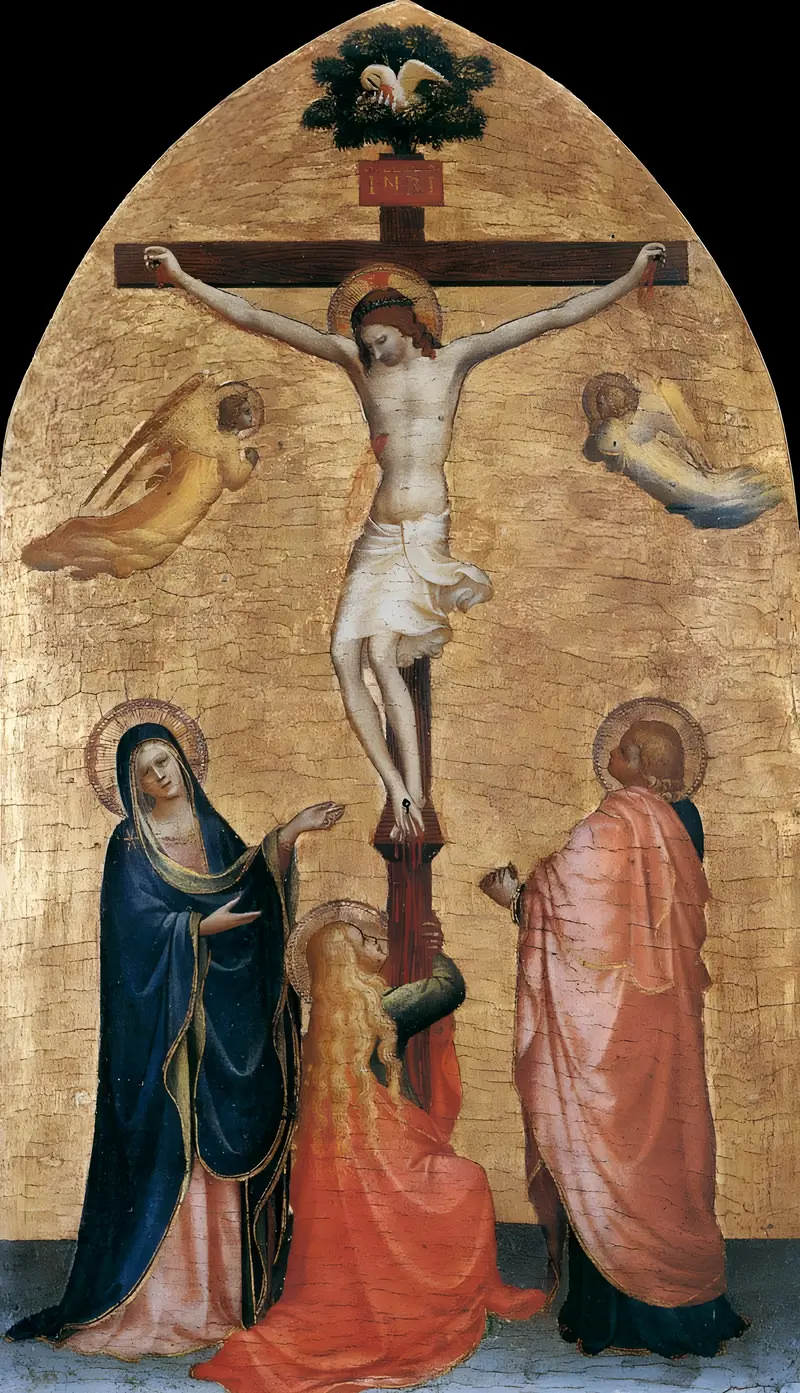
Crucifixion with the Virgin, John the Evangelist, and Mary Magdelene
Fra Angelico
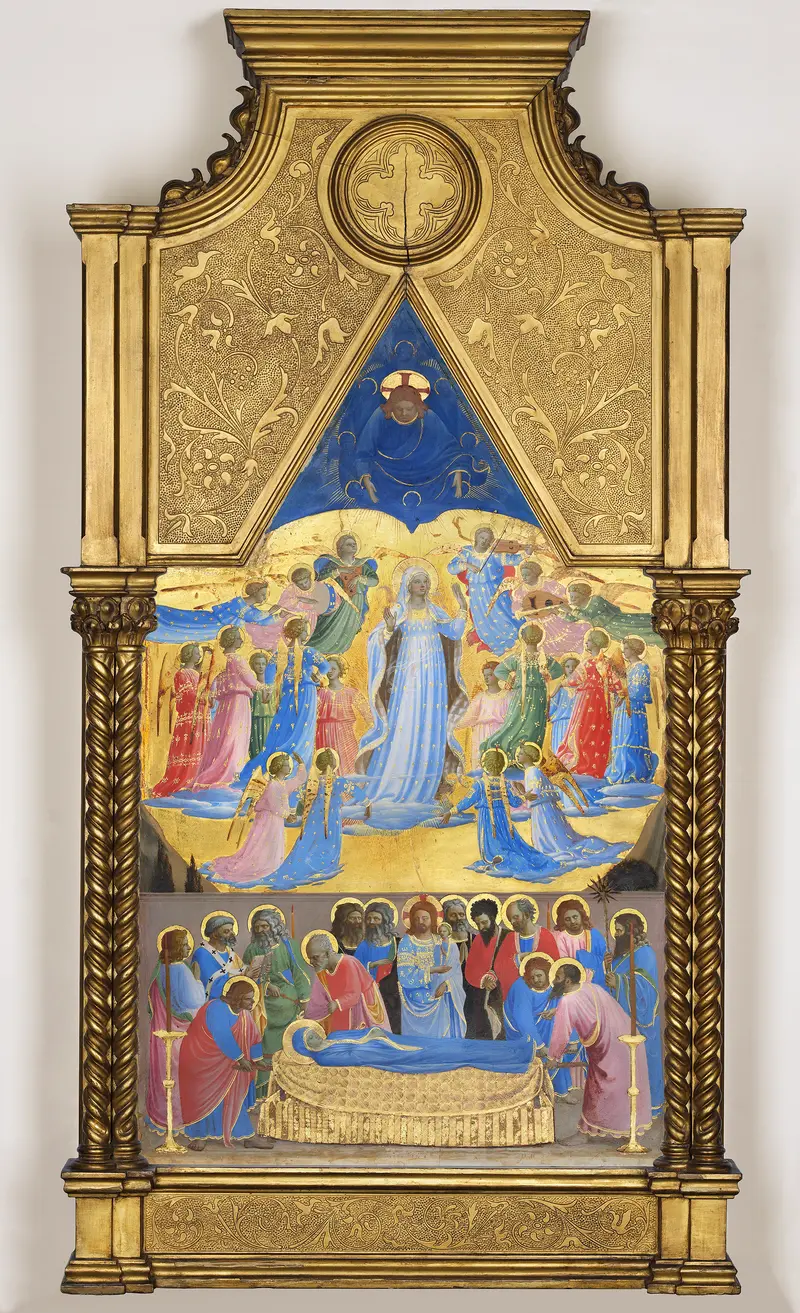
Dormition and Assumption of the Virgin
Fra Angelico
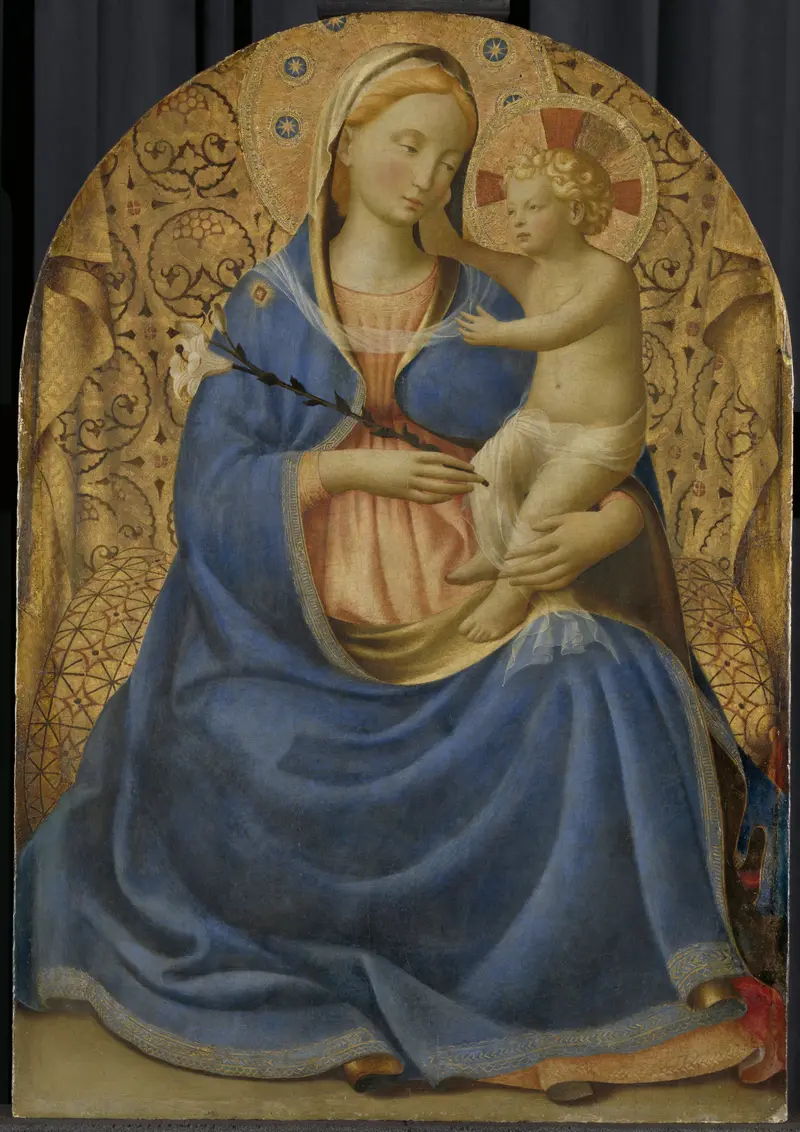
Madonna of Humility
Fra Angelico
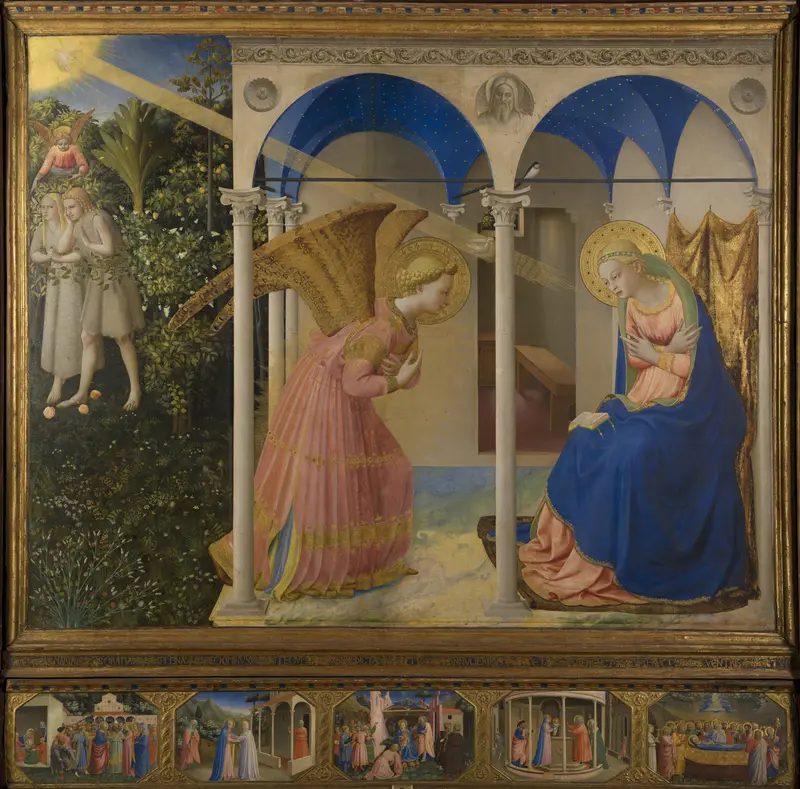
The Annunciation
Fra Angelico

Saint Anthony Abbot
Fra Angelico





