Schlosshof — History & Facts
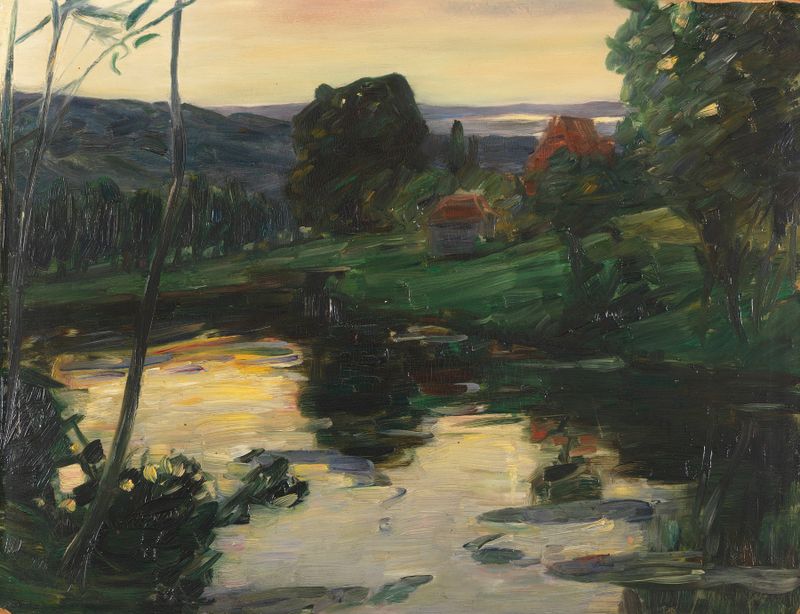
Could a single brushstroke hold eternity? In Schlosshof, Leo Putz invites us to explore the depths of melancholy captured in a tranquil yet ghostly landscape. Look to the center of the canvas where the gentle hues of twilight blend seamlessly, creating a delicate gradient from soft lavender to muted gold. The careful strokes outline an abandoned courtyard, where crumbling stone walls stand sentinel to time's passage. Notice how the light delicately caresses the surfaces, casting long shadows that stretch and intertwine, evoking a sense of nostalgia for what once was. In the quiet corners of this composition, hidden meanings emerge.
The juxtaposition of the vibrant flora against the decaying architecture emphasizes the relentless march of time and nature's reclamation. The stillness in the air speaks of lost moments, of laughter long faded, while the shadows seem to whisper tales of yesteryears. Each brushstroke, a memory, carries an emotional weight that resonates deeply, leaving the viewer in reflective silence. Painted in 1912, Putz was navigating the throes of artistic transitions, moving away from traditional representation towards a more emotive approach.
Working in Germany, he was influenced by the burgeoning expressionist movement, which sought to convey feelings rather than mere appearances. This work emerged during a time when the world was on the brink of monumental shifts, and Putz's exploration of solitude and sorrow reflects a broader existential questioning that many artists grappled with in an ever-changing landscape.