
Schmiede in einem Gebirgsdorf — History & Facts
Could beauty survive in a century of chaos? In Schmiede in einem Gebirgsdorf, the artist captures a moment where the mundane meets the sublime, inviting viewers to ponder the ecstatic dance between labor and artistry. Look closely at the figures in the foreground, where a blacksmith’s robust silhouette contrasts with the delicate tools scattered around. The warm, golden light emanating from the forge spills across the scene, illuminating the sweat on the laborer’s brow and the vibrant glow of the fiery coals. Notice how the artisans’ expressions embody a complex mix of concentration and joy, revealing the inherent beauty in their dedicated craft.
The serene mountains cradle the village, underscoring a harmony between nature and human endeavor. Yet beneath this idyllic exterior lies a tension that hints at a deeper narrative. The juxtaposition of the rough-hewn blacksmith and the ethereal quality of the light suggests a fleeting moment of ecstasy amidst the rigors of daily life. The small details—a hammer poised mid-air, a flicker of flame—serve as metaphors for the precarious balance between creation and destruction, reflecting the turmoil of the era.
This visual language resonates with the broader anxieties of a world on the brink of significant upheaval. In 1830, Heinrich Bürkel painted this scene while living in Germany, a time when romanticism flourished and revolutions were brewing across Europe. Art was evolving, with artists like Bürkel seeking to capture both the beauty of everyday life and the complexities of human emotion. As societal changes loomed, his work stood as a testament to the enduring spirit of creativity amid uncertainty.
More Artworks by Heinrich Bürkel
Browse all →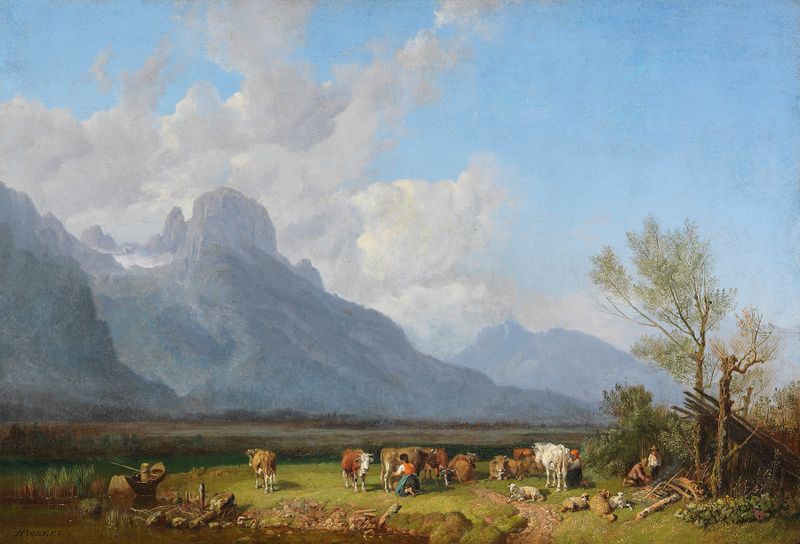
Viehhirten am Seeufer
Heinrich Bürkel
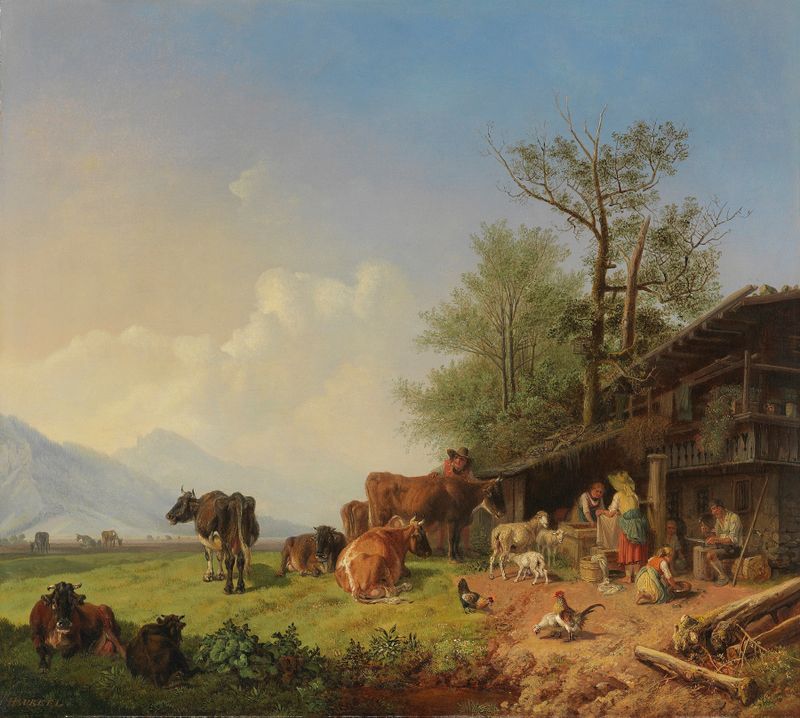
Bauernhof mit Brunnen
Heinrich Bürkel
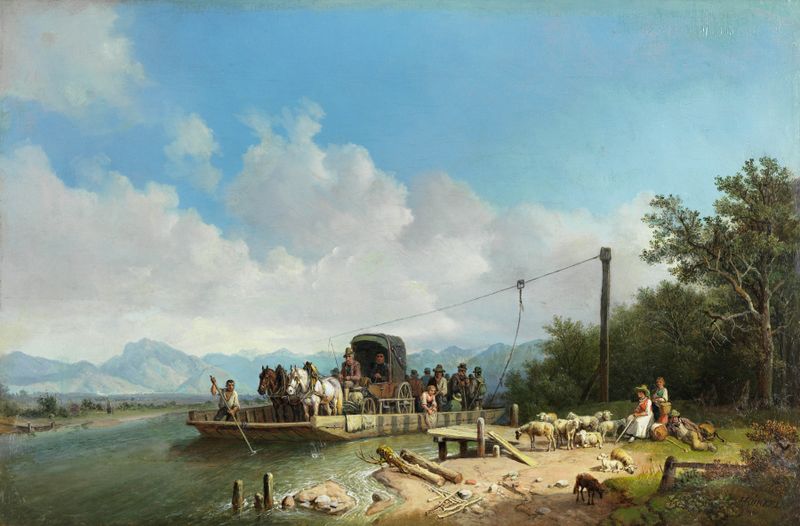
Fähre am Inn
Heinrich Bürkel

Am Dorfbrunnen in den italienischen Bergen
Heinrich Bürkel

Italienische Hirtenfamilie in der Felsenhöhle
Heinrich Bürkel
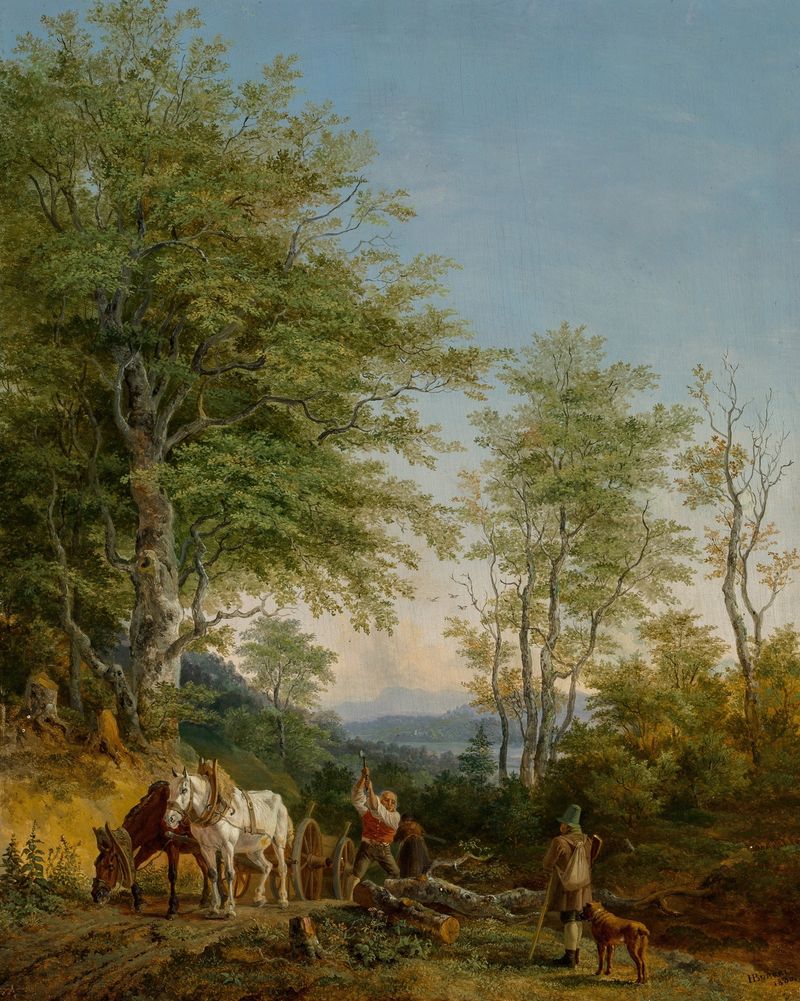
An Italianate wooded landscape with a woodcutter and his team of horses and a passerby with his dog
Heinrich Bürkel
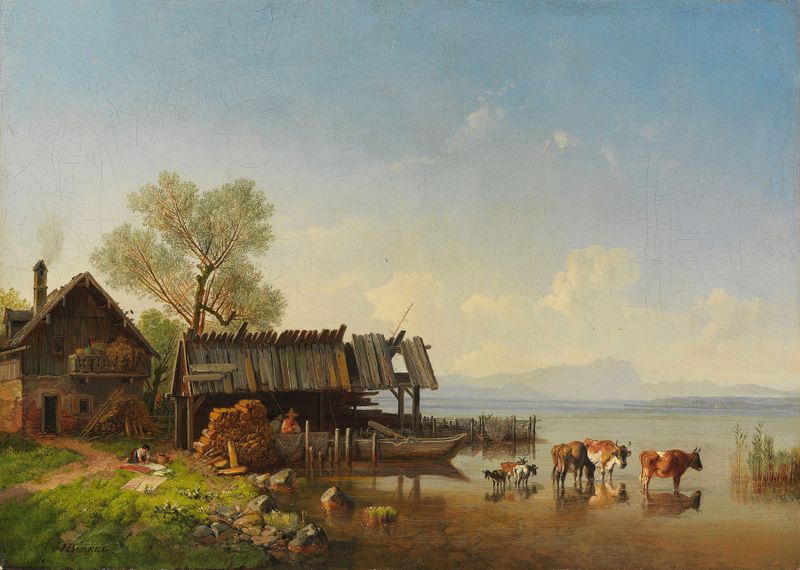
Der Starnberger See mit Blick auf das Wettersteingebirge
Heinrich Bürkel
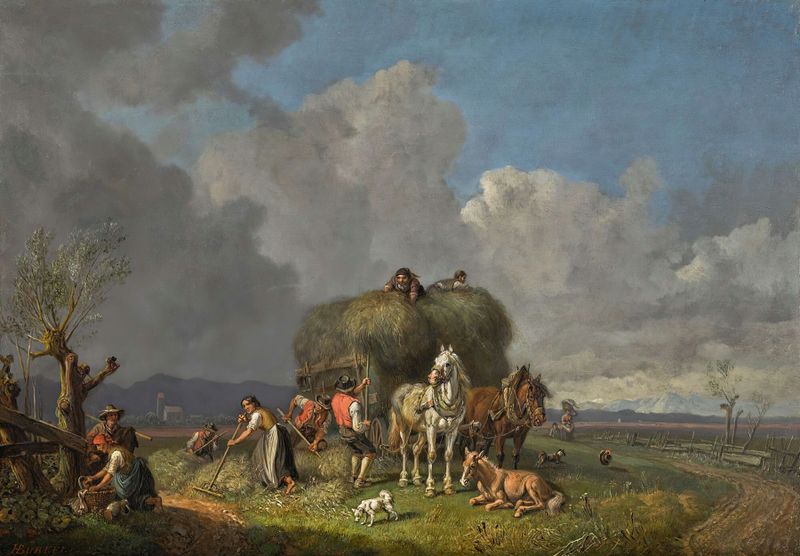
The Hay Harvest
Heinrich Bürkel
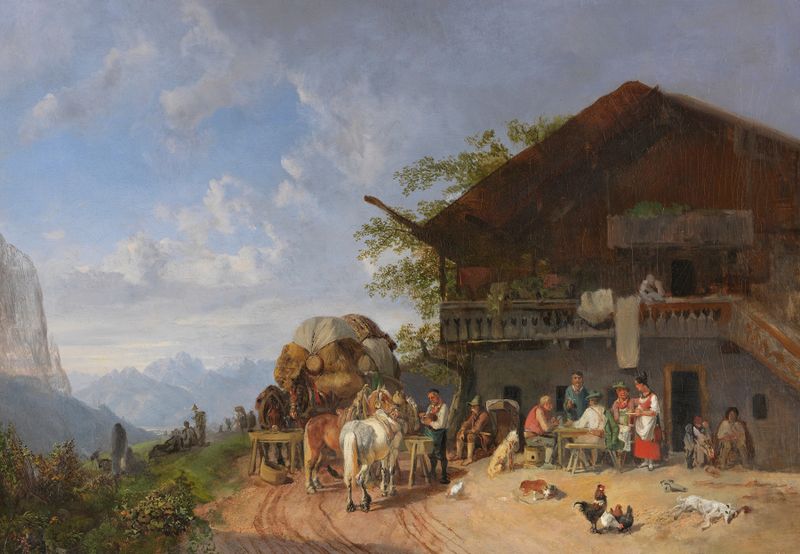
Rast vor einem Gasthof in den Bergen
Heinrich Bürkel

Blick auf den Monte Circeo
Heinrich Bürkel





