
S.E. View of the Porch of an Old House in Hanover Court near Grub Street — History & Facts
Could beauty survive in a century of chaos? In the early 19th century, the world was transforming under the weight of industrialization, yet the allure of the past whispered through the cracks of time. First, look to the left where ivy-clad brick softly merges into the shadowed recesses of the porch. The artist’s meticulous attention to detail reveals weathered stone and textured foliage, inviting you to trace the lines of nature entwined with human craftsmanship. Notice how the muted palette of ochres and greens breathes life into the structure, evoking a sense of nostalgia that transcends the physical space. Beneath this rustic exterior lies a poignant contrast; the old house stands as a monument to resilience against the relentless march of time.
The interplay between the sturdy architecture and the encroaching greenery reflects a silent dialogue between human endeavor and nature’s reclamation. Moments frozen in the brushwork suggest both the permanence of history and the impermanence of its beauty, asking viewers to consider what remains amid the inevitable decay. John Thomas Smith painted this work in 1809, during a period when England was grappling with the consequences of war and rapid urban change. Living in London, he was deeply passionate about capturing the essence of the city’s heritage, often finding beauty in its overlooked corners.
This artwork is a testament to his commitment to preserving the fleeting charm of a bygone era amidst the chaos of his contemporary world.
More Artworks by John Thomas Smith
Browse all →
Dr. Johnson’s House in 8 Bolt Court, Fleet Street
John Thomas Smith
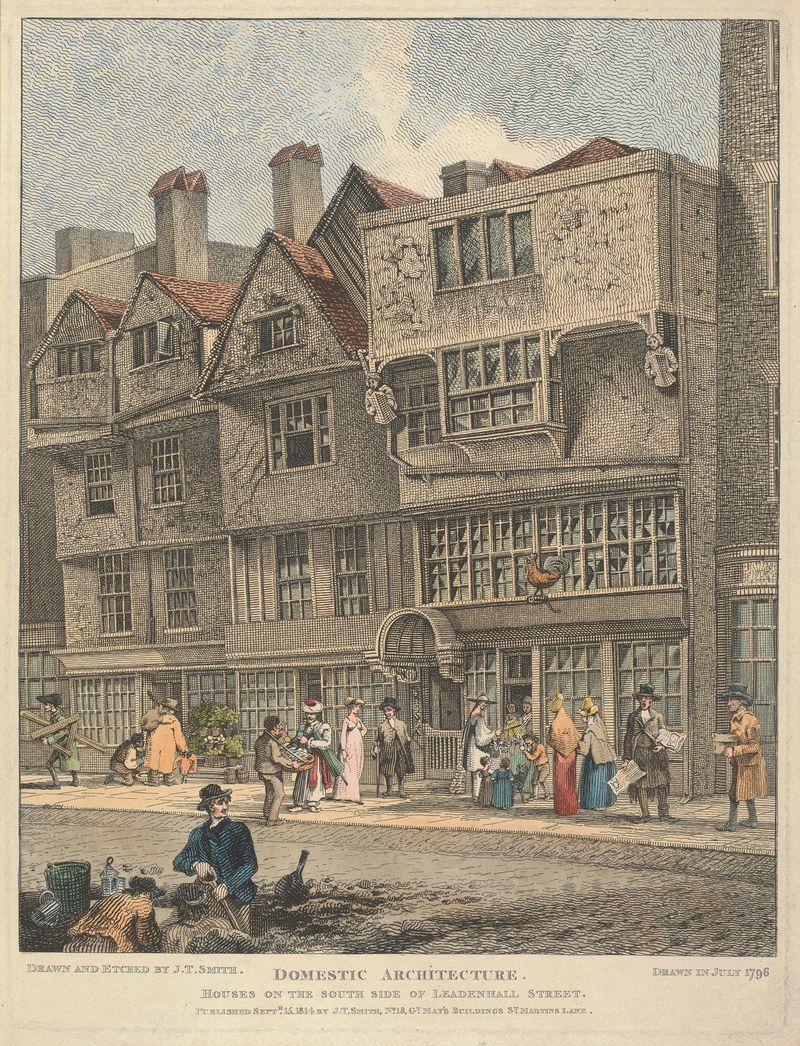
Houses on the South Side of Leadenhall Street
John Thomas Smith
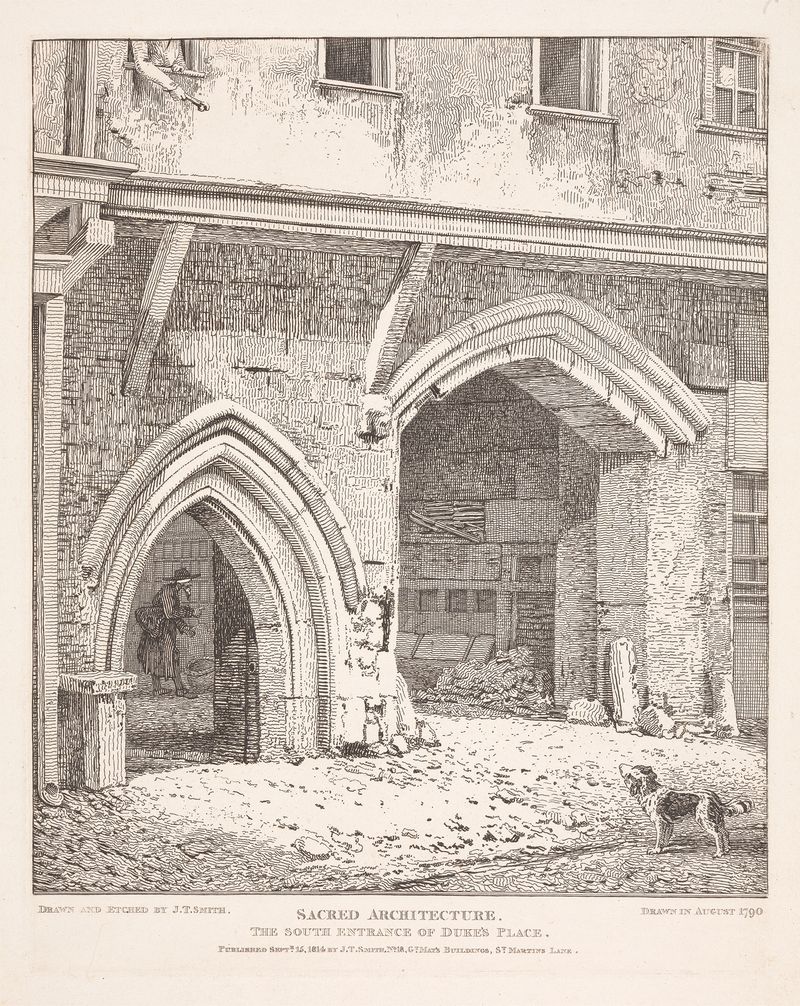
Sacred Architecture; the South Entrance of Dukes Place
John Thomas Smith
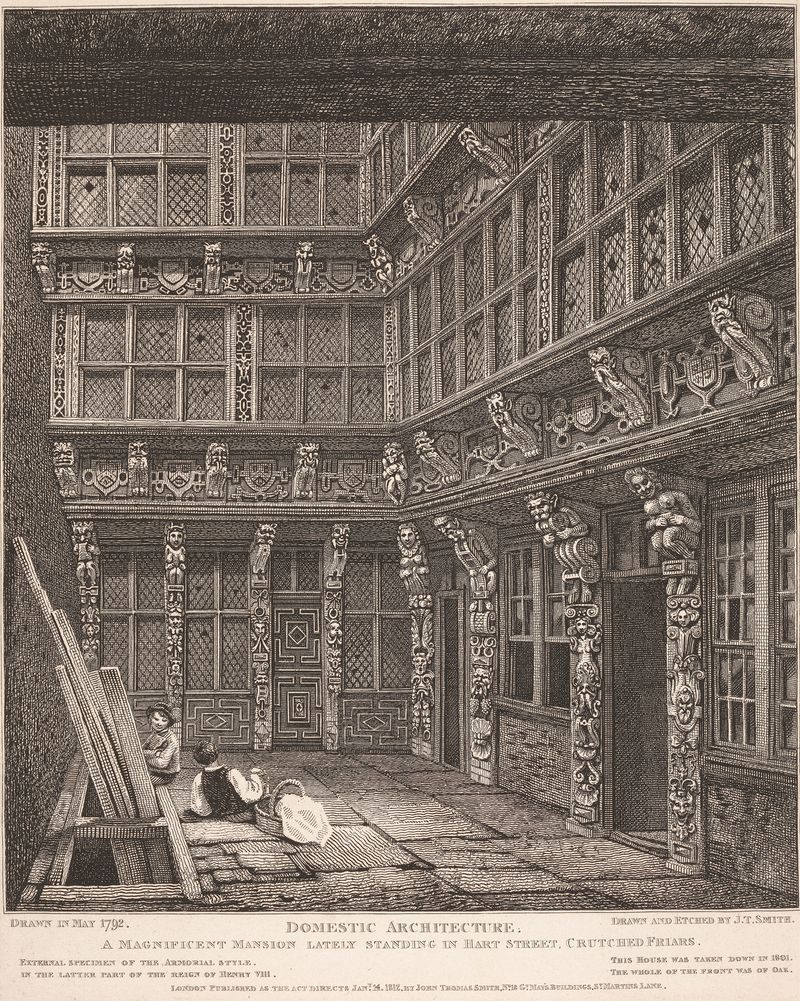
Domestic Architecture, A Magnificent Mansion Lately Standing in Hart Street, Crutched Friars
John Thomas Smith
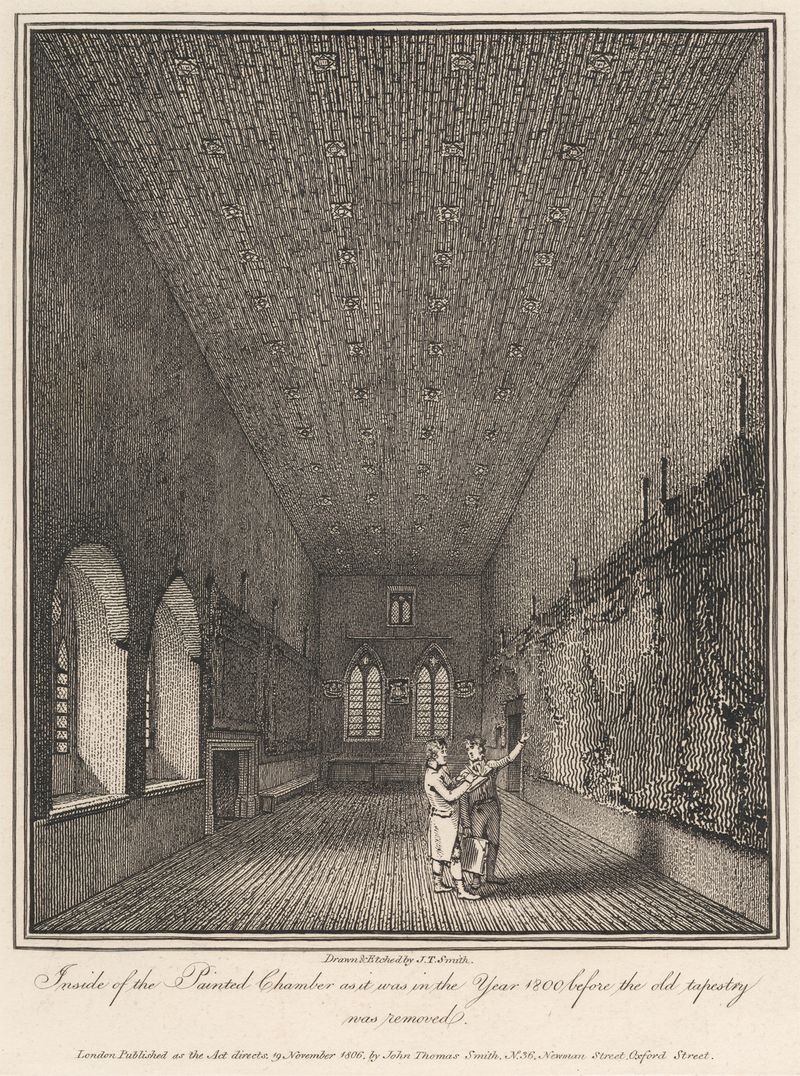
Inside the Painted Chamber as it was in the year 1800 before the old tapestry was removed
John Thomas Smith
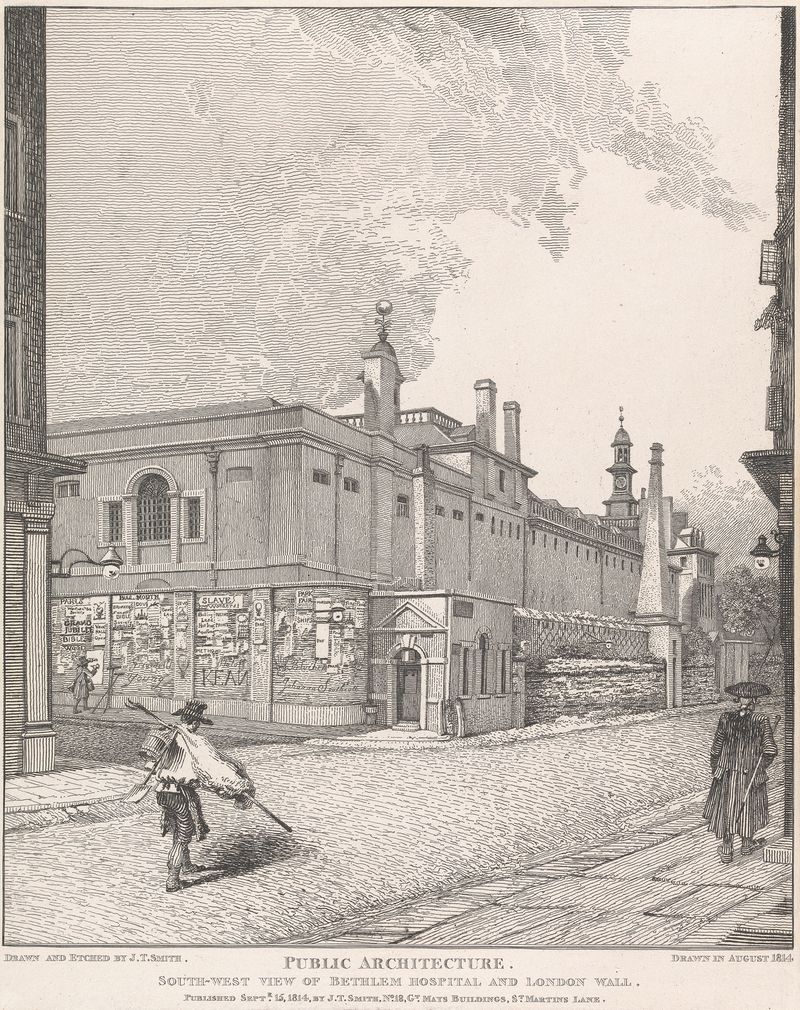
South West View of Bethlem Hospital and London Wall
John Thomas Smith

Winchester Street, London Wall
John Thomas Smith
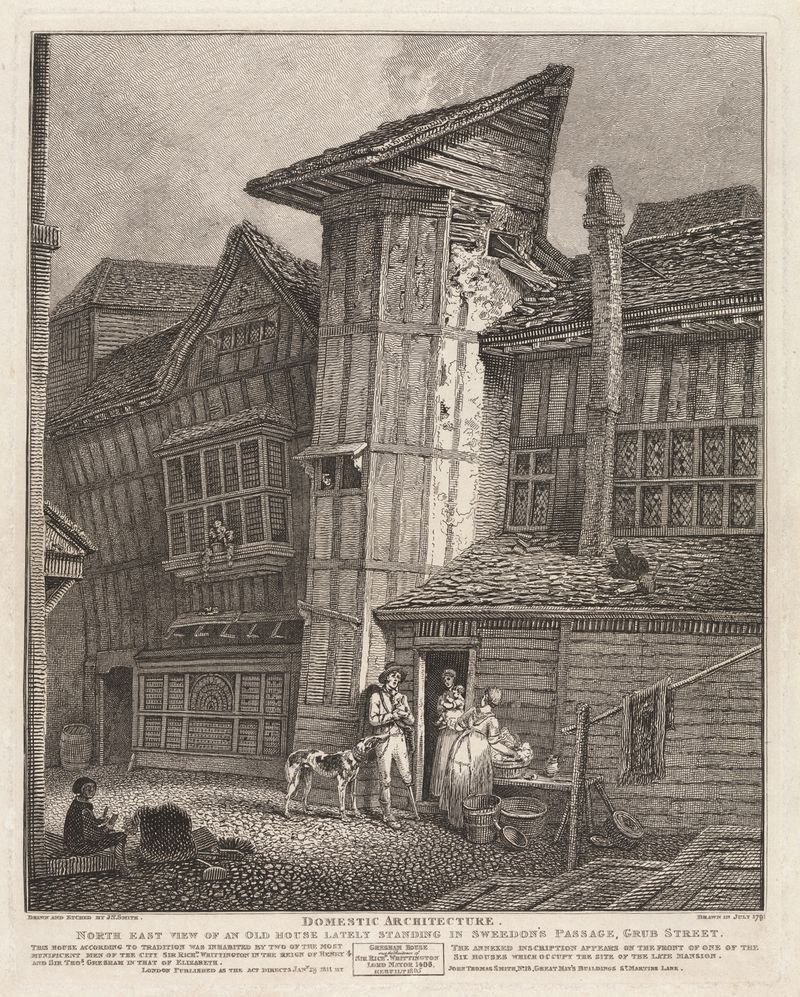
Domestic Architecture – N. E. View of an Old House lately Standing in Sweedon’s Passage, Grub Street
John Thomas Smith

Houses on the South SIde of a Street called London Wall
John Thomas Smith
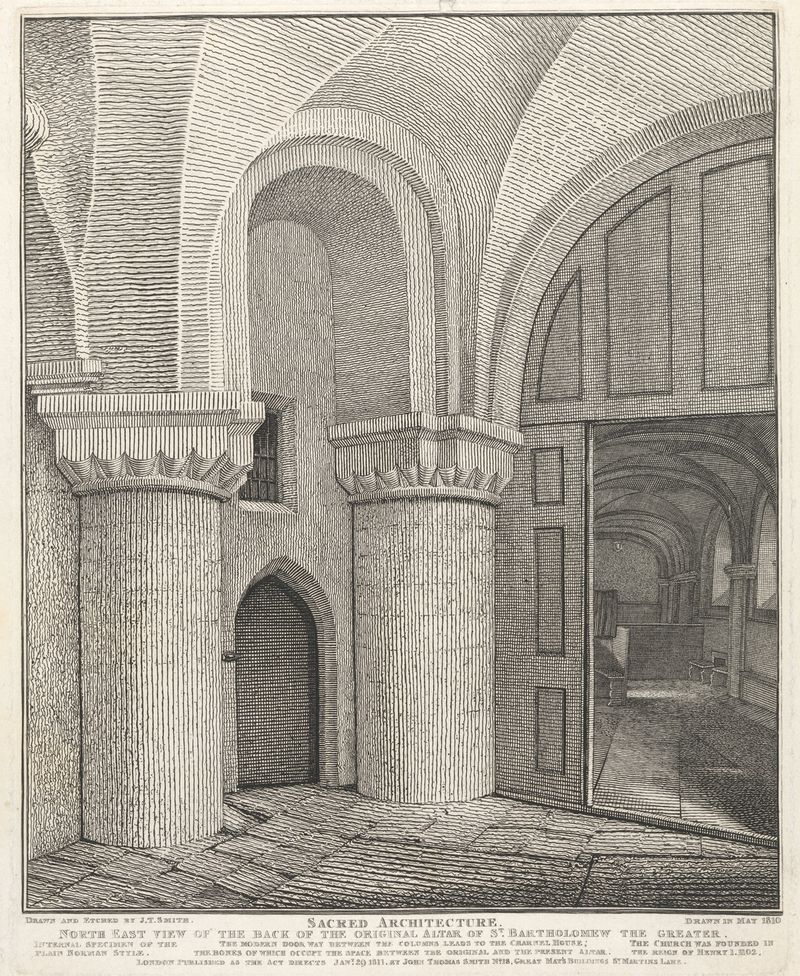
Northeast View of the Back of the Original Altar of St. Barts the Great
John Thomas Smith
More Architecture Art
Browse all →
The statue of Liberty
Frédéric Auguste Bartholdi

View of Houses in Delft, Known as ‘The Little Street’
Johannes Vermeer

View of Houses in Delft, Known as ‘The Little Street’
Johannes Vermeer

The Cathedral in Rouen. The portal, Grey Weather
Claude Monet

The yellow house
Vincent van Gogh

The Church in Auvers-sur-Oise, View from the Chevet
Vincent van Gogh