
Second charge of the guards – when they retook the two gun battery at the battle of Inkermann — History & Facts
The air is thick with smoke and the palpable tension of battle. A group of soldiers, faces etched with determination and fear, charges forward, their uniforms muddied by the chaos surrounding them. Amidst the cacophony of cannon fire and the cries of the wounded, the light pierces through the haze, illuminating the valiant charge as they retake the two-gun battery, heroic and innocent in their youthful bravado. Focus on the central figures, boldly striding into the fray, their bodies angled forward as if propelled by sheer will.
The artist captures the brutal energy of the moment through jagged brushstrokes that emphasize movement, while the muted palette of grays and browns adds to the gravity of the scene. Notice the tension in their clenched fists and the glint of determination in their eyes; the contrasting hues of their uniforms against the earthiness of the battlefield evoke a sense of both valor and vulnerability. Yet, hidden beneath the surface of this charged moment is an exploration of innocence lost. Each soldier, embodying a promise of youth, seems to grapple with the harsh realities of war, the line between bravery and recklessness blurred.
The juxtaposition of their spirited advance against the grim surroundings invites reflection on the cost of glory, hinting at the tragedy that often accompanies such valor. It raises questions about the nature of heroism and the price paid by those who partake in the dance of war. In 1855, William Simpson created this poignant work during the Crimean War, a period marked by significant upheaval in Europe. As a war artist, he aimed to document the stark realities faced by soldiers, providing a narrative that bridged the gap between battlefield and home front.
Living in an era when the romanticism of war was challenged by its brutal truths, Simpson's rendering encapsulates both the courage and the innocence of those caught in the storm of conflict.
More Artworks by William Simpson
Browse all →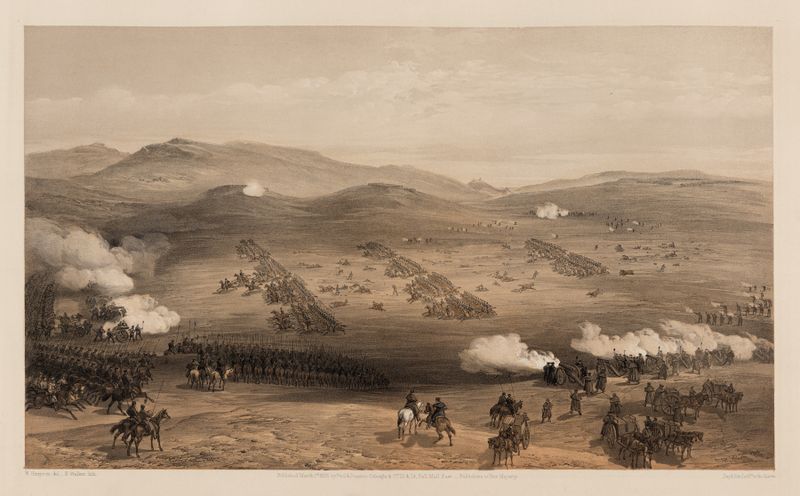
Charge of the light cavalry brigade, 25th Oct. 1854, under Major General the Earl of Cardigan
William Simpson

Charge of the heavy cavalry brigade, 25th Octr. 1854
William Simpson
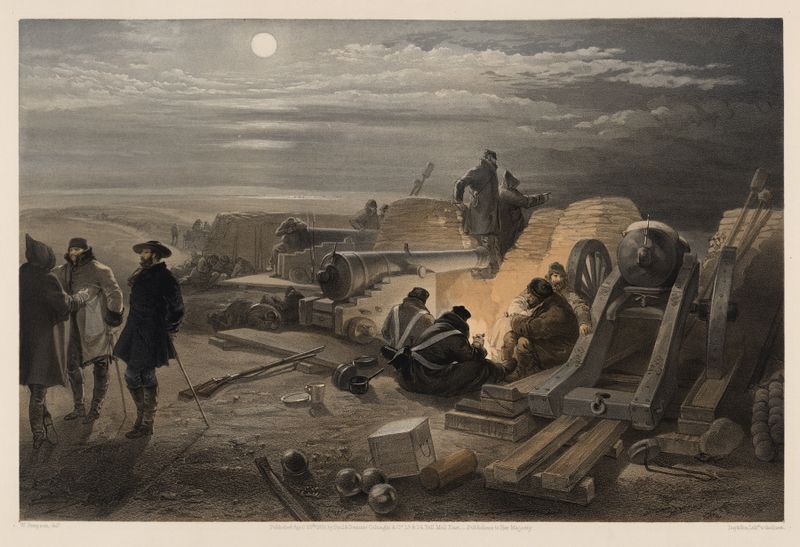
A quiet night in the batteries – a sketch in the Greenhill battery (Major Chapman’s), 29th Jany. 1855
William Simpson

The Great Wall of China
William Simpson
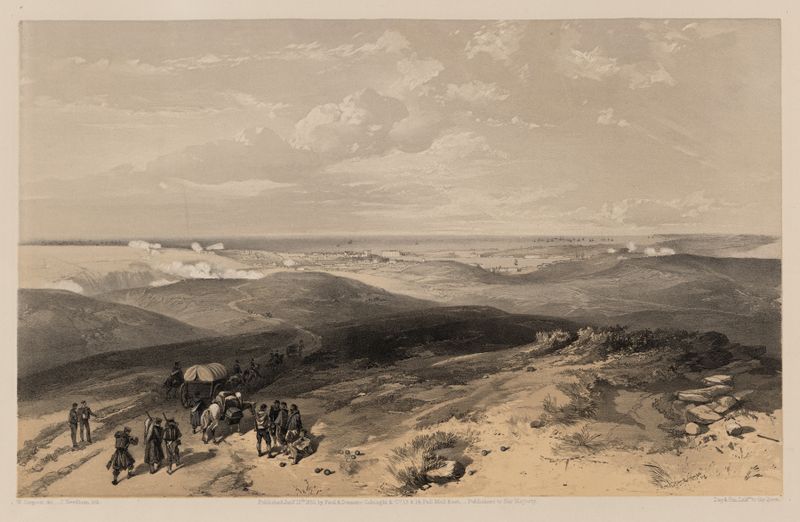
Sebastopol from the rear of the English batteries
William Simpson
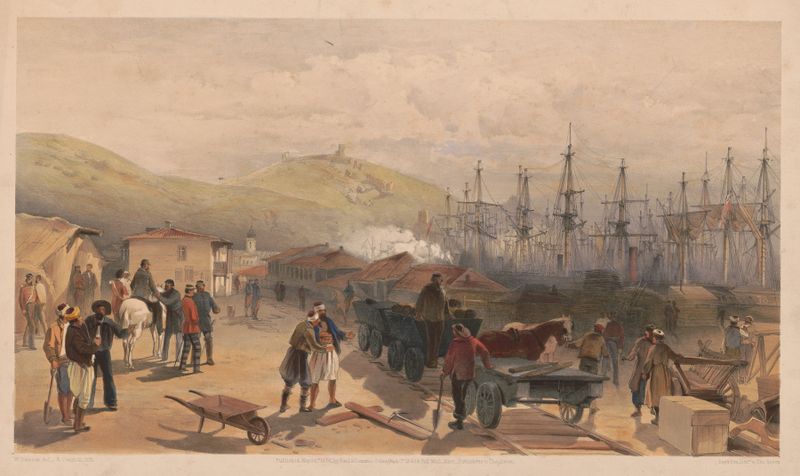
The railway at Balaklava, looking south
William Simpson

The Governor-General’s and Commander-in-Chief’s Camp at Jalandhar, 1 Febuary 1860
William Simpson
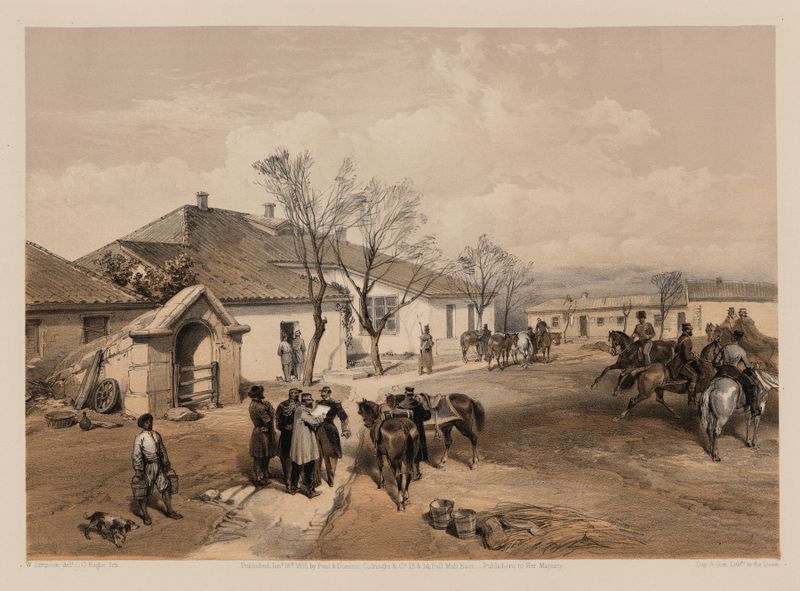
Lord Raglan’s head quarters at Khutor-Karagatch
William Simpson
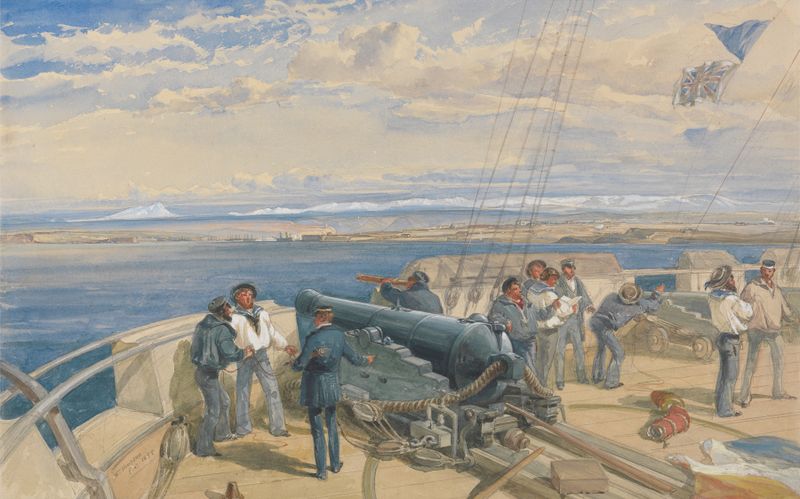
Sebastopol from the Sea, Sketched from the Deck of H. M. S. Sidon, Feb. 1855
William Simpson
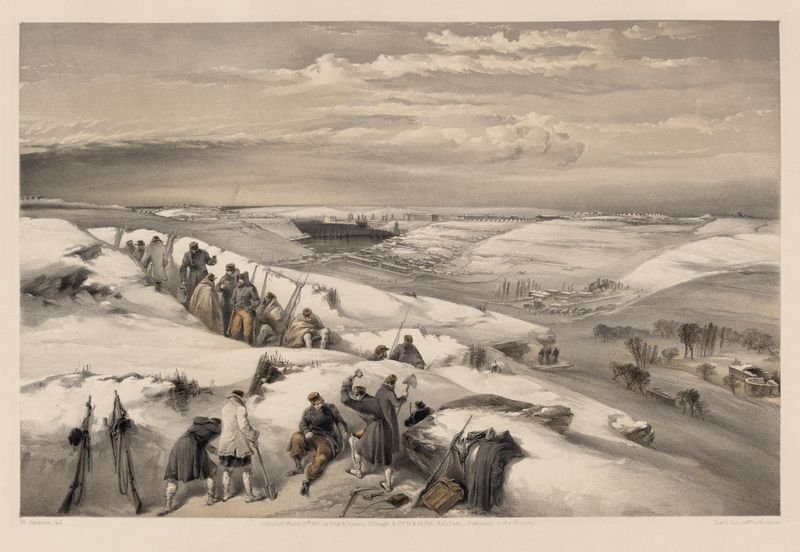
Sebastobol from the 26 gun battery on the extreme right of French attack
William Simpson
More Historical Art
Browse all →
The Night Watch Militia Company of District II under the Command of Captain Frans Banninck Cocq
Rembrandt van Rijn

Lincoln Memorial
Henry Bacon

The Third of May 1808
Francisco de Goya

Isaac and Rebecca, Known as ‘The Jewish Bride’
Rembrandt van Rijn

The Charge of the Mamelukes (1814)
Francisco de Goya

De vier ruiters van de apocalyps
Albrecht Dürer