
Segesta — History & Facts
Can paint confess what words never could? In the silent expanse of Segesta, a void beckons, inviting contemplation beyond speech. Look to the horizon where ancient ruins emerge, bathed in the warm embrace of soft, golden light. The delicate strokes blend earth tones and gentle greens, encapsulating a timeless moment of serenity. Focus on the crumbling temple, its stones whispering stories of a forgotten civilization, while the surrounding landscape stretches into an infinite sky, offering a sense of both permanence and decay.
Here, the artist balances detail and abstraction, creating a narrative that lives between the tangible structure and the ethereal atmosphere. Beneath the beauty lies a deeper tension—the juxtaposition of human endeavor against the relentless march of nature. The temple, a symbol of human aspiration, stands resilient yet fragile, while the wild grasses encroaching upon it signify nature's reclamation. This poignant contrast evokes a sense of loss, suggesting that even the most monumental achievements succumb to time’s grasp.
Each brushstroke invites the viewer to ponder their own ephemerality and the void left in the wake of existence. In 1842, Lear painted Segesta during his travels in Sicily, a period marked by personal exploration and artistic experimentation. At this time, he was navigating the delicate balance between his roles as a poet and painter, seeking to harmonize the two forms of expression. The world was witnessing a burgeoning interest in the picturesque, and Lear's work reflected the Romantic era’s fascination with the sublime, channeling the awe and melancholy of landscapes that carry the weight of history.
More Artworks by Edward Lear
Browse all →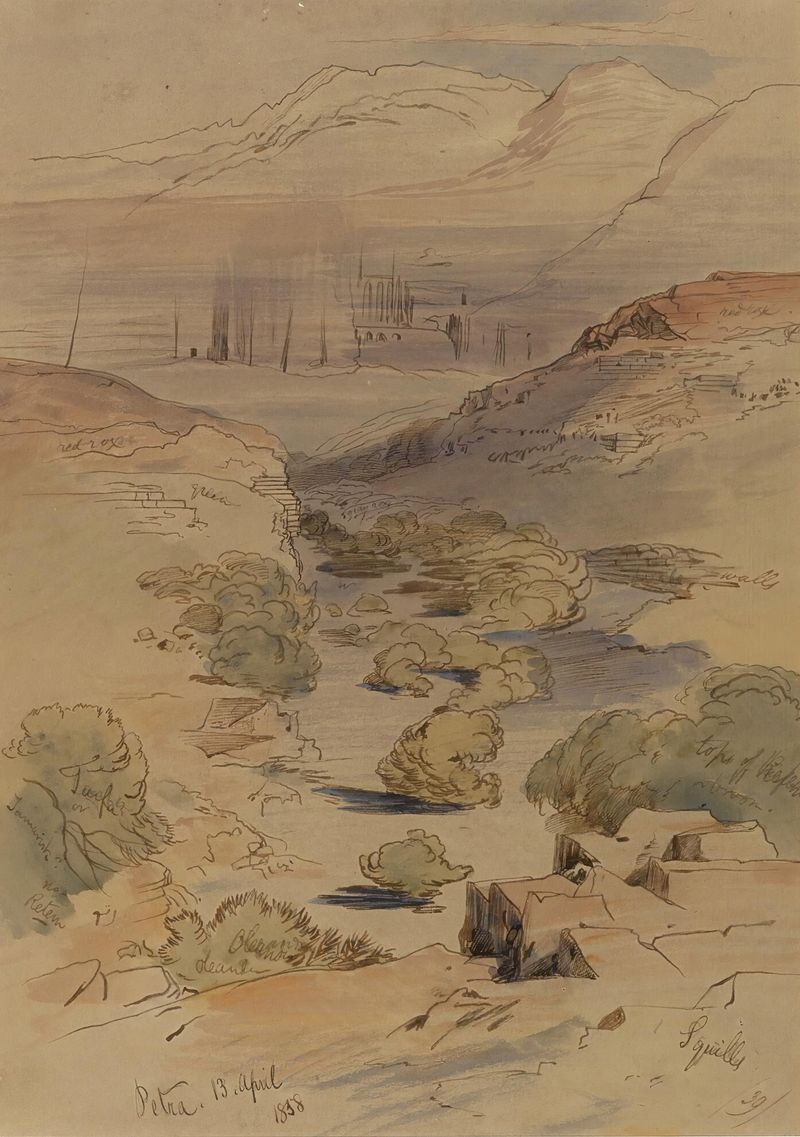
Petra
Edward Lear
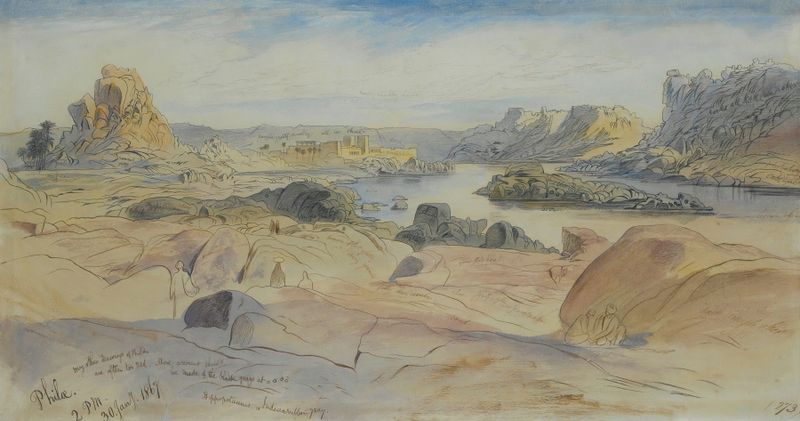
Philae, Egypt
Edward Lear
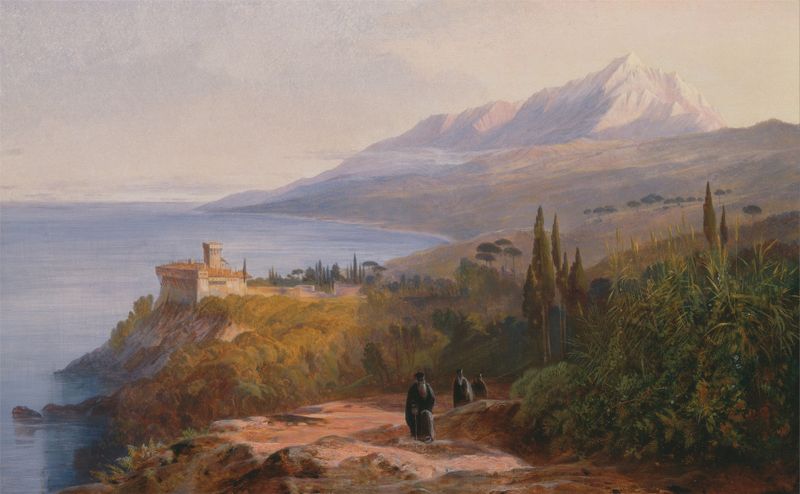
Mount Athos and the Monastery of Stavronikétes
Edward Lear
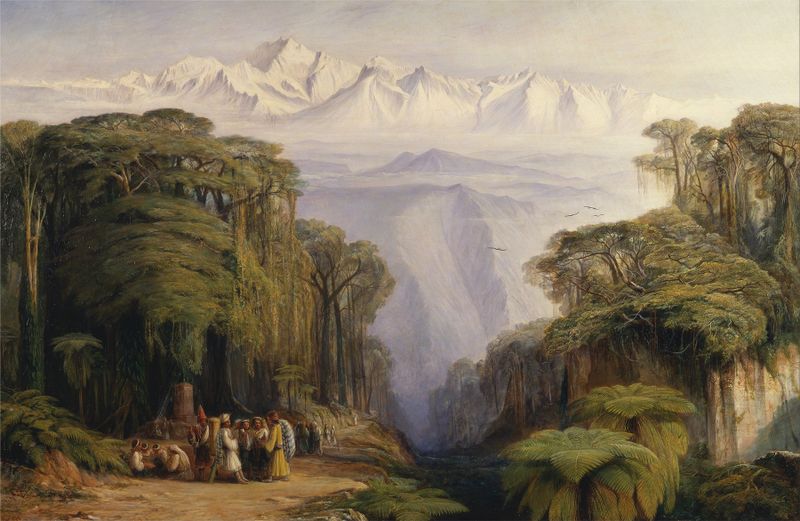
Kangchenjunga from Darjeeling
Edward Lear
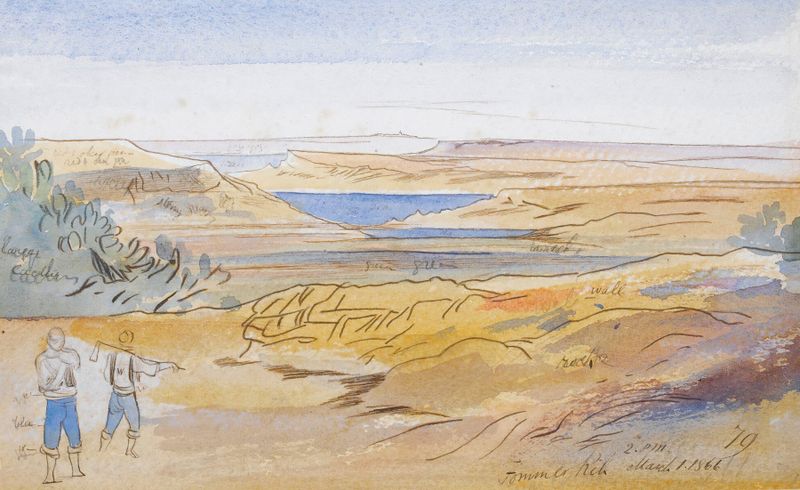
Fomm Ir-Rih, Malta
Edward Lear
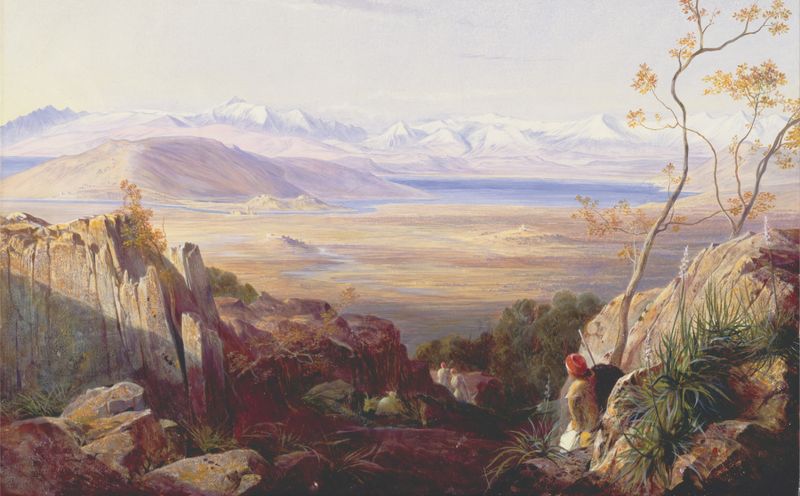
Butrinto, Albania
Edward Lear
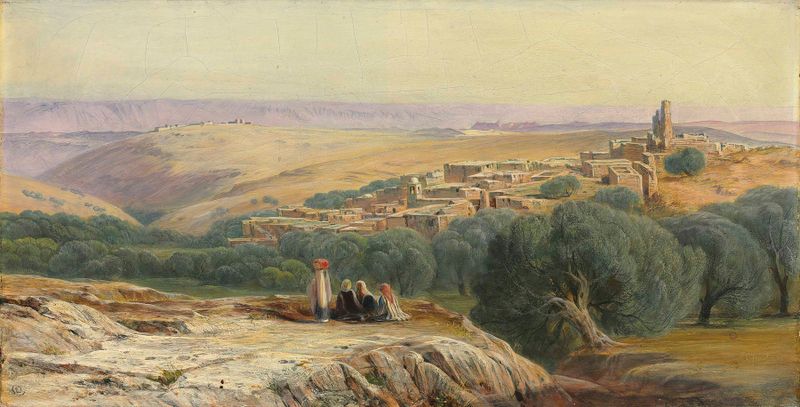
The Plains of Bethany
Edward Lear

Karnak, 9-30 pm, 22 January 1867
Edward Lear
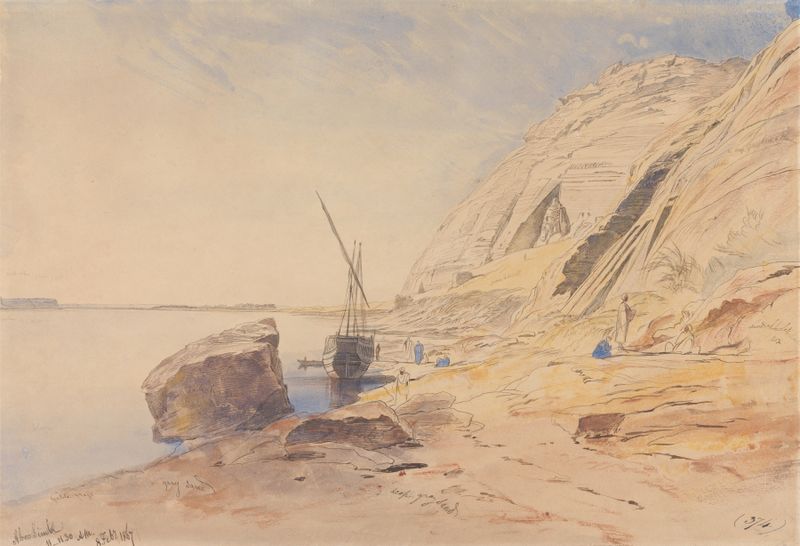
Abu Simbel, 11-11;30 am, 8 February 1867 (374)
Edward Lear

A View Of Mount Athos And The Pantokrator Monastery, Greece
Edward Lear





