
Seitzergasse — History & Facts
Can beauty exist without sorrow? Richard Moser’s Seitzergasse invites this haunting question, revealing the intricate dance between aesthetic allure and the shadows that linger in its depths. Look to the center of the canvas where a narrow alley unfurls, its cobblestone path glistening under a soft, muted light. The buildings, with their weathered facades, seem to lean in toward one another, creating an intimate yet claustrophobic atmosphere. The palette—rich earth tones contrasting with whispering grays—draws the viewer’s eye deeper into this urban embrace, where every detail, from the cracked windows to the fluttering laundry above, tells a story of life lived in close quarters. Yet beneath this picturesque scene lies a tension, a stark reminder of the human experience.
The stillness of the alley stands in contrast to the ghostly absence of figures, invoking a sense of longing and solitude. The delicate interplay of light and shadow hints at unseen lives, perhaps those who walk this path daily, burdened by their own obsessions and sorrows. This absence transforms the space into a poignant metaphor for isolation within the crowd, making the viewer reflect on what remains unsaid. In 1901, while Moser worked on Seitzergasse, Vienna was at a crossroads of artistic innovation and social upheaval.
The Secession movement was gaining momentum, and artists were beginning to challenge the conventions of representation. During this time, Moser himself was exploring urban themes and the complexities of modern life, capturing the essence of human connection even amidst the solitude of city streets.
More Artworks by Richard Moser
Browse all →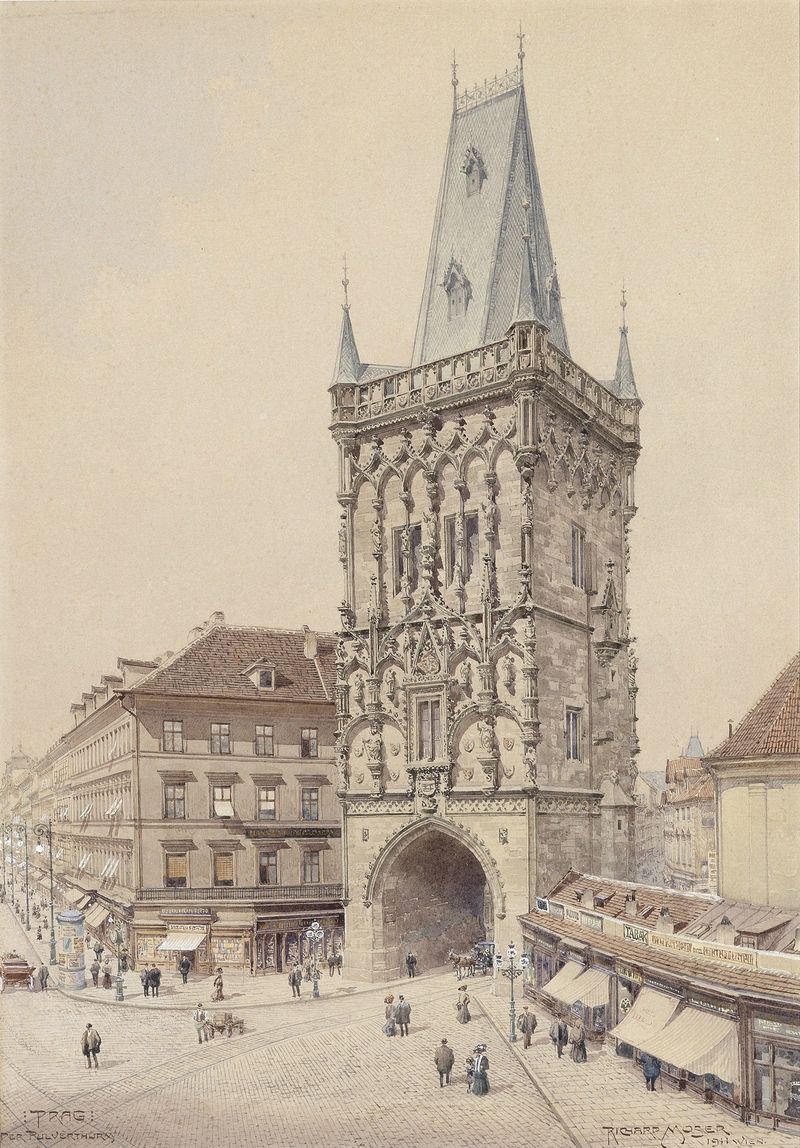
Prag Pulverturm
Richard Moser
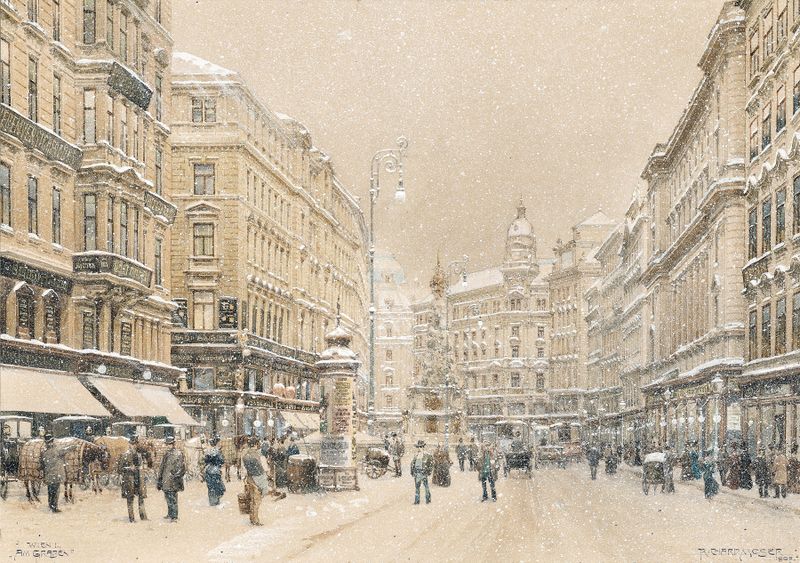
Graben in Vienna at snow flurry
Richard Moser

Wien Am Hof
Richard Moser

Stephansdom Pilgramkanzel
Richard Moser

A view of the church and monastery of the Visitation of the Virgin (church of the Salesian sisters) a gardener in the foreground
Richard Moser

Die Jubiläumsausstellung in Wien 1898; Pavillion der Stadt Wien
Richard Moser
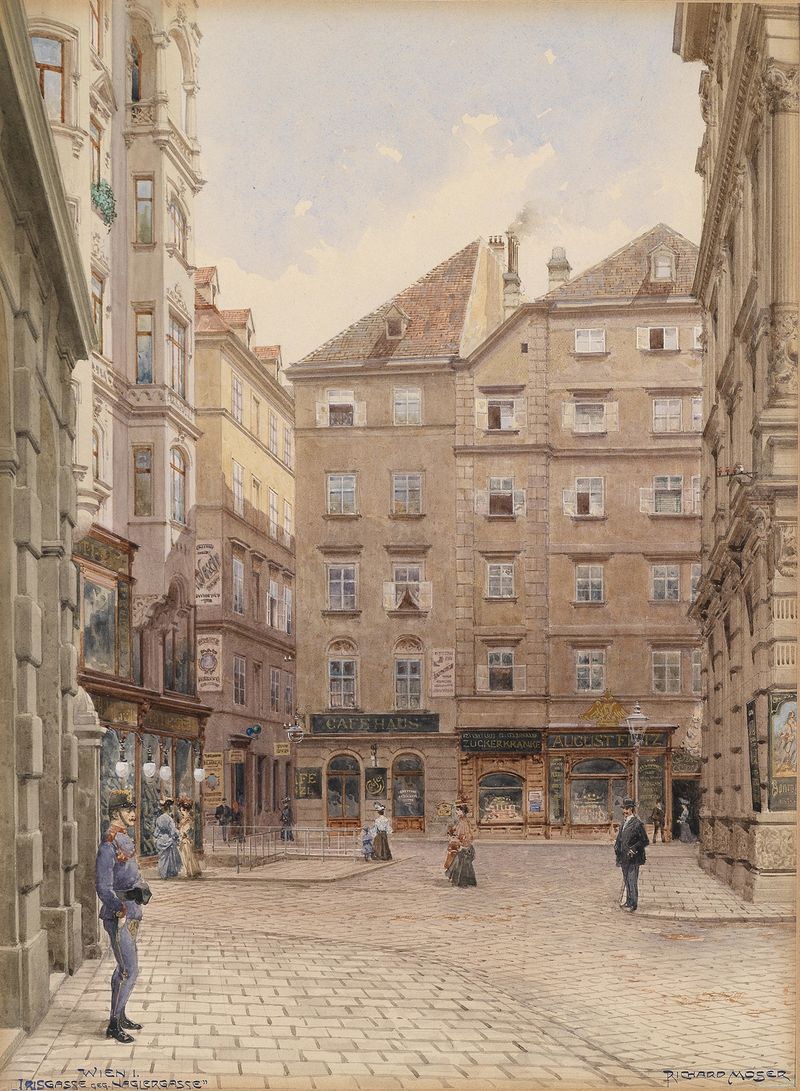
Wien Irisgasse gegen Naglergasse
Richard Moser
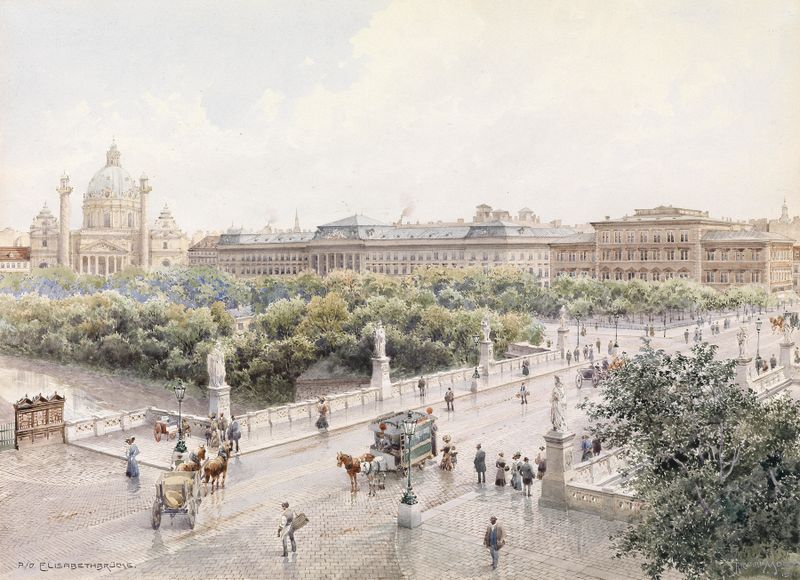
Wien Elisabethbrücke
Richard Moser
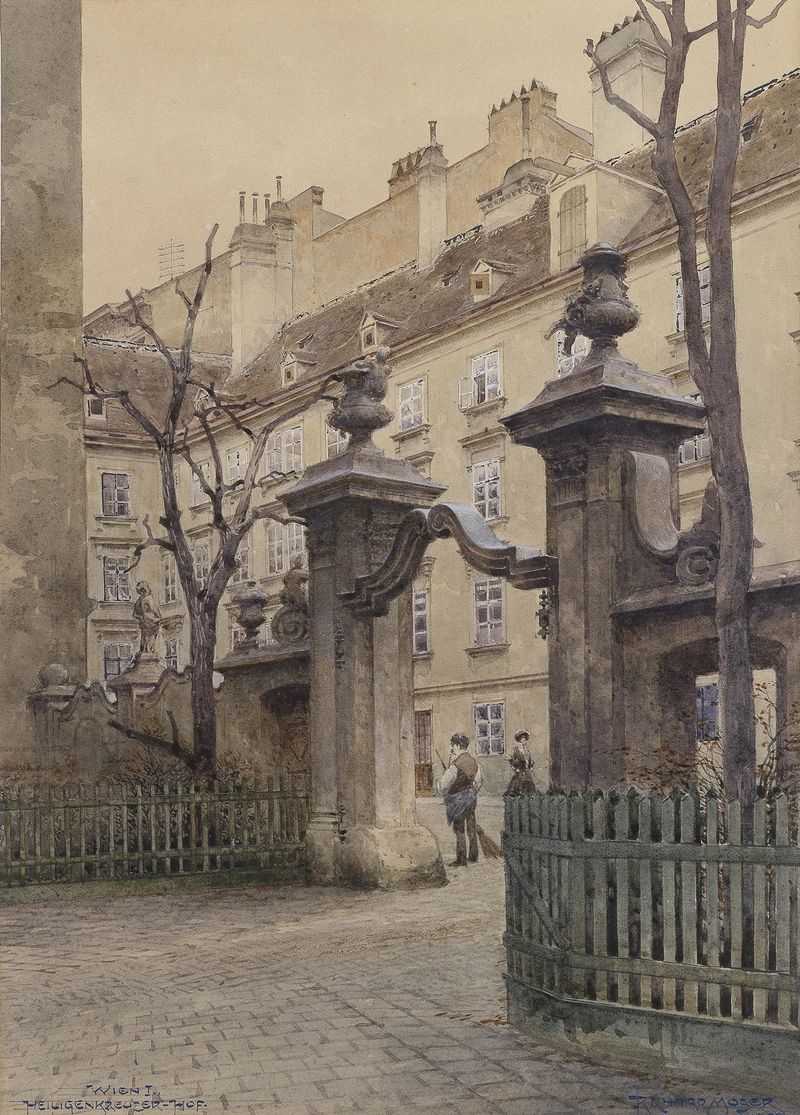
Heiligenkreuzerhof in Wien
Richard Moser
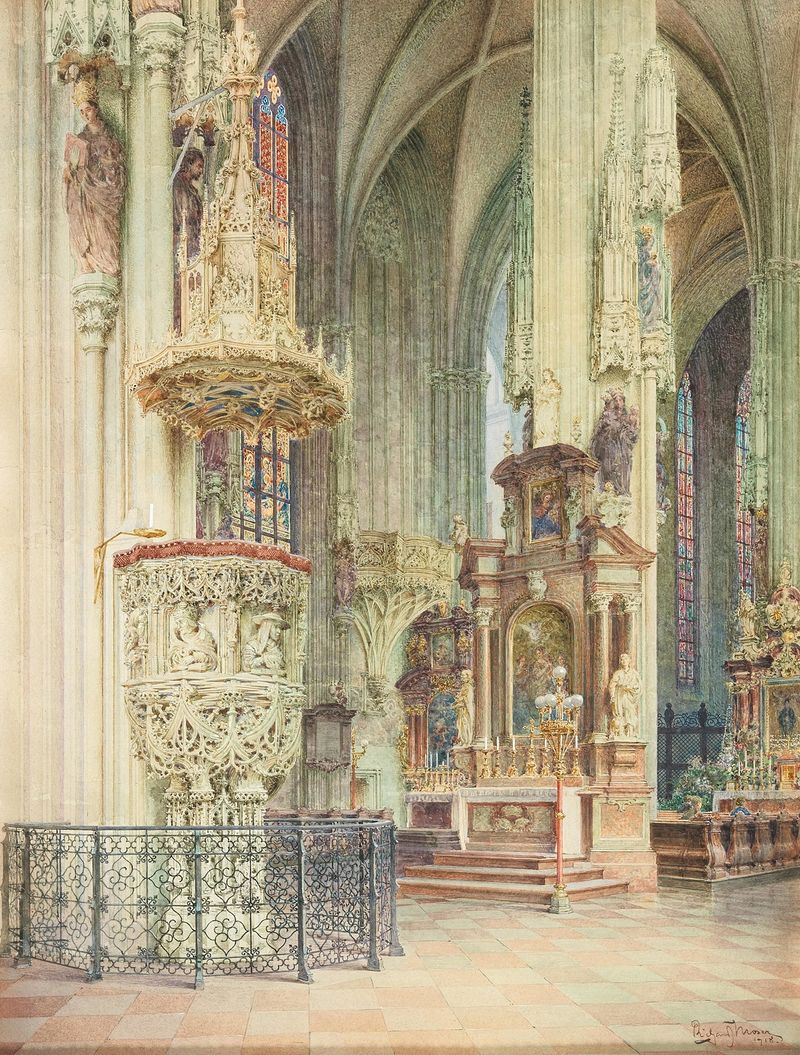
Inneres des Stephansdoms mit Pilgramkanzel
Richard Moser
More Architecture Art
Browse all →
The statue of Liberty
Frédéric Auguste Bartholdi

View of Houses in Delft, Known as ‘The Little Street’
Johannes Vermeer

View of Houses in Delft, Known as ‘The Little Street’
Johannes Vermeer

The Cathedral in Rouen. The portal, Grey Weather
Claude Monet

The yellow house
Vincent van Gogh

The Church in Auvers-sur-Oise, View from the Chevet
Vincent van Gogh