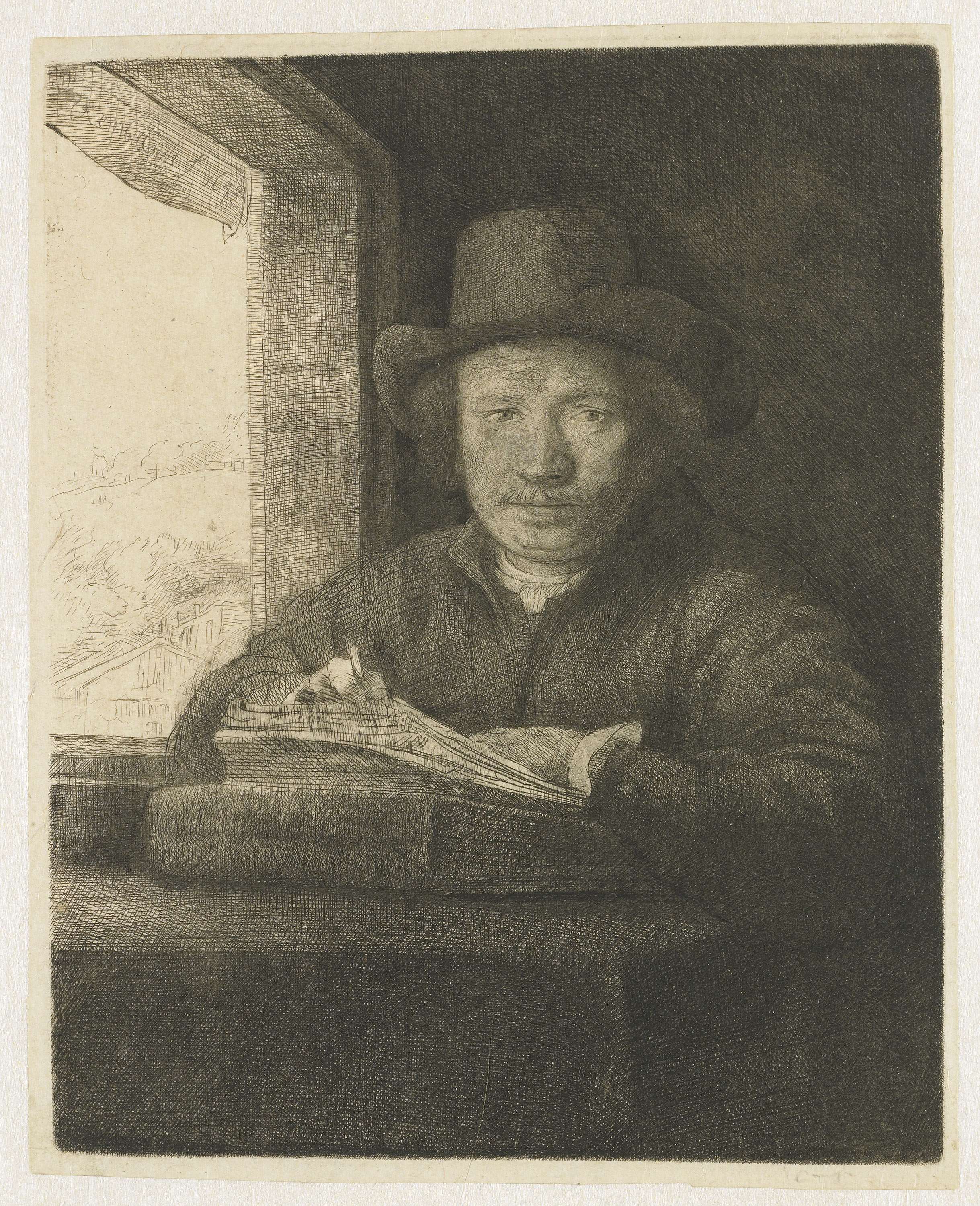
“Sometimes beauty is just pain, disguised in gold.” In the delicate interplay of light and shadow, the essence of existence whispers through the etched lines in this self-portrait. The moment captured transcends the mere act of looking; it invites a deeper examination of the artist’s soul, laid bare in a moment of introspection. Focus on the face, where lines of experience weave through the delicate rendering of features. Notice how the light caresses the contours, creating a dance of highlights and deep shadows that conveys both vulnerability and strength. The window frame encases the figure, suggesting a barrier between the artist and the world, while the gentle movement of the hand suggests a flicker of life, an urge to break free from the confines of isolation. Yet, there’s a poignant duality in what this portrait expresses. The somber gaze reflects a profound solitude, perhaps hinting at the emotional turmoil of the artist’s life during this period. At the same time, the exquisite detail in the etching, especially the texture of the fabric and the soft illumination, speaks to a pursuit of beauty amidst struggle. Each line holds a story, a flicker of movement capturing both the artist's longing and the weight of his experiences. In 1648, Rembrandt was navigating both personal and professional challenges, including the death of his beloved wife and declining fortunes. Painted in Amsterdam, this self-portrait represents not just a moment in time, but the evolution of an artist grappling with his legacy. The world was witnessing the rise of a new artistic movement that challenged conventional norms, and within that shifting landscape, he forged his own path, capturing the depths of the human condition.