
Self-portrait with palette — History & Facts
It is rare for a 19th-century Polish artist to leave behind a self-portrait that so directly confronts the viewer, yet Self-portrait with palette by Tadeusz Ajdukiewicz does just that. The painting’s precise date and medium remain uncertain, but it stands as one of the few known self-images by an artist better known for his grand equestrian portraits and scenes of European courts. What makes this work especially intriguing is that it offers a rare glimpse into the self-perception of an artist who spent much of his life abroad, navigating the shifting borders and allegiances of partitioned Poland.
In a period when national identity was often contested, Ajdukiewicz’s self-portrait quietly asserts the presence of a Polish painter on the international stage. Ajdukiewicz presents himself holding a painter’s palette, his gaze steady and direct, as if pausing in the midst of work to acknowledge the viewer. The palette and brushes are not mere accessories but declarations of his vocation, while his attire—neither ostentatious nor humble—places him firmly in the world of the professional artist. The background is subdued, drawing attention to his face and hands, the tools of his trade.
Unlike the theatrical self-portraits of Rembrandt, who often played with costume and expression, Ajdukiewicz opts for clarity and realism, aligning himself more closely with the sober introspection found in late 19th-century portraiture. The light falls evenly, emphasizing neither drama nor mystery, but rather the quiet confidence of a craftsman. The journey of Self-portrait with palette is not well documented, a fate shared by many works from Eastern Europe in this era. It is likely that the painting remained in private hands for much of its existence, only surfacing in public collections as interest in Ajdukiewicz’s oeuvre grew in the 20th century.
Today, the work is valued as a rare testament to the artist’s self-awareness and his place within the cosmopolitan art circles of his time. For Ajdukiewicz, whose career took him from Kraków to Vienna, Paris, and Istanbul, this self-portrait stands as a personal anchor—a quiet assertion of identity amid a life spent in motion.
More Artworks by Tadeusz Ajdukiewicz
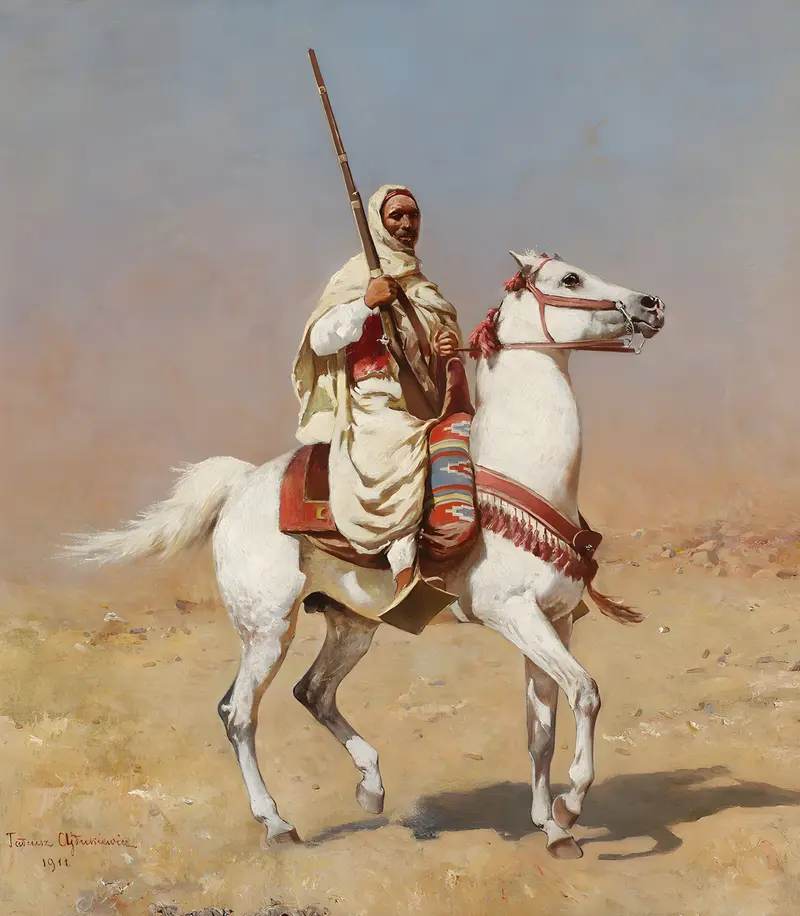
Arab on a grey horse
Tadeusz Ajdukiewicz
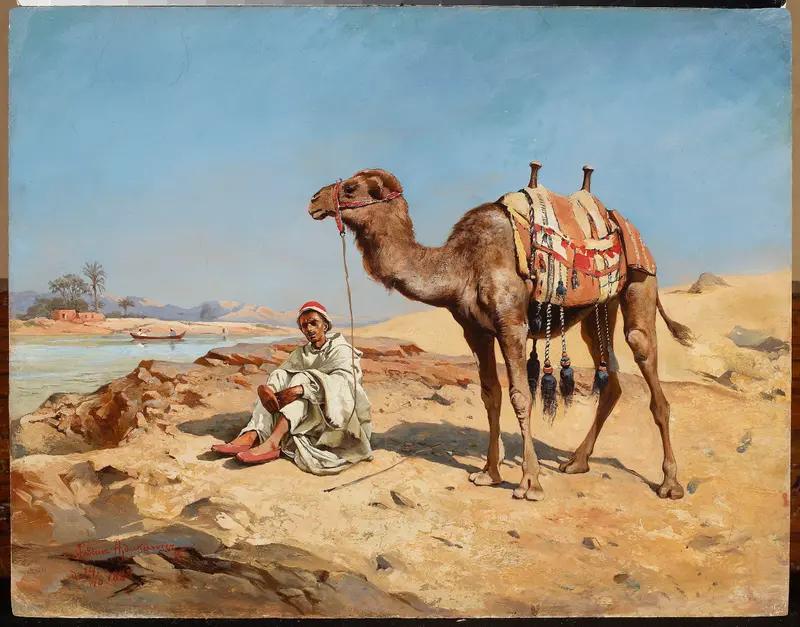
Arab in the desert
Tadeusz Ajdukiewicz
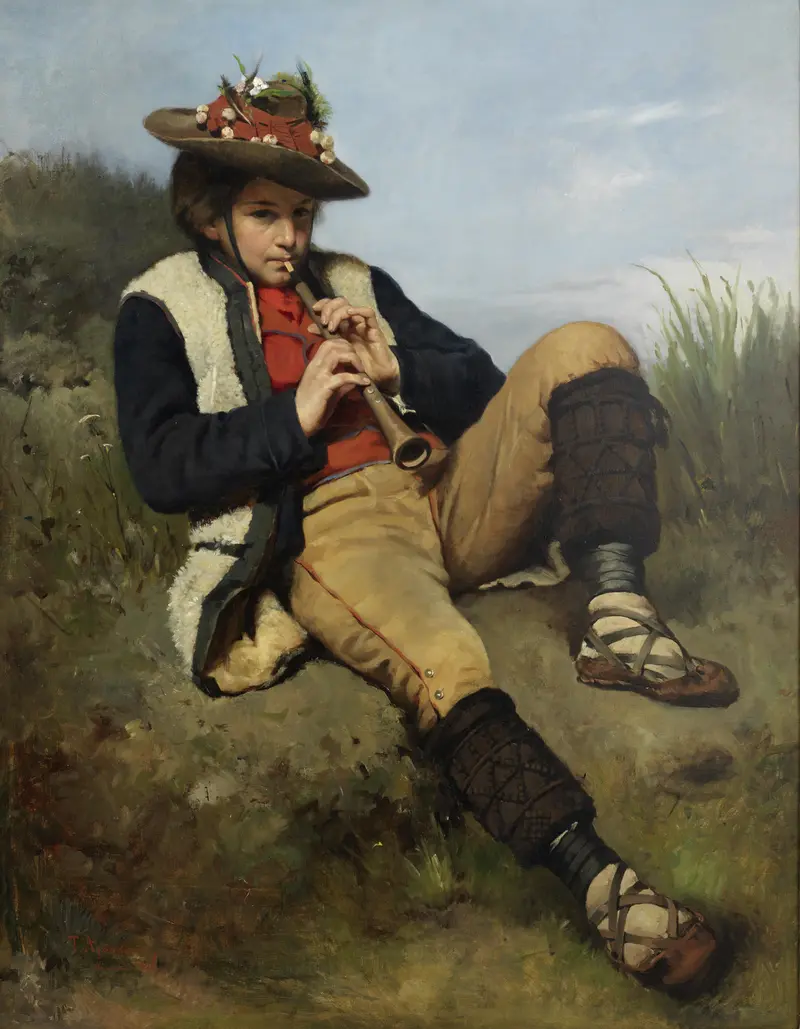
The shepherd boy
Tadeusz Ajdukiewicz

A Parforce Rider in the Forest
Tadeusz Ajdukiewicz
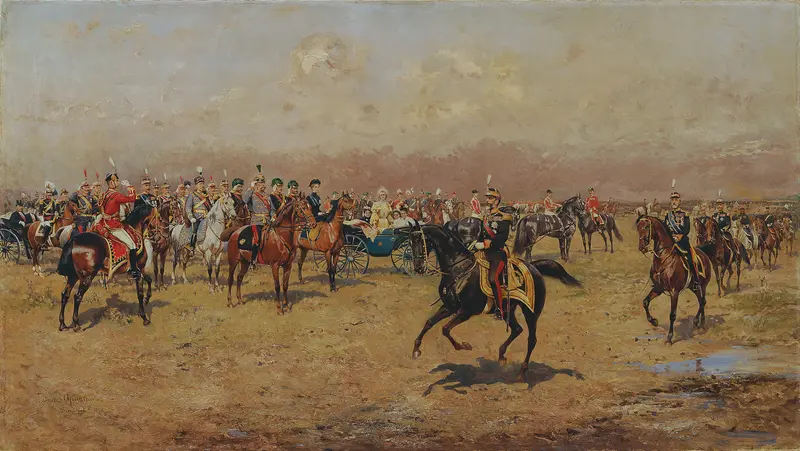
Militärparade vor Kaiser Franz Joseph I.
Tadeusz Ajdukiewicz
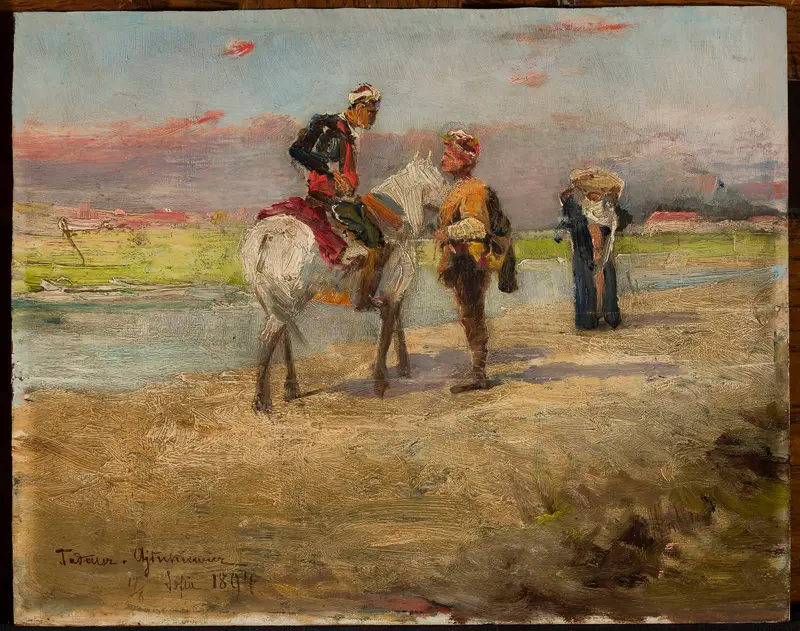
Eastern scene against a landscape
Tadeusz Ajdukiewicz
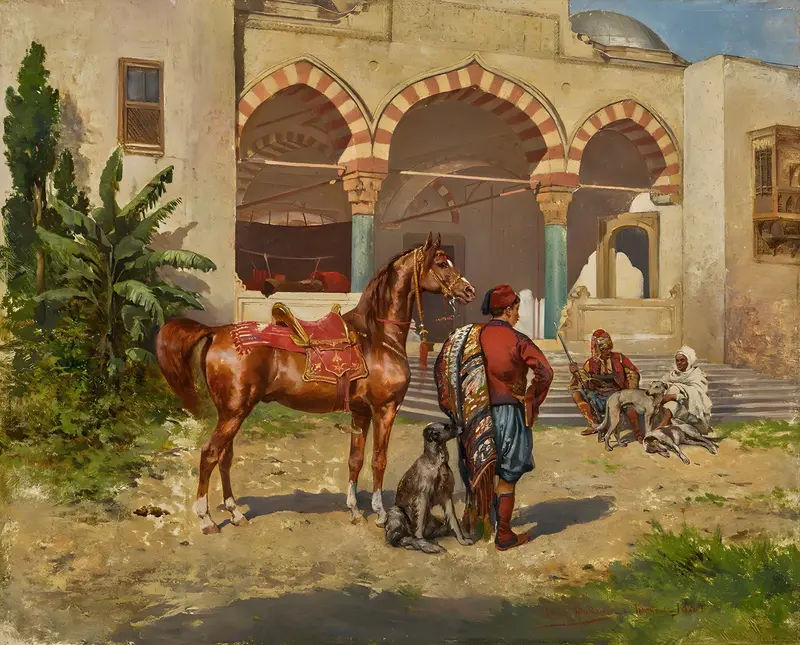
A turkish courtyard
Tadeusz Ajdukiewicz
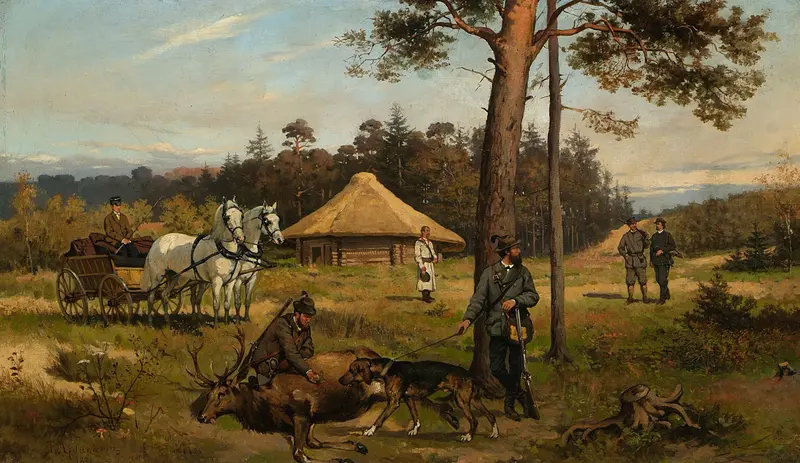
After hunting for a deer
Tadeusz Ajdukiewicz
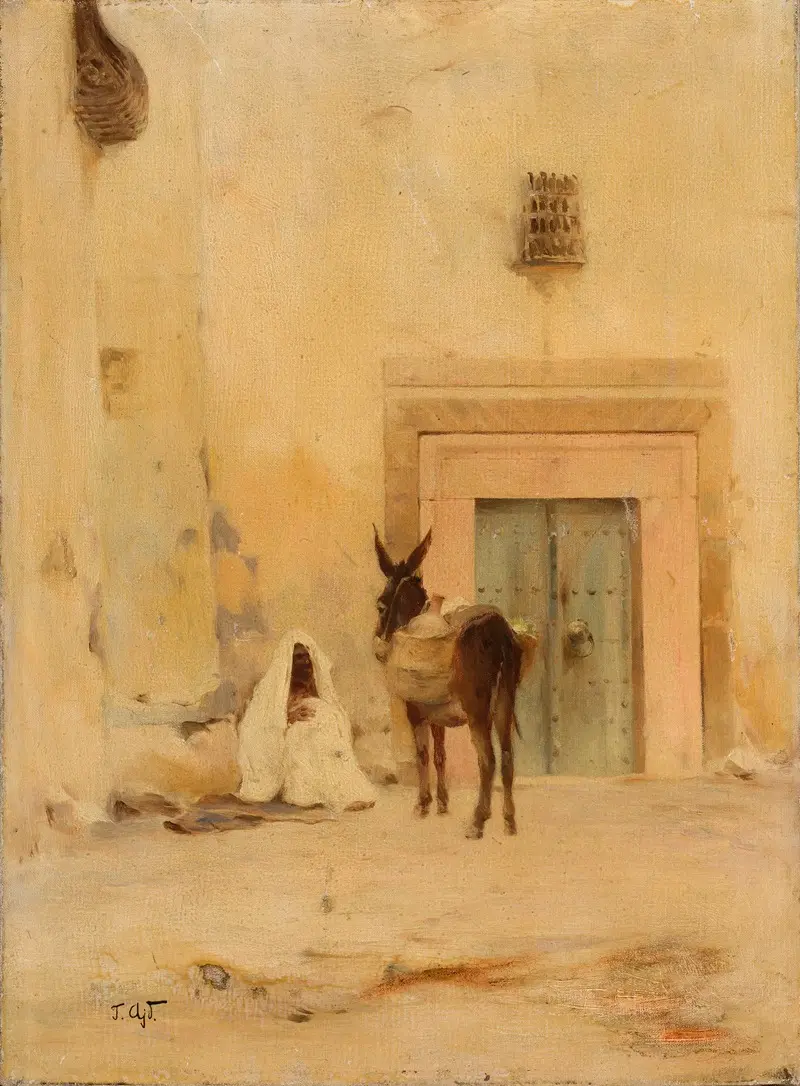
Arab and a donkey at the wall of a house
Tadeusz Ajdukiewicz
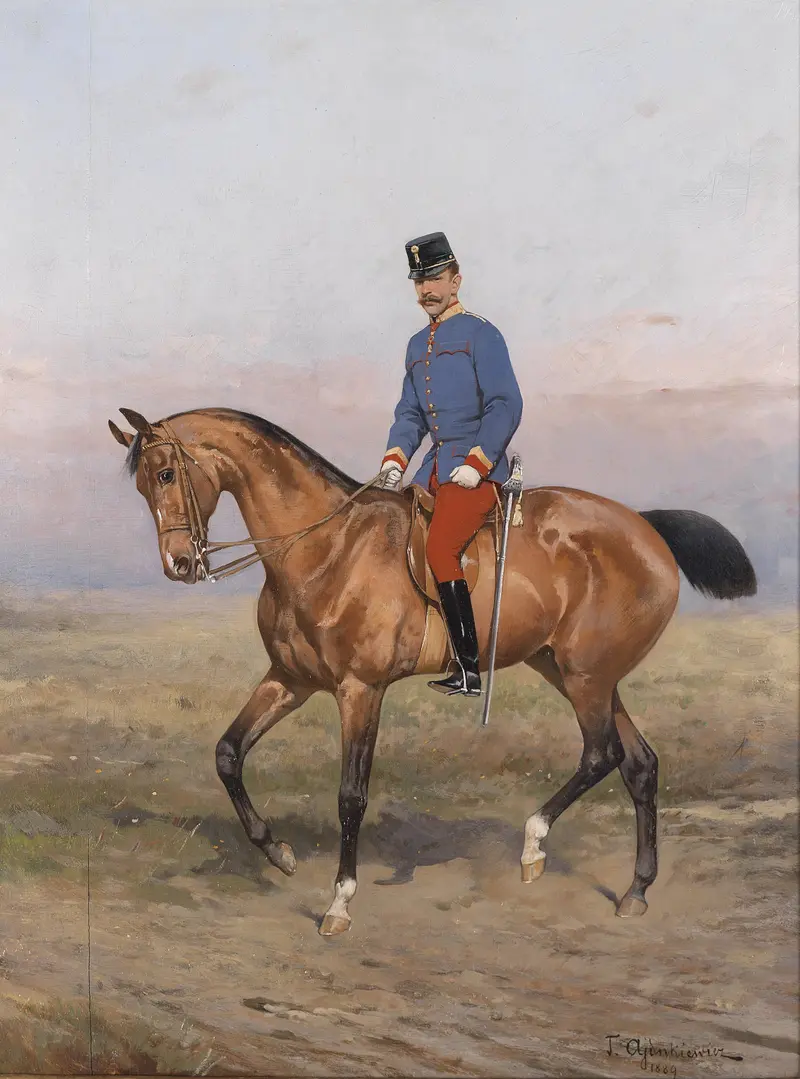
Kronprinz Rudolf zu Pferd
Tadeusz Ajdukiewicz





