
Sepulchral Chambers near Bethany — History & Facts
Who listens when art speaks of silence? In Sepulchral Chambers near Bethany, the stillness resonates, calling forth reflections on mortality and the promise of hope. Look to the center of the canvas where the sepulchral chambers emerge from the earth, their weathered stone structures exuding an ancient dignity. Notice how the soft, ambient light gently illuminates the archways, casting delicate shadows that give depth and dimension to the scene. The muted palette of earthy browns and soft grays contrasts against the vibrant greens of the surrounding landscape, suggesting a silent yet persistent life that flourishes in the face of decay. The juxtaposition of the somber tombs and the vibrant life outside speaks to the tension between death and rebirth, loss and hope.
The archways, though they symbolize entrapment, also offer a passage, hinting at the possibility of transcendence. Perhaps the viewer is invited to contemplate their own connections to these themes—how silence often speaks louder than words, urging introspection and contemplation in the endless cycle of life. In 1804, Luigi Mayer created this work during a period when romanticism was flourishing, and artists were turning their gaze towards nature, history, and personal reflection. Working in the Holy Land, he sought to capture the profound essence of the landscapes steeped in biblical significance, embodying the intersection of art, culture, and spirituality during a time of great change in Europe.
More Artworks by Luigi Mayer
Browse all →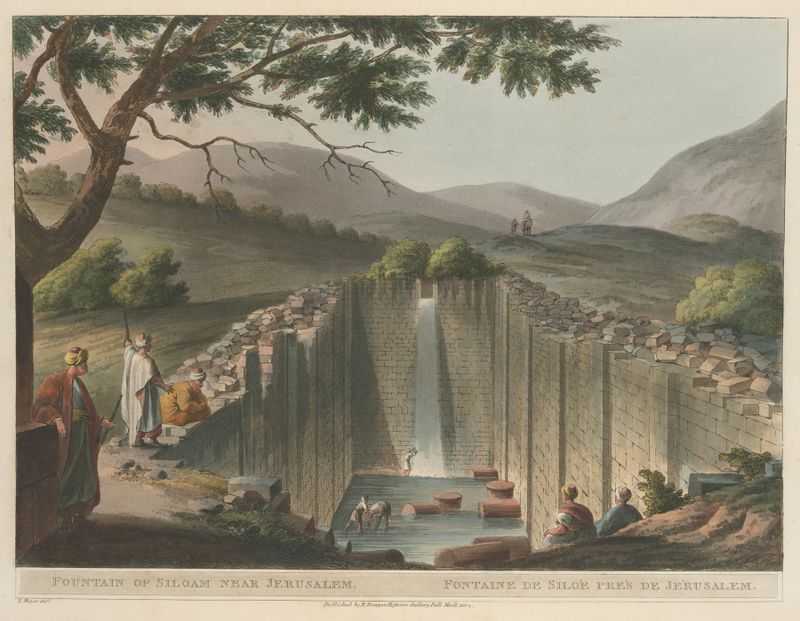
Fountain of Siloam Near Jerusalem
Luigi Mayer

View of the Dardanelles
Luigi Mayer
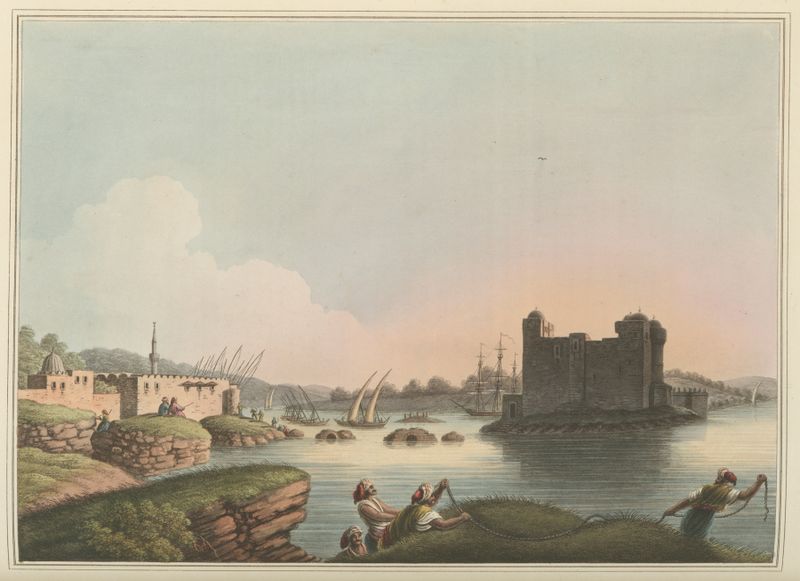
Port of Latachia
Luigi Mayer

Stadium at Ephesus
Luigi Mayer

Ancient Temples at Agrigentum
Luigi Mayer
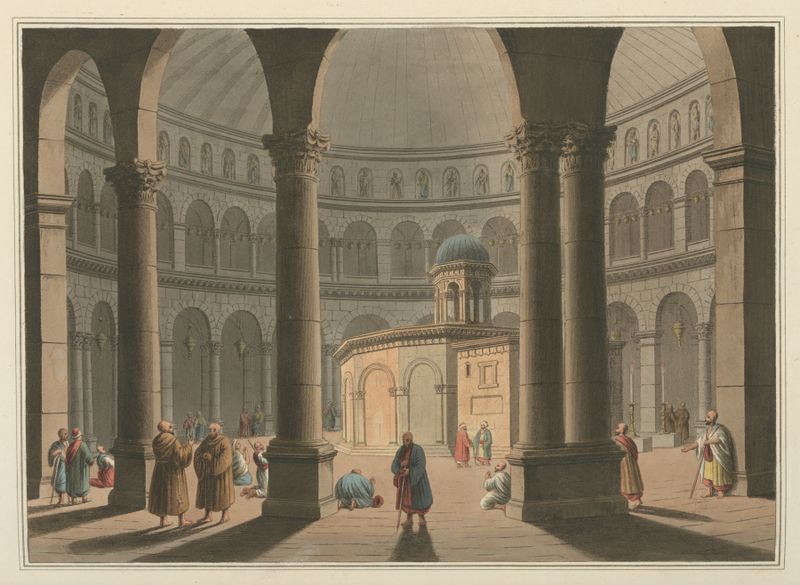
Church of the Holy Sepulchre
Luigi Mayer
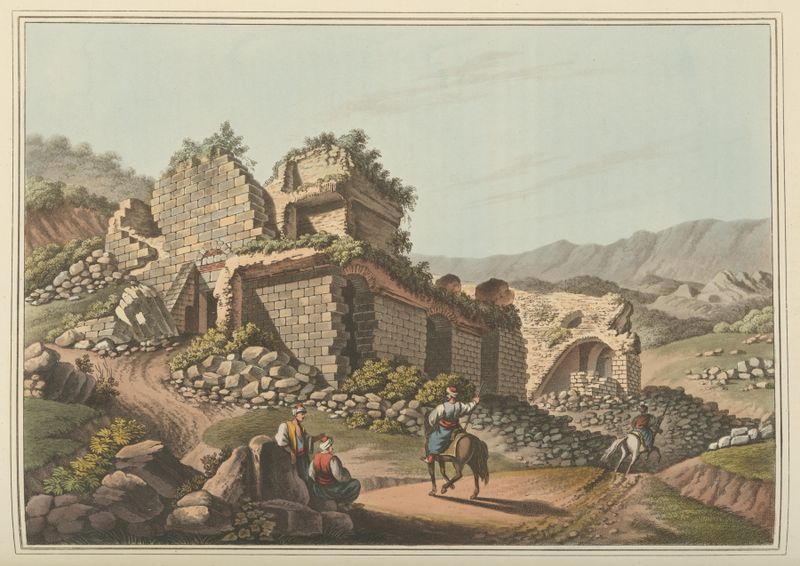
Theatre at Ephesus
Luigi Mayer
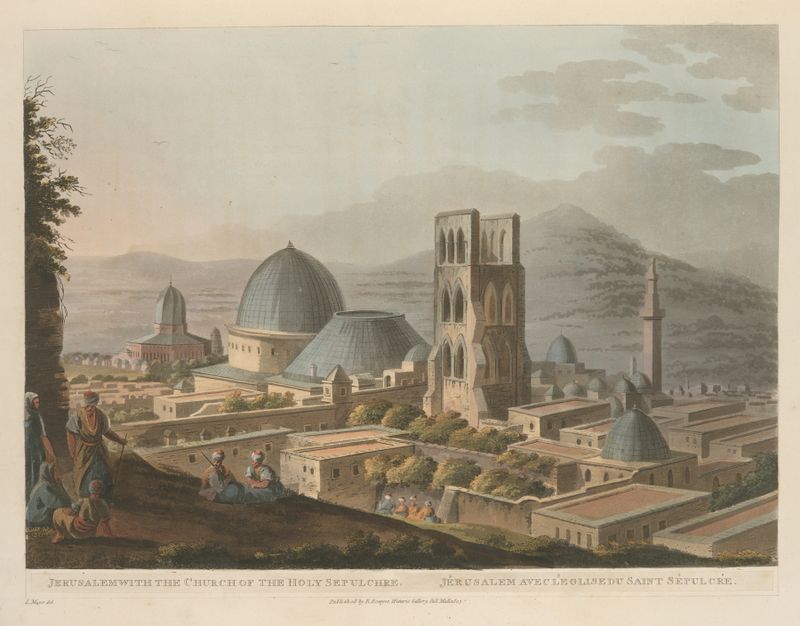
Jerusalem with the Church of the Holy Sepulchre
Luigi Mayer
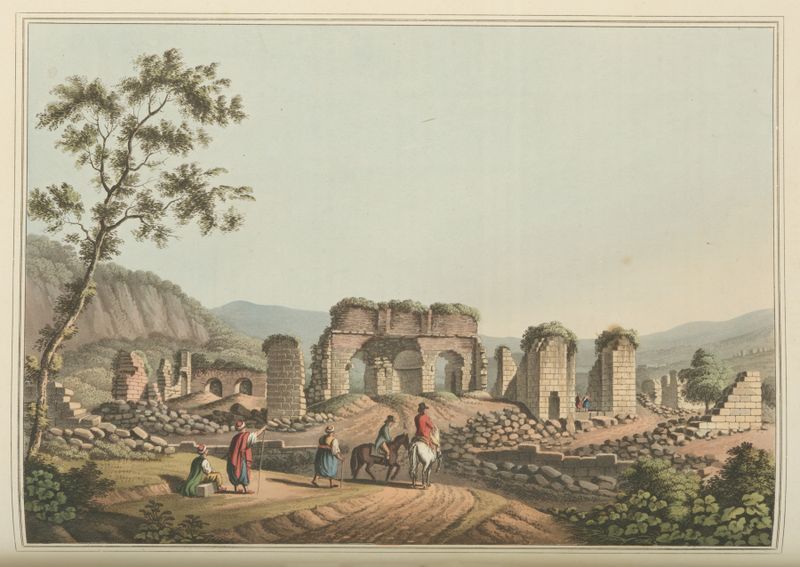
Ruins of the Temple of Diana at Ephesus
Luigi Mayer

Crater in the Island of Volcano
Luigi Mayer
More Architecture Art
Browse all →
The statue of Liberty
Frédéric Auguste Bartholdi

View of Houses in Delft, Known as ‘The Little Street’
Johannes Vermeer

View of Houses in Delft, Known as ‘The Little Street’
Johannes Vermeer

The Cathedral in Rouen. The portal, Grey Weather
Claude Monet

The yellow house
Vincent van Gogh

The Church in Auvers-sur-Oise, View from the Chevet
Vincent van Gogh