Seventeen, Insane — History & Facts
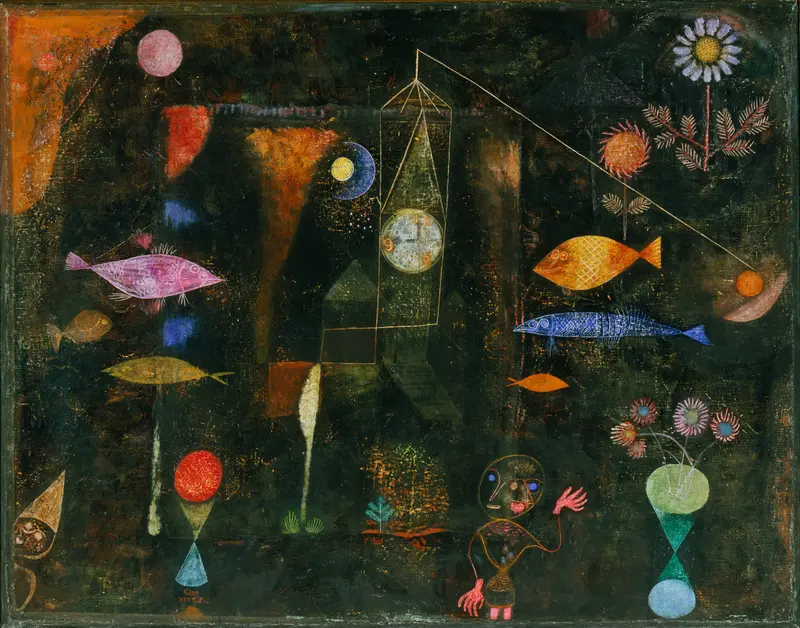
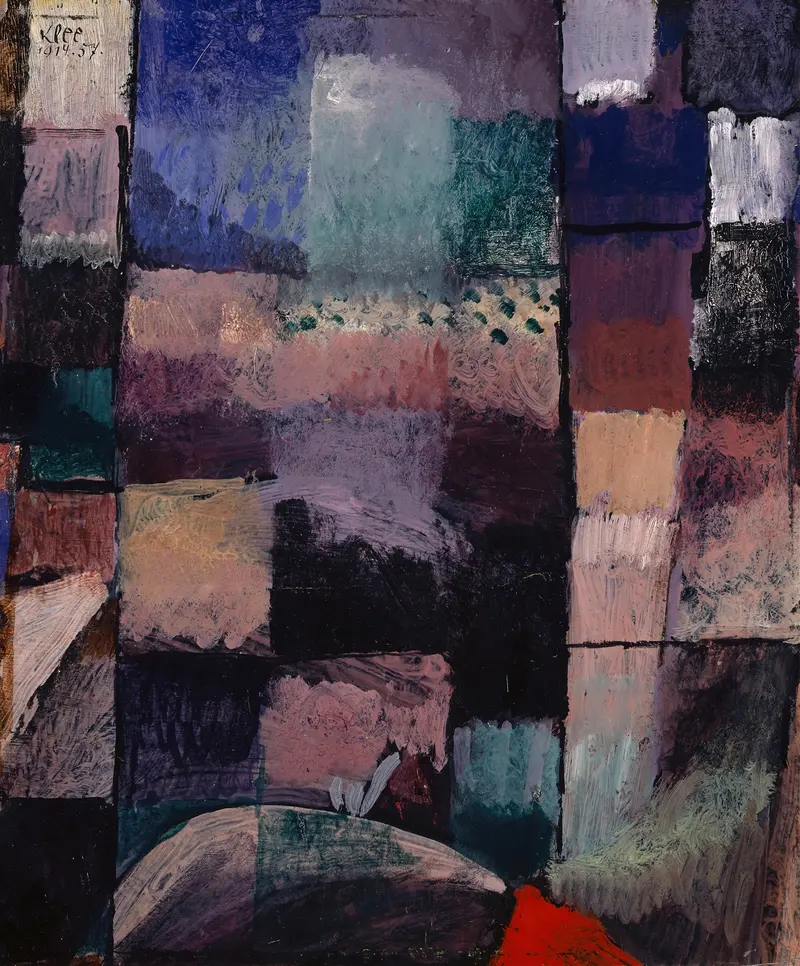
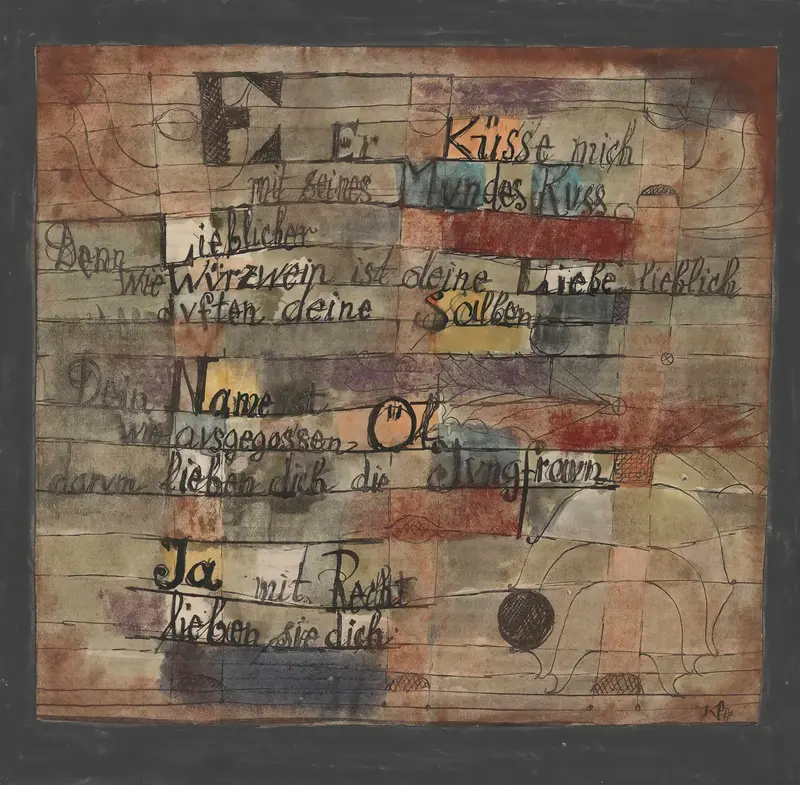
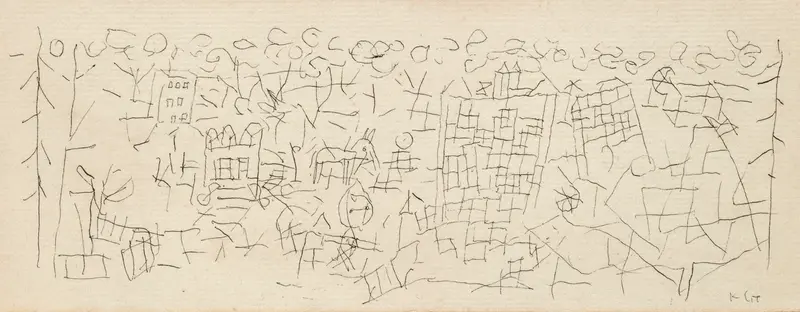
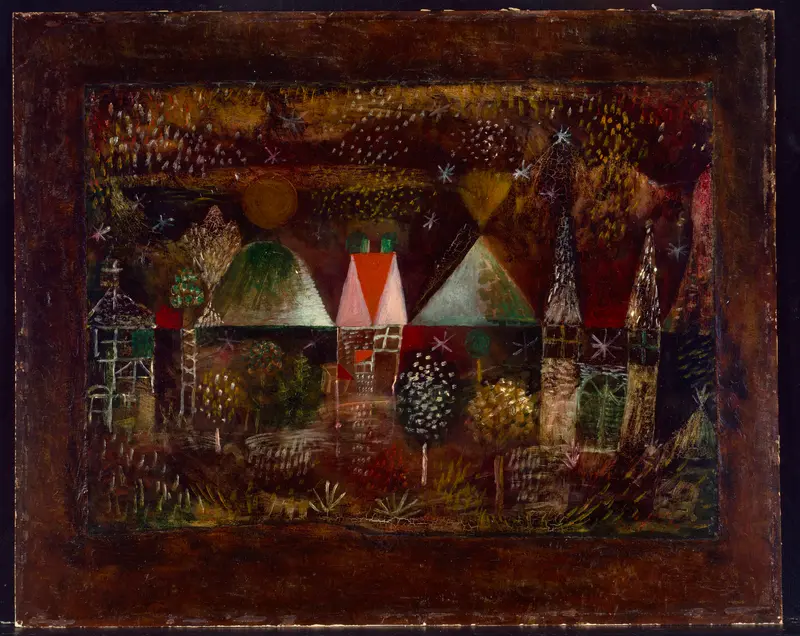
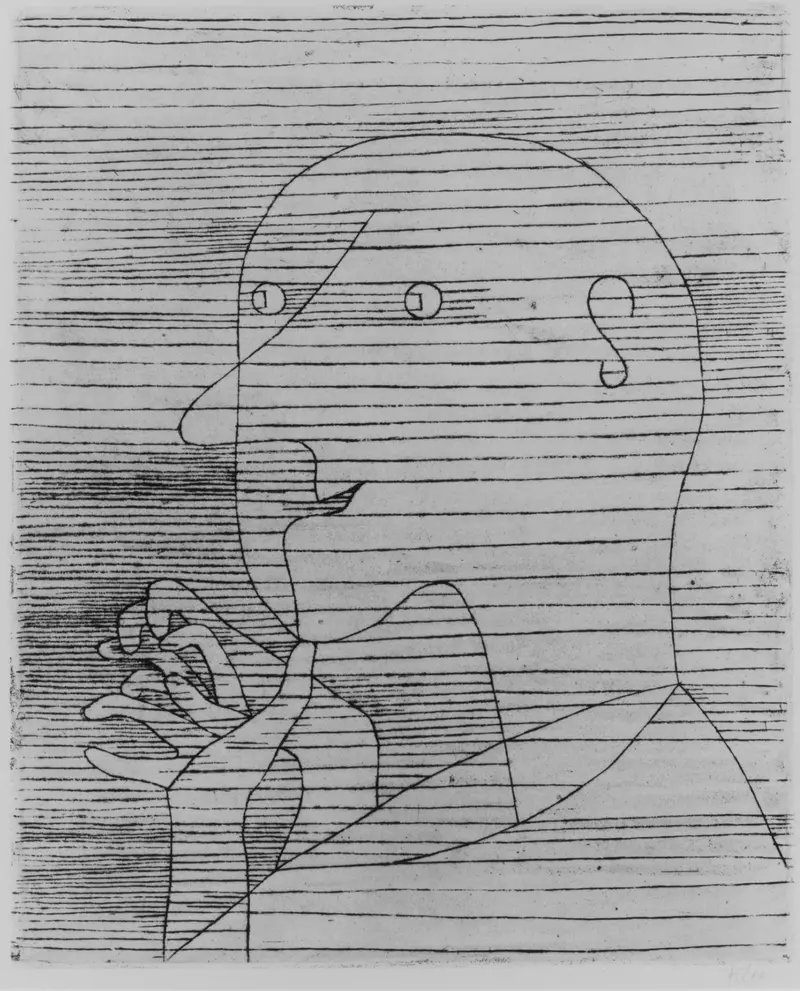
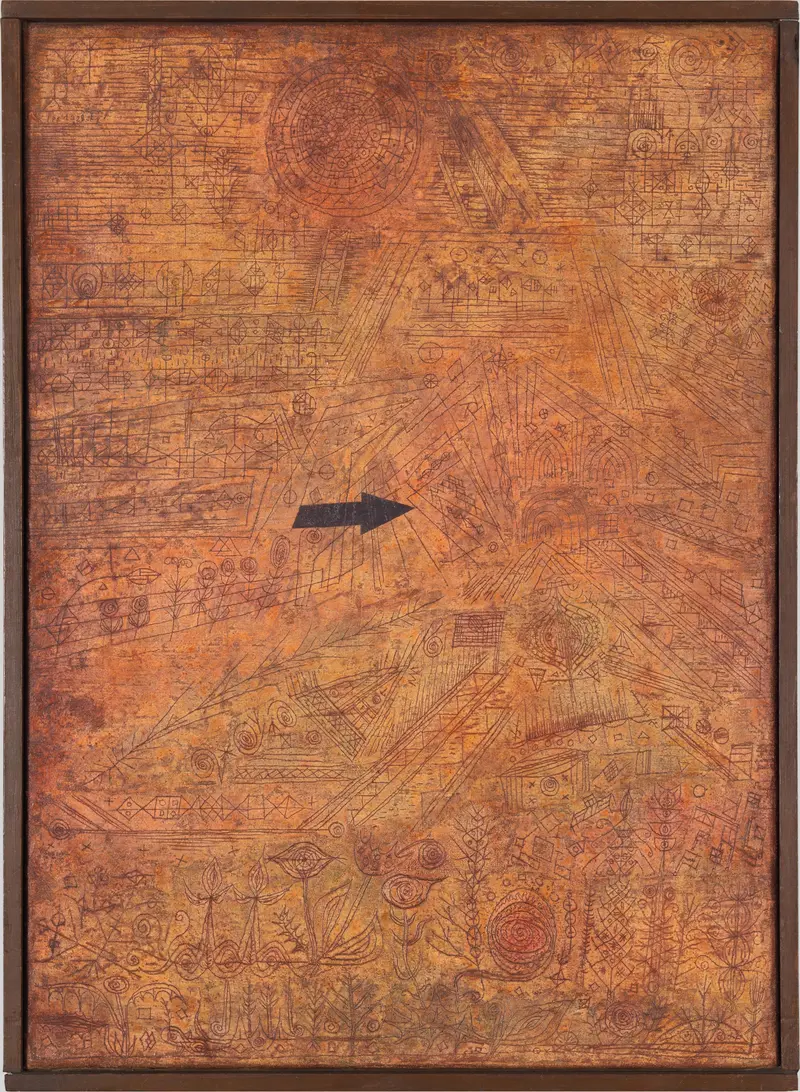
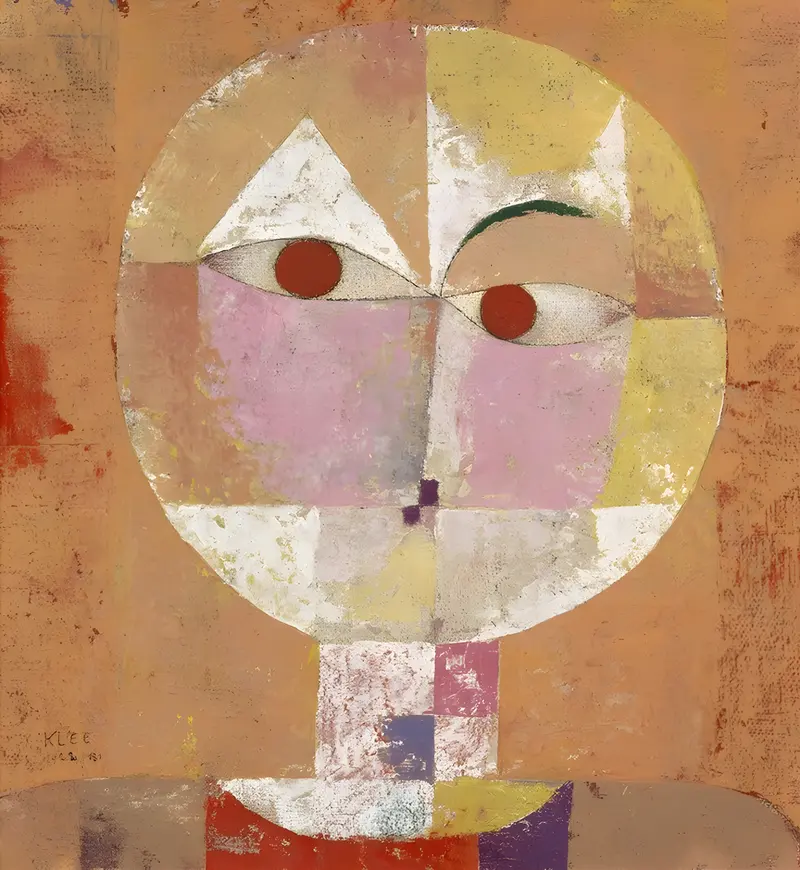
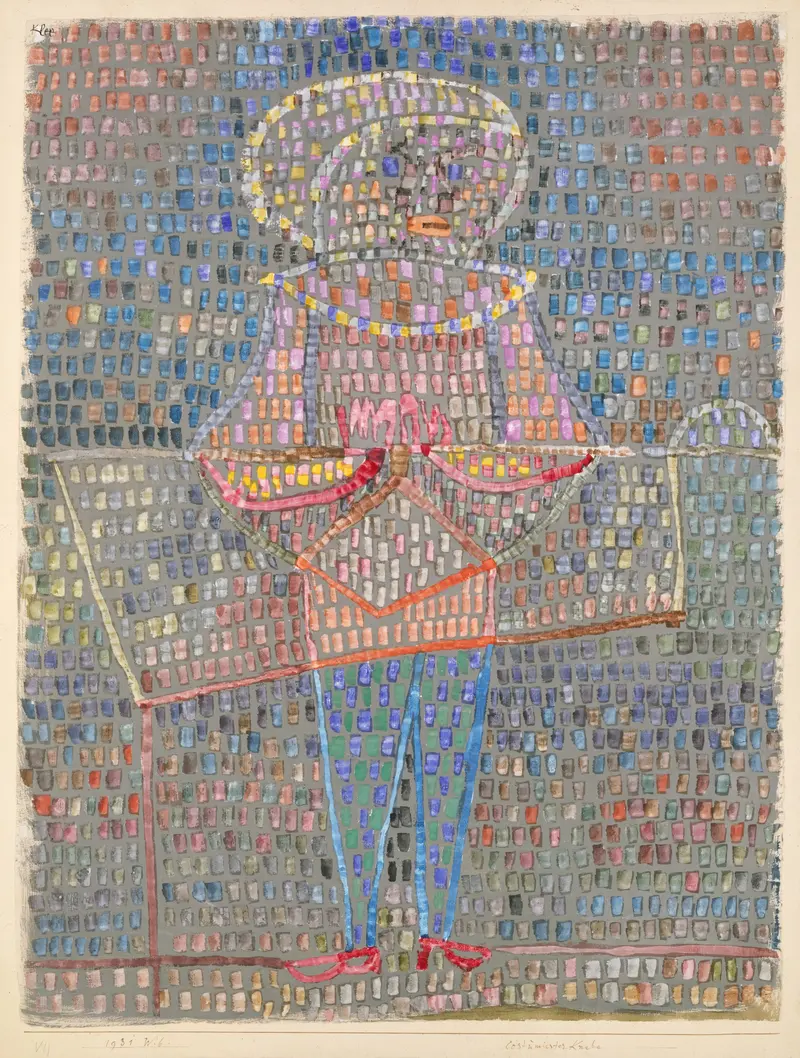
In Seventeen, Insane, Paul Klee employs a vibrant palette of colors, including bold reds, blues, and yellows. The composition features abstract figures that seem to dance across the canvas, creating a sense of movement and chaos. The background is filled with swirling shapes and patterns, adding to the overall dynamic feel of the piece.
This artwork captures a playful yet unsettling energy, reflecting the complexities of youth and madness. The painting is characterized by Klee's signature use of line and color, which creates depth and texture. The abstract figures are outlined in dark tones, contrasting with the bright colors that fill their forms. Klee's technique often involves layering colors to achieve a sense of vibrancy and luminosity.
Viewers can appreciate the meticulous brushwork and the way the colors interact with one another. Paul Klee was a Swiss painter known for his unique style that blends elements of expressionism and abstraction. Seventeen, Insane reflects Klee's fascination with the psychological aspects of youth, often exploring themes of innocence and madness. An interesting fact about this work is that it was created during a period when Klee was deeply influenced by his experiences as a teacher and his interactions with children.
This influence is evident in the playful yet complex nature of the artwork.