Shaddock with Caterpillar and Moths — History & Facts
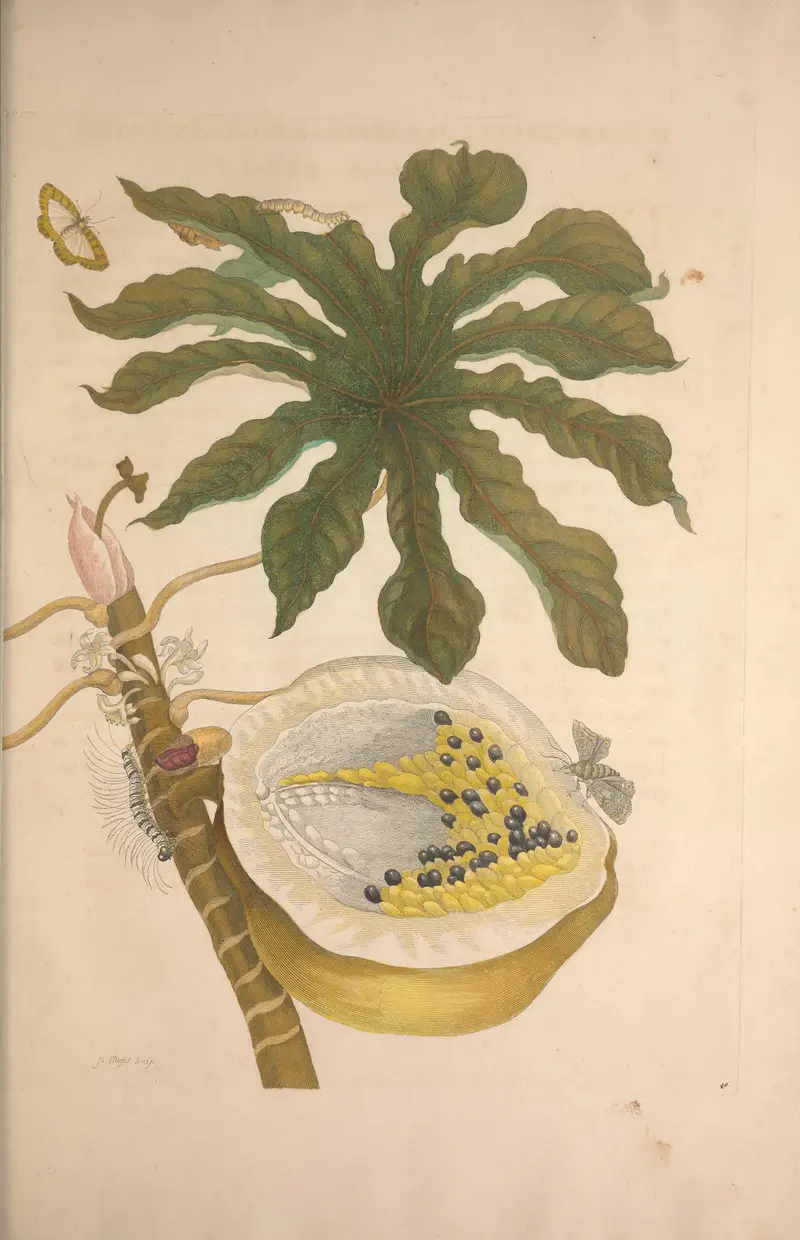
What first catches the eye in Shaddock with Caterpillar and Moths is the sense of quiet suspense: a caterpillar bristles along the rind of a swollen yellow fruit, while two moths, wings patterned like delicate tapestries, hover above, poised between arrival and departure. The fruit’s dappled skin glows with a lemony light, anchoring the entire composition, its weight and roundness set off by the arching stem and curling leaves. Every detail is rendered with a precision that feels almost forensic, yet the scene never loses its sense of wonder—the moths’ antennae flick outward, the caterpillar’s spines bristle, and the leaves curl as if caught mid-breath.
The artist guides your gaze in a gentle arc, from the fruit’s navel to the drama unfolding above, and finally to the subtle shadows that root the plant to the page. This image belongs to the world of early eighteenth-century natural history, when artists and scientists alike sought to capture the marvels of distant lands for European audiences hungry for knowledge and spectacle. Created in 1705, as part of a series documenting the insects and plants of Suriname, this work stands at the intersection of art and science, where observation was both a method and a form of devotion. Such illustrations were prized by collectors, scholars, and wealthy patrons eager to possess a piece of the exotic, and they often served as the only record of species unknown in Europe.
History has kept few traces of the individual journeys of these images, but their purpose is clear: to invite the viewer to look closer, to marvel at the intricacy of life, and to see the extraordinary in the everyday.
More Artworks by Maria Sibylla Merian
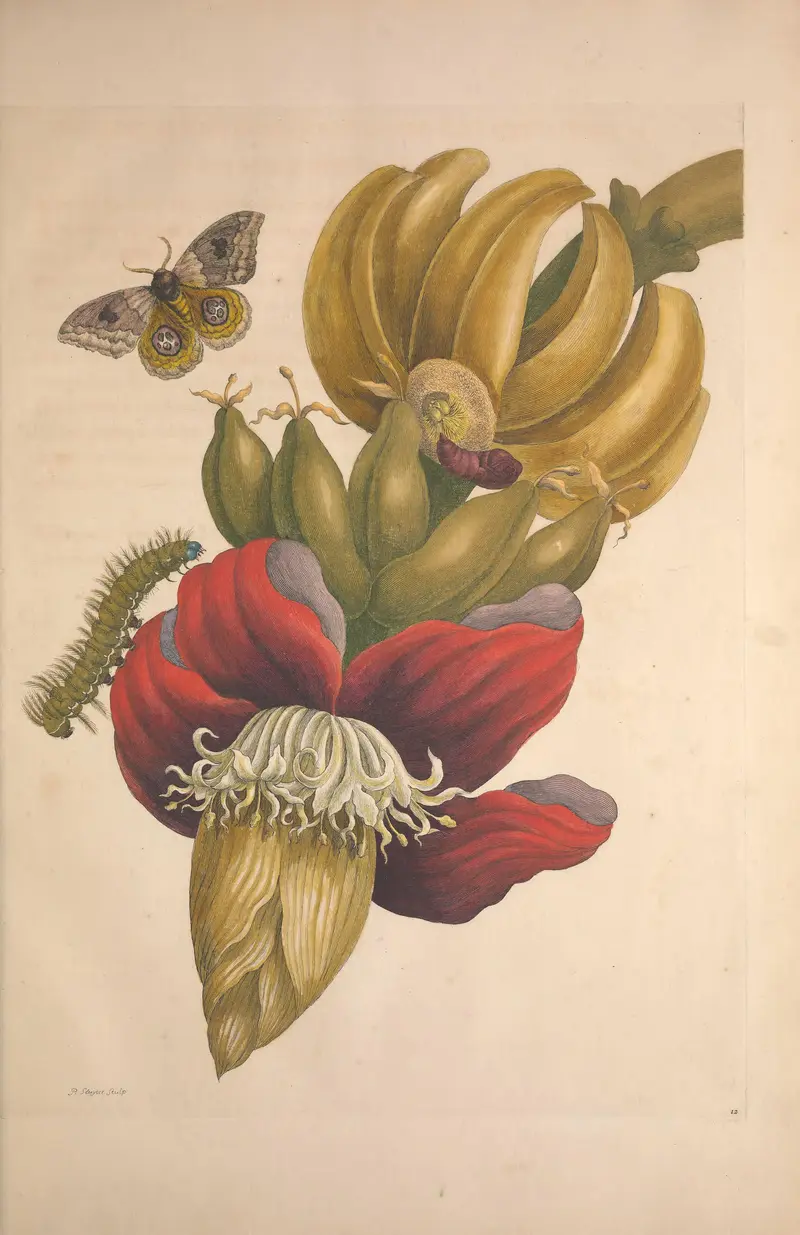
Banana with Bullseye Moth and Caterpillar
Maria Sibylla Merian
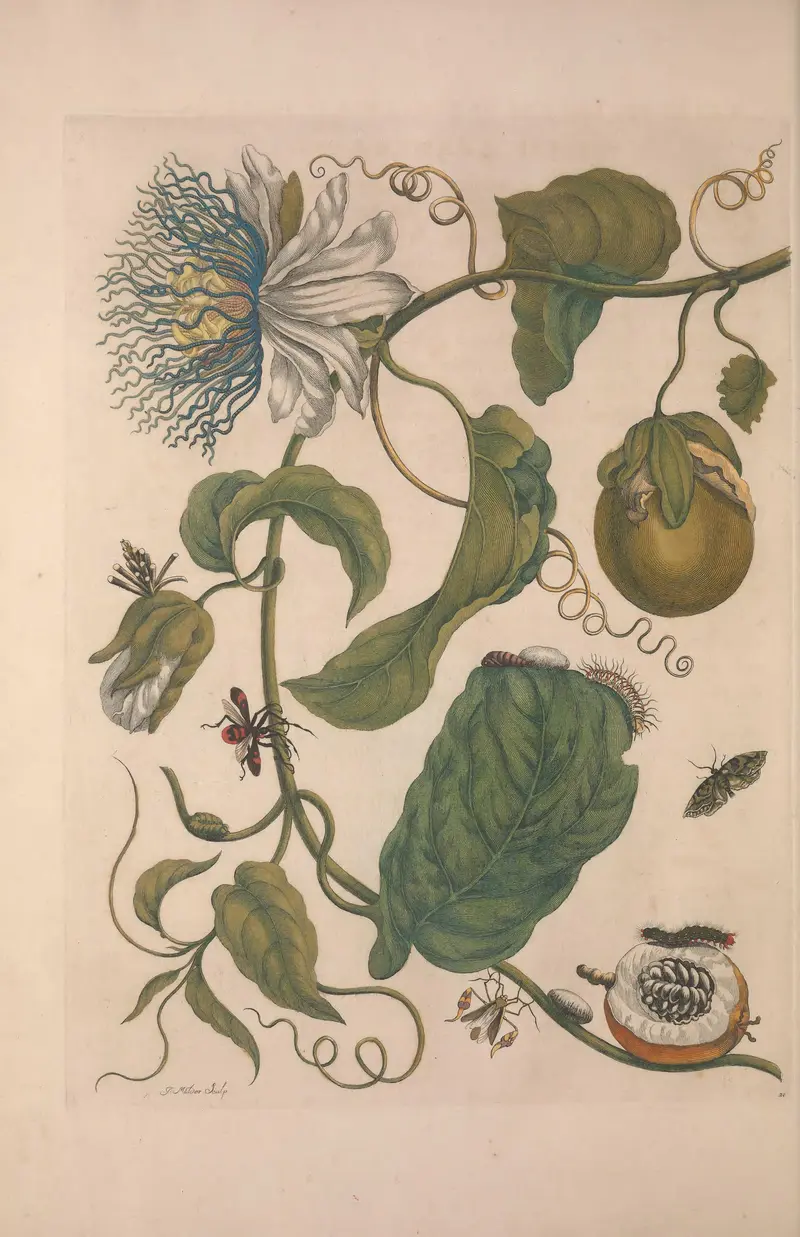
Passionflower with Caterpillars and Insects
Maria Sibylla Merian
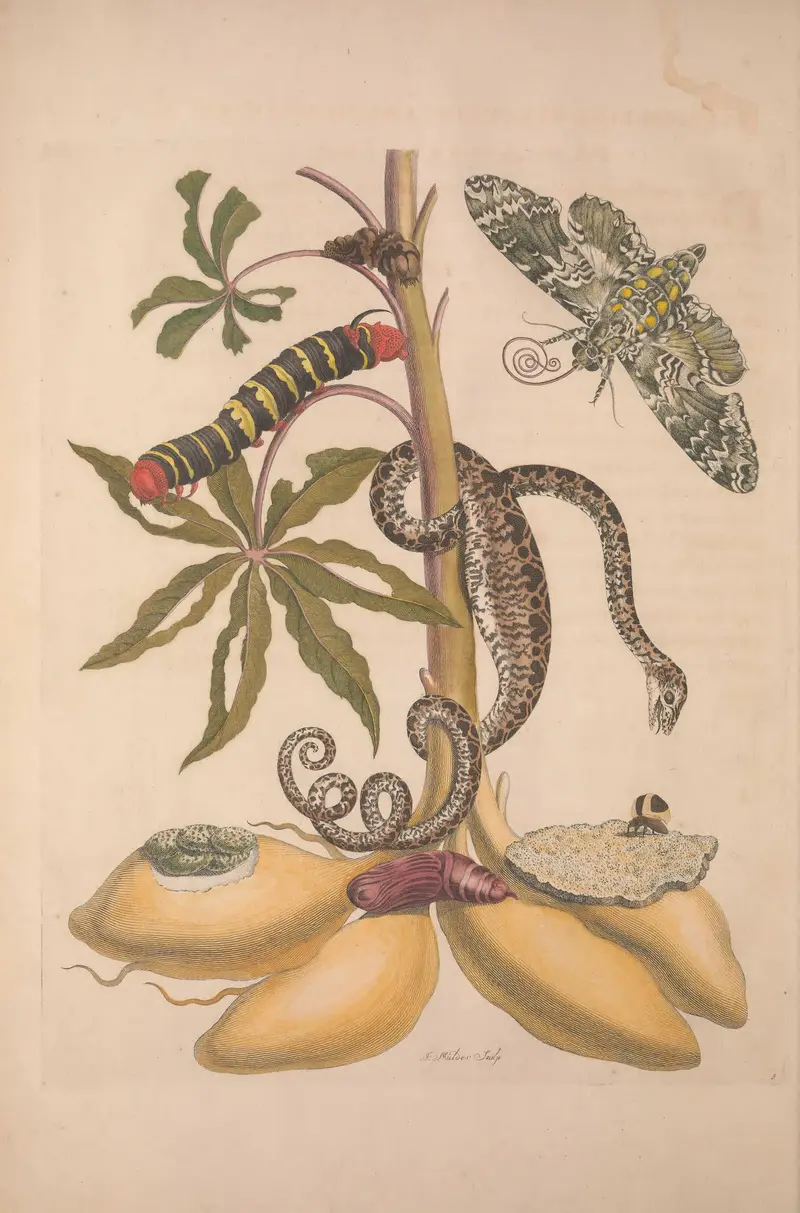
Cassava Root with Tree Boa and Sphinx Moth
Maria Sibylla Merian
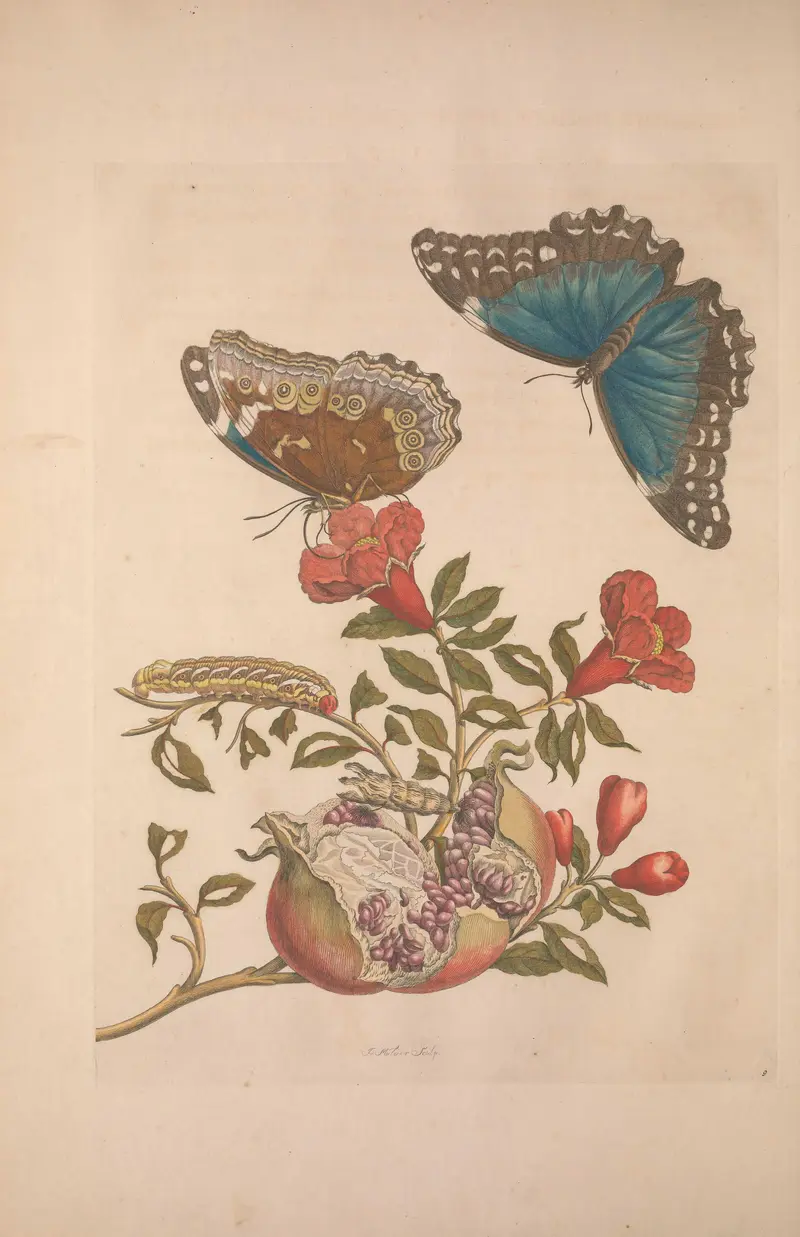
Pomegranate with Caterpillar, Pupa and Blue Butterfly
Maria Sibylla Merian
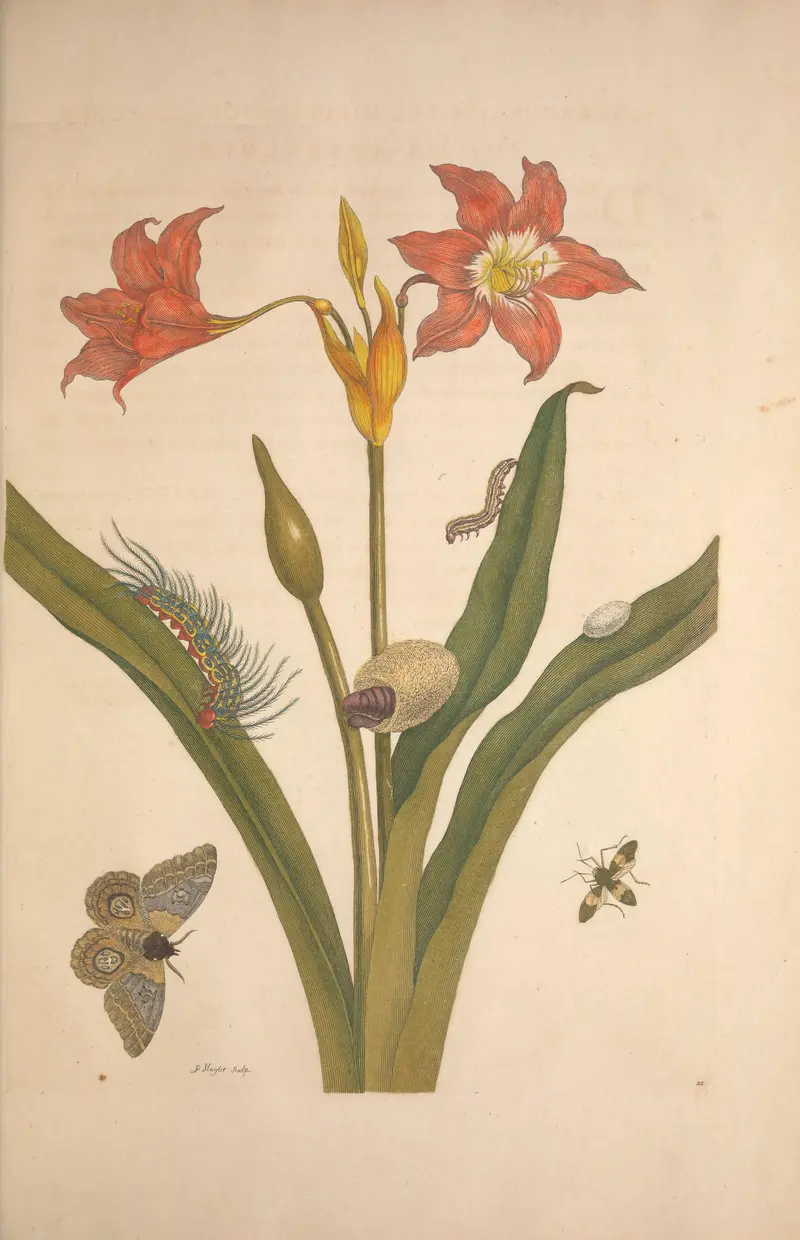
Red Amaryllis Lily with Moth and Caterpillars
Maria Sibylla Merian
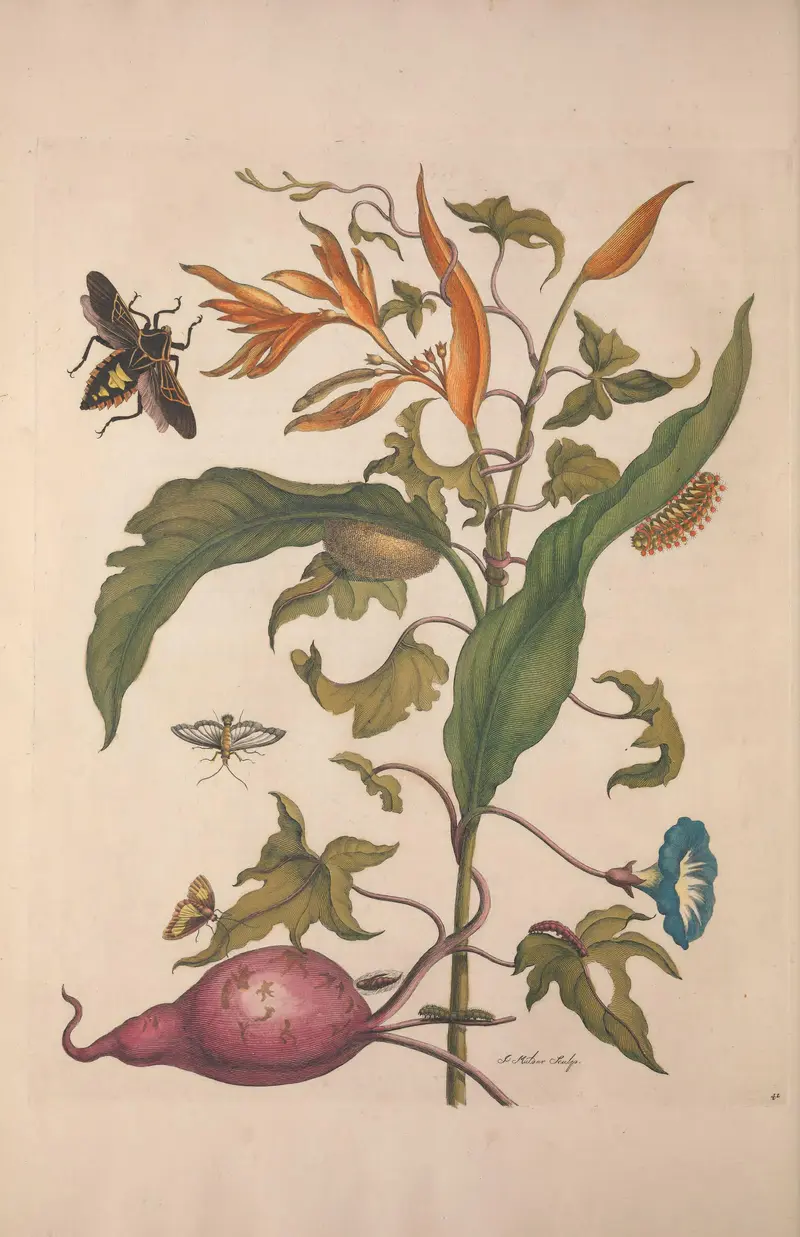
Sweet Potato with Beetle and Butterfly
Maria Sibylla Merian
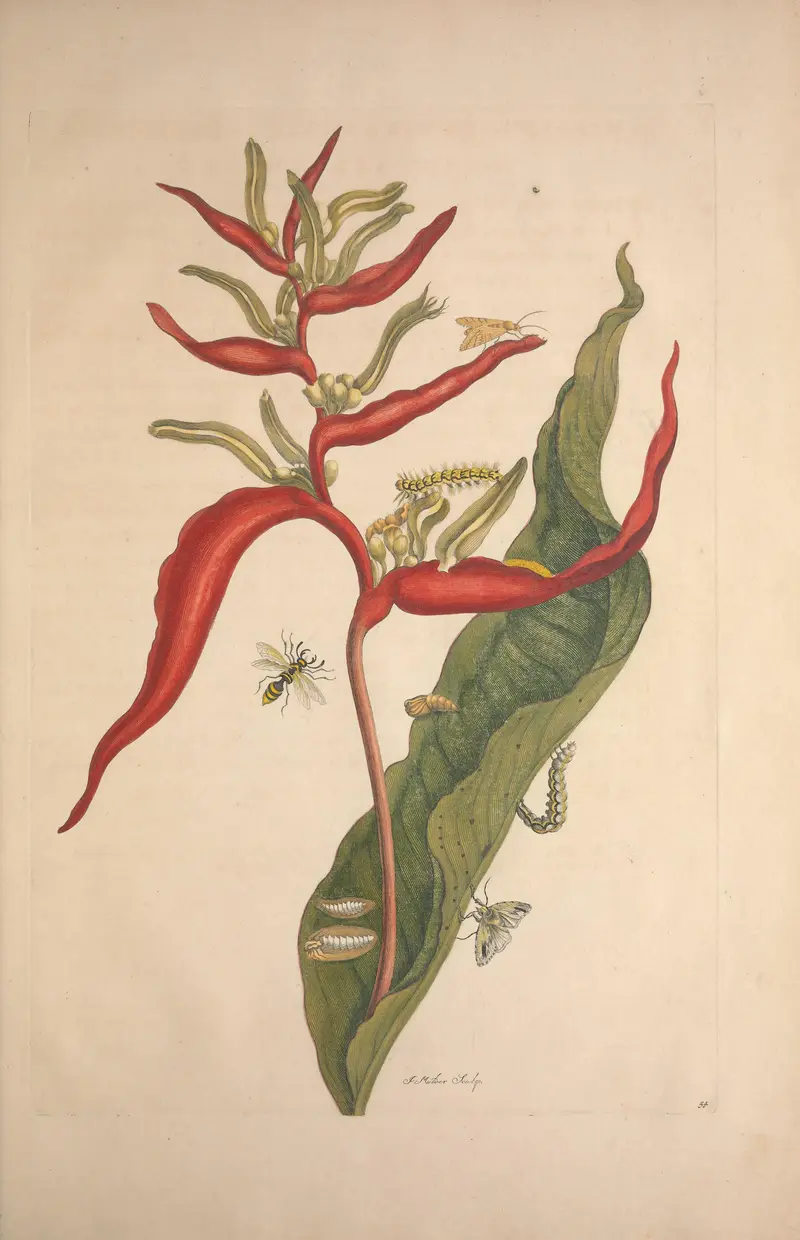
Heliconia with Moth
Maria Sibylla Merian
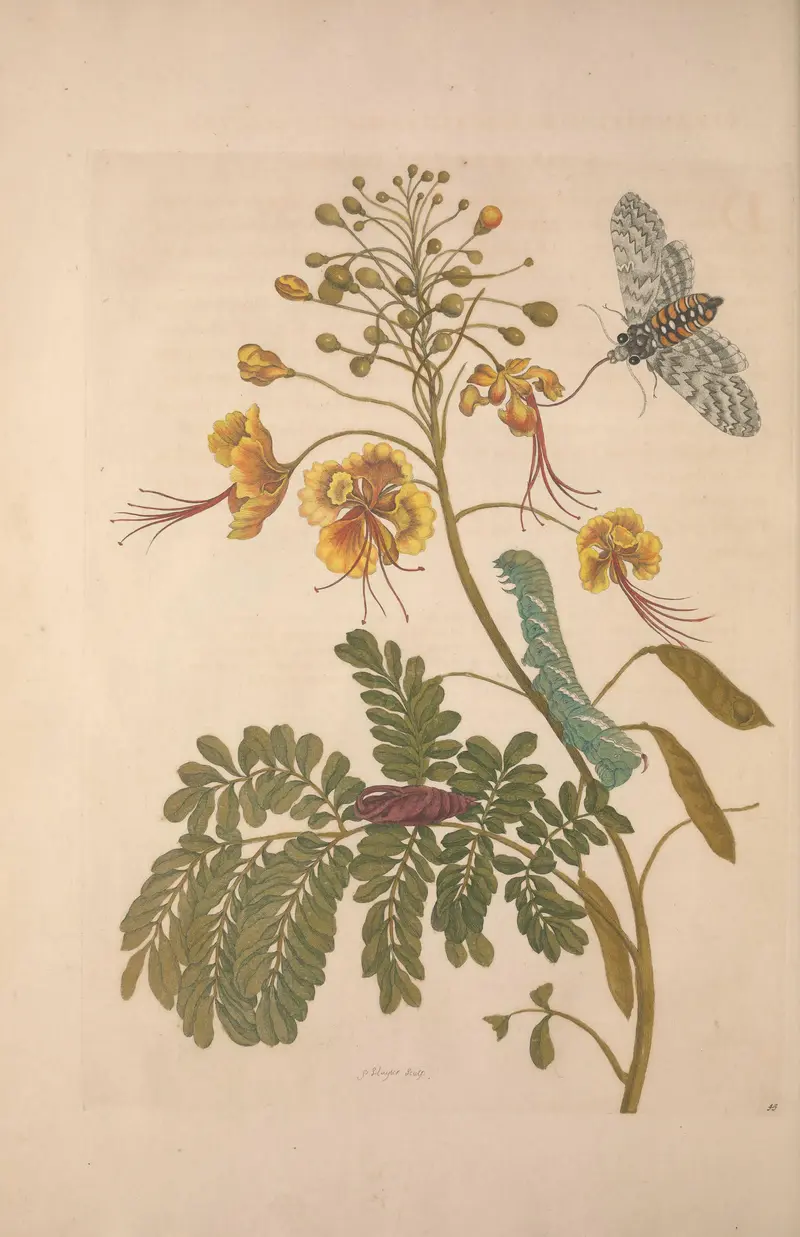
Mimosa with Moth and Caterpillar
Maria Sibylla Merian

Grapevine with Caterpillar and Moth
Maria Sibylla Merian
Papaya with Moth and Caterpillar
Maria Sibylla Merian