
Shepperton — History & Facts
In Shepperton, the beauty of a quiet moment encaptures the essence of life itself, whispering to those attuned to its stillness. Look to the center where the river flows gently, reflecting a tender blend of greens and blues, its surface mirroring the delicate brushwork above. Notice how the light plays upon the water, creating a dance of glistening highlights that invite the viewer to linger. The trees lining the riverbank stand sentinel, their looser strokes suggesting movement, while the sky stretches overhead in soft, muted tones, enveloping the scene with a serene tranquility. Yet, within this tranquility lies an undercurrent of tension; the contrast between the solid, rooted trees and the fluidity of the water evokes a sense of impermanence.
The subtle ripples on the river’s surface hint at unseen forces at play, perhaps a reminder of the passage of time. A solitary figure, barely distinguishable, seems to merge with the landscape, emphasizing the idea of humanity’s fleeting presence in nature’s vast narrative. In 1864, when this piece was created, Haden was deeply engaged in the realms of etching and printmaking in England, exploring the interplay of light and shadow. The art world was experiencing a shift toward more personal and expressive forms, with movements like Impressionism beginning to stir.
Haden himself was connected to these evolving ideas, seeking to capture the essence and emotional weight of his surroundings, while also reflecting his own artistic journey.
More Artworks by Francis Seymour Haden
Browse all →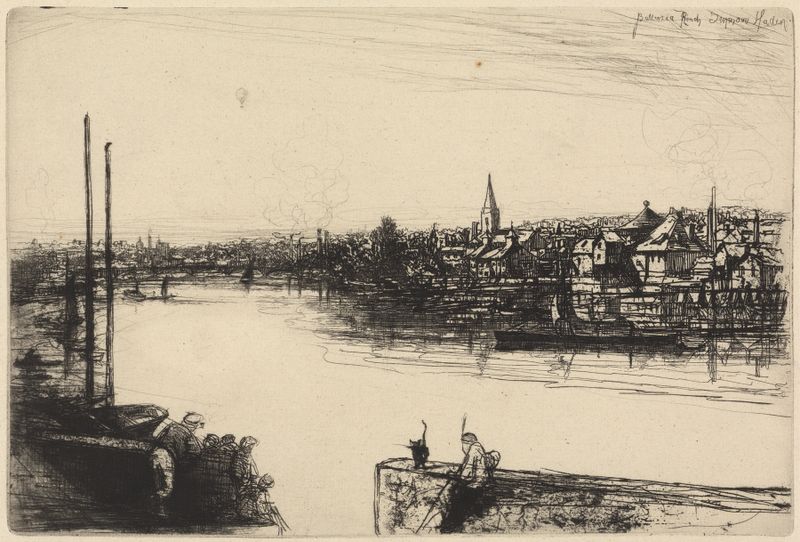
Battersea Reach
Francis Seymour Haden

Nine Barrow Down
Francis Seymour Haden
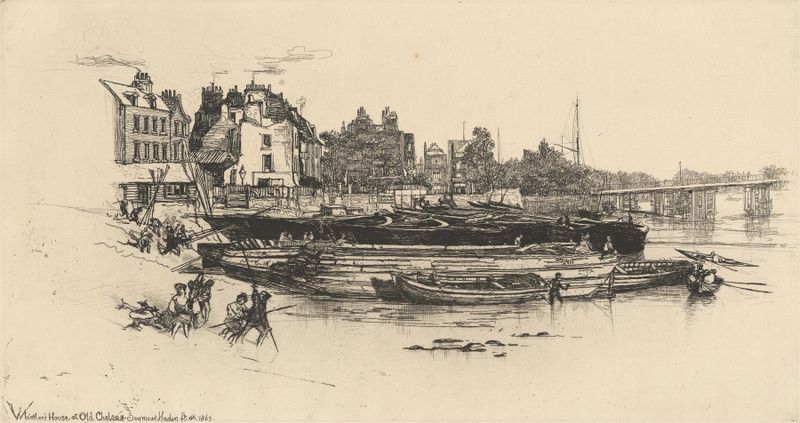
Whistler’s House at Old Chelsea
Francis Seymour Haden

The Mill-Wheel
Francis Seymour Haden
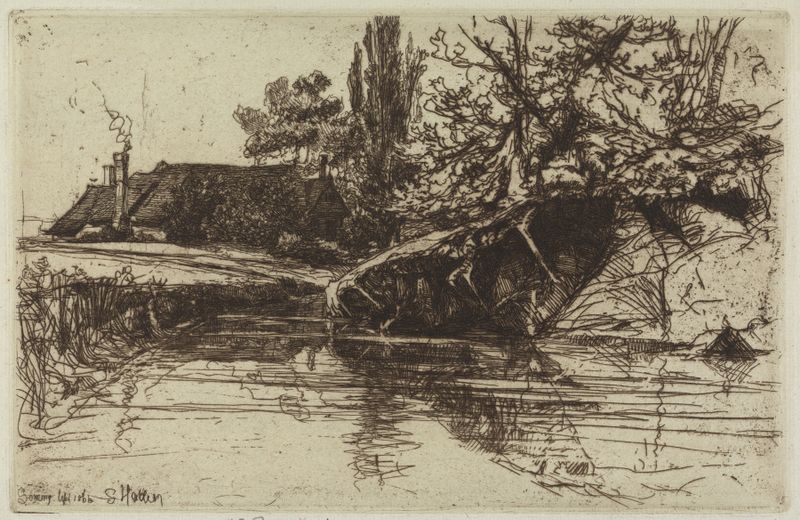
The Moat House
Francis Seymour Haden

By Twickenham
Francis Seymour Haden

Newcastle Emlyn
Francis Seymour Haden
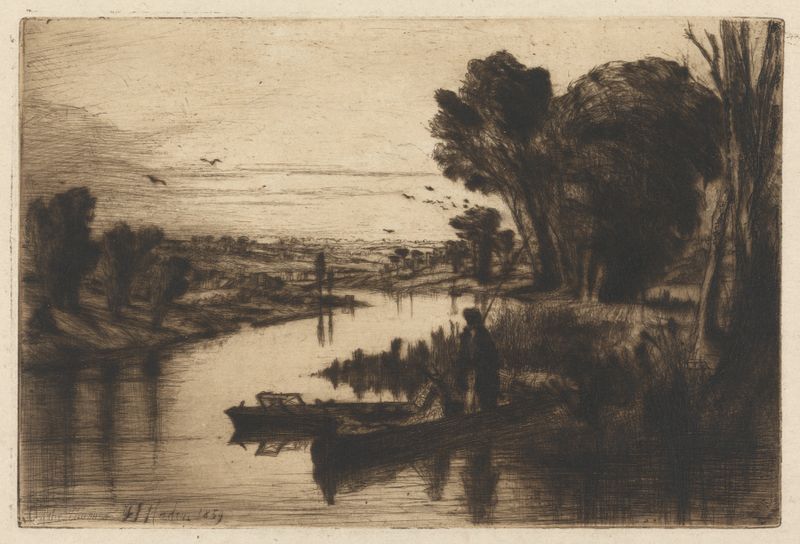
On the Thames
Francis Seymour Haden

Kidwelly Castle
Francis Seymour Haden
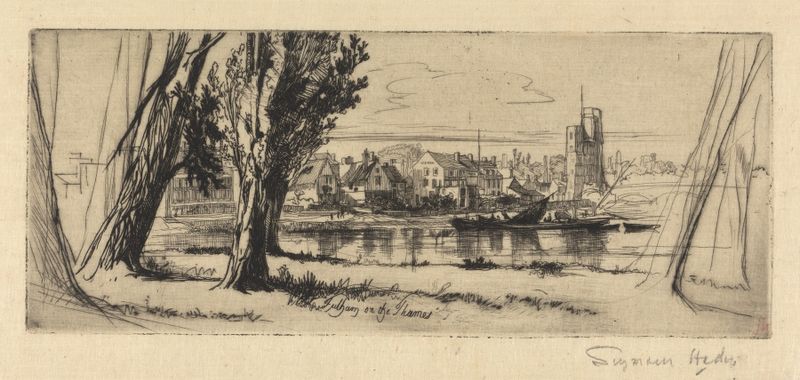
Fulham on the Thames
Francis Seymour Haden





