
Shere Mill Pond, no. 1 — History & Facts
What secret hides in the quiet of the canvas? A stillness envelops the scene, inviting us to peer into its depths and unravel the silent narratives it guards. Look closely at the serene water in the foreground, its surface like glass, mirroring the muted colors of the surrounding landscape. The gentle brushstrokes creating the trees in the background reveal a delicate interplay of light and shadow, giving life to the foliage without overpowering the tranquil pond. Notice how the subtle variations of green and blue suggest a soft breeze whispering through the leaves, while the earthy browns ground the scene in an intimate embrace with nature. Yet, beneath the calm surface, a sense of solitude permeates the composition.
The absence of human figures or disturbances leaves a void, evoking contemplation and introspection. This emptiness contrasts with the vibrancy of the natural world, hinting at unspoken stories and thoughts that linger just beyond the viewer’s reach. The still water not only reflects but also conceals, becoming a metaphor for the complexities of existence that lie beneath our everyday perceptions. In 1860, Francis Seymour Haden painted this work during a period of personal and artistic evolution.
Residing in England, he was deeply engaged in the etching revival and had just begun to embrace a more impressionistic style. This shift mirrored the broader transition in art as artists sought to capture fleeting moments and sensations, reflecting the changing world around them—a world where quietude could speak volumes.
More Artworks by Francis Seymour Haden
Browse all →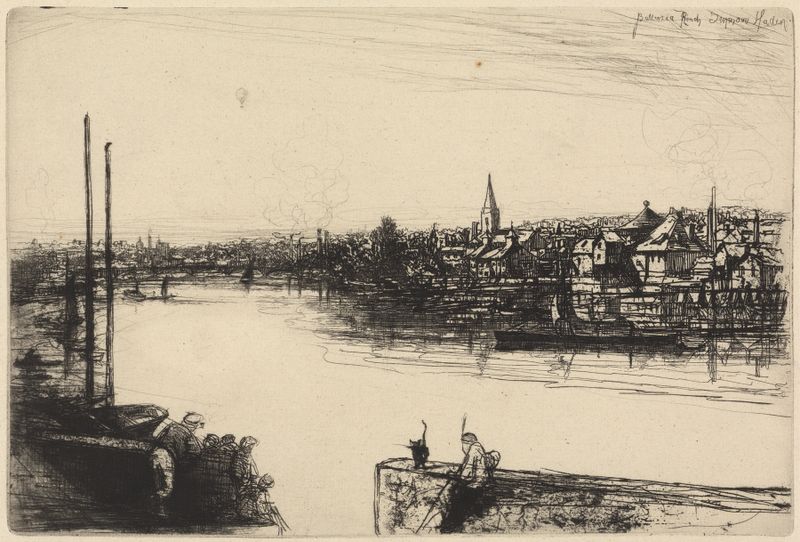
Battersea Reach
Francis Seymour Haden

Nine Barrow Down
Francis Seymour Haden
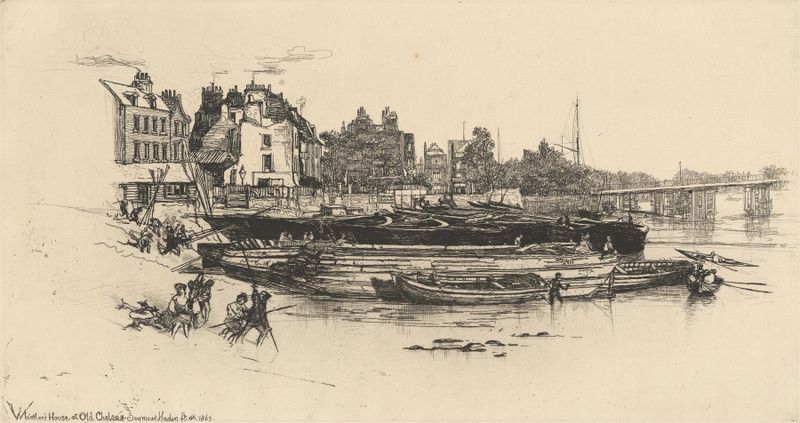
Whistler’s House at Old Chelsea
Francis Seymour Haden

The Mill-Wheel
Francis Seymour Haden
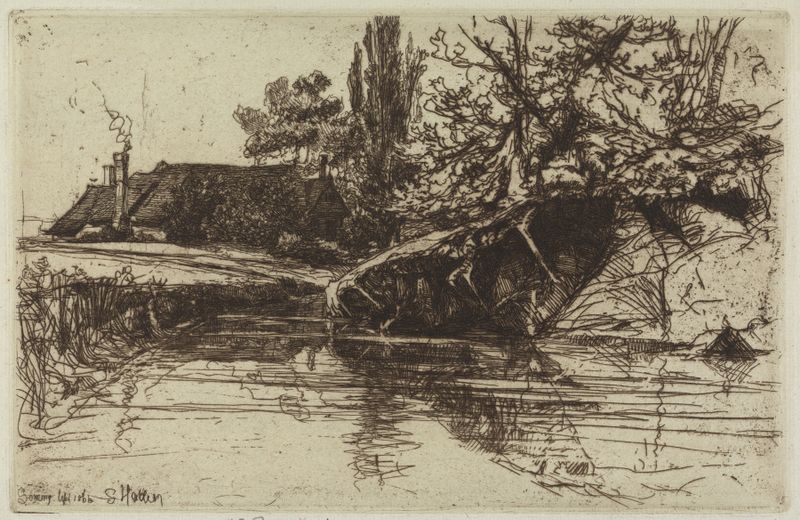
The Moat House
Francis Seymour Haden

By Twickenham
Francis Seymour Haden

Newcastle Emlyn
Francis Seymour Haden
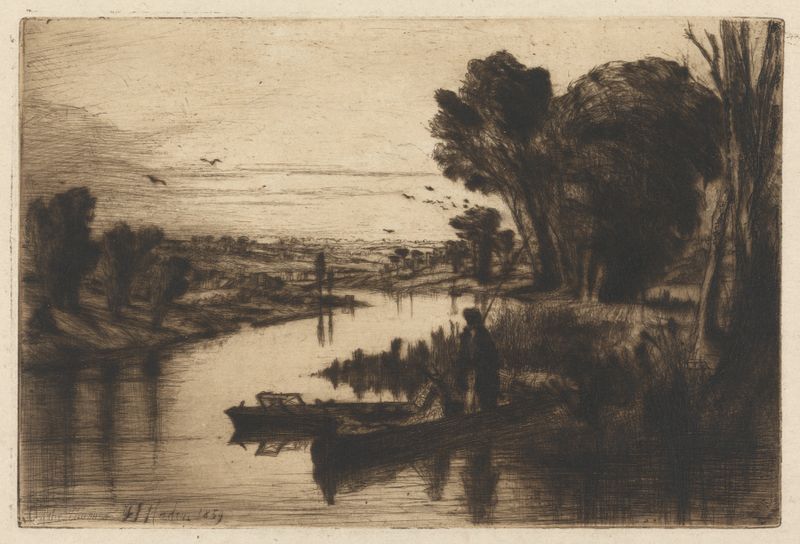
On the Thames
Francis Seymour Haden

Kidwelly Castle
Francis Seymour Haden
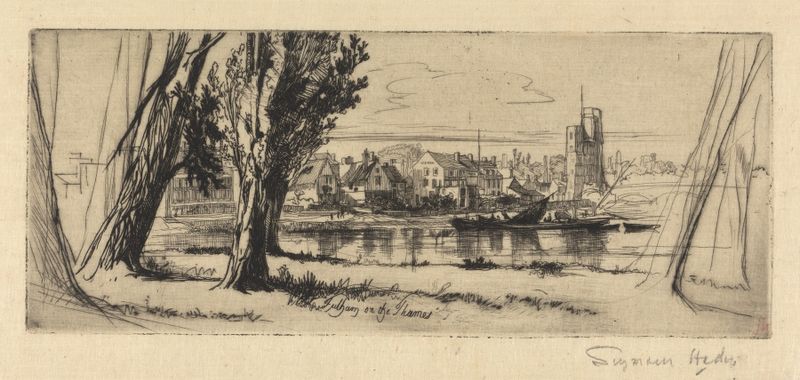
Fulham on the Thames
Francis Seymour Haden





