
Shipping off Delftshaven — History & Facts
What first draws the eye in Shipping off Delftshaven is the sweep of the sails—tall, billowing, and alive with wind—set against a cityscape that hovers like a promise on the horizon. The painter, Abraham Salm, orchestrates a busy choreography of vessels, each one angled and animated, their flags snapping, their hulls heaving through the choppy water. The low horizon hands almost the entire canvas to the sky, a pale and restless expanse that dwarfs the ships and seems to press down with the weight of weather and distance.
Every detail, from the crowded decks to the tiny rowboat laboring in the foreground, pulls the viewer into a world where commerce, travel, and human ambition collide at the water’s edge. This painting belongs to the late 17th or early 18th century, a time when Dutch marine painting flourished alongside the Republic’s maritime power. Works like this were prized by merchants and shipowners, eager to commemorate their trade and the bustling ports that drove it. The city of Delftshaven, with its windmills and clustered rooftops, stands as a testament to the era’s prosperity and the ceaseless movement of goods and people.
Though little is recorded about this particular canvas beyond its presence in the Royal Museums Greenwich collection, it speaks in the universal language of Dutch seascapes—where every sail and ripple is a measure of a nation’s reach. Let your gaze linger on the distant masts and the restless water; this is a world built on movement, both real and imagined.
More Artworks by Abraham Salm
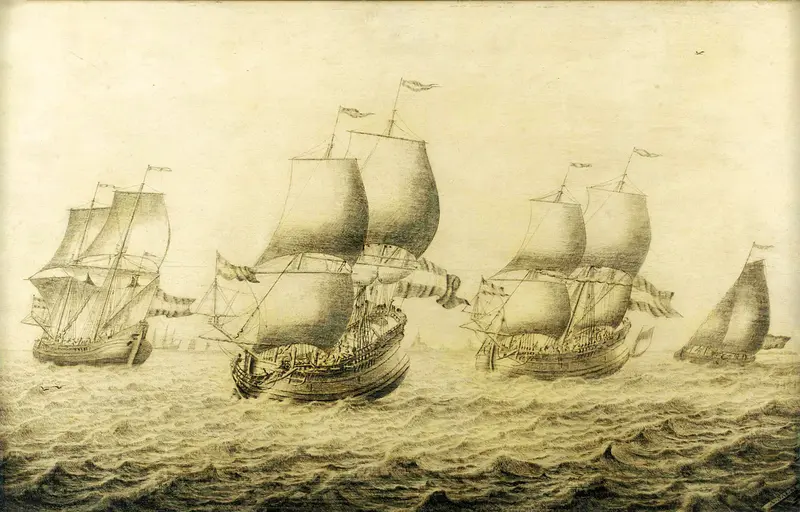
A Fleet of Whalers
Abraham Salm
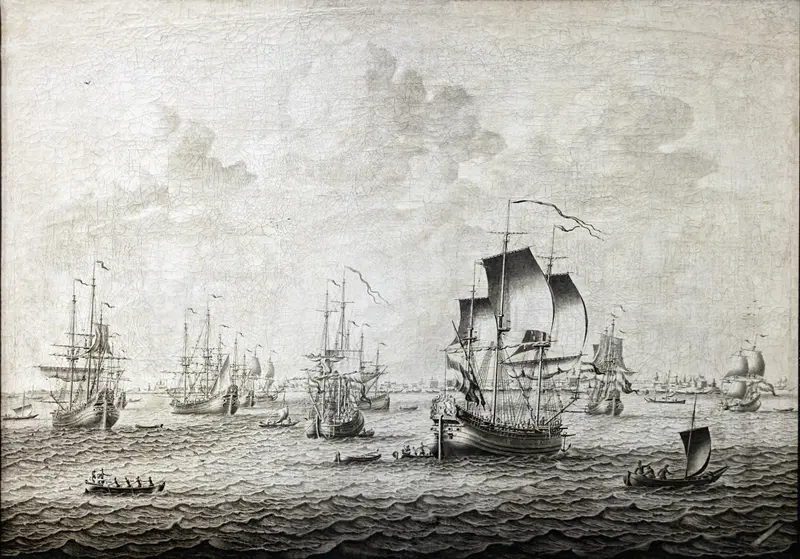
Marine with calm Sea
Abraham Salm
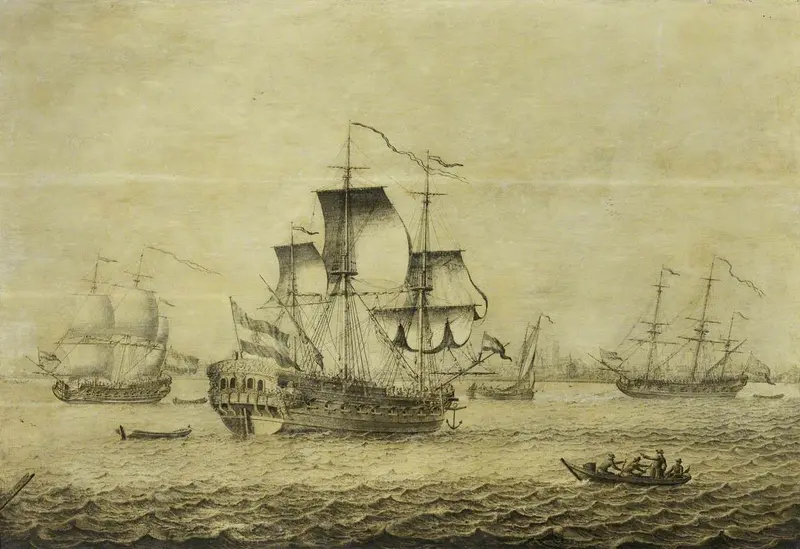
A Dutch frigate off Rotterdam
Abraham Salm

A DUTCH MAN-OF-WAR WITH A FLOTILLA OF FISHING BOATS AND OTHER SHIPS: A PENSCHILDERIJ
Abraham Salm
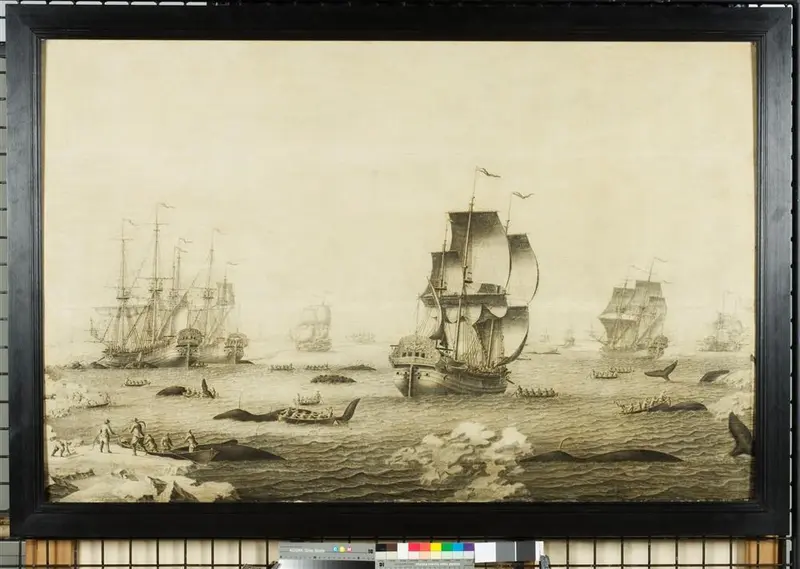
Adriaen Cornelisz (van der) Salm Walvisvaarders in bedrijf P1293 Maritime Museum Rotterdam
Abraham Salm
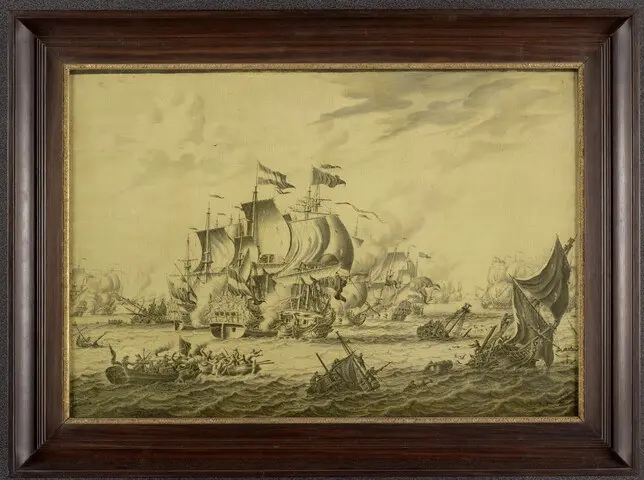
Adriaen Cornelisz. van Salm Een zeegevecht tussen Nederlandse, Engelse, en Franse oorlogsschepen A.2766 Het Scheepvaartmuseum
Abraham Salm
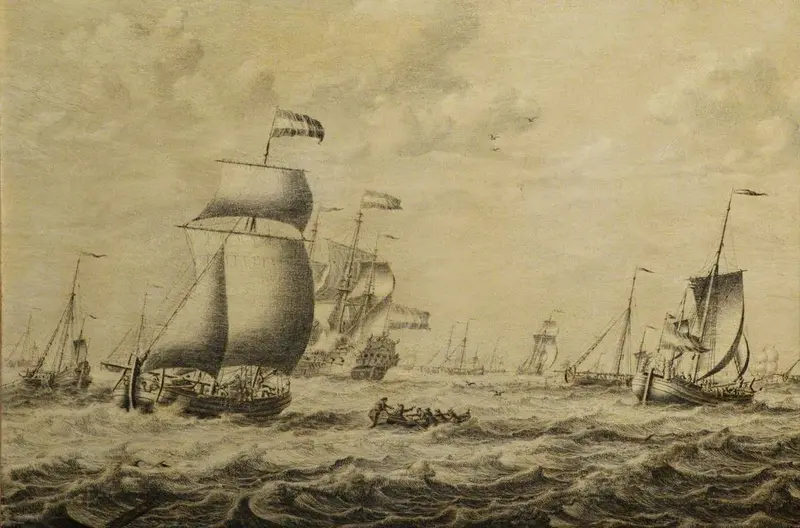
Dutch herring fishery
Abraham Salm
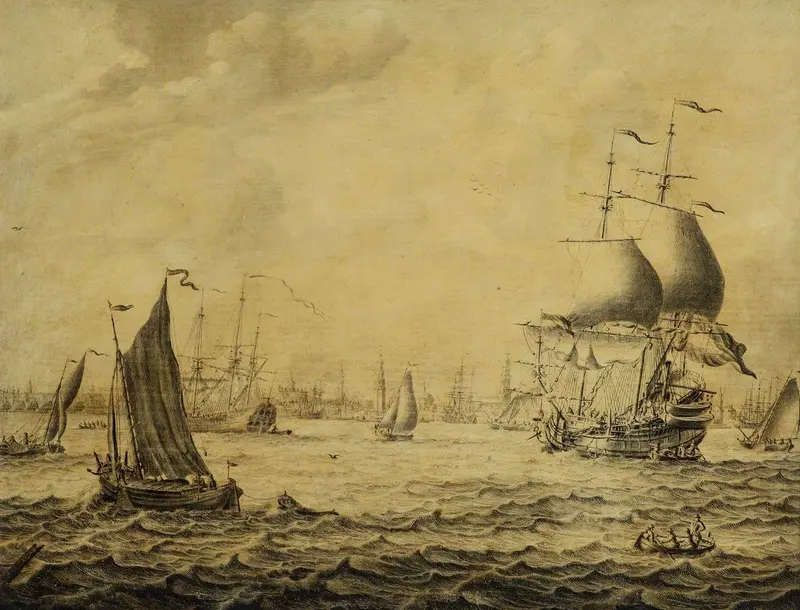
Dutch merchantmen and small craft in a roadstead
Abraham Salm
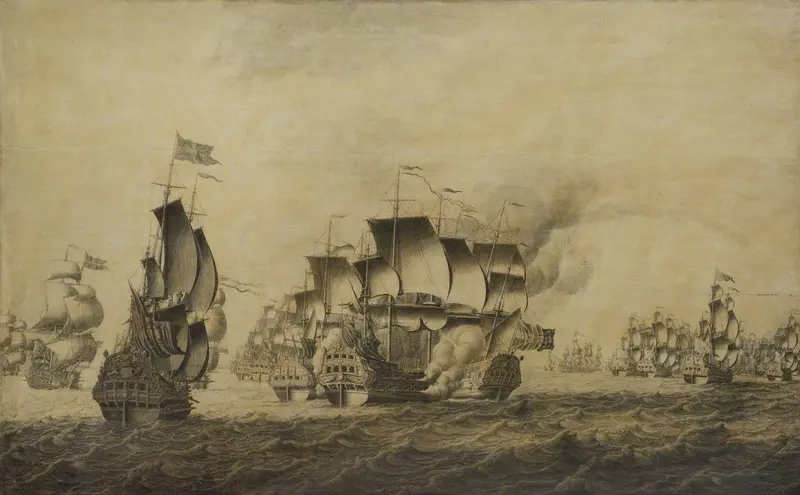
Forbin's Attempt Against Scotland, 13 March
Abraham Salm

Abraham van Salm Een walvisvaarder en twee fluitschepen A.4152 Het Scheepvaartmuseum
Abraham Salm





