
Ships at sunset — History & Facts
The first thing that draws the eye in Ships at sunset is the sky itself—an immense, glowing stage where clouds drift in rose and gold, dwarfing the ships below. The light pools and stretches across the water, catching the masts and sails in its last warmth, while the boats themselves seem to pause in a moment of calm. A small rowboat in the foreground tethers to the shore, its occupants busy with unseen tasks, while larger vessels anchor farther out, their flags barely stirring.
The low horizon gives the sky the leading role, making the ships feel both important and fragile, caught between the vastness above and the darkening water below. Every brushstroke of cloud and reflection seems designed to slow the viewer’s gaze, inviting a quiet contemplation of endings and returns. Painted in 1646, this work belongs to the world of the Dutch Golden Age, when maritime scenes were both a celebration of national identity and a quiet meditation on daily life. Artists like Aert van der Neer became known for their mastery of light and atmosphere, often painting river landscapes and evening scenes that spoke to the rhythms of commerce and nature.
Such paintings were prized by the prosperous merchant class, who saw in them both the reality and the romance of their water-bound world. History has kept few traces of this particular painting’s journey, but its survival in a modern collection—shared today via a digital gallery—reminds us how these quiet moments at the water’s edge still hold the power to stop us in our tracks. Let your eye linger on the horizon, and imagine the stories that once sailed home beneath those clouds.
More Artworks by Aert van der Neer

A Moonlit River Landscape With Figures Standing By A Gate, A Village Beyond
Aert van der Neer
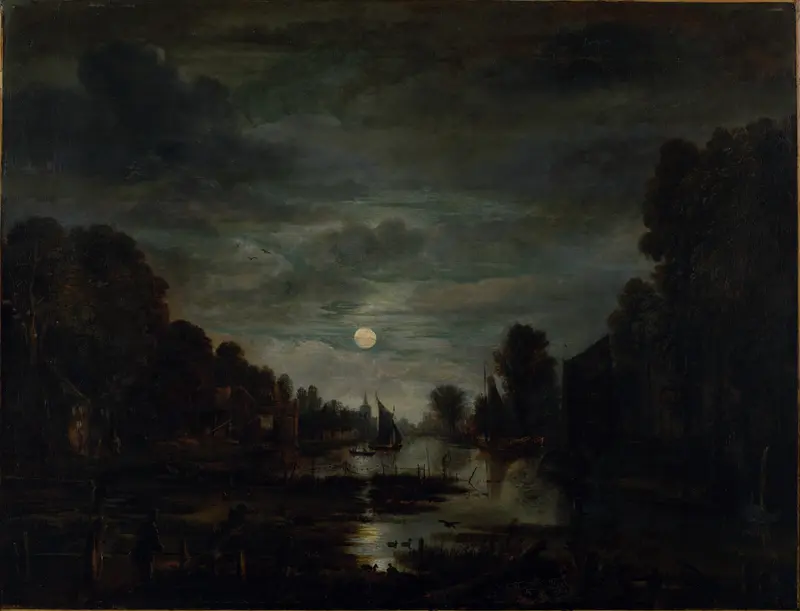
River Landscape in Moonlight
Aert van der Neer
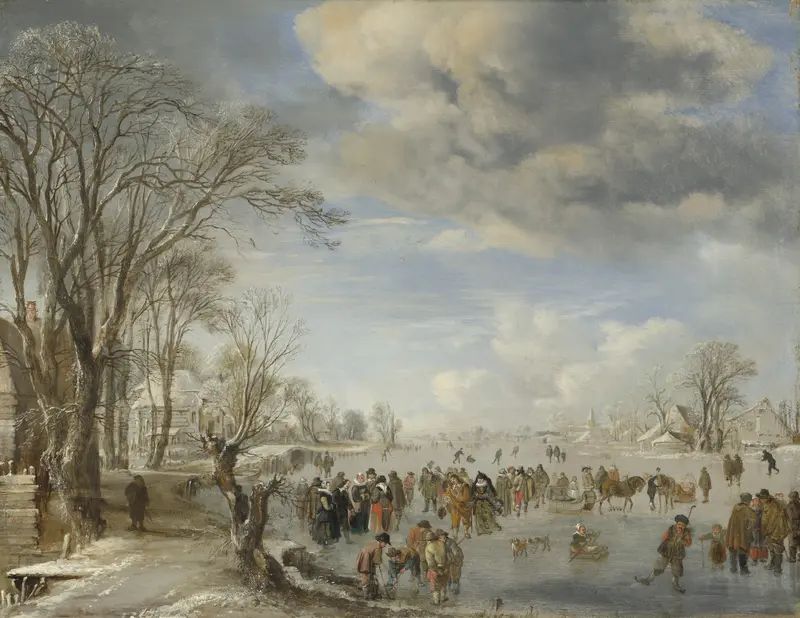
Winter in Holland – Skating Scene
Aert van der Neer

River Landscape
Aert van der Neer
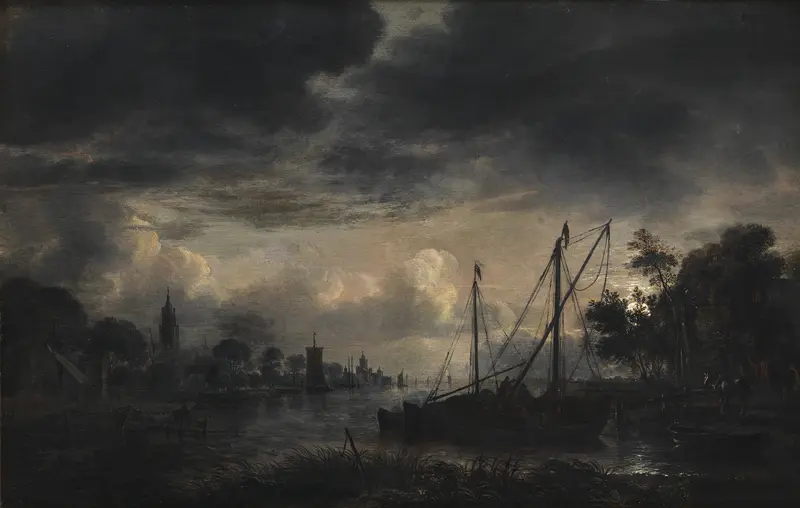
River Landscape in Moonlight
Aert van der Neer
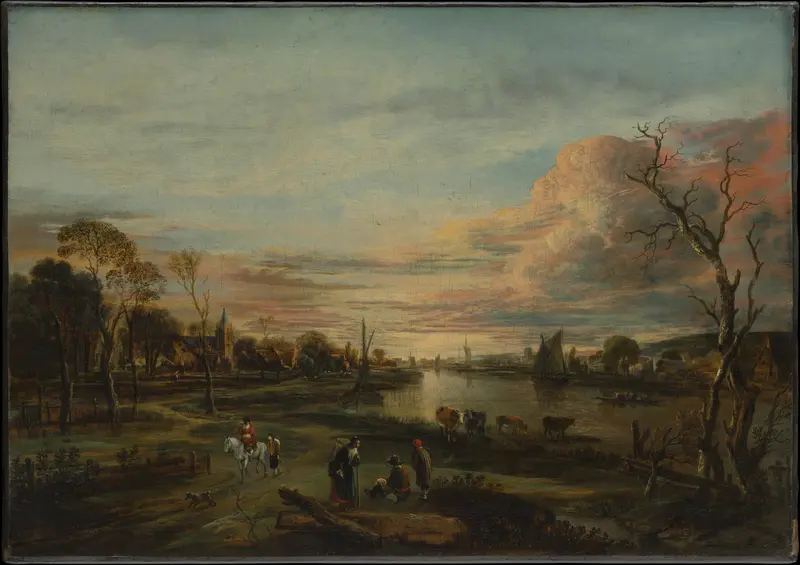
Landscape at Sunset
Aert van der Neer
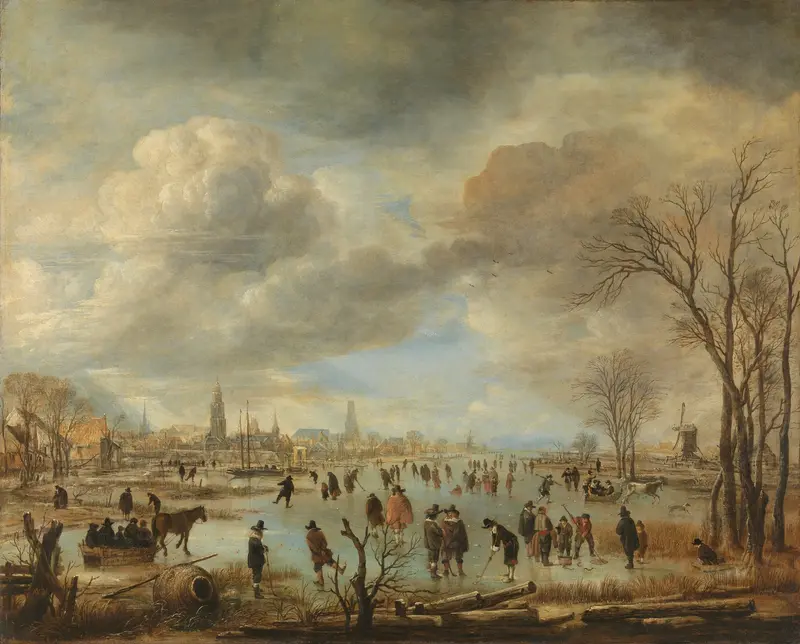
Winter Landscape near a Town with Kolf Players and Horse-Drawn Sleighs
Aert van der Neer

Winter Landscape with Skaters on a Frozen River
Aert van der Neer
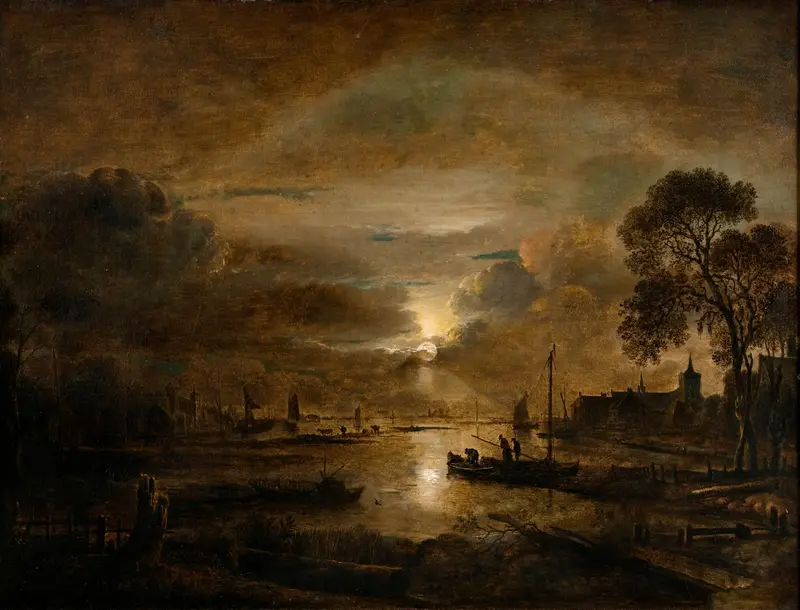
Moonlight at a Dutch River
Aert van der Neer
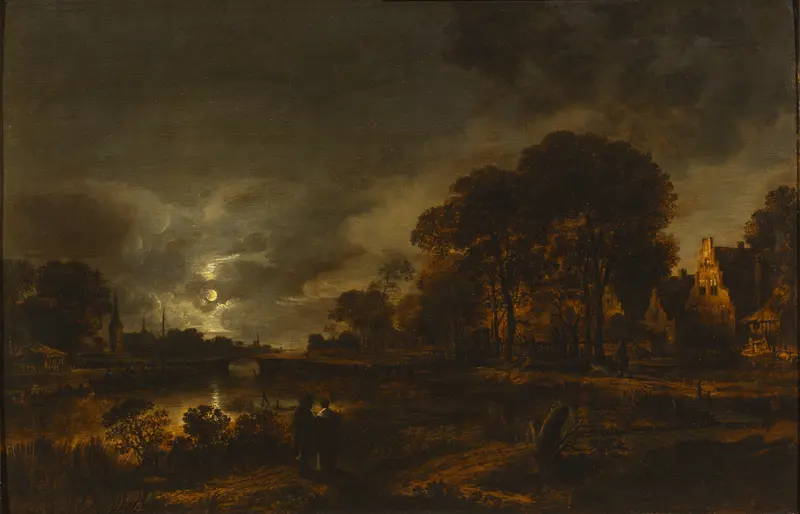
Moonlight Landscape
Aert van der Neer





