Shūbi gakan, Pl.02 — History & Facts
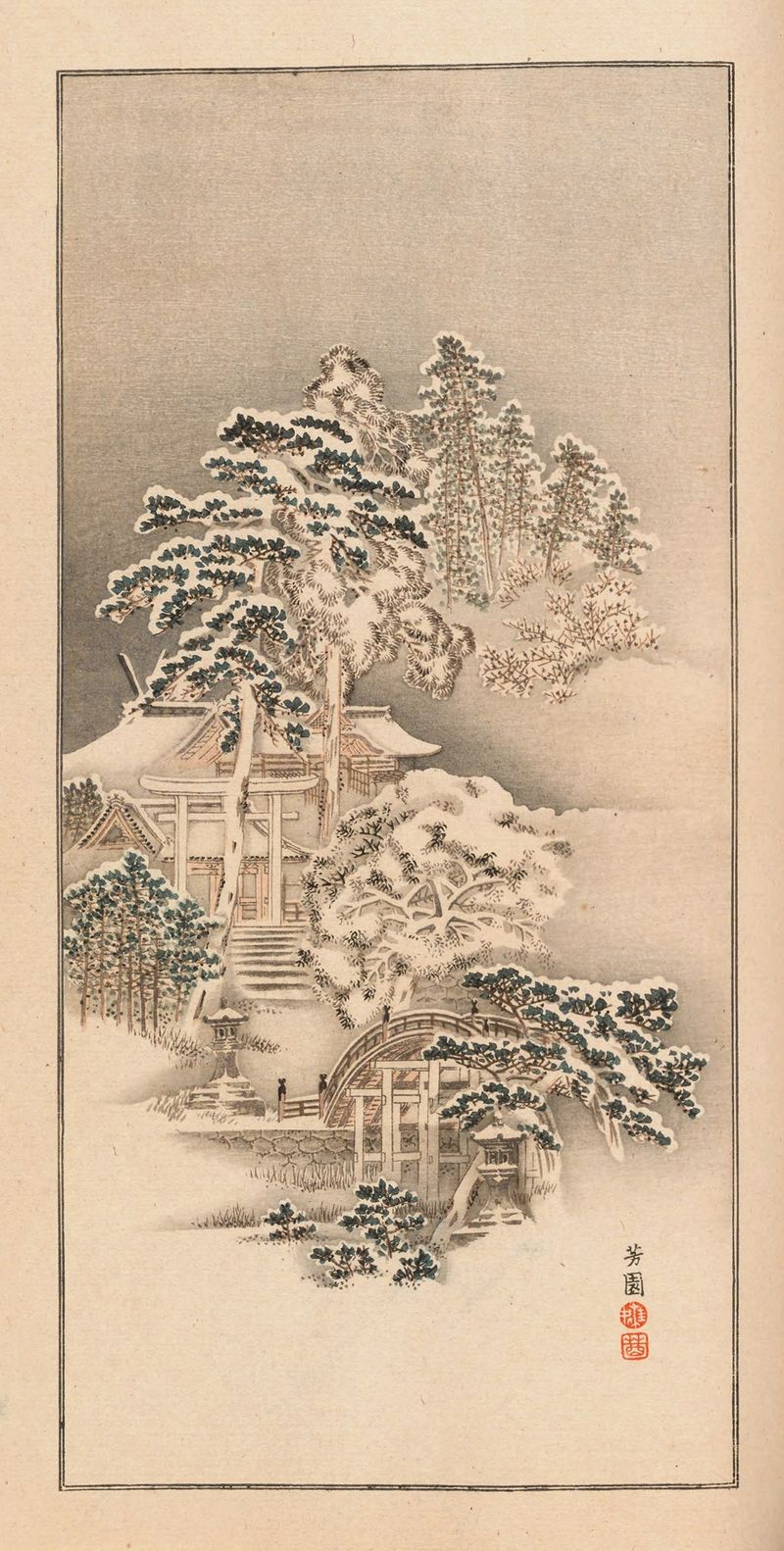
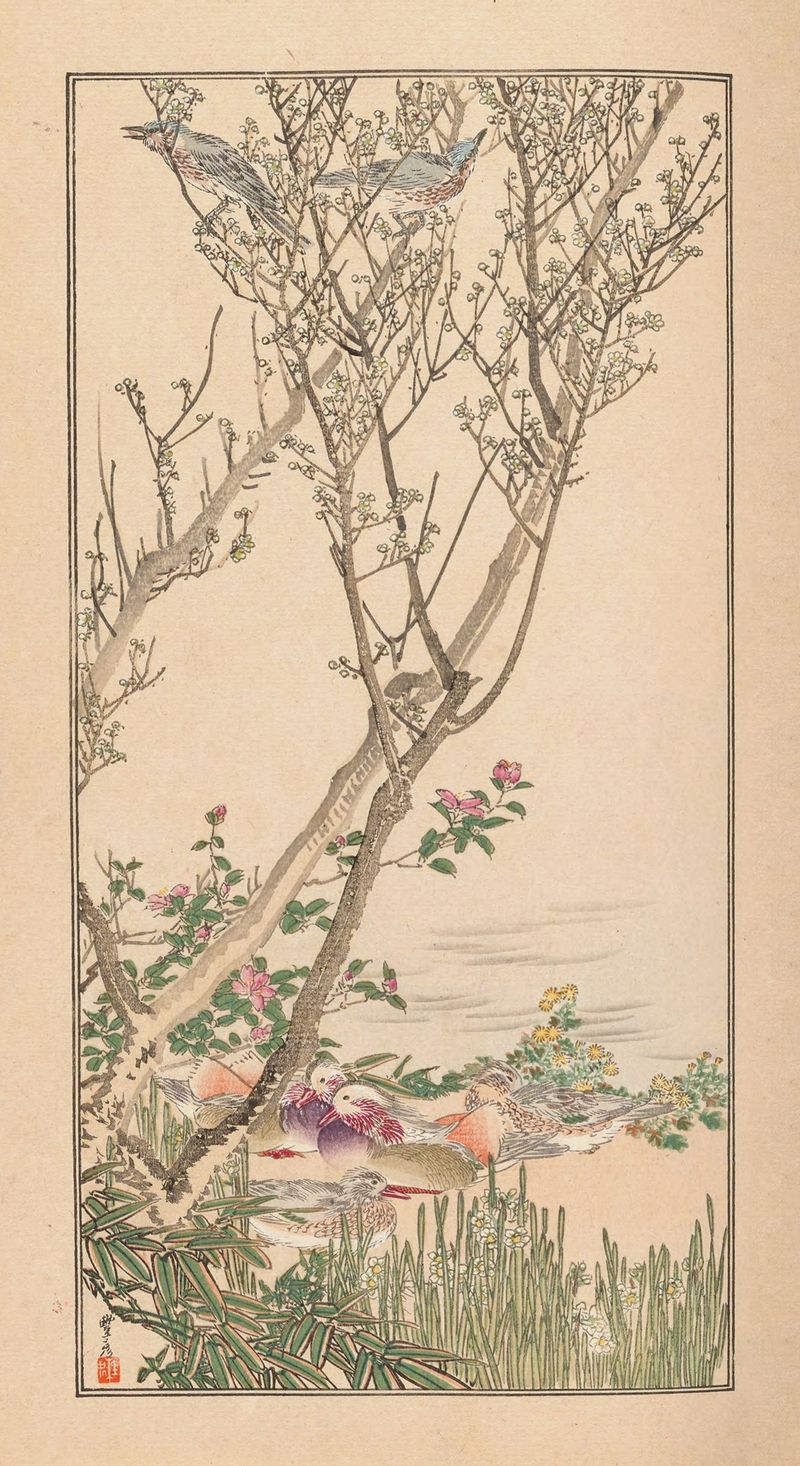
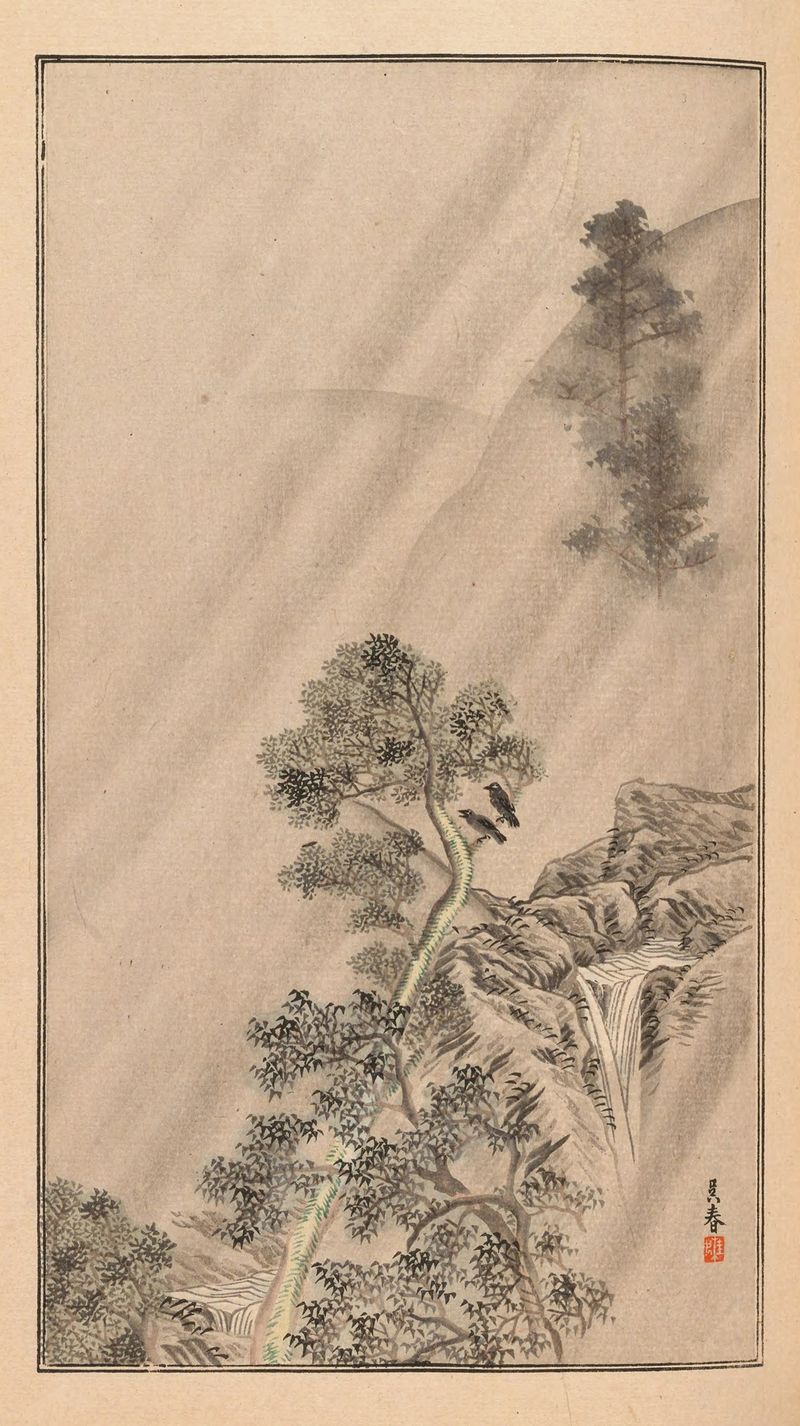
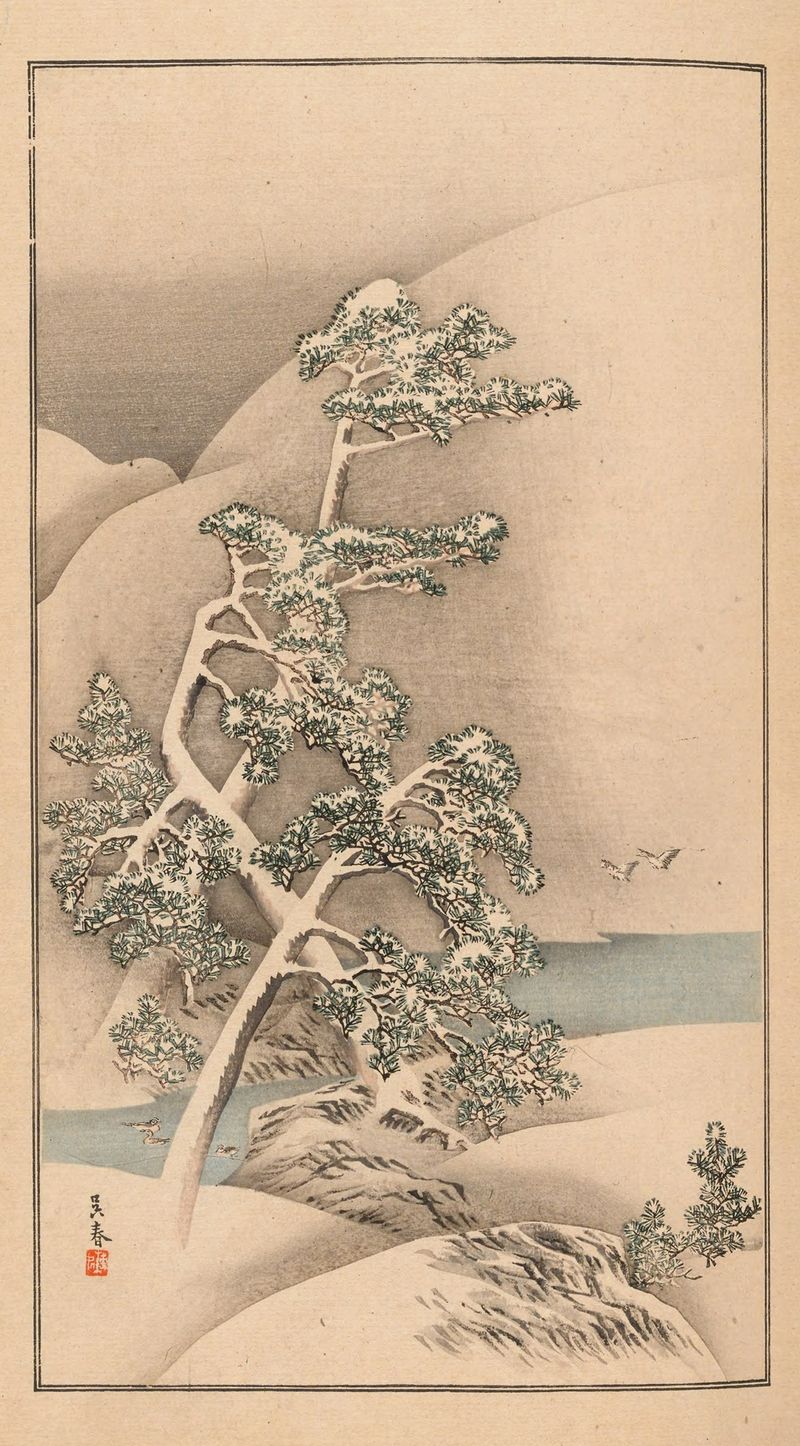
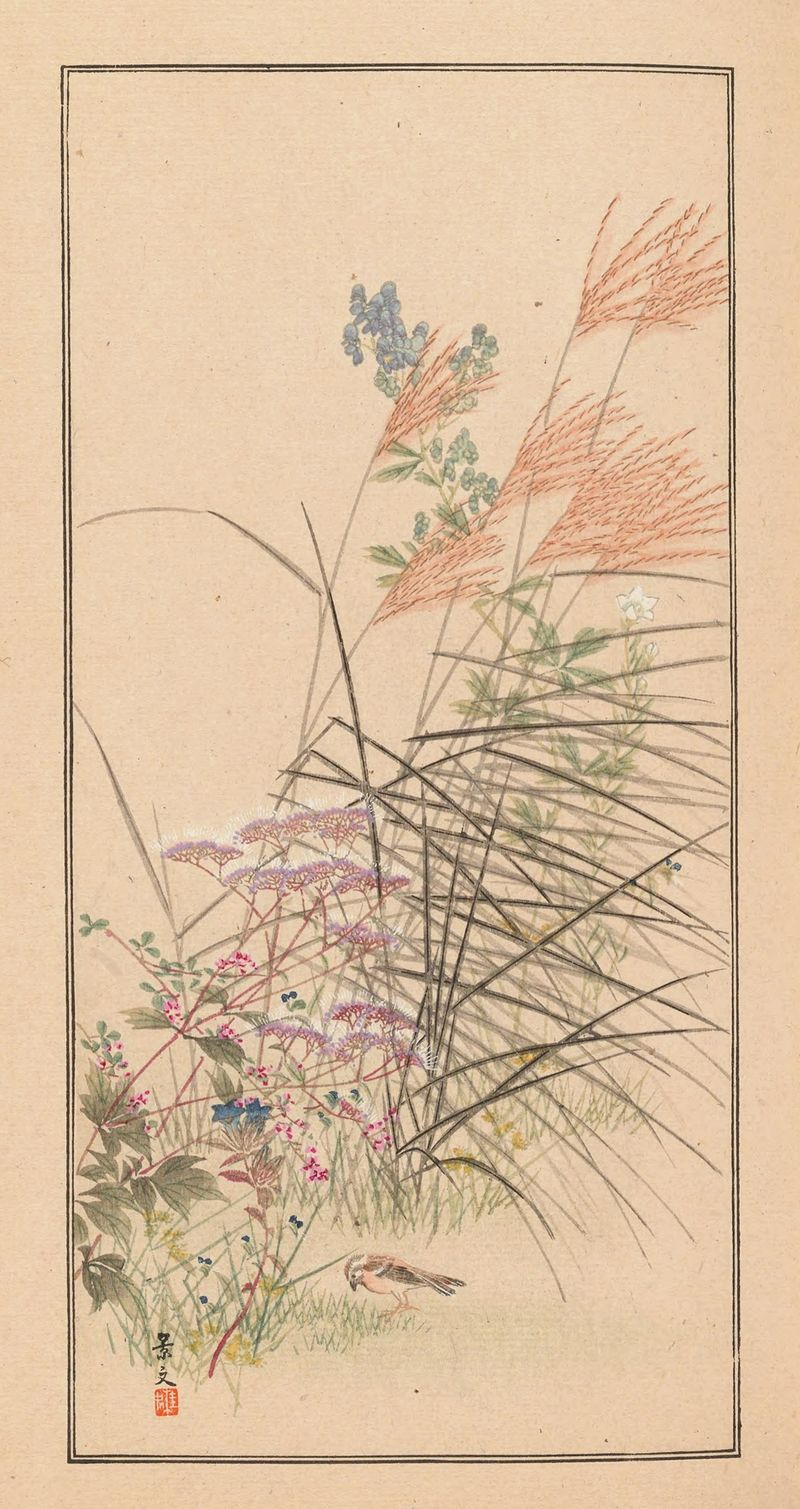
What secret hides in the quiet of the canvas? Underneath the serene surface of Shūbi gakan, Pl.02, a subtle unease simmers, as if the brushstrokes conceal whispers of fear and uncertainty. Focus on the delicate hues of blue and gray that fill the background, casting a tranquil yet haunting atmosphere. Notice how the meticulous details of the foreground elements draw your gaze - a lone figure, poised yet seemingly isolated, stands in a space that feels both expansive and constricting. The play of light softly illuminates the figure, creating a stark contrast against the muted surroundings, inviting contemplation of the emotional distance between the subject and the viewer. The tension in this composition lies in the juxtaposition of calmness and underlying dread.
The figure's serene posture contrasts with the heaviness of their solitude, suggesting an inner turmoil that speaks to universal fears of isolation. The intricate patterns in the clothing and the surrounding nature suggest beauty and stability, yet they also become a backdrop to the figure's quiet anxiety, emphasizing how fear can lurk even in the most peaceful of settings. In 1889, while creating this piece, Nanbara Sakujirō was deeply immersed in the evolving art scene of Japan, which was grappling with Western influences. During this time, he explored the intersection of traditional Japanese aesthetics with new techniques, reflecting the broader societal shifts as Japan opened to the world.
This pivotal moment in his career shaped Shūbi gakan, Pl.02, revealing the complex emotions tied to identity, belonging, and fear amid change.