Shūbi gakan, Pl.22 — History & Facts
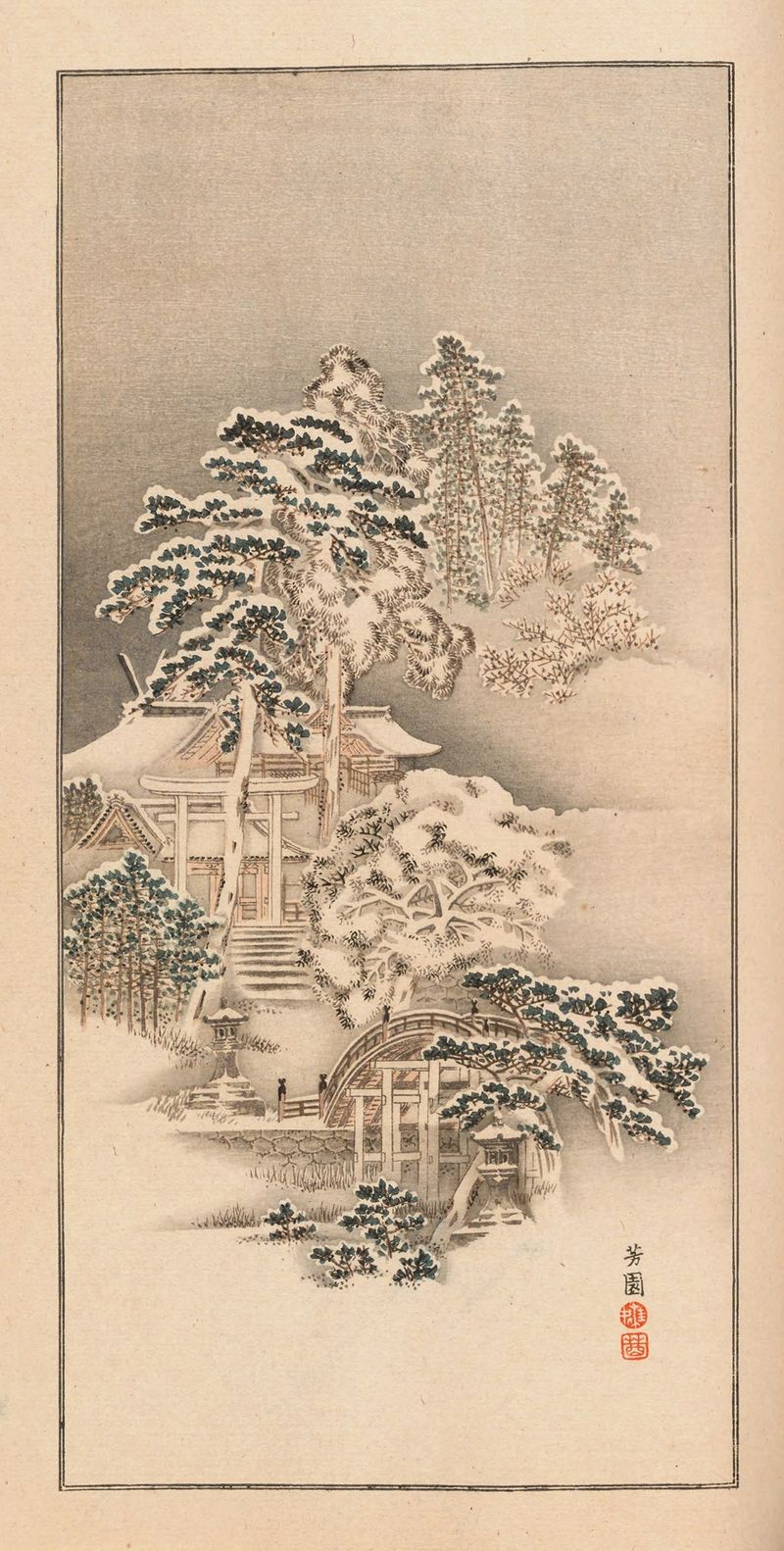
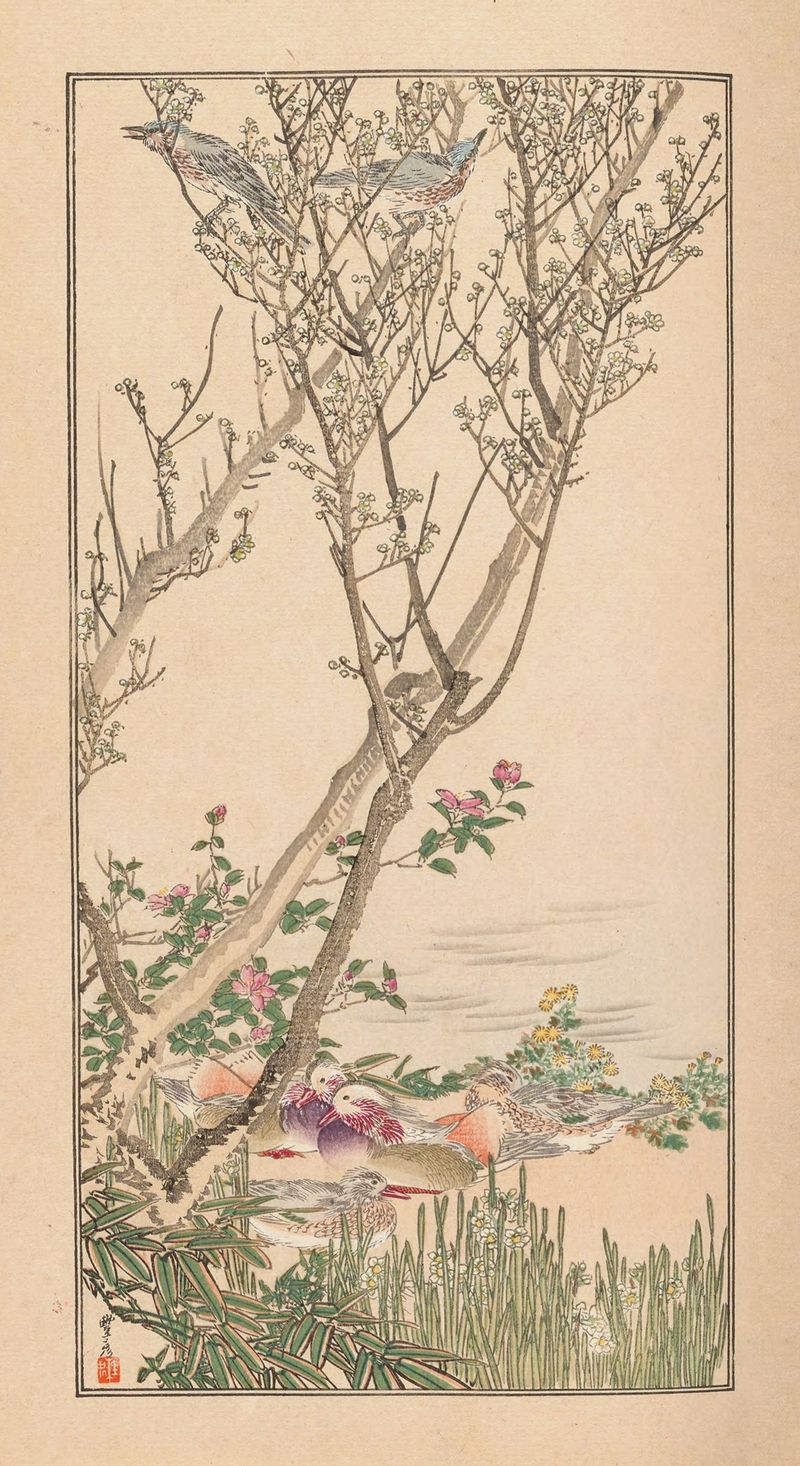
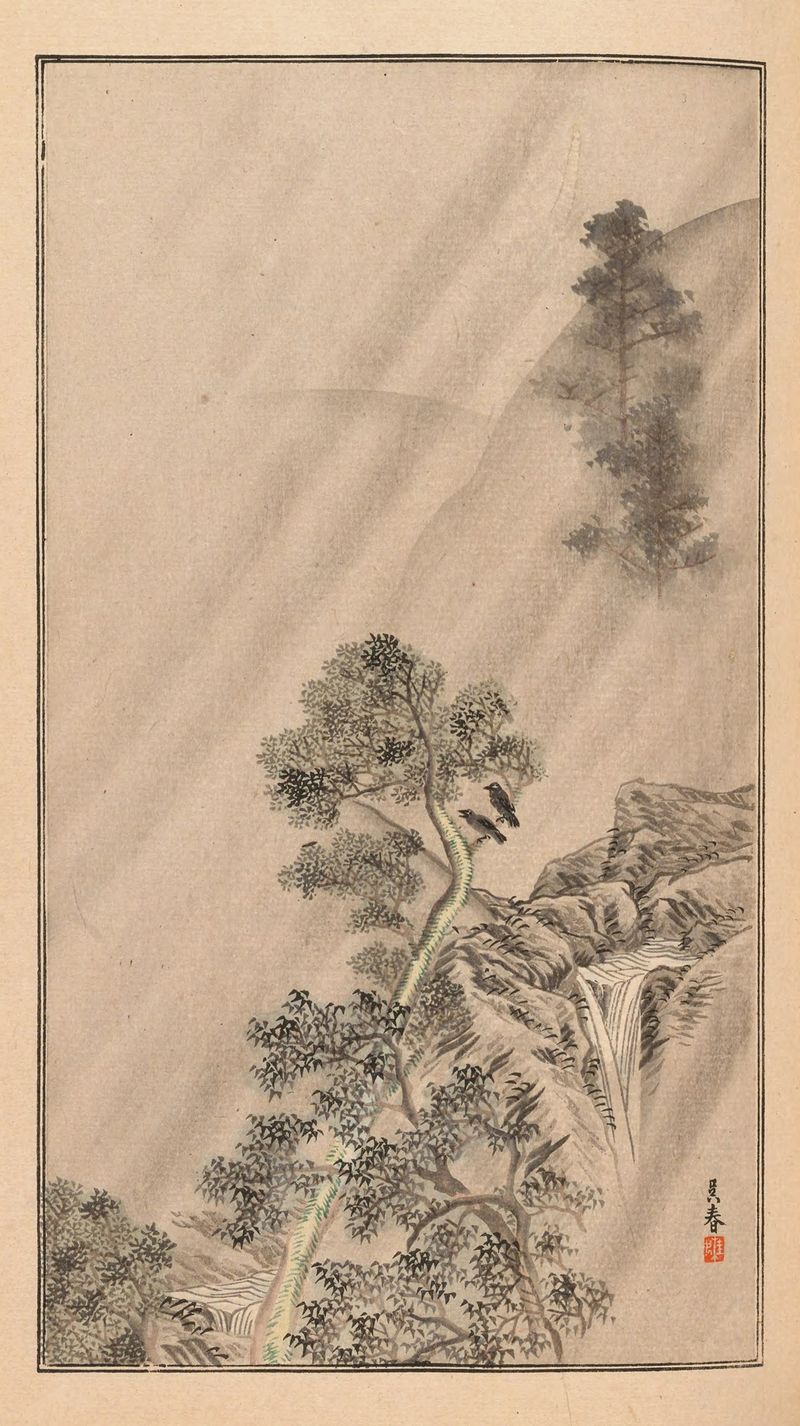
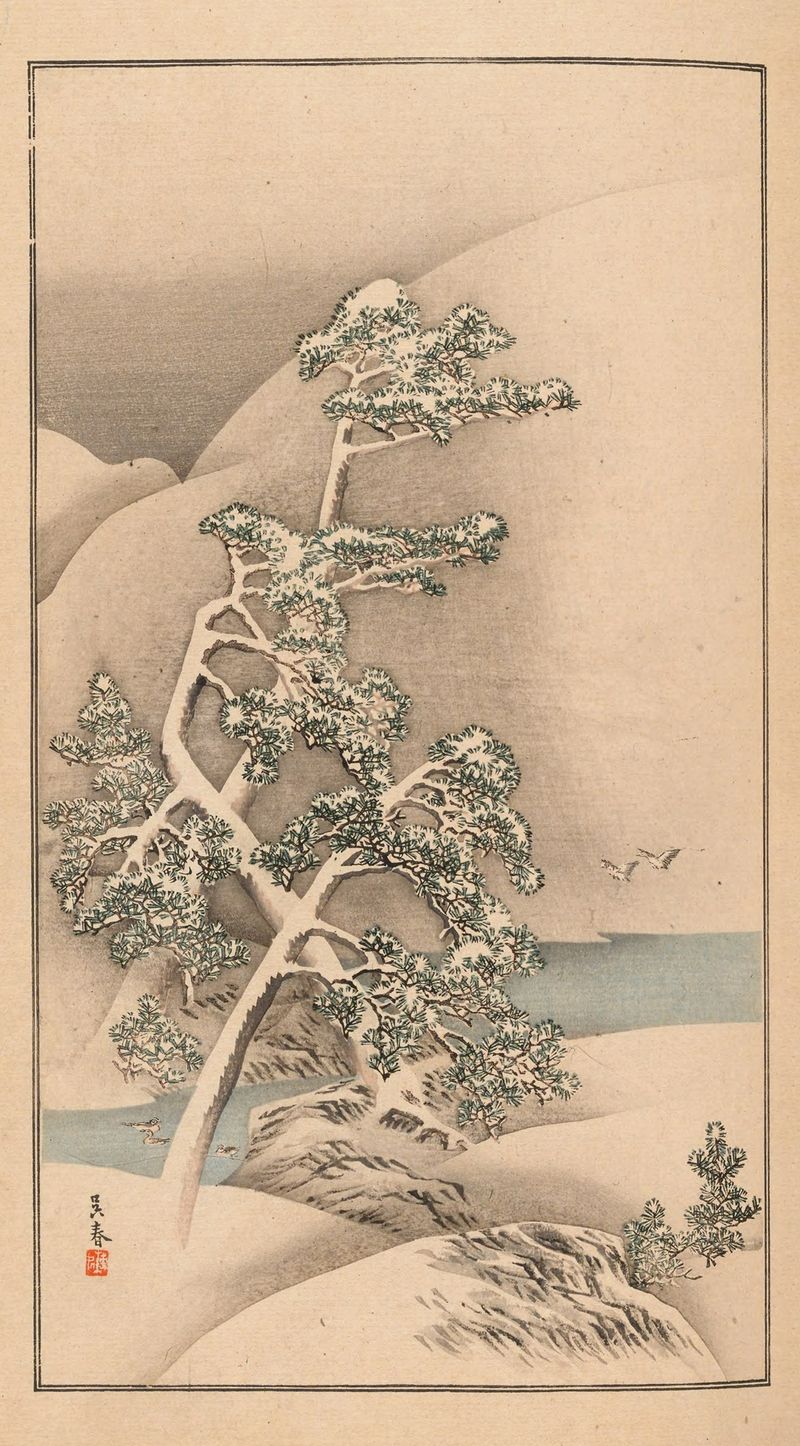
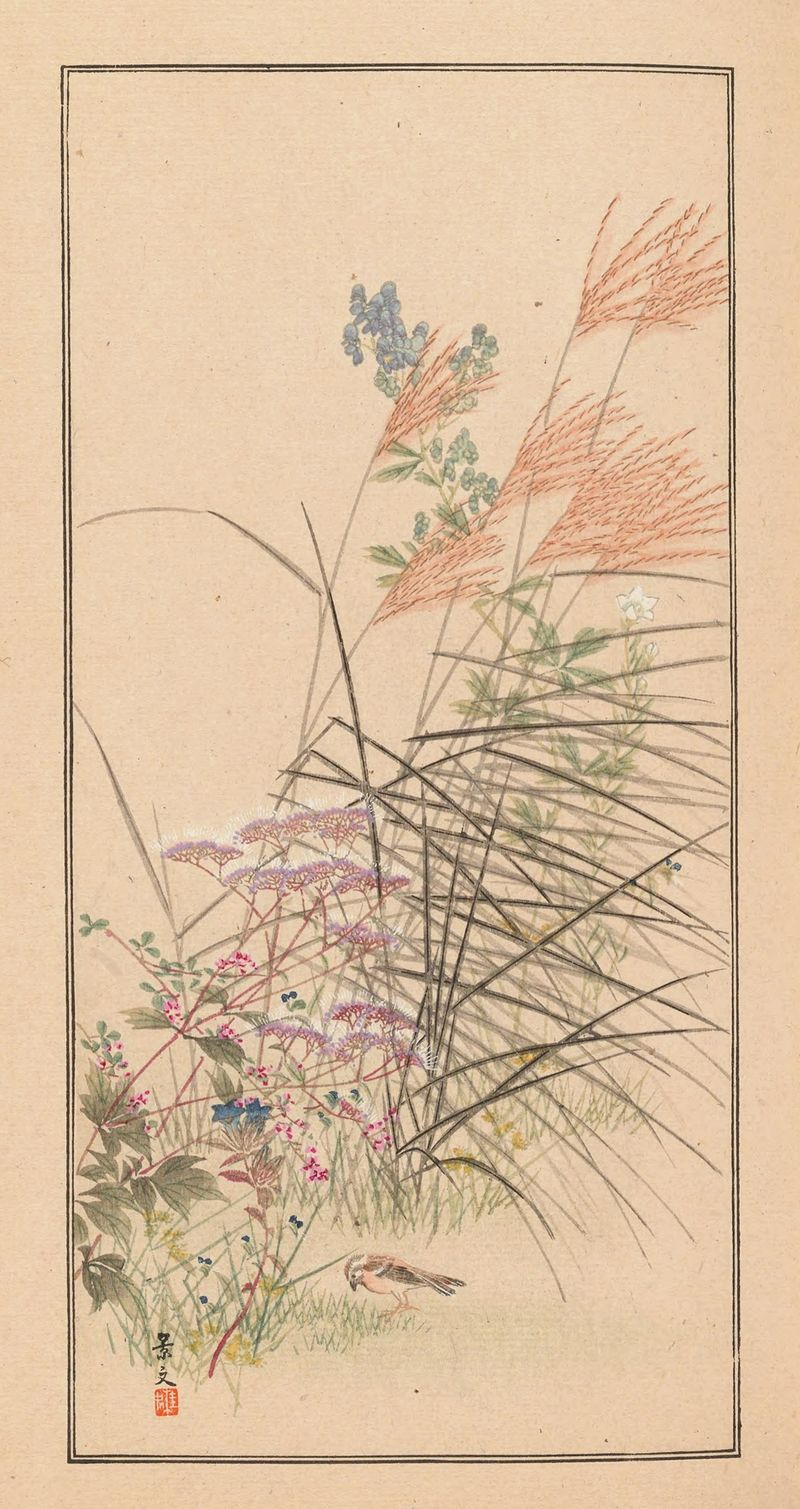
In the quietude of innocence, a moment breathes, inviting us to explore its depths. The art world of the late 19th century often danced between the vibrancy of modernity and the whispers of tradition, and in that delicate balance, a profound simplicity emerges. Look to the soft hues enveloping this work, where gentle greens and muted blues coalesce to create a serene landscape. Focus on the subtle interplay between light and shadow; the delicate brush strokes imbue the scene with a sense of tranquility that feels almost palpable.
The composition draws your gaze toward the horizon, inviting contemplation, while the meticulous detailing in the foreground captures every blade of grass, every fluttering leaf, anchoring the viewer in a world that feels both natural and profoundly personal. Yet beneath this serene surface lies a rich tapestry of emotions. The absence of figures suggests a solitude that speaks to the viewer's own experience, inviting reflections on innocence and the passage of time. Contrast the lushness of nature with the stillness of the scene; here, every element resonates with the tension between life’s vibrancy and the quiet moments we often overlook.
It is as if the landscape itself confesses the innocence lost within every heartbeat, urging us to remember what lies beneath our surface. In 1889, Nanbara Sakujirō crafted Shūbi gakan, Pl.22 during a time of great transformation in Japan as it navigated the intricacies of modernization. As Japan opened its doors to Western influence, artists began to explore new themes and techniques, blending traditional aesthetics with contemporary ideas. This work reflects that transitional spirit, embodying the essence of innocence while simultaneously hinting at the era's profound cultural shifts.