
Sigismondo Pandolfo Malatesta before Saint Sigismund — History & Facts
In 1451, the ambitious lord of Rimini, Sigismondo Pandolfo Malatesta, commissioned Piero della Francesca to immortalize him in a work that would hang in his own church, the Tempio Malatestiano. The painting was not merely a display of piety but a bold assertion of legitimacy and power, as Sigismondo’s turbulent rule and controversial reputation made him a figure both admired and reviled in Renaissance Italy. The choice to pair himself with his namesake saint was a calculated move: Sigismondo sought divine endorsement at a time when his enemies, including Pope Pius II, condemned him as a heretic and tyrant.
This work stands as a rare, early example of a living patron depicted kneeling before his patron saint, blurring the line between earthly ambition and spiritual aspiration. The scene unfolds in a quiet, architectural space: Sigismondo kneels, hands clasped in prayer, before Saint Sigismund, the martyred king. The saint, crowned and robed, stands in gentle authority, his gesture both blessing and acceptance. Behind them, classical columns and a delicately patterned floor evoke the new language of perspective and geometry that Piero della Francesca was pioneering.
The chain and medallion worn by the saint echo the insignia of power, while the subdued light focuses attention on the encounter’s intimacy. Unlike the dramatic martyrdoms favored by artists such as Andrea Mantegna, Piero chooses a moment of quiet intercession, emphasizing the personal bond between mortal and saint. Today, Sigismondo Pandolfo Malatesta before Saint Sigismund is recognized as a milestone in both portraiture and religious art of the Early Renaissance. Originally created for the Tempio Malatestiano in Rimini, the painting’s medium remains a subject of scholarly debate, though its precise execution suggests tempera on panel.
Over the centuries, the work has survived war, shifting tastes, and the partial destruction of its original setting. It now resides in the Louvre, a testament to Piero della Francesca’s reputation as a master of perspective and psychological nuance. The painting marks a pivotal moment in his career, foreshadowing the serene, mathematical order that would define his later masterpieces.
More Artworks by Piero Della Francesca

Portrait of the Duchess of Urbino, Battista Sforza
Piero Della Francesca

Portrait of Federico da Montefeltro
Piero Della Francesca

Federico da Montefeltro, Duke of Urbino
Piero Della Francesca
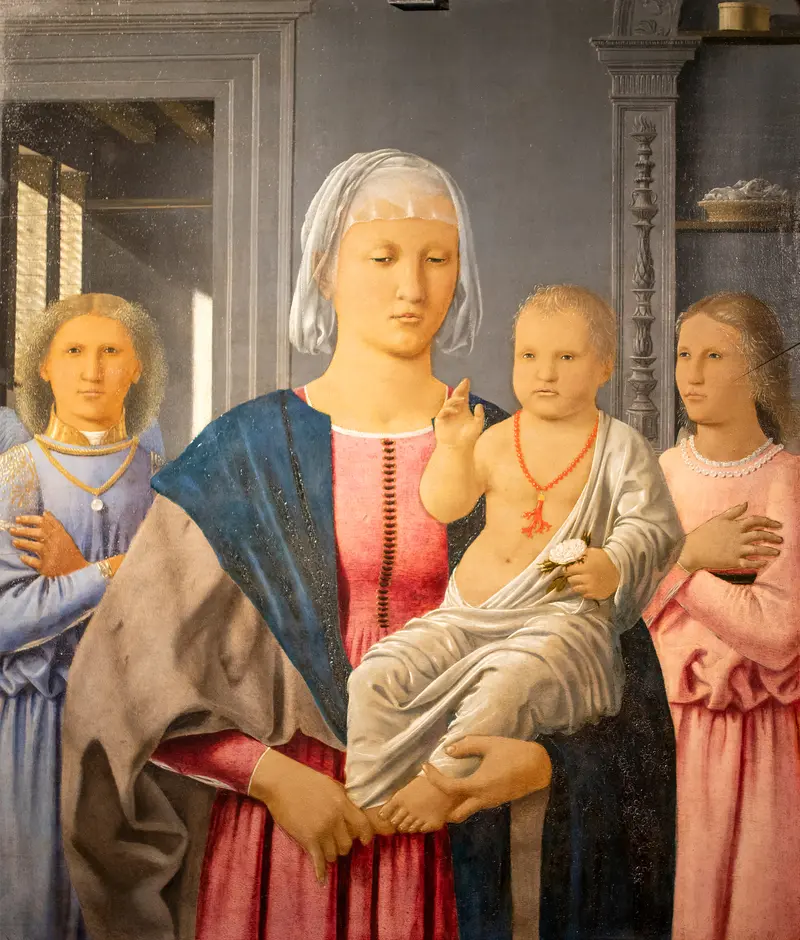
Madonna di Senigallia
Piero Della Francesca
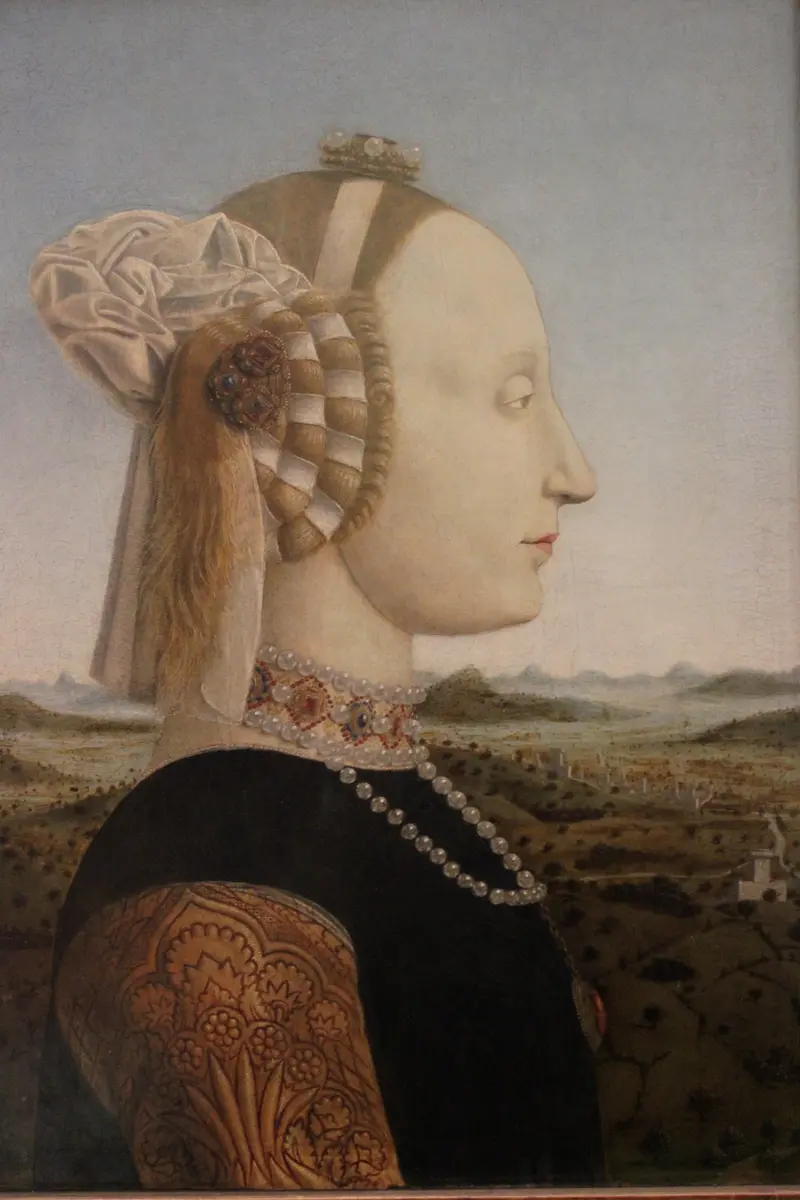
Portrait of Battista Sforza
Piero Della Francesca
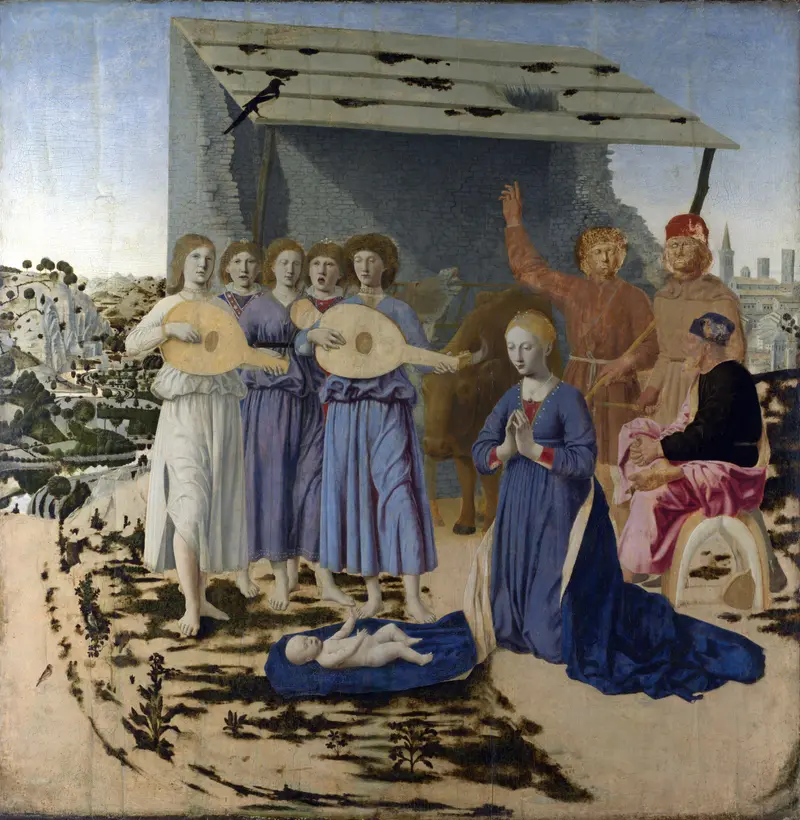
The Nativity
Piero Della Francesca

Diptych of Federico da Montefeltro and Battista Sforza
Piero Della Francesca
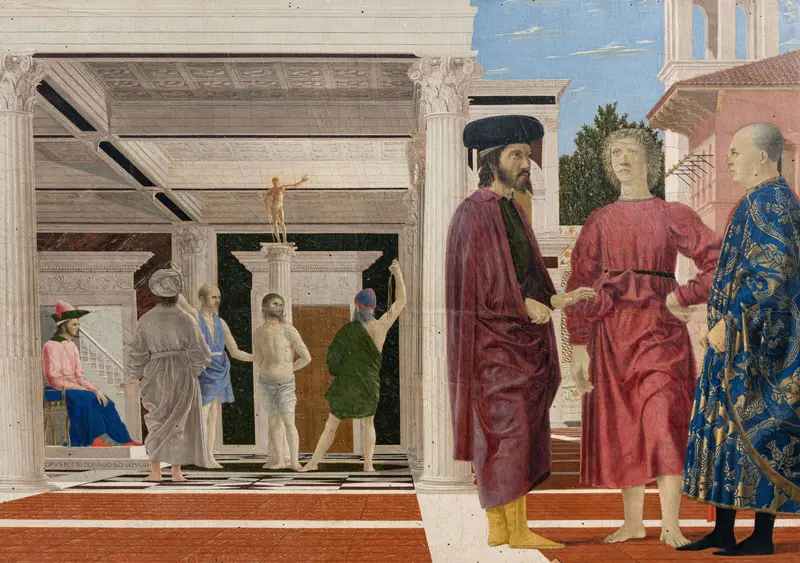
Flagellation of Christ
Piero Della Francesca
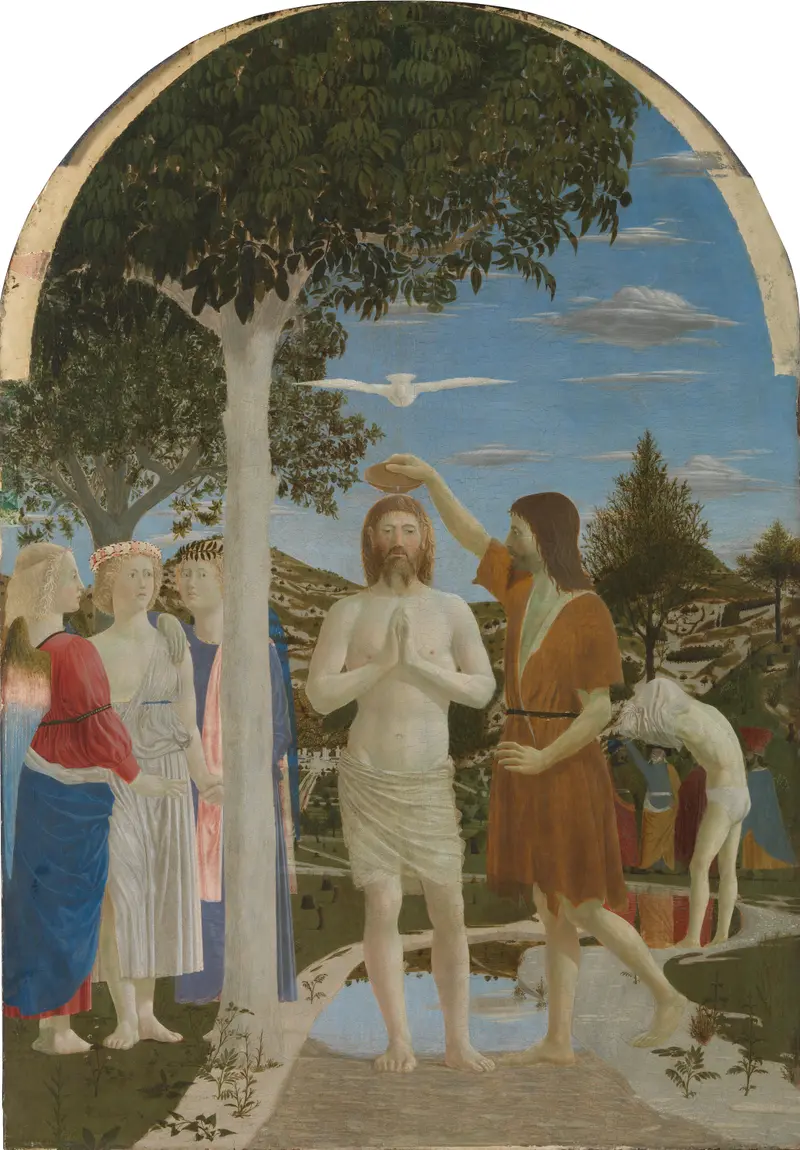
The Baptism of Christ
Piero Della Francesca
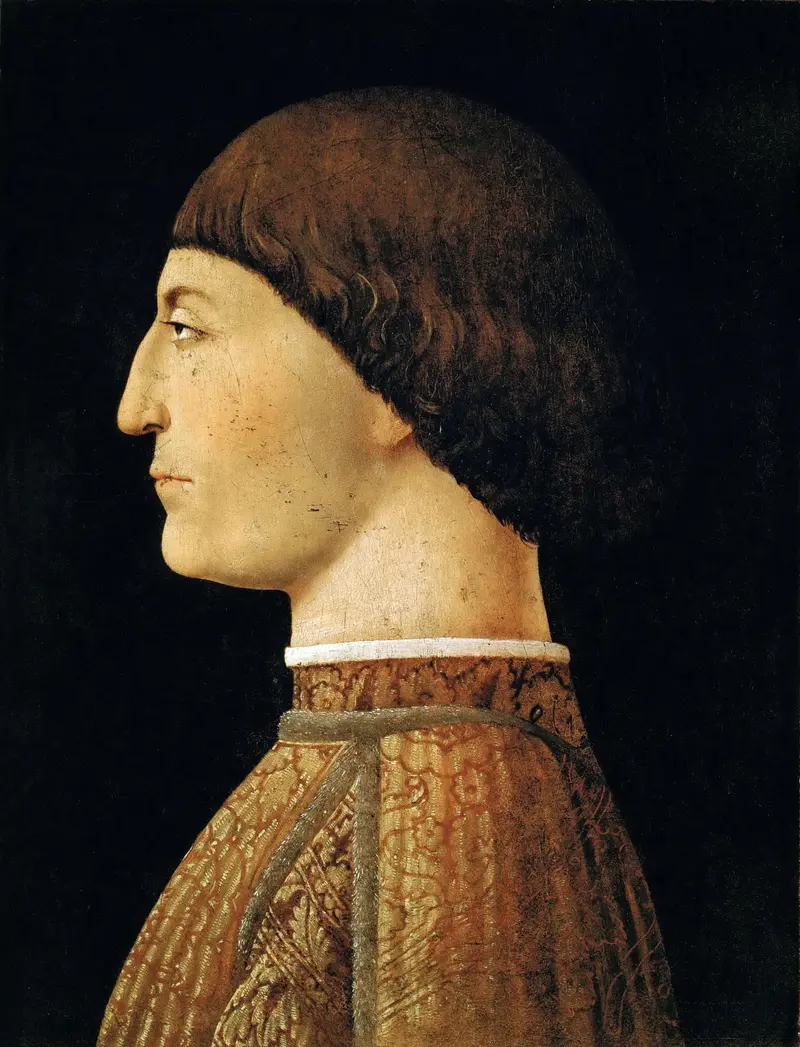
Portrait of Sigismondo Pandolfo Malatesta
Piero Della Francesca





