
Sistine Chapel lunettes - Rehoboam, Abijah — History & Facts
When Michelangelo began work on the lunettes of the Sistine Chapel in 1511, he was not simply filling architectural gaps—he was threading the ancestry of Christ into the very bones of the chapel. These lunettes, including the one featuring Rehoboam and Abijah, form part of a grand genealogy that traces the bloodline from Abraham to Jesus, a visual testament to continuity and promise. The decision to paint these ancestors was not Michelangelo’s alone; Pope Julius II, intent on asserting the legitimacy of the papacy, insisted that every inch of the chapel’s vault speak to divine order and papal authority.
The lunettes, often overlooked in favor of the more dramatic ceiling scenes, quietly anchor the entire biblical narrative. In the lunette of Rehoboam and Abijah, Michelangelo captures a moment of generational transition. Rehoboam, son of Solomon, sits beside his own son Abijah, both figures rendered in broad, sculptural forms that recall the artist’s training as a sculptor. The two are not shown in action but in contemplation, their bodies turned inward, hands resting in gestures of thought or fatigue—a visual metaphor for the burdens of kingship and the weight of legacy.
The muted palette and the play of shadow across their robes suggest the somber mood of a dynasty divided, as Rehoboam’s reign marked the split of the united kingdom of Israel (c. 930 BCE). Unlike the narrative clarity of Ghiberti’s Old Testament panels or the emotional immediacy of Caravaggio, Michelangelo’s approach is meditative, inviting the viewer to consider not just the story, but the humanity of its subjects. Painted directly onto the plaster of the Sistine Chapel, this lunette has never left its original home in Vatican City.
The medium is fresco, though Michelangelo’s handling of paint and plaster was so innovative that even his contemporaries marveled at the illusion of depth and substance. Over centuries, the lunettes suffered from candle smoke and neglect, their colors dulled until the major restoration of the 1980s and 1990s revealed their original clarity. As part of the Sistine Chapel ceiling, this work stands at the midpoint of Michelangelo’s career, bridging his early sculptural triumphs and his later, more anguished paintings.
Today, visitors to the chapel often crane their necks for the central scenes, but the lunettes remain essential: the quiet, steady rhythm beneath the biblical drama above.
More Artworks by Michelangelo

Libyan Sibyl
Michelangelo
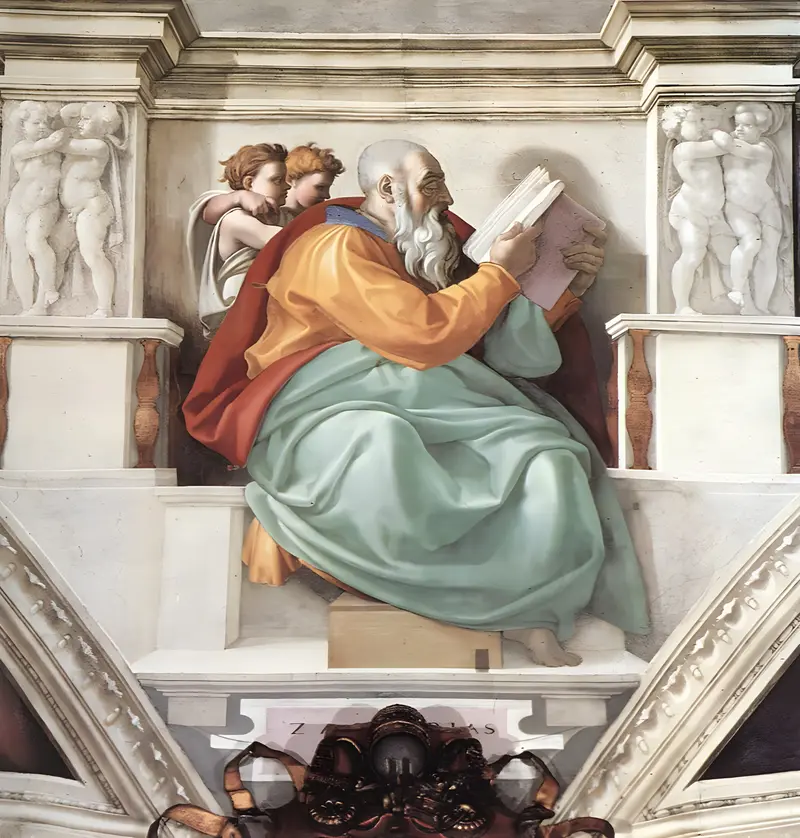
Prophet Zechariah
Michelangelo

Cumaean Sibyl
Michelangelo
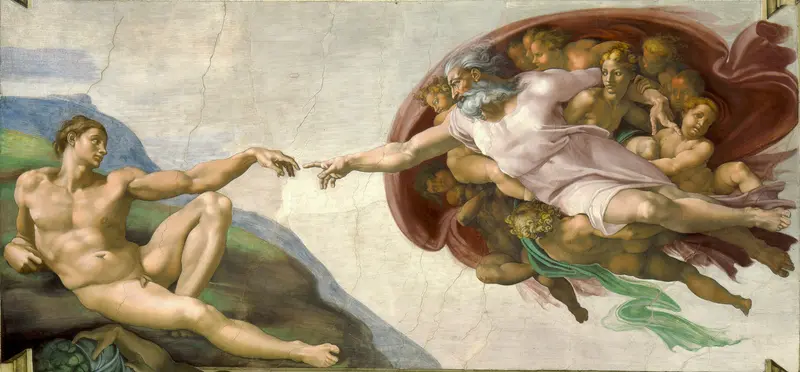
The Creation of Adam
Michelangelo
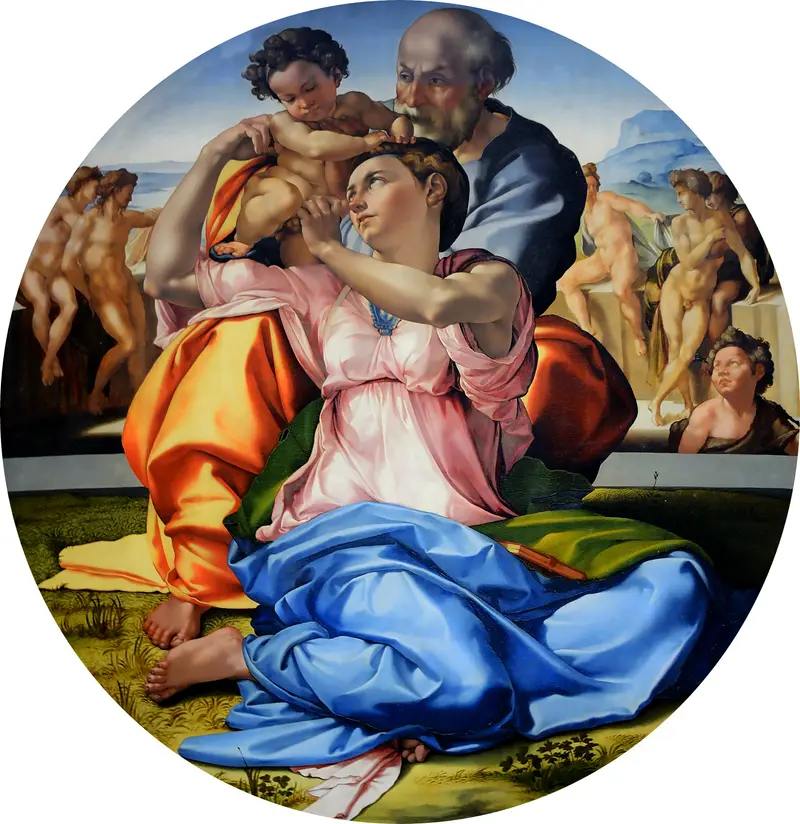
Doni Tondo
Michelangelo
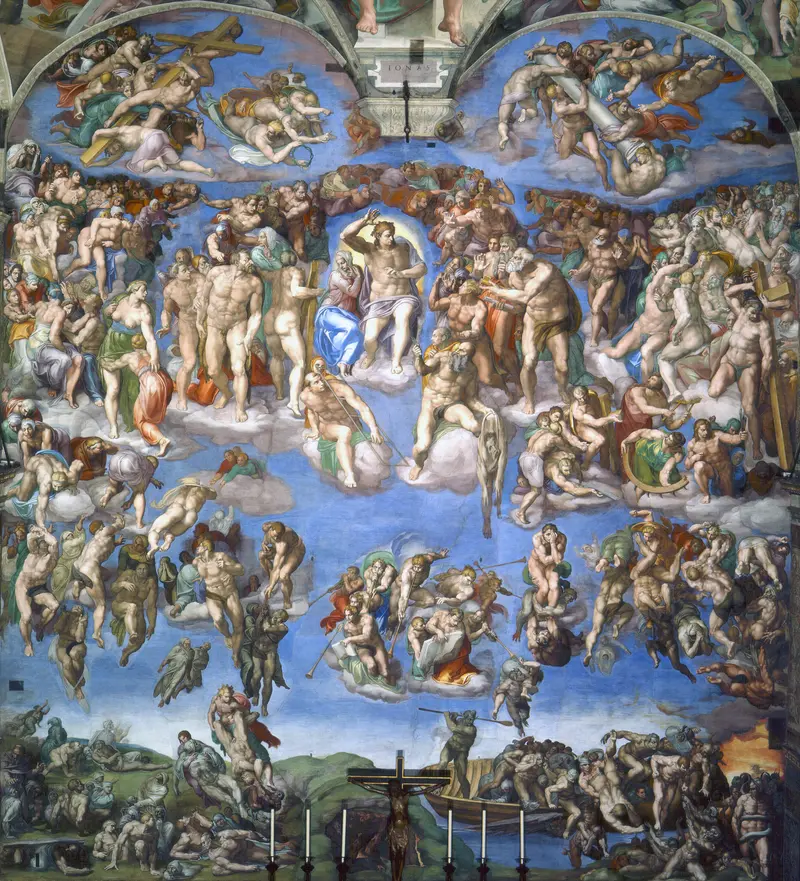
The Last Judgment
Michelangelo
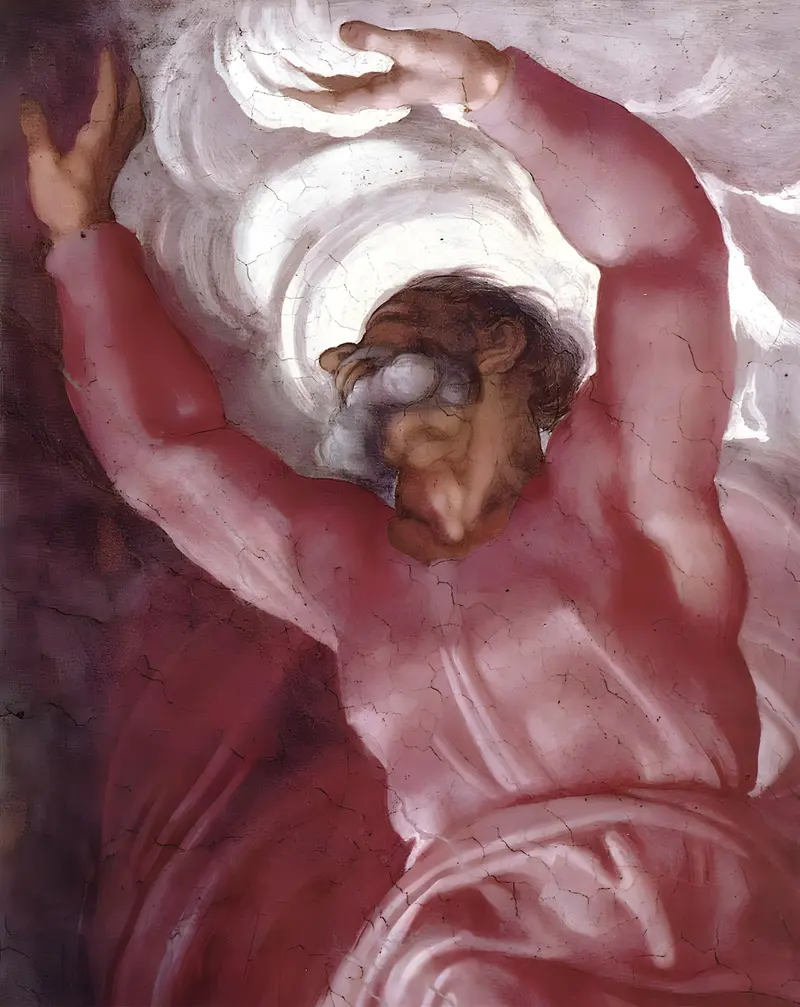
Separation of Light from Darkness
Michelangelo
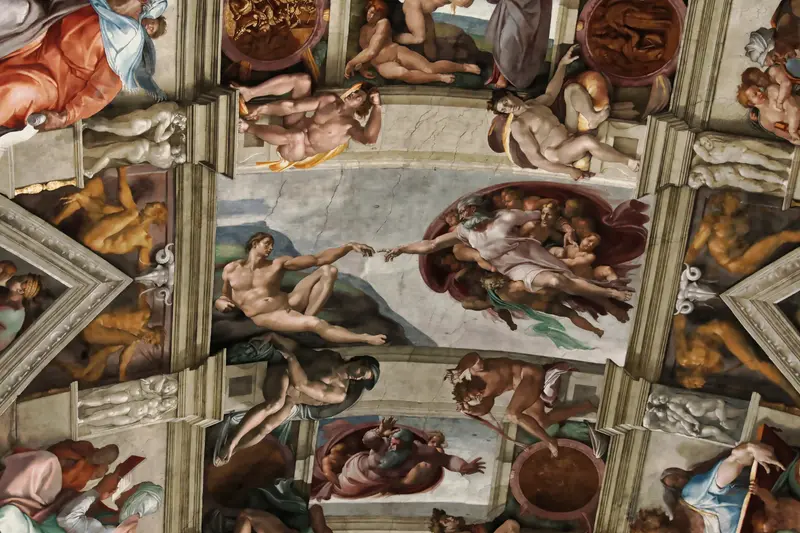
The Separation of the Earth and Waters
Michelangelo

Erythraean Sibyl
Michelangelo
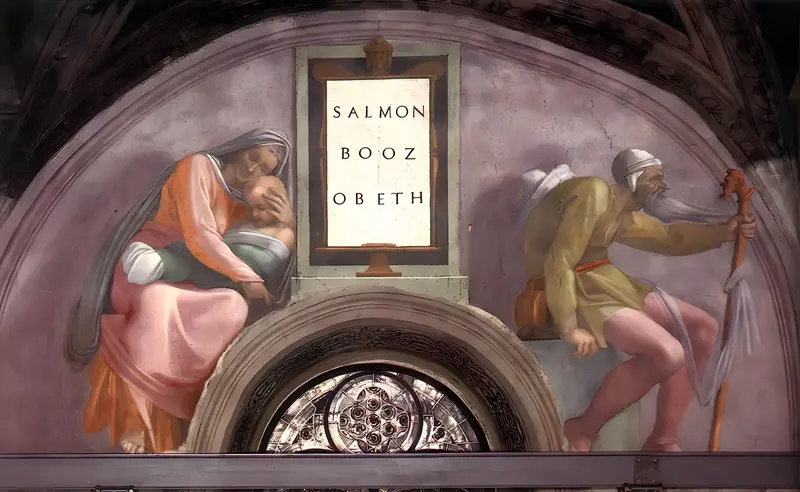
Salmon, Boaz, Obed
Michelangelo




