
Sketch for The Return of the Bear Hunter — History & Facts
A hush of anticipation fills this dim interior, where every figure leans inward, drawn by the drama unfolding at the center. The eye is pulled immediately to the slumped figure on the bench, his pallor and limp posture suggesting exhaustion or injury, as a woman—perhaps his mother—cradles his head and searches his face with anxious tenderness. Around them, a tight circle of villagers presses close: a kneeling youth gestures urgently, a hunter stands with rifle slung, and a child clutches a doll, half-concealed in the shadows.
The light, sparse and smoky, isolates the group in a pool of warmth, while the rest of the room recedes into murk, heightening the sense of an intimate crisis witnessed by all. Painted sometime between 1857 and 1861, this Sketch for The Return of the Bear Hunter by Adolph Tidemand belongs to a period when Norwegian artists turned their gaze to rural life, capturing the rituals and hardships of everyday people. Such works were often intended for a growing bourgeois audience eager for images of national character and folk tradition. Today, the sketch is held by the National Museum of Art, Architecture and Design, a testament to the enduring fascination with these scenes of communal care and quiet heroism.
The viewer is left to wonder what story the young hunter brings home—and what hopes or fears the faces in the half-light betray.
More Artworks by Adolph Tidemand

Bridal Procession on the Hardangerfjord
Adolph Tidemand
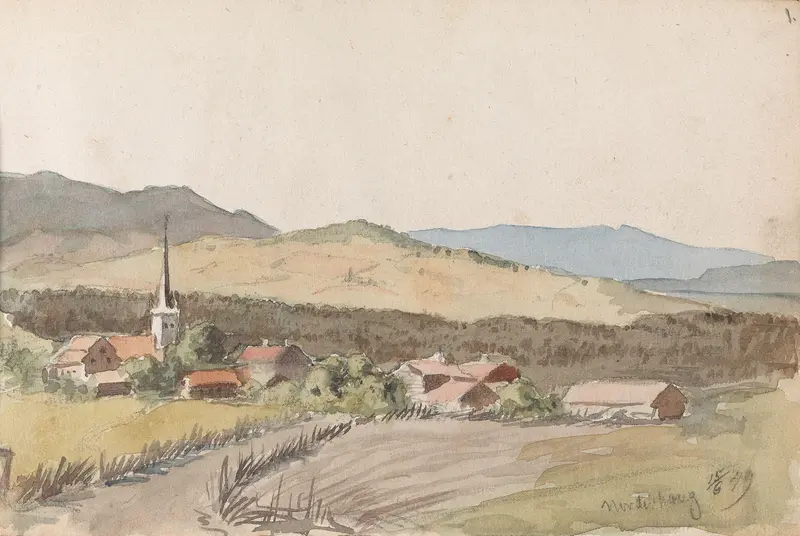
Fra Haugsbygd
Adolph Tidemand
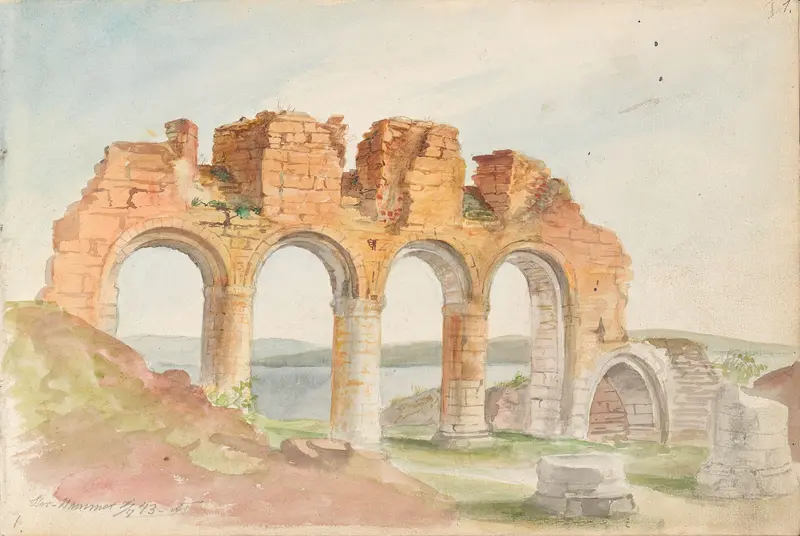
Domkirkeruinen, Hamar
Adolph Tidemand
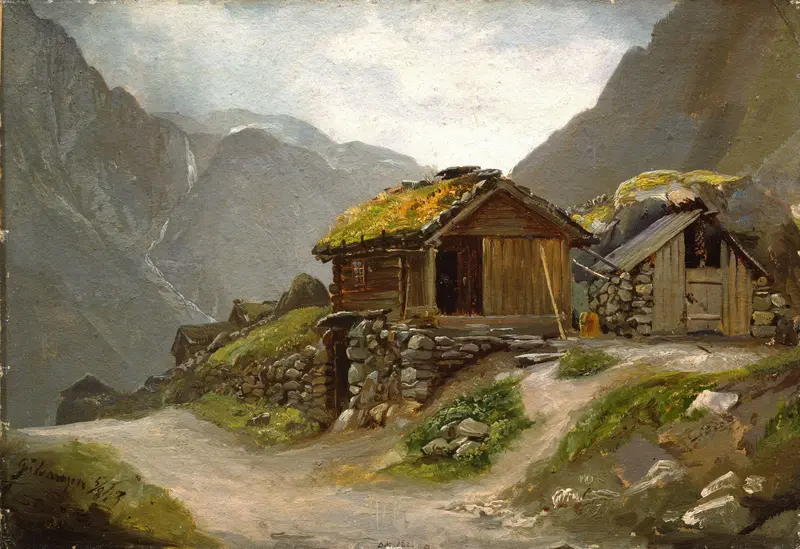
View from Gudvangen
Adolph Tidemand
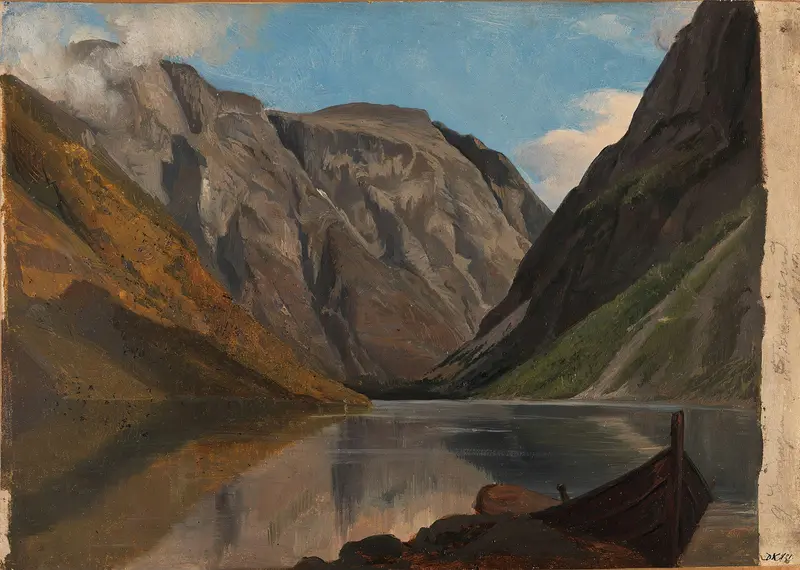
View of Gudvangen
Adolph Tidemand
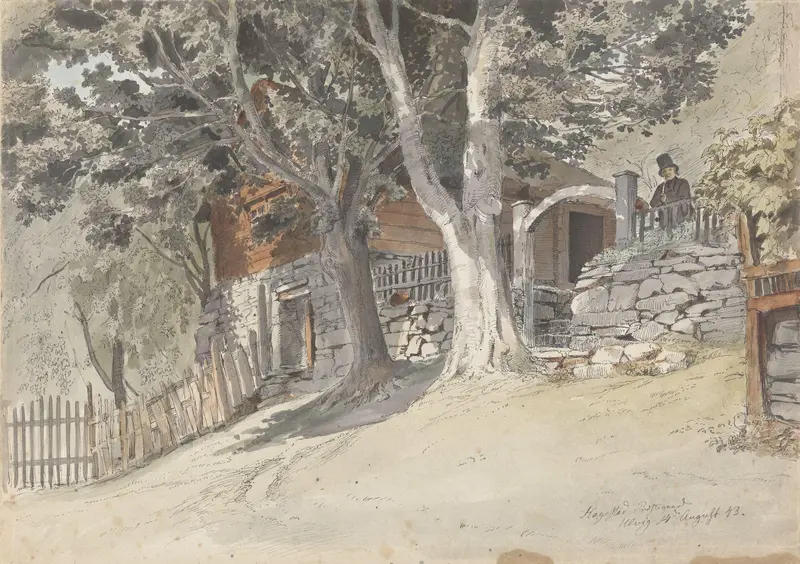
Hagestad prestegård, Ulvik i Hardanger
Adolph Tidemand
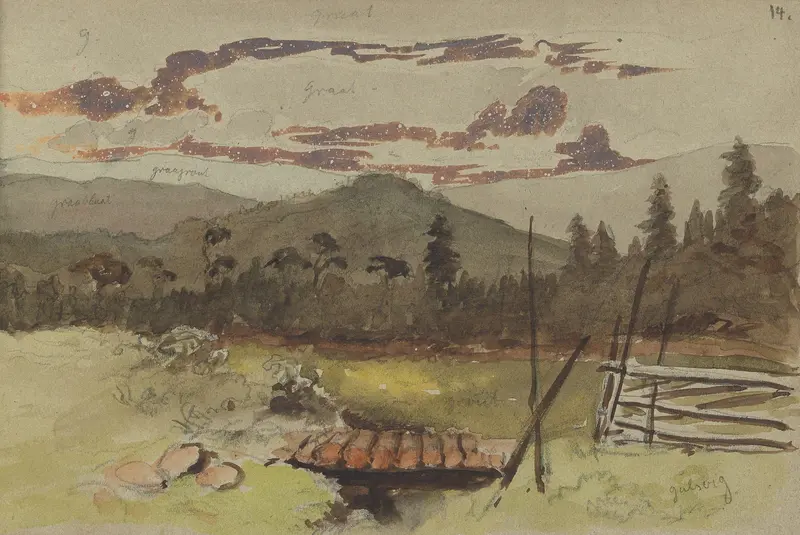
Fra Gulsvik
Adolph Tidemand
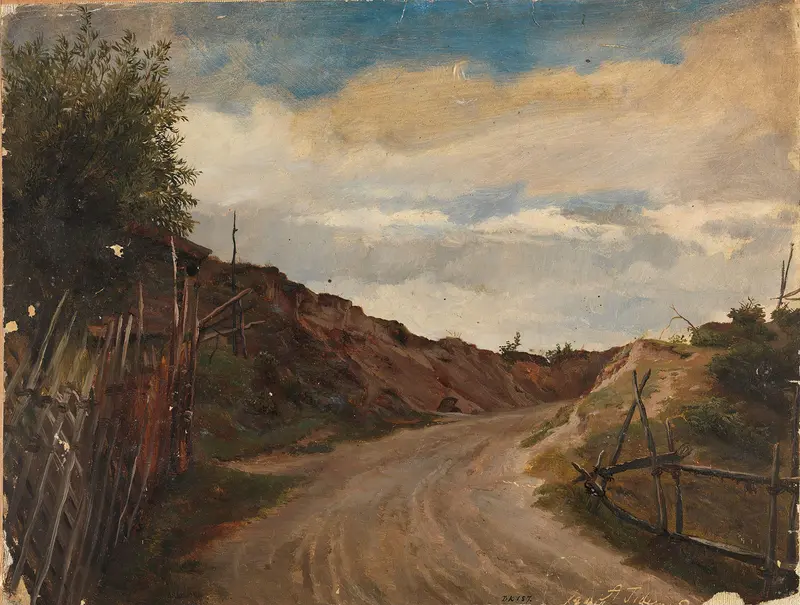
Country Road
Adolph Tidemand
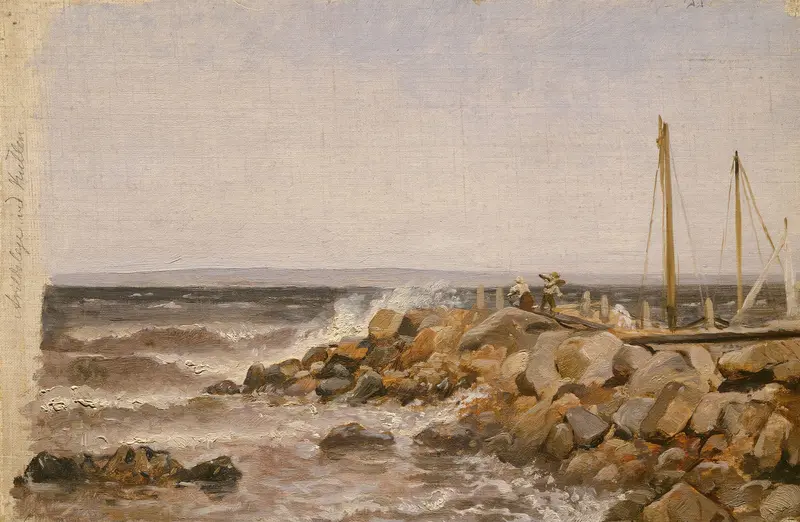
From Kullen in Sweden
Adolph Tidemand
Untitled
Adolph Tidemand
More Genre Scene Art

Banquet of the Officers of the St George Civic Guard
Frans Hals

Rembrandt and Saskia in the Scene of the Prodigal Son
Rembrandt van Rijn

Bal du moulin de la Galette
Pierre-Auguste Renoir

Quadrille at the Moulin Rouge
Henri de Toulouse-Lautrec

A Burial at Ornans
Gustave Courbet

When Will You Marry?
Paul Gauguin