
Snow Effect in Louveciennes — History & Facts
A hush seems to settle over the scene before you, as if the world has paused to let the snow speak. The rooftops and bare branches wear a delicate frosting, each brushstroke capturing the quiet weight of winter. Your gaze is drawn along the diagonal sweep of the orchard, where the lines of trees lead you toward distant houses and a pair of tiny, blue-coated figures who animate the otherwise still landscape.
The sky, painted in broad, creamy strokes, presses low and heavy, its pale warmth hinting at the late afternoon or the faintest promise of thaw. Here, color is not banished by winter but transformed—look closely, and you’ll find blues, ochres, and even hints of green beneath the snow’s surface. Painted in 1876, this work belongs to a moment when artists like Alfred Sisley were redefining how the world could be seen. The Impressionists, as they came to be known, turned their attention to the fleeting effects of light and weather, often painting outdoors to catch the shifting moods of nature.
Scenes like this, from the outskirts of Paris, were rarely grand commissions; instead, they were painted for a new kind of collector—urbanites eager for glimpses of the countryside, or fellow artists exchanging canvases. Today, this painting rests in the collection of the Museo Nacional de Bellas Artes, a quiet testament to both the ordinary beauty of a winter’s day and the radical vision of a painter who found poetry in the everyday. Let your eyes linger on the snow, and imagine the silence it brings.
More Artworks by Alfred Sisley
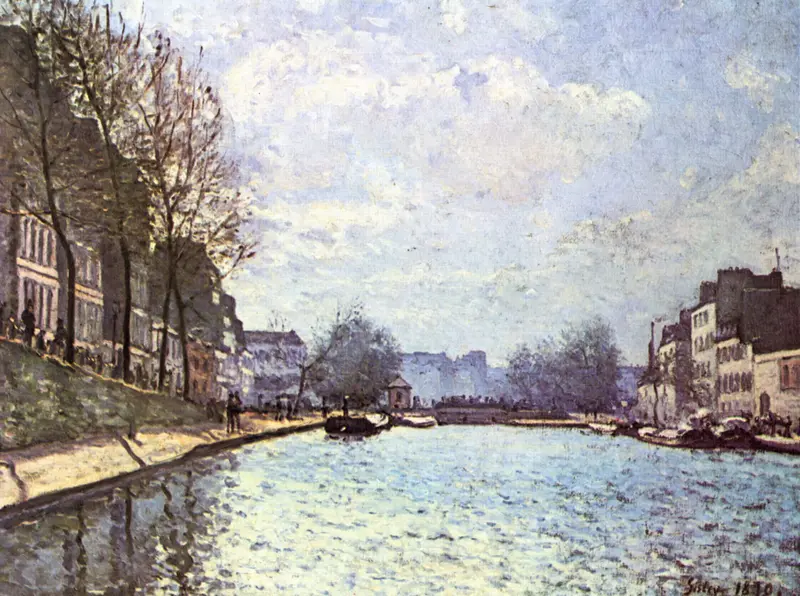
View of the Canal Saint-Martin
Alfred Sisley

Le Loing à Saint-Mammès
Alfred Sisley
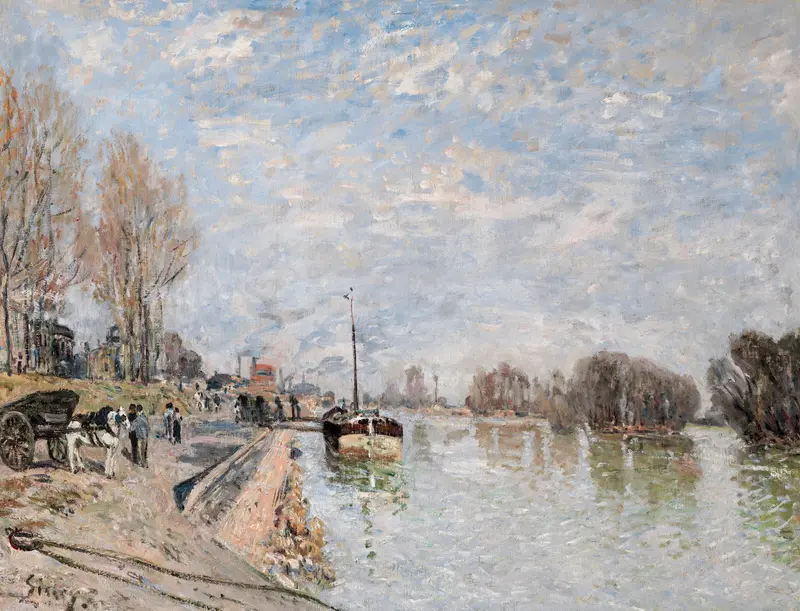
La Seine à Suresnes
Alfred Sisley
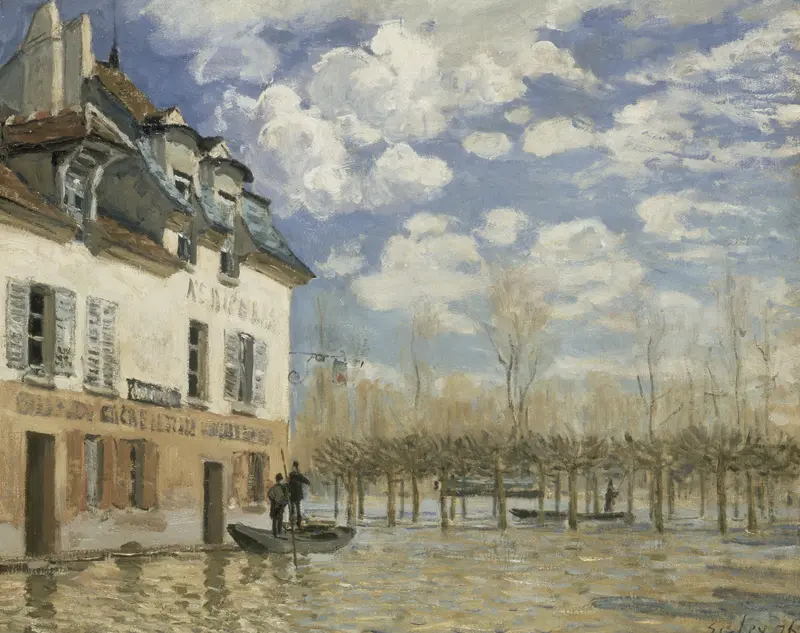
Boat in the Flood at Port Marly
Alfred Sisley
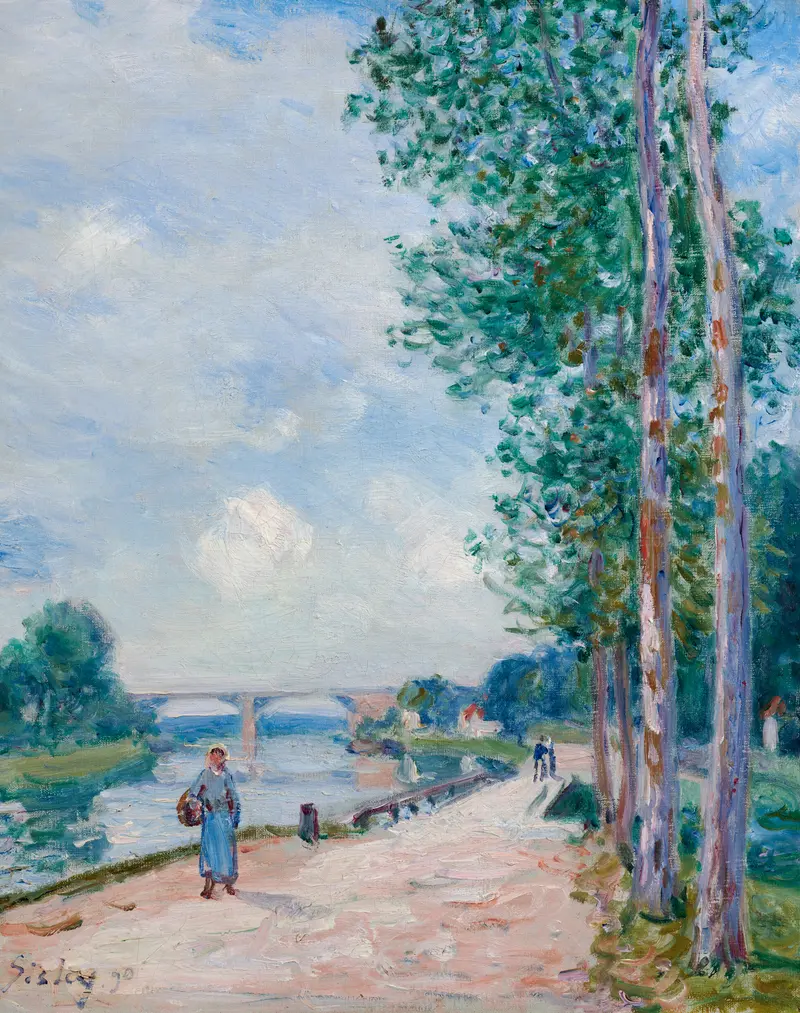
Les bords du Loing près de Moret
Alfred Sisley
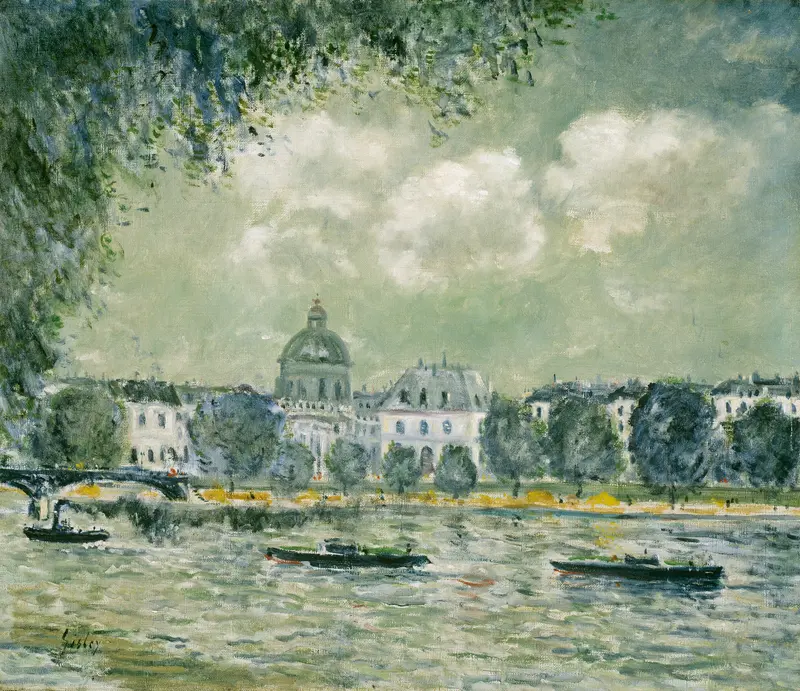
Landscape along the Seine with the Institut de France and the Pont des Arts
Alfred Sisley

Printemps au bord du Loing
Alfred Sisley
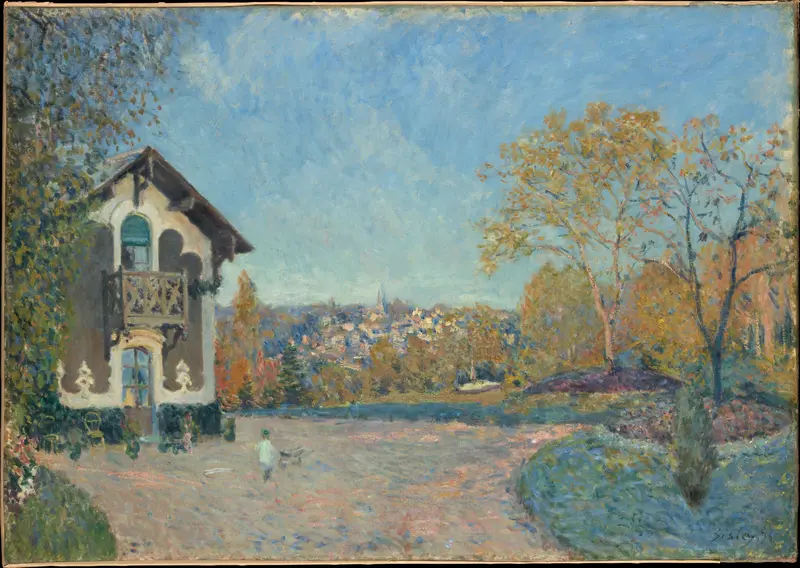
View of Marly-le-Roi from Coeur-Volant
Alfred Sisley
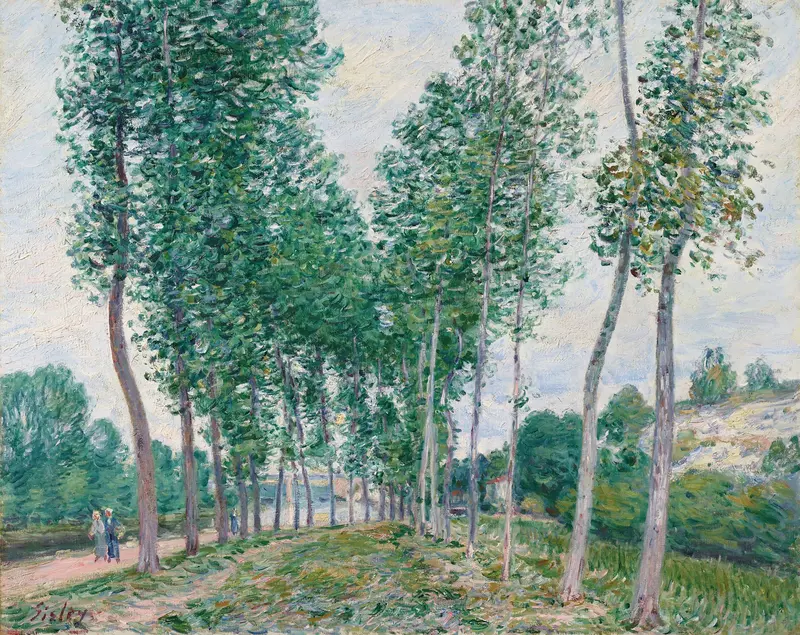
L’allée des peupliers au bord du Loing
Alfred Sisley
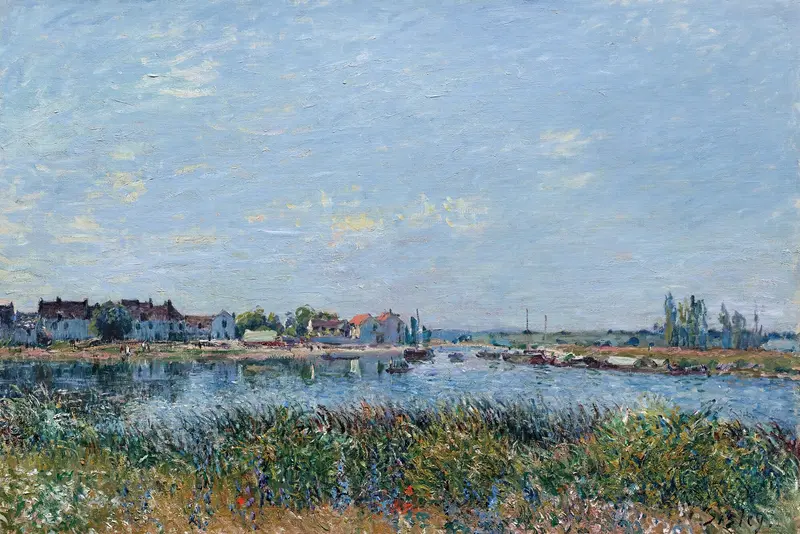
Saint-Mammès, Le Matin
Alfred Sisley
More Landscape Art

The Starry Night
Vincent van Gogh

View of Delft
Johannes Vermeer

Water Lilies
Claude Monet

The Grand Canal, Venice, looking north-west from the Ca' Corner to the Ca' Contarini degli Scrigni, with the campanile of Santa Maria della Carità
Canaletto

Windsor Castle
Canaletto

The Grand Canal looking North-East from the Palazzo Dolfin-Manin to the Rialto Bridge
Canaletto