
Snowfall on a village beside a frozen canal — History & Facts
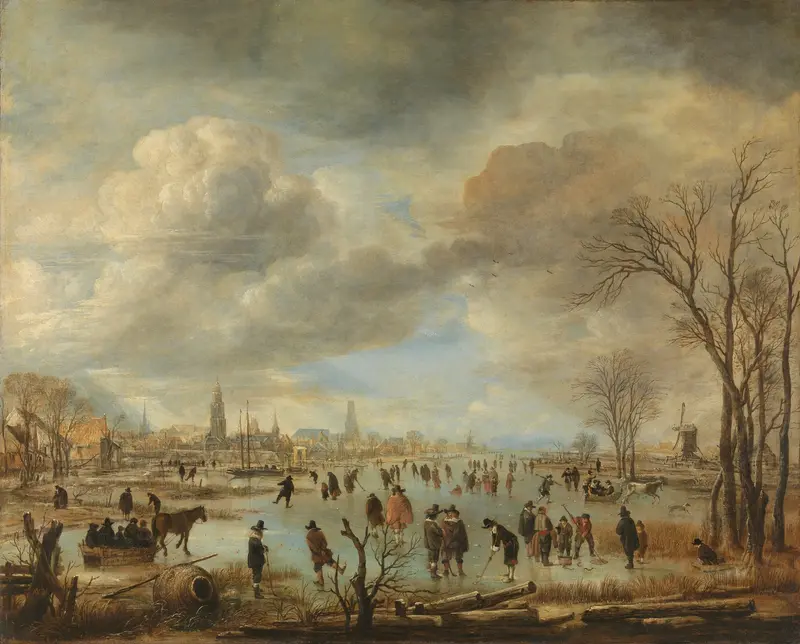
A heavy sky presses down on the village, its clouds swollen with snow, yet the life below is anything but still. The eye is drawn first to the frozen canal, where small figures—some gliding, some stooping—claim the ice as their winter stage. Each gesture is a clue: the hunched man in the foreground, perhaps setting a game in motion, the children clustered near the bank, the distant kolf players mid-swing.
The palette is all muted browns and silvery whites, the brushwork loose enough to let the cold seep in. Look at the way the light catches the roofs and the bare branches, and how the church anchors the horizon, a silent witness to the season’s brief pleasures. This is the world of Aert van der Neer, painting in the heart of the Dutch Golden Age, when winter landscapes became a genre in their own right. Scenes like these were prized by a new class of collectors—merchants and burghers eager to see their own towns and pastimes reflected on their walls.
Painted between 1630 and 1677, as the Rijksmuseum confirms, this work belongs to a period when Dutch painters found poetry in the everyday, and when the long winters turned ice into a communal playground. History has kept few traces of this particular village or its skaters, but the painting’s quiet drama invites you to step onto the ice and trace their stories for yourself.
More Artworks by Aert van der Neer

A Moonlit River Landscape With Figures Standing By A Gate, A Village Beyond
Aert van der Neer
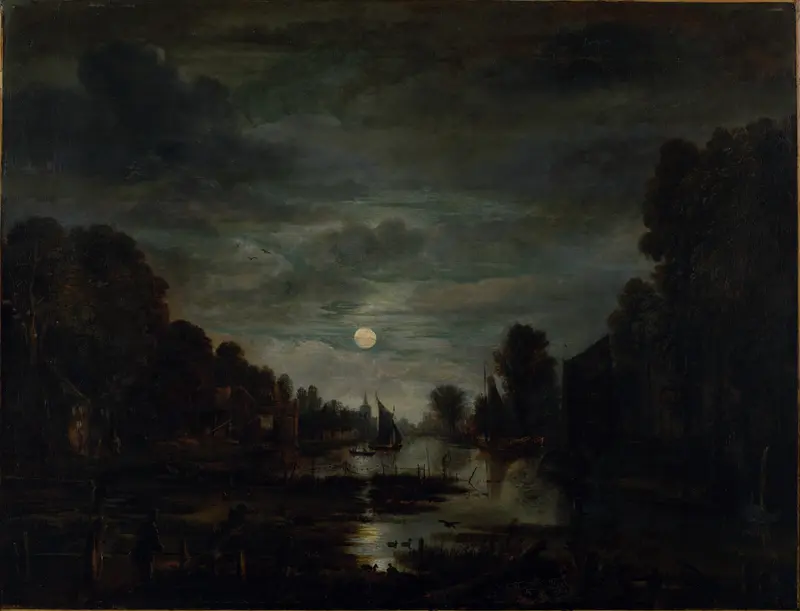
River Landscape in Moonlight
Aert van der Neer
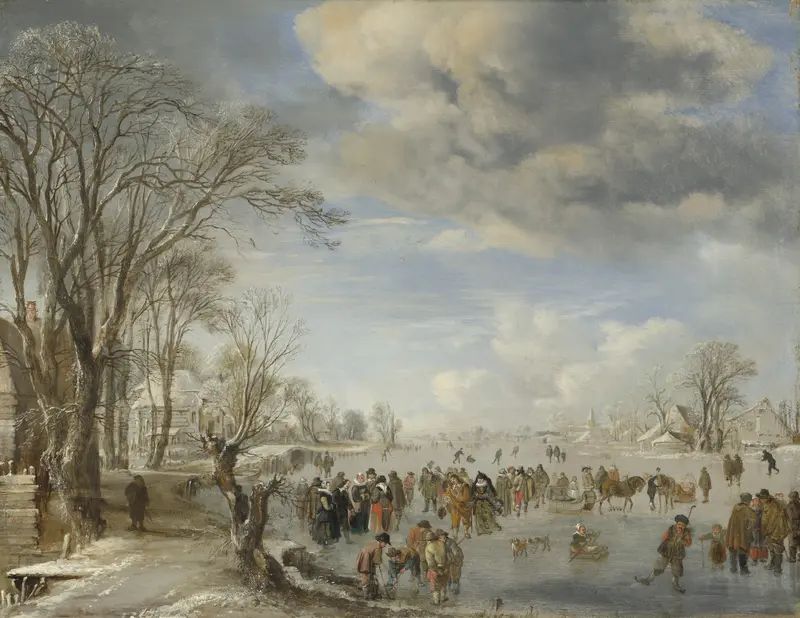
Winter in Holland – Skating Scene
Aert van der Neer

River Landscape
Aert van der Neer
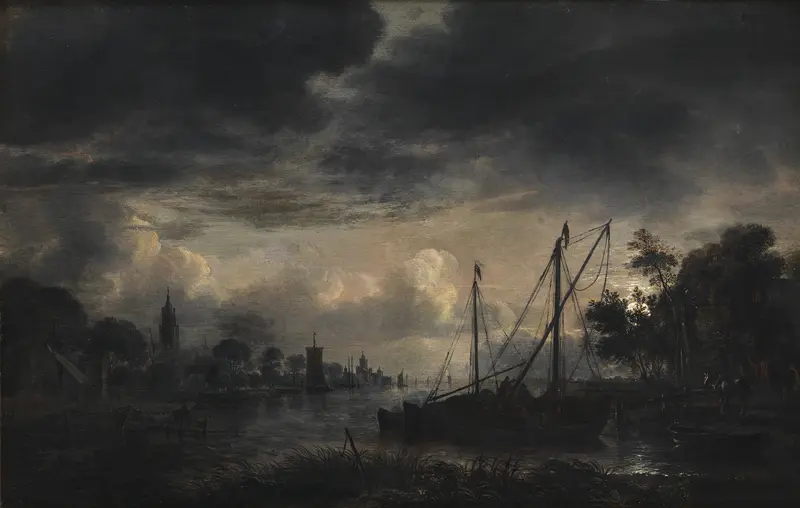
River Landscape in Moonlight
Aert van der Neer
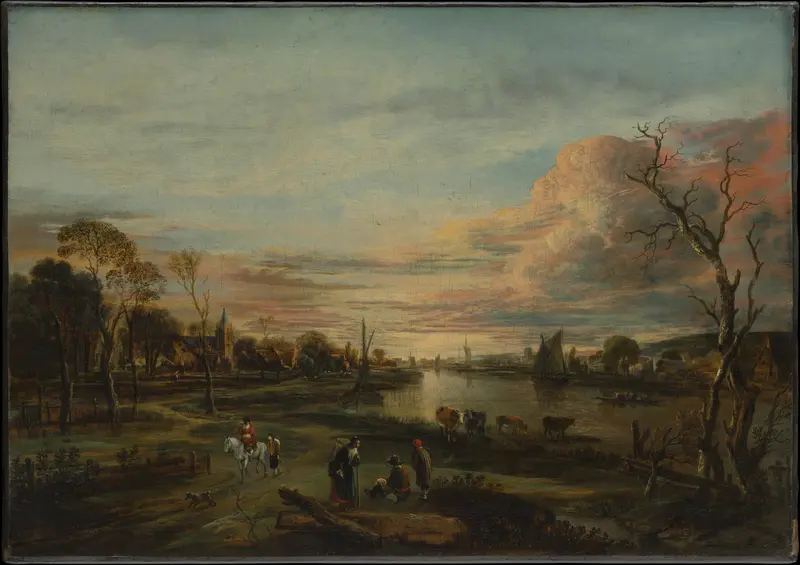
Landscape at Sunset
Aert van der Neer
Winter Landscape near a Town with Kolf Players and Horse-Drawn Sleighs
Aert van der Neer

Winter Landscape with Skaters on a Frozen River
Aert van der Neer
Moonlight at a Dutch River
Aert van der Neer
Moonlight Landscape
Aert van der Neer
More Landscape Art

The Starry Night
Vincent van Gogh

View of Delft
Johannes Vermeer

Water Lilies
Claude Monet

The Grand Canal, Venice, looking north-west from the Ca' Corner to the Ca' Contarini degli Scrigni, with the campanile of Santa Maria della Carità
Canaletto

Windsor Castle
Canaletto

The Grand Canal looking North-East from the Palazzo Dolfin-Manin to the Rialto Bridge
Canaletto