
South Georgia Shanty — History & Facts
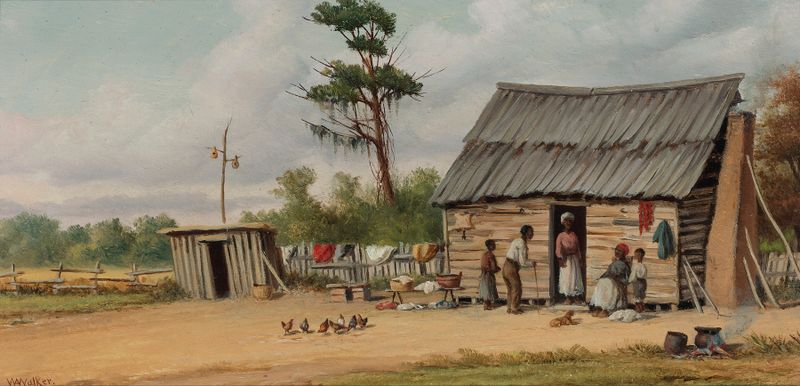
When did color learn to lie? In the soft, deliberate strokes of this painting, vibrant hues of ochre and cobalt murmur a different truth, one that speaks of transformation and fleeting moments in the life of a shanty. Look to the left where the shanty stands, its weathered boards wearing a coat of rich, sunlit yellow. The artist captures the caress of light against the structure, as though the sun itself is a reluctant painter bestowing warmth upon it. Notice the deep shadows that nestle beneath the eaves, contrasting with the brilliant sky—a tapestry of azure splashed with wisps of white.
The balance of light and shadow evokes a sense of nostalgia, inviting viewers to draw closer and embrace the scene’s intimacy. Yet, there lies an emotional tension beneath this pastoral exterior. The shanty, while radiant, is a symbol of transience, embodying a life that might be beautiful but is also fleeting. The vibrant colors may promise joy, yet they hint at decay and abandonment, a reminder of the relentless passage of time.
The surrounding landscape, rich with detail, emphasizes this duality; it flourishes with life, yet whispers of impermanence linger like autumn leaves ready to fall. William Aiken Walker painted this work during the late 19th century, a period when American art was shifting towards realism. Working primarily in the Southern states, he adopted a style that celebrated local life while reflecting the socio-economic changes around him. The shanty, perhaps a humble dwelling, serves as a testament to both the beauty of everyday life and the transformations that define our existence.
More Artworks by William Aiken Walker
Browse all →
A South Carolina Cabin
William Aiken Walker

Louisiana Cabin Scene
William Aiken Walker
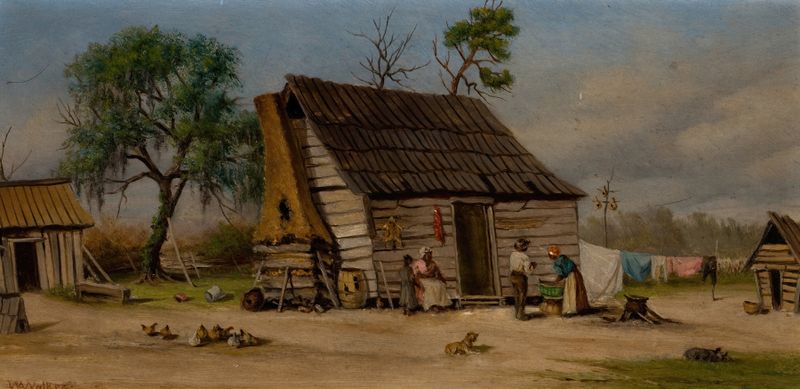
Cabin Scene
William Aiken Walker

Cabin Scene
William Aiken Walker

Cabin Scene, Wash Day
William Aiken Walker

Sharecroppers Gathering in the Yard
William Aiken Walker
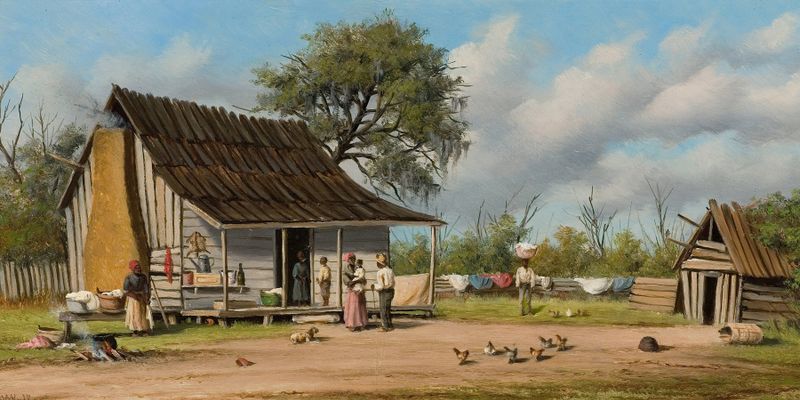
Cabin Scene
William Aiken Walker
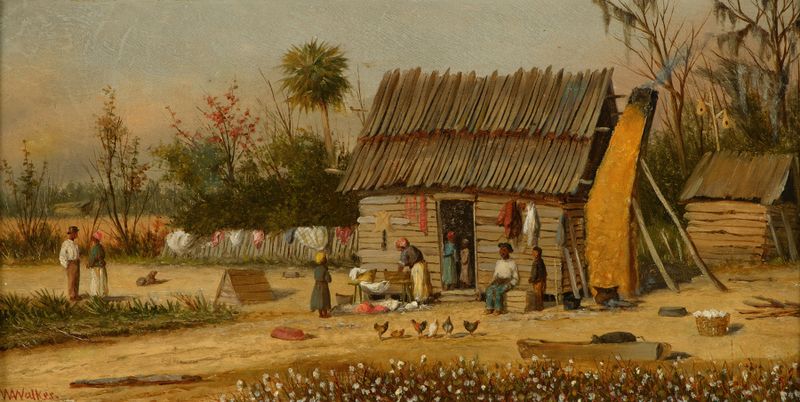
Wash Day
William Aiken Walker
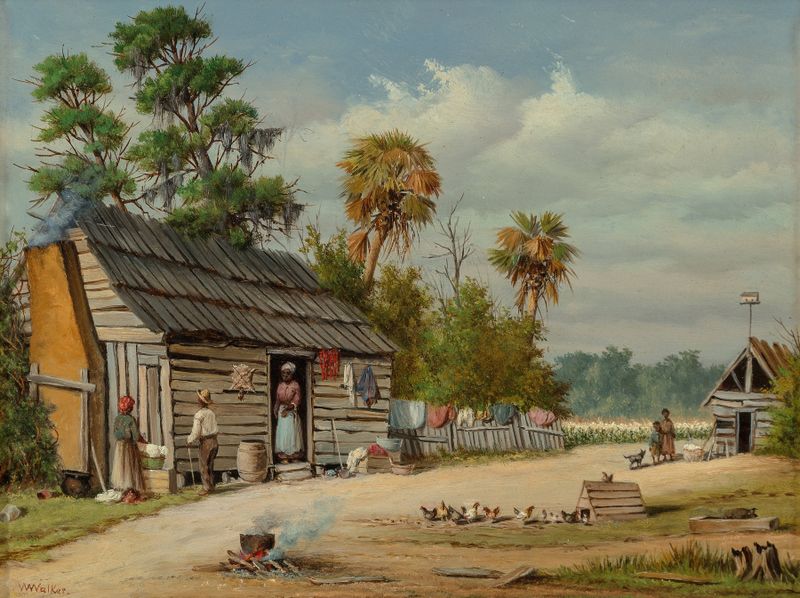
Cabin
William Aiken Walker
The Old Cabin
William Aiken Walker





