
Southend Pier — History & Facts
Can paint confess what words never could? The haunting allure of a pier suspended in time invites us to ponder the boundaries of expression and emotion. Look to the center of the canvas, where the pier stretches into the distance, its slender form leading the eye toward the horizon. Notice how the artist employs a delicate palette of muted blues and greys, evoking a sense of tranquility tinged with melancholy. The gentle brushwork creates an ethereal quality, as if the scene is half-remembered, capturing the fleeting quality of light as it dances on the water’s surface. As you explore further, you'll find contrasts that reveal emotional depth: the stoic structure of the pier juxtaposed against the fluidity of the water.
Each ripple holds a story, while the faint silhouettes of distant figures suggest connection and solitude intertwined. This visual tension suggests not only a physical departure but also an emotional journey—one that resonates with longing, nostalgia, and the quiet awe of nature’s vastness. Whistler painted this work during a period marked by his intense exploration of tonal harmony and atmospheric effects. Creating it in the late 19th century, he was immersed in the aesthetic movement that valued beauty and emotional resonance over detailed representation.
At this time, he lived in London, where he was influenced by the changing industrial landscape, which added layers of complexity to his work and transformed the traditional perspectives of art.
More Artworks by James Abbott McNeill Whistler
Browse all →
Nocturne in Blue and Silver
James Abbott McNeill Whistler
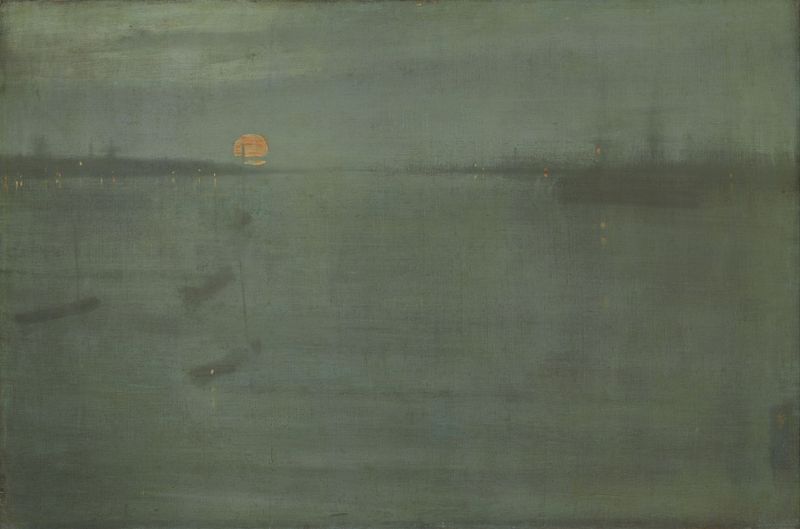
Nocturne: Blue and Gold–Southampton Water
James Abbott McNeill Whistler
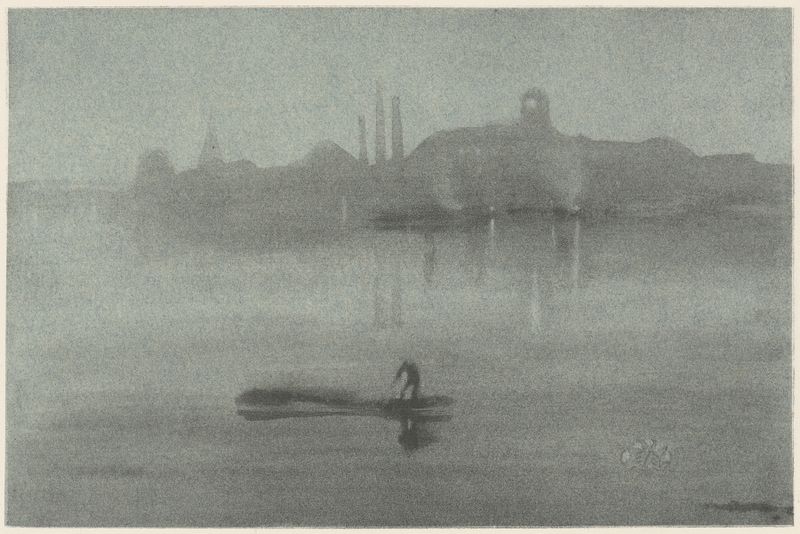
Nocturne
James Abbott McNeill Whistler
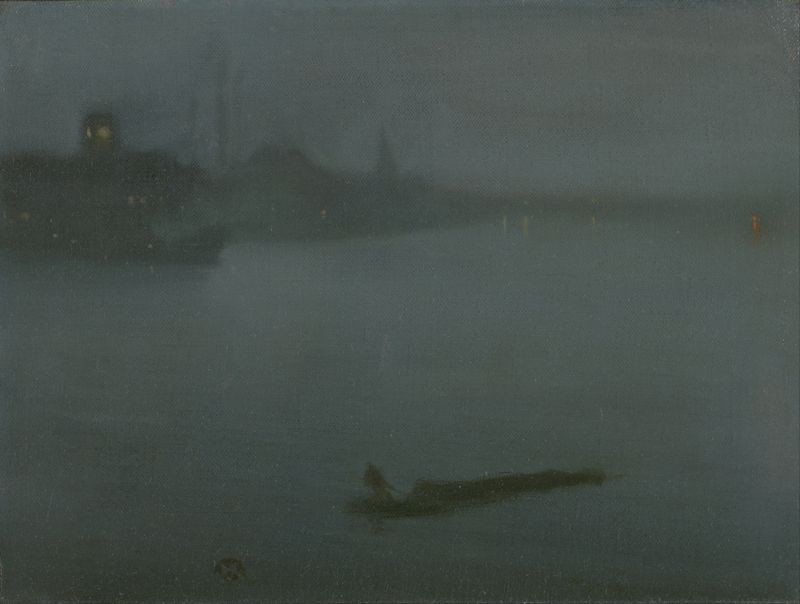
Nocturne in Blue and Silver
James Abbott McNeill Whistler
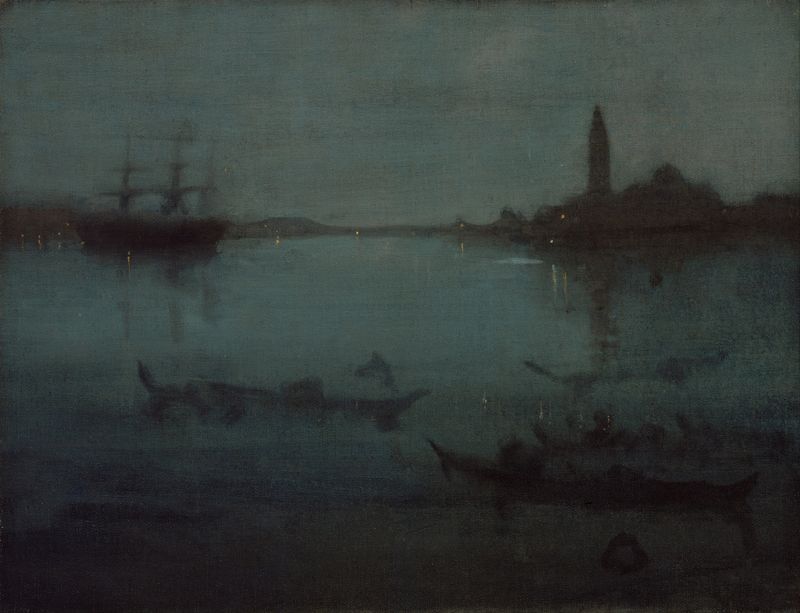
Nocturne in Blue and Silver- The Lagoon, Venice
James Abbott McNeill Whistler
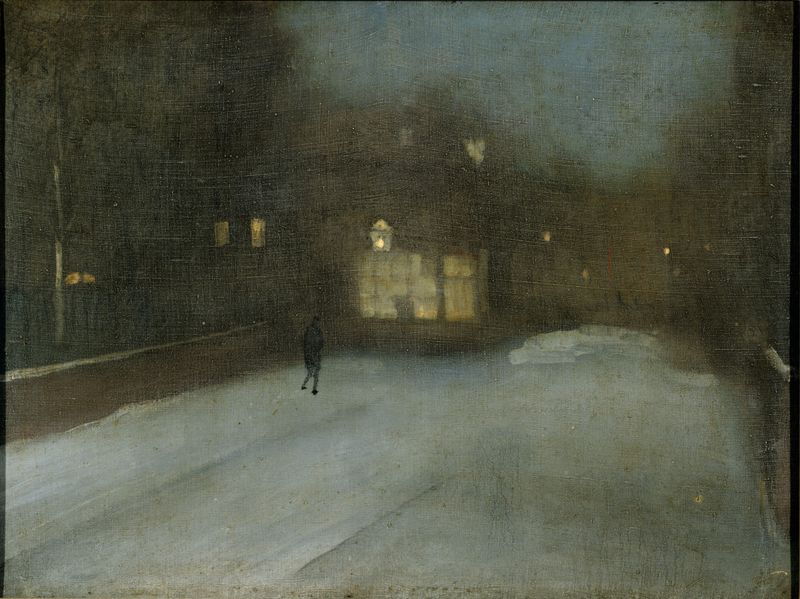
Nocturne in Grey and Gold: Chelsea Snow
James Abbott McNeill Whistler
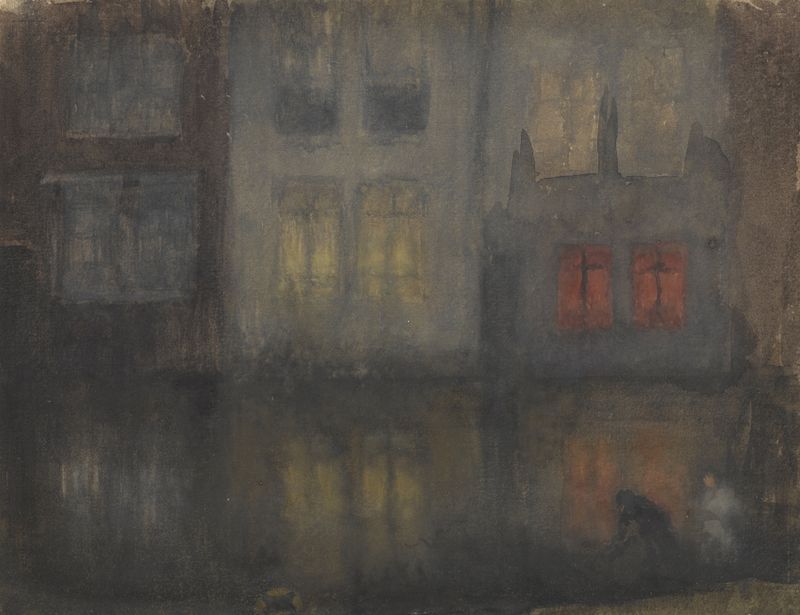
Nocturne: Black and Red—Back Canal, Holland
James Abbott McNeill Whistler
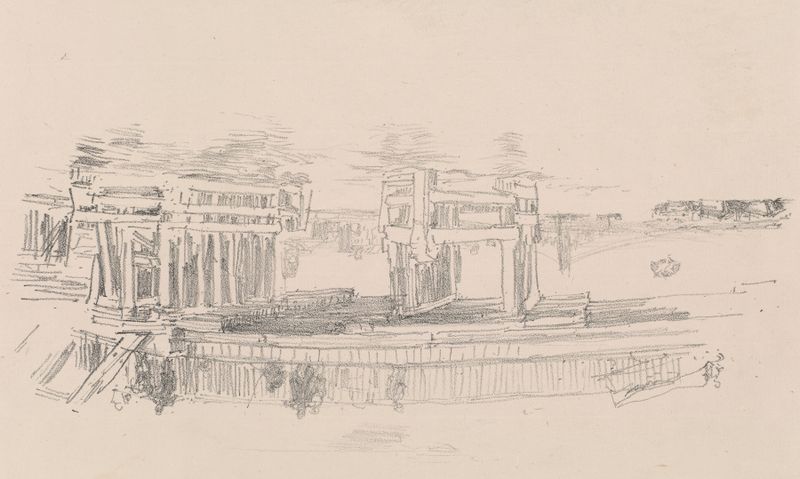
Old Battersea Bridge
James Abbott McNeill Whistler

Nocturne: Blue and Silver–Battersea Reach
James Abbott McNeill Whistler
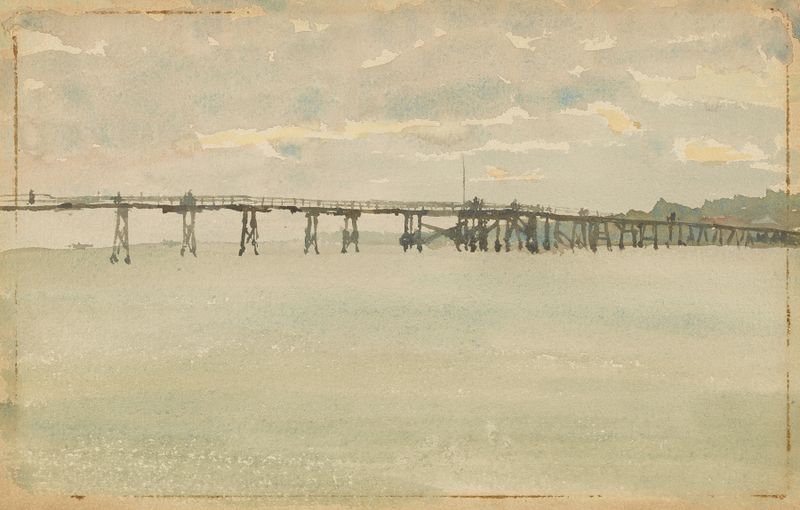
Grey and Silver–Pier, Southend
James Abbott McNeill Whistler




