
Southwest View of Middle Temple — History & Facts
What if beauty was never meant to be finished? In that ephemeral moment, we stand before the magnificent architecture, feeling the weight of history and the whispers of untold stories. Focus on the grand structure to the left, its intricate details etched against the soft blue of the sky. Notice how the light bathes the stone in a warm amber glow, bringing life to its geometric precision. The artist’s choice of soft hues and bold lines create a harmonious balance, guiding the eye from the elaborate façades to the serene waterway below, where reflections ripple like fragmented memories. Hidden within this depiction lies a tension between permanence and transience.
The solidity of the temple contrasts sharply with the ephemeral quality of the water, symbolizing the fragility of legacy and the betrayal of time. Elements of nature brush against the man-made, reminding us of the inevitable decay that follows beauty. The scene speaks not only of architectural triumph but also of a yearning for stability in an ever-changing world. Samuel Ireland painted this view in 1800, a time when the Romantic movement was beginning to influence art across Europe.
Living in London, he found inspiration in the city’s evolving landscapes amidst political and social upheaval. The emergence of new ideas around aesthetics and identity informed his work, as he sought to capture not just a view, but the essence of his era and the bittersweet nature of beauty that could never be complete.
More Artworks by Samuel Ireland
Browse all →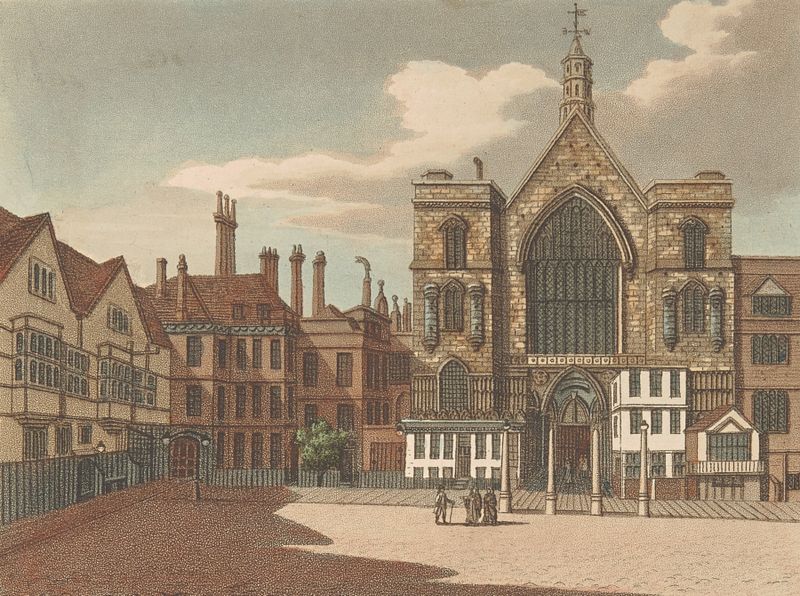
Westminster Hall
Samuel Ireland

Southwest View of Middle Temple
Samuel Ireland
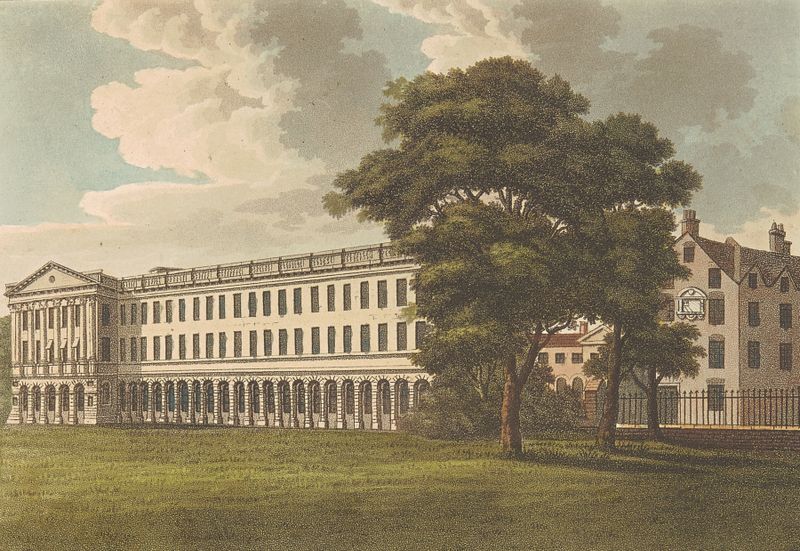
Stone Buildings, Lincoln’s Inn
Samuel Ireland
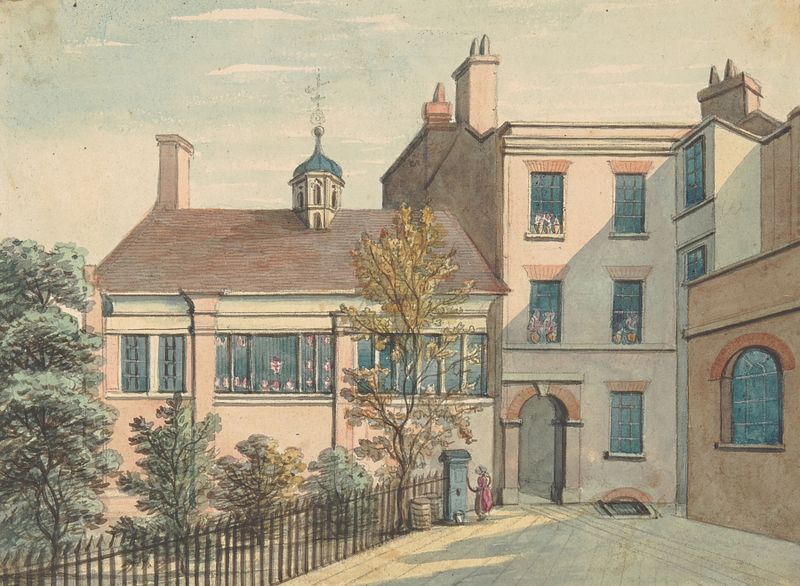
Barnard’s Inn
Samuel Ireland

Lincoln’s Inn Hall and Chapel
Samuel Ireland

Lion’s Inn
Samuel Ireland
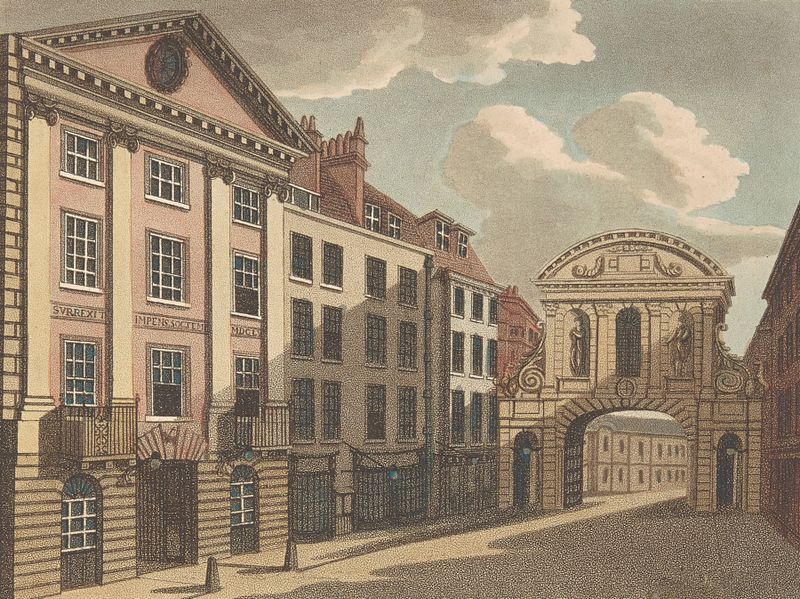
Middle Temple Gate
Samuel Ireland
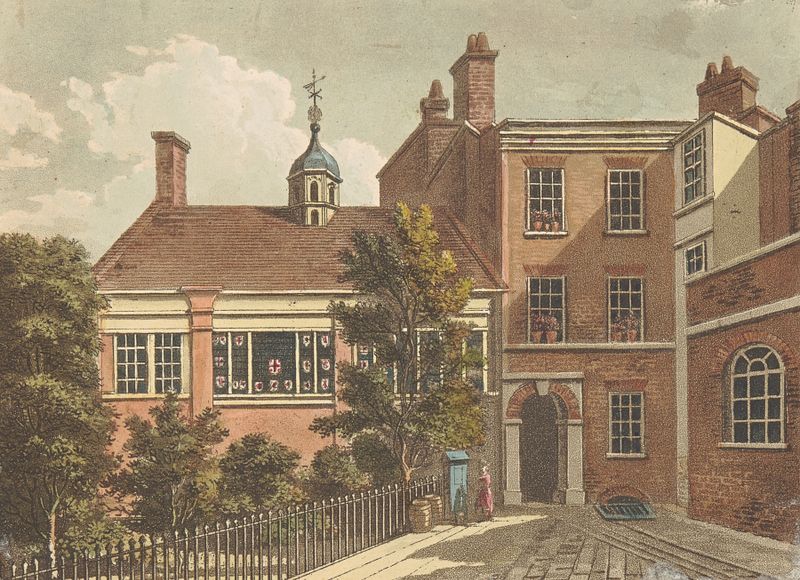
Barnard’s Inn
Samuel Ireland

Westminster Hall
Samuel Ireland
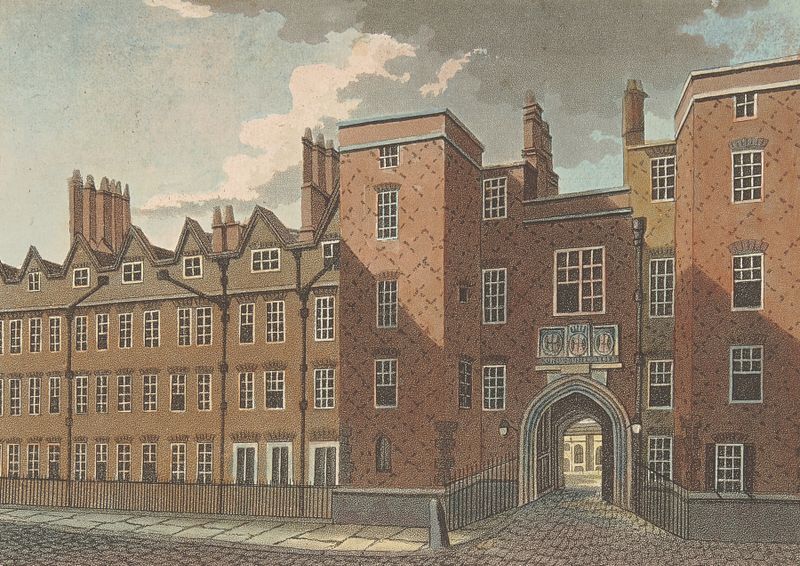
Lincoln’s Inn Gate
Samuel Ireland
More Architecture Art
Browse all →
The statue of Liberty
Frédéric Auguste Bartholdi

View of Houses in Delft, Known as ‘The Little Street’
Johannes Vermeer

View of Houses in Delft, Known as ‘The Little Street’
Johannes Vermeer

The Cathedral in Rouen. The portal, Grey Weather
Claude Monet

The yellow house
Vincent van Gogh

The Church in Auvers-sur-Oise, View from the Chevet
Vincent van Gogh