Spiders, Ants and Hummingbird on a Guava Branch — History & Facts
A guava branch with a yellow fruit and leaves eaten into holes is overrun with animals. At lower left a huge black, hairy spider lies over a hummingbird beside a small nest of white eggs; another sits on the trunk below a gray silken mass. Columns of large ants march along the twigs, winged ants gather at lower right, and webs with smaller spiders fill the top. Maria Sibylla Merian drew the scene for plate 18 of Metamorphosis insectorum Surinamensium (1705), engraved by P.
Sluyter. She wrote that she usually found the largest spiders on guava trees, that they normally eat ants, and that for lack of ants they take small birds from their nests. The Natural History Museum identifies the scene as a pinktoe tarantula eating a ruby-topaz hummingbird. Linnaeus named the spider avicularia, little bird, after this plate.
Langsdorff and others ridiculed the idea of a bird-eating spider, but researchers now know Merian recorded a real predation. It is in the Smithsonian Libraries in Washington, DC.
More Artworks by Maria Sibylla Merian
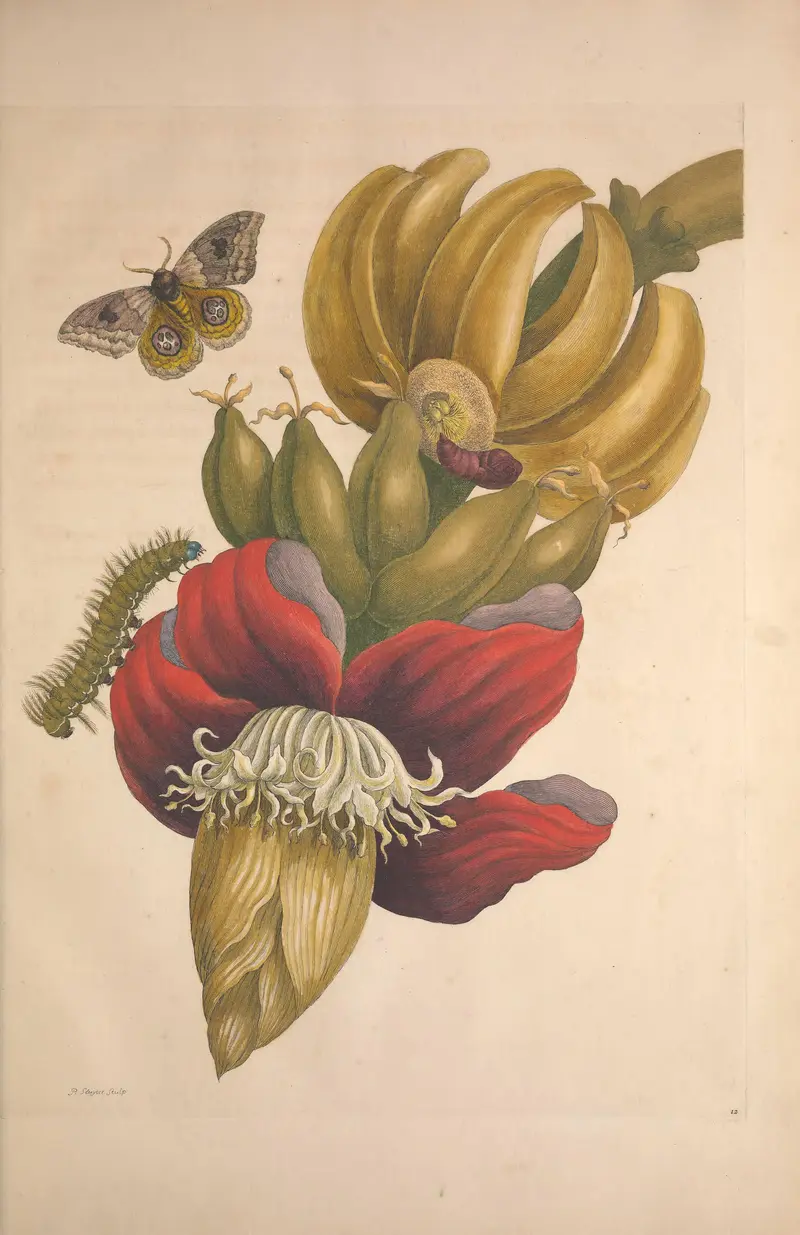
Banana with Bullseye Moth and Caterpillar
Maria Sibylla Merian
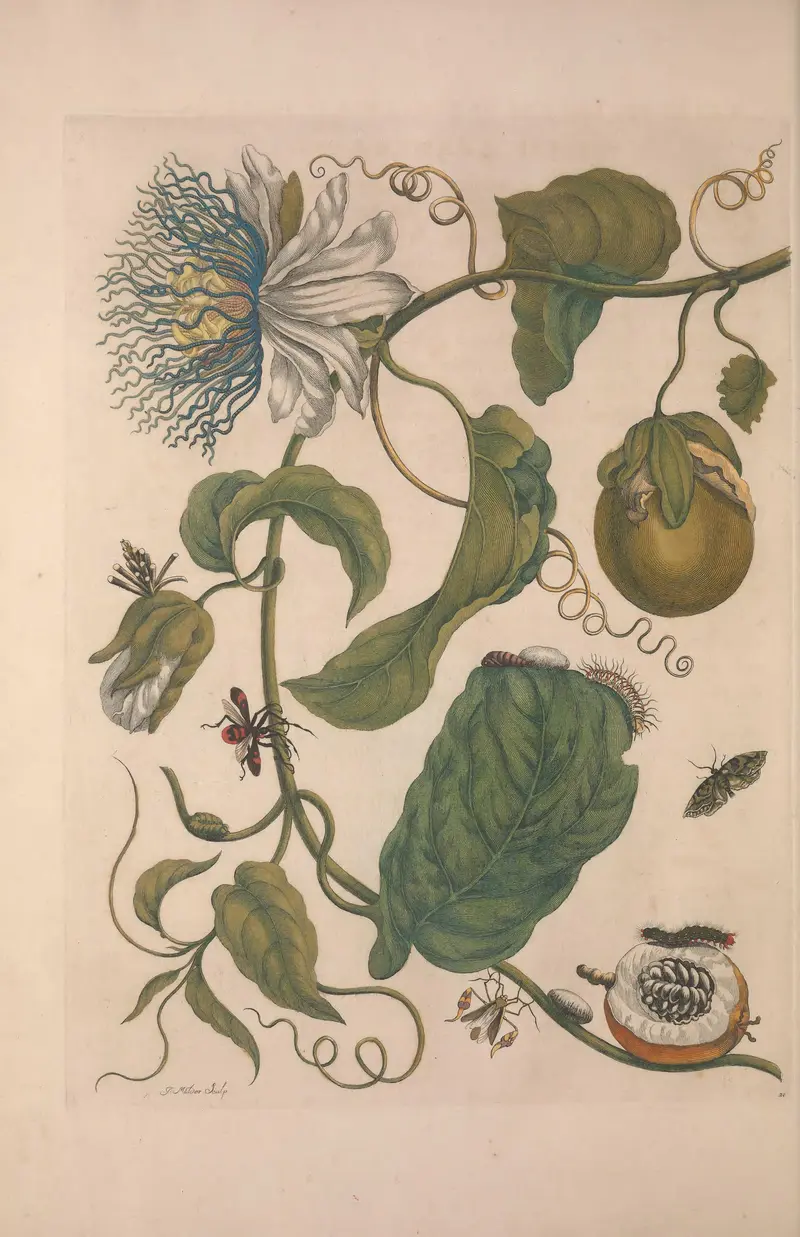
Passionflower with Caterpillars and Insects
Maria Sibylla Merian
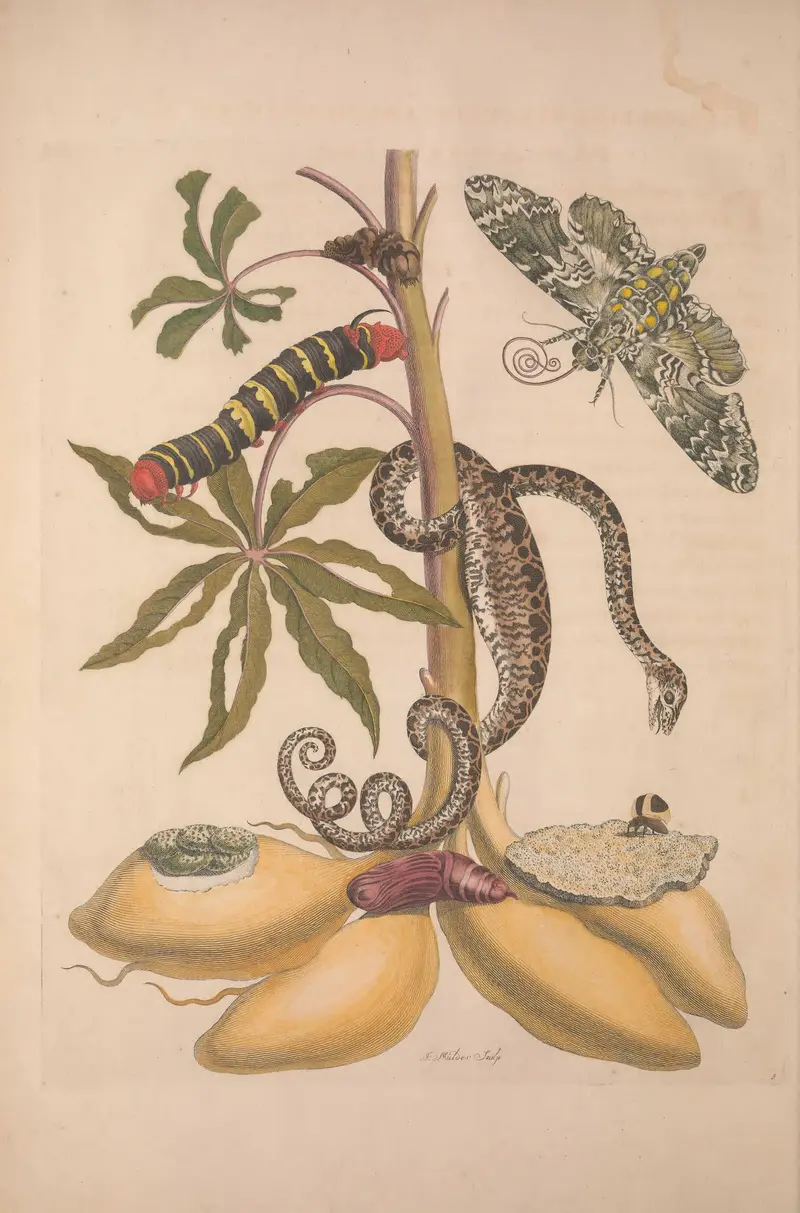
Cassava Root with Tree Boa and Sphinx Moth
Maria Sibylla Merian
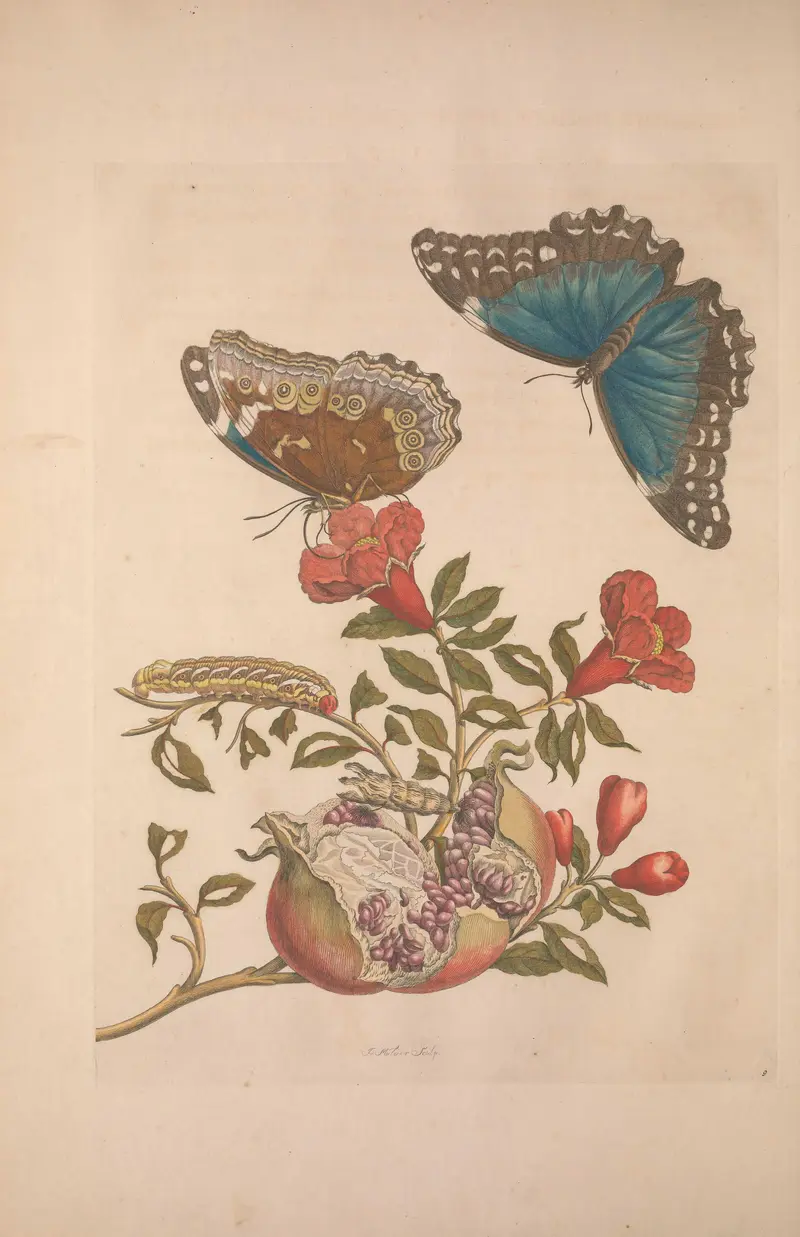
Pomegranate with Caterpillar, Pupa and Blue Butterfly
Maria Sibylla Merian
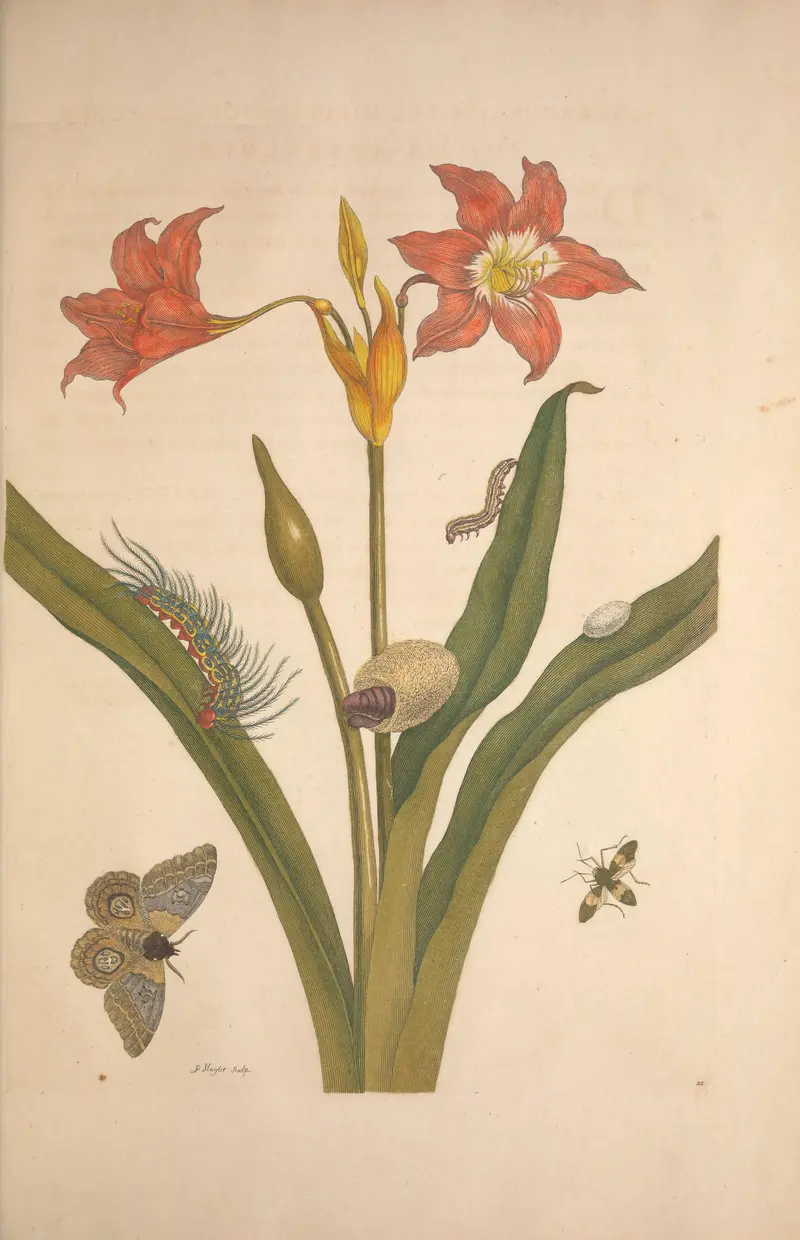
Red Amaryllis Lily with Moth and Caterpillars
Maria Sibylla Merian
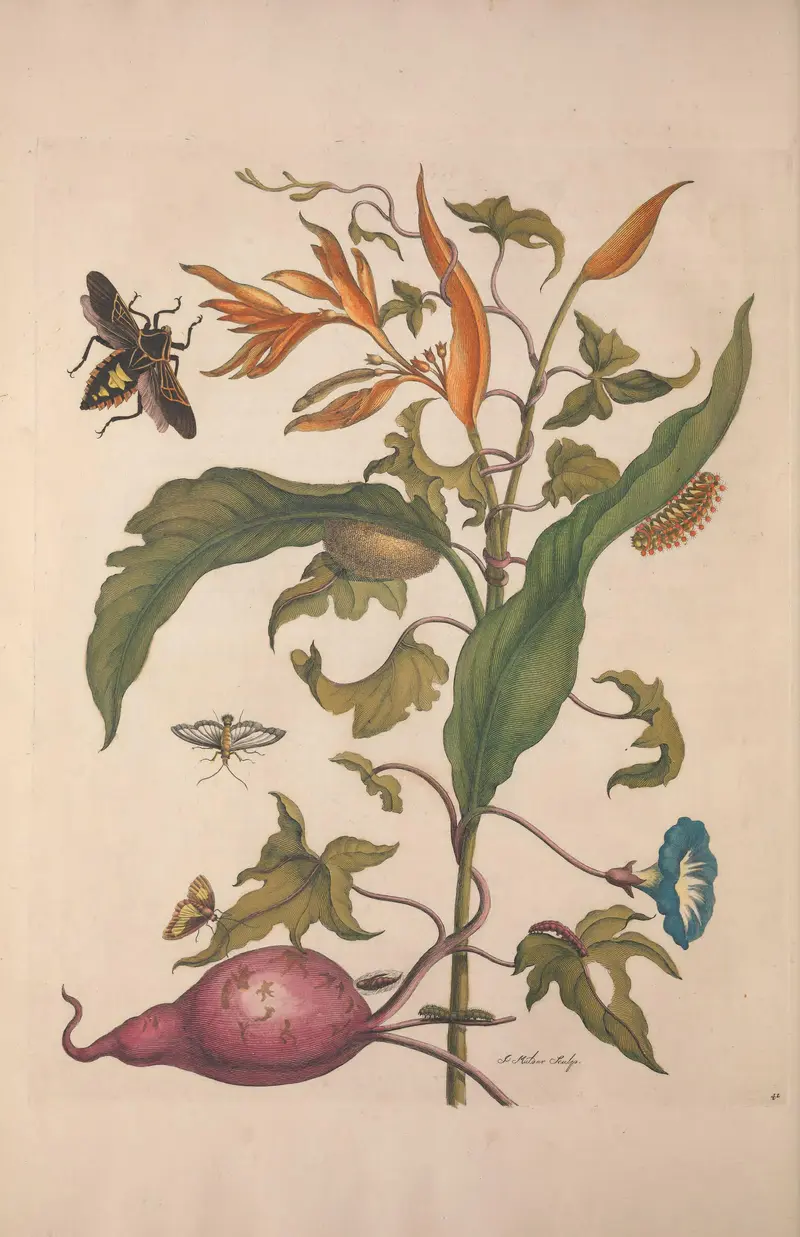
Sweet Potato with Beetle and Butterfly
Maria Sibylla Merian
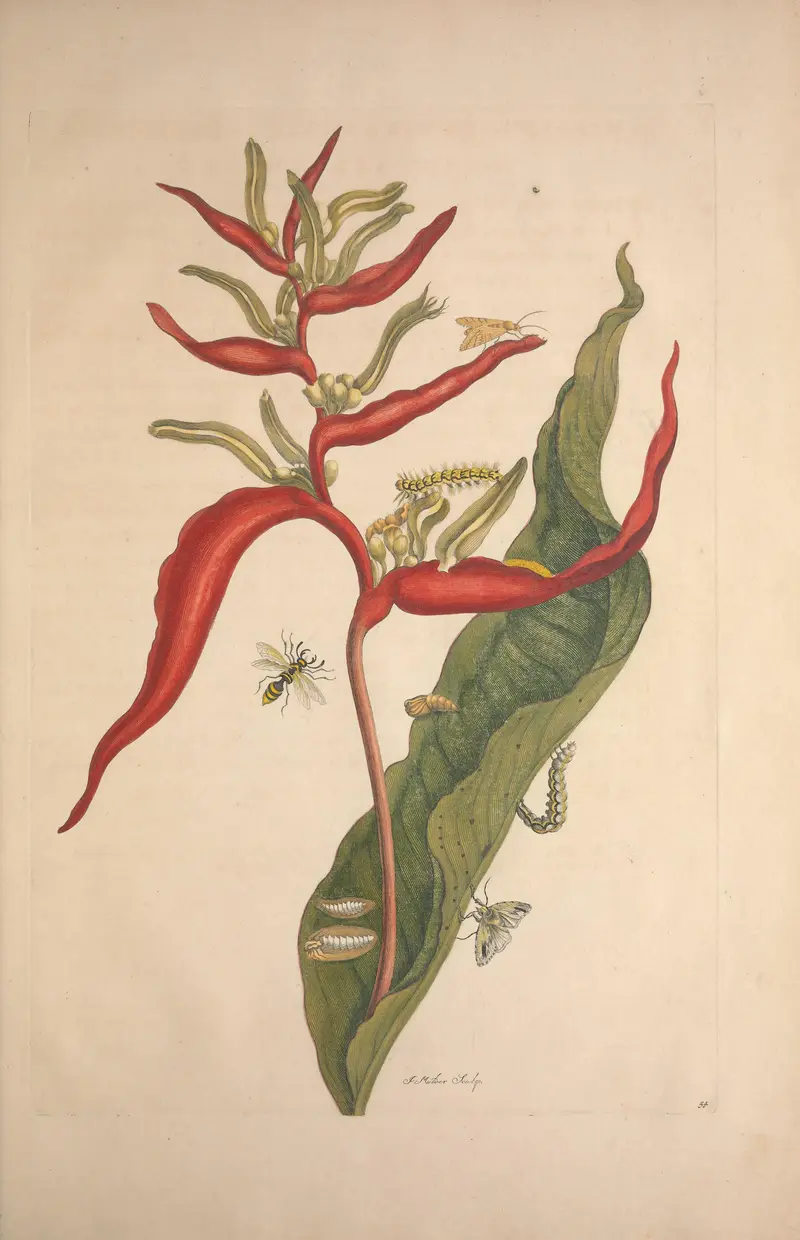
Heliconia with Moth
Maria Sibylla Merian
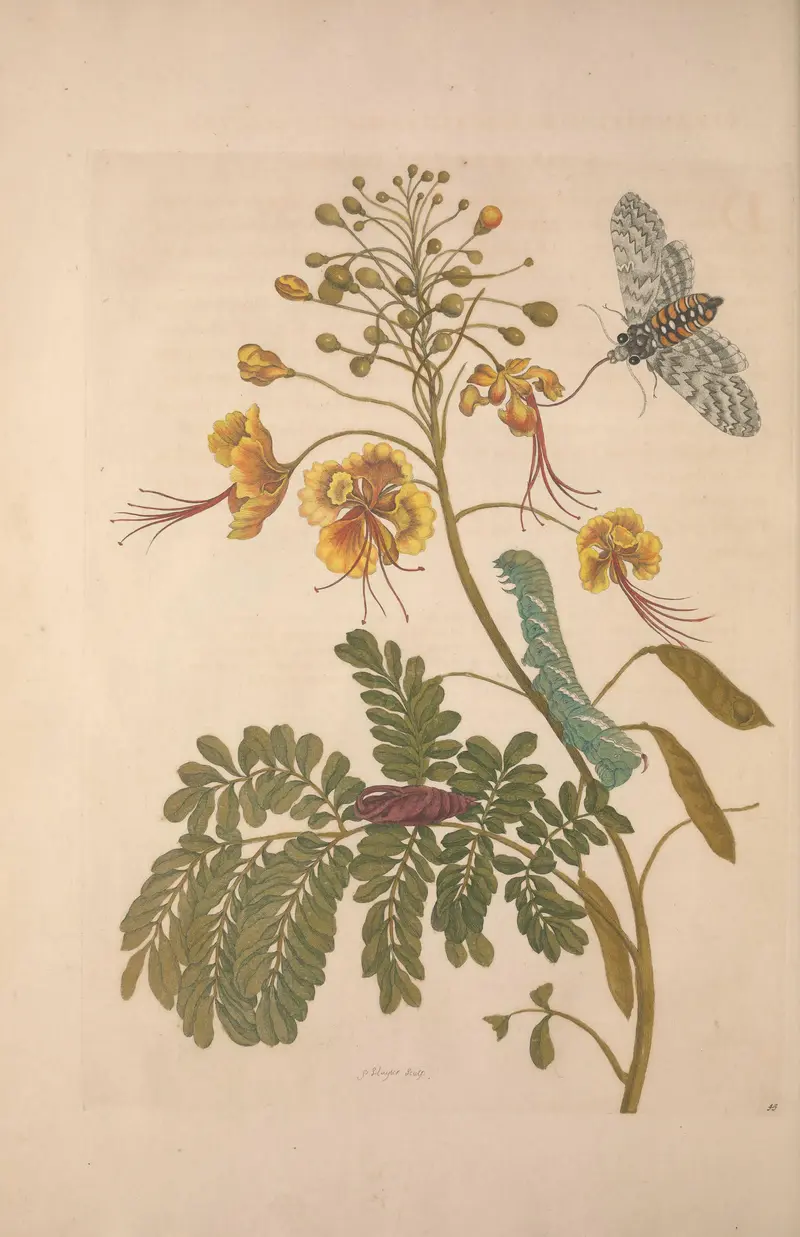
Mimosa with Moth and Caterpillar
Maria Sibylla Merian

Grapevine with Caterpillar and Moth
Maria Sibylla Merian
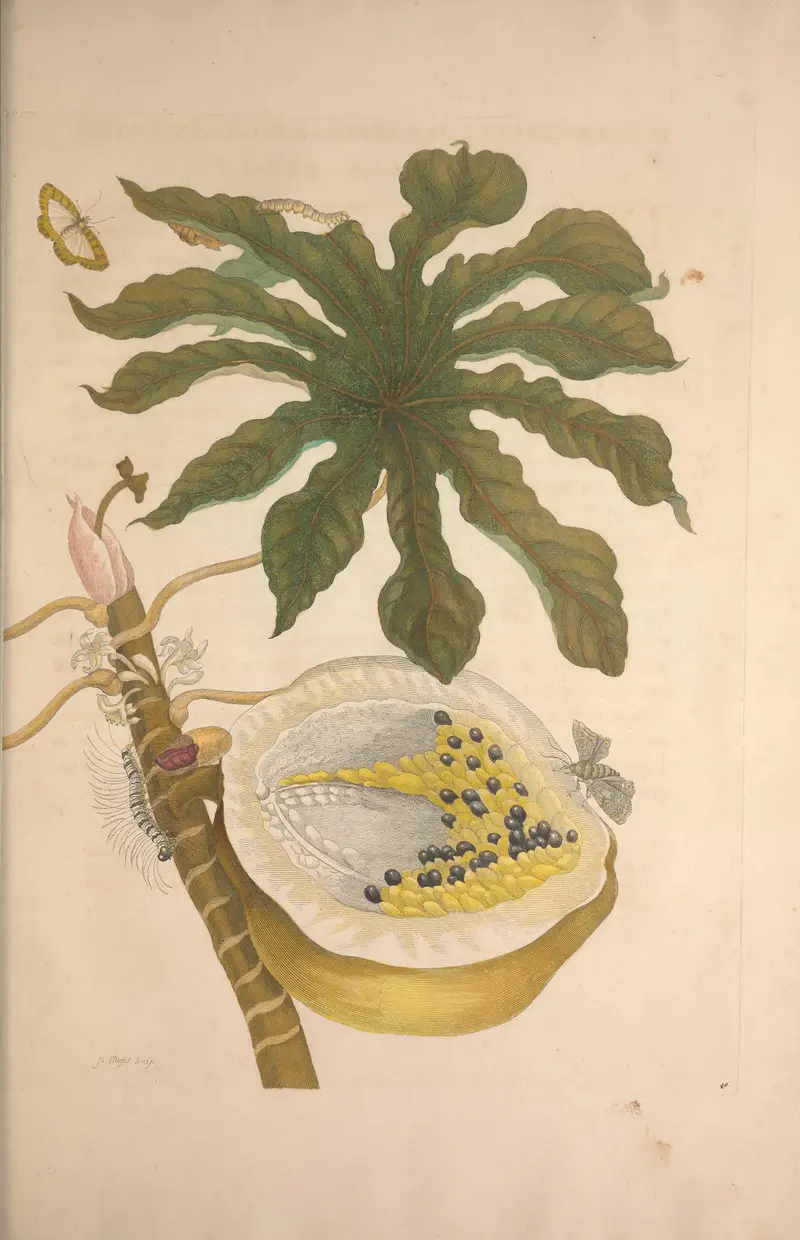
Papaya with Moth and Caterpillar
Maria Sibylla Merian