Spring in Cornwall — History & Facts
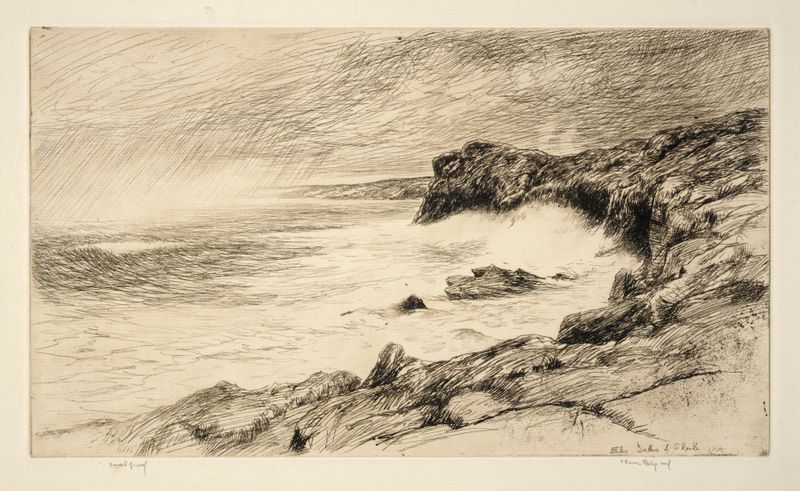
What if beauty was never meant to be finished? The essence of desire runs through the vibrant hues and textured strokes of this landscape, suggesting a longing for an elusive perfection. Look to the foreground where a lush field of verdant greens meets the eye, dotted with wildflowers that burst forth in colors of yellow and violet. The sweeping sky, painted with soft blues and grays, casts a delicate light over the scene, accentuating the gentle contours of rolling hills in the background. Each brushstroke conveys movement, inviting the viewer into a world where nature unfolds with every glance. Underneath the tranquil surface lies a contrast between the vibrancy of life and the stillness of the moment.
The flowers, in their transient beauty, evoke a sense of fleeting joy, while the expansive sky hints at the infinite possibilities beyond the horizon. This tension between the immediate and the eternal captures a desire not just for beauty, but for a deeper connection to the world around us. In 1926, the artist was immersed in a post-war environment, seeking solace in the natural landscapes of Cornwall. This period marked a transition in his career, as he moved towards capturing the emotional resonance of nature.
Eby’s brushwork reflects a synthesis of impressionistic influences paired with his own stylistic evolution, embodying both the serenity of the English countryside and the complexities of a rapidly changing world.