SS City of Leeds — History & Facts
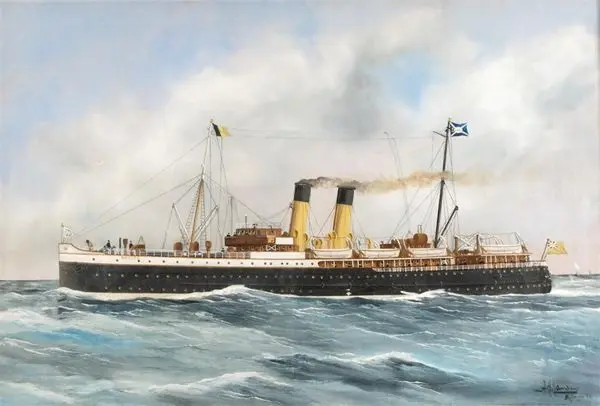
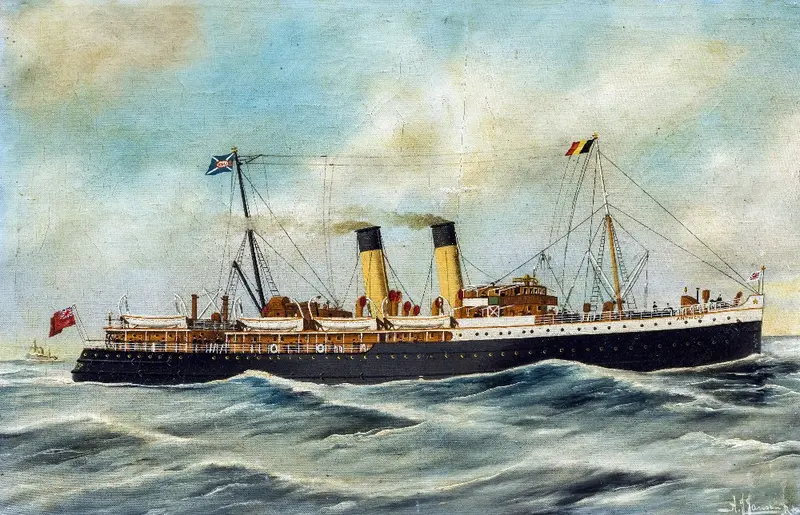
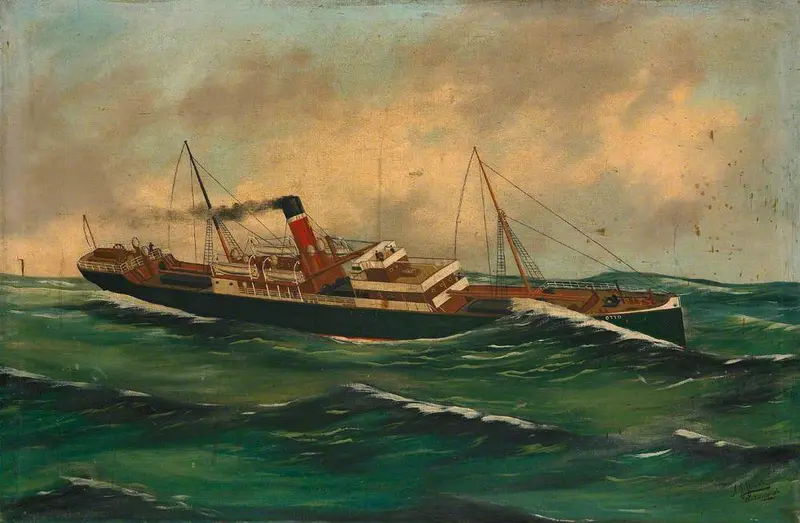
The eye is drawn first to the proud silhouette of the SS City of Leeds, her hull slicing through a restless, green-grey sea under a sky brushed with ochre and cream. Flags snap at her masts, announcing her identity and allegiance, while the trim lines of rigging and the upright funnel speak of an age when steam and sail briefly coexisted. The artist, A.
J. Jansen, places the ship almost parallel to the picture plane, giving her a sense of measured progress and allowing the viewer to take in her every detail: the lifeboats, the deck structures, the tiny, purposeful figures that hint at the human scale of maritime ambition. The low horizon grants the sky a broad stage, its subtle turbulence echoing the energy of the waves below, and lending the whole scene a quiet tension.
This is not a ship at rest, but a vessel with somewhere to go. Painted in 1906, this work belongs to a tradition of ship portraiture that flourished in the late nineteenth and early twentieth centuries—a time when steamships were the lifeblood of commerce and empire. Such paintings were often commissioned by shipping lines, captains, or proud owners to commemorate a launch, a maiden voyage, or simply to celebrate the engineering marvels of their day. The SS City of Leeds is shown not in dramatic peril or grand arrival, but in the steady business of passage, a choice that reflects the era’s faith in progress and routine.
Little is recorded about this specific canvas or its journey to the present collection, but its careful attention to detail and sense of purpose place it firmly within the world of Edwardian maritime pride. Look again at the flags and the wake: they are signals, not just of nationality, but of a world in motion.