SS 'Colchester' — History & Facts
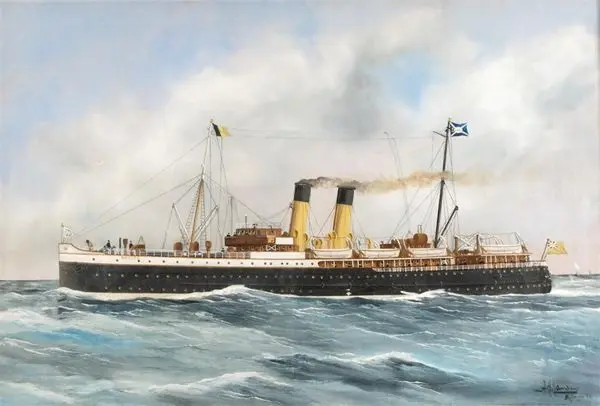
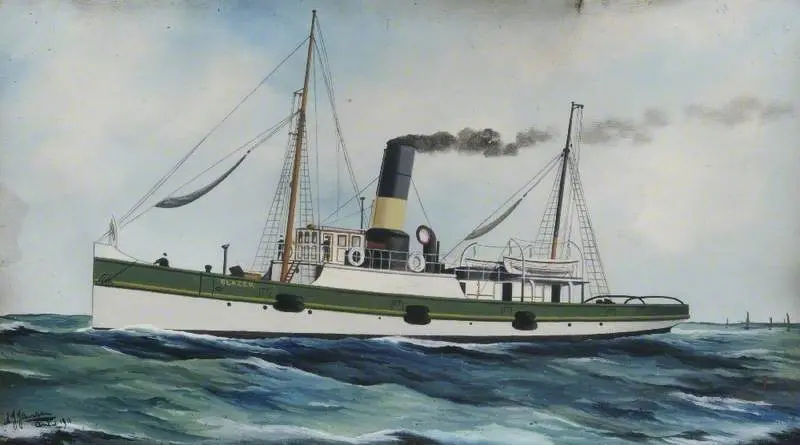
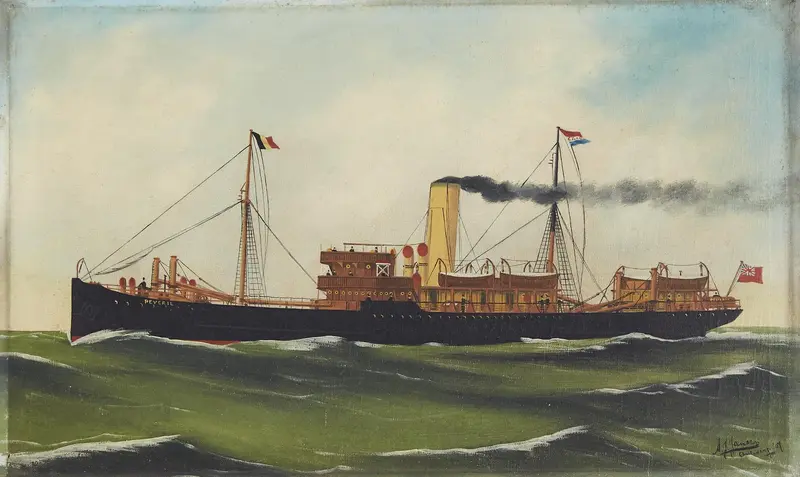
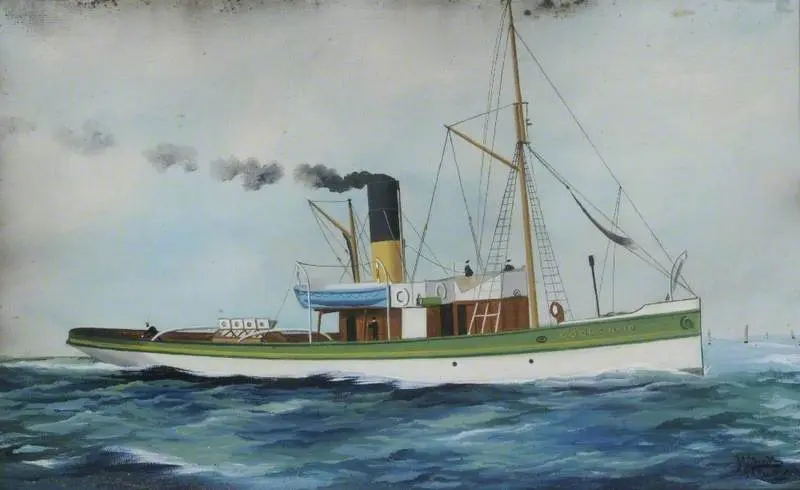
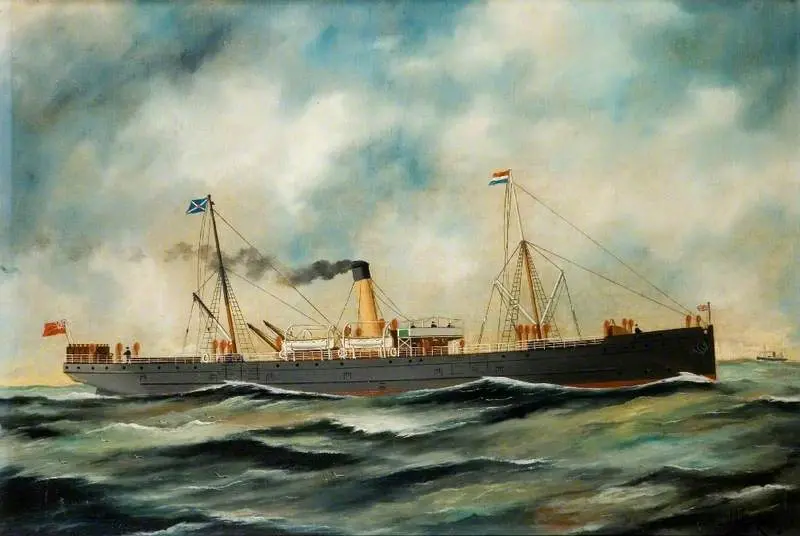
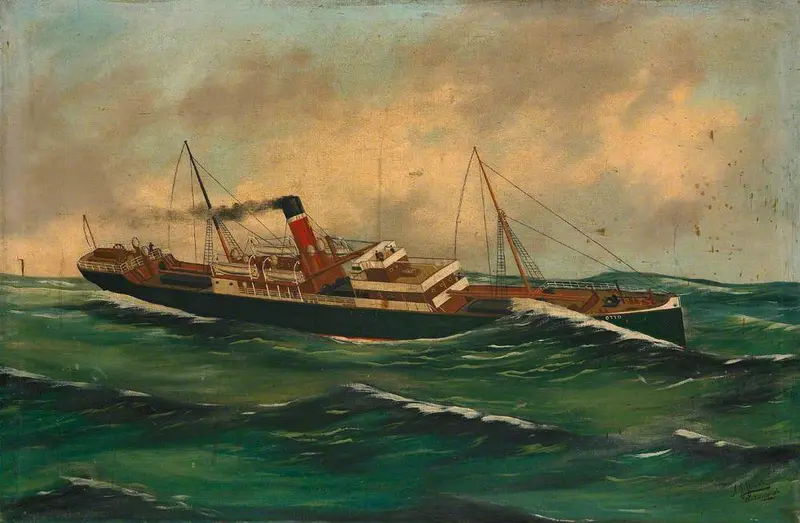
What first grips the eye in SS 'Colchester' by A. J. Jansen is the sense of purpose and motion—this is no idle vessel, but a ship cleaving the choppy water under a sky alive with shifting weather.
The flags at her masts—Dutch, Scottish, and British—signal her international identity and the web of routes she must have sailed. Jansen places the viewer at water level, so the ship dominates the horizon, its hull slicing through green-black waves, while the steam funnel sends a plume of smoke into the wind. Every detail, from the taut rigging to the careful rendering of lifeboats and deck machinery, is a testament to the pride and precision of early twentieth-century ship portraiture.
The palette—stormy blues, iron greys, flashes of red—sets a mood of industry and anticipation, as if the ship is about to vanish into the mist beyond. Painted in 1915, this work belongs to a tradition that flourished as steam replaced sail and the world’s shipping lanes became the arteries of empire and commerce. Such portraits were often commissioned by shipping lines or captains to commemorate new vessels or mark milestones in their service. The date situates the painting in the midst of the First World War, a time when ships like the SS 'Colchester' were both commercial lifelines and potential targets.
Little is recorded of this particular canvas’s journey, but its survival in a public collection today is a reminder of how these images once served as both advertisement and memorial, capturing the pride of an industry and the optimism of an age. Look again at the ship’s steady progress and the painter’s careful hand: both speak of a world on the move, and the hopes invested in steel, steam, and the open sea.