SS Marylebone (Railway Steamer) — History & Facts
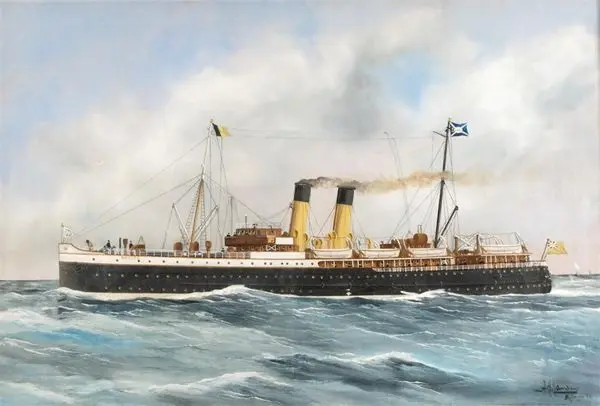
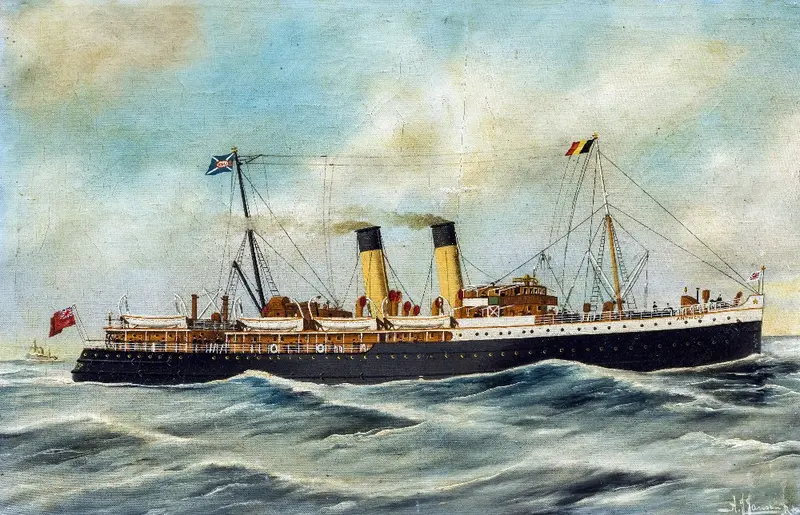
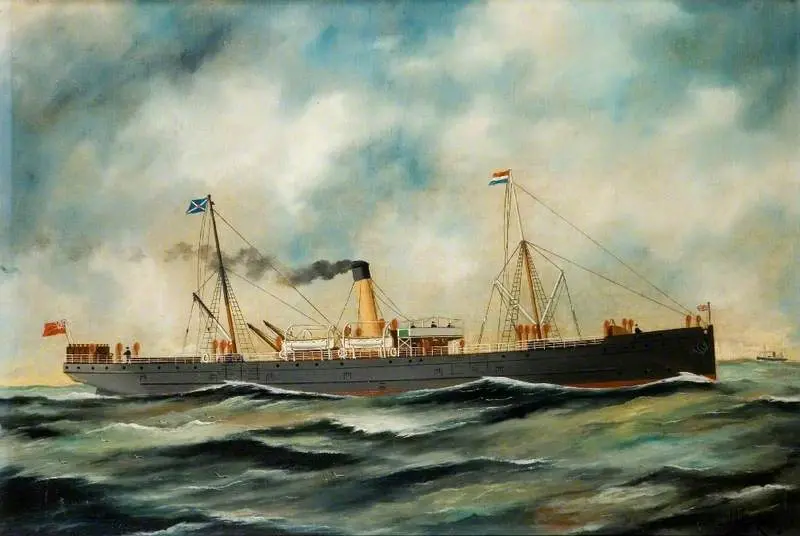
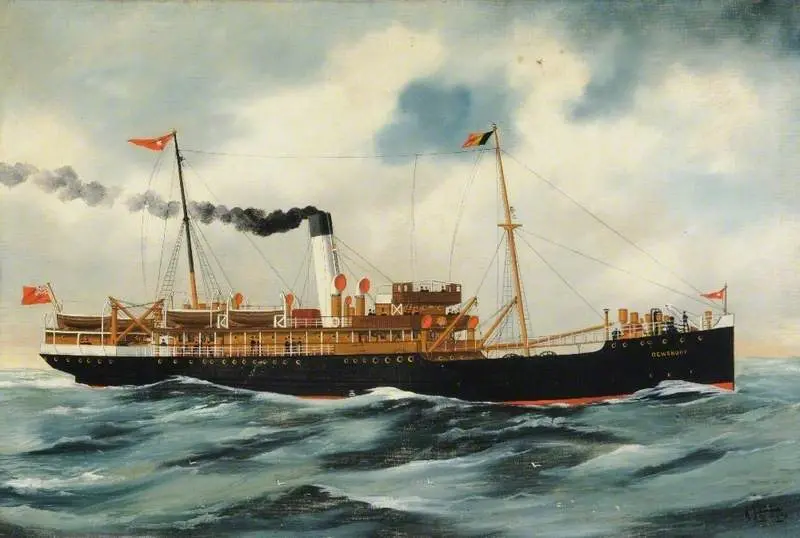
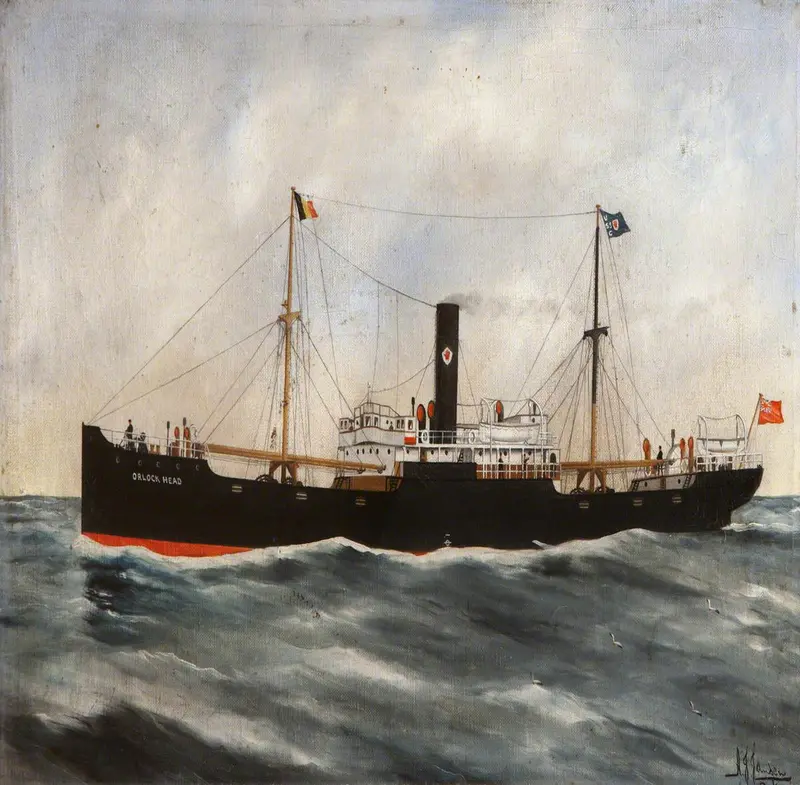
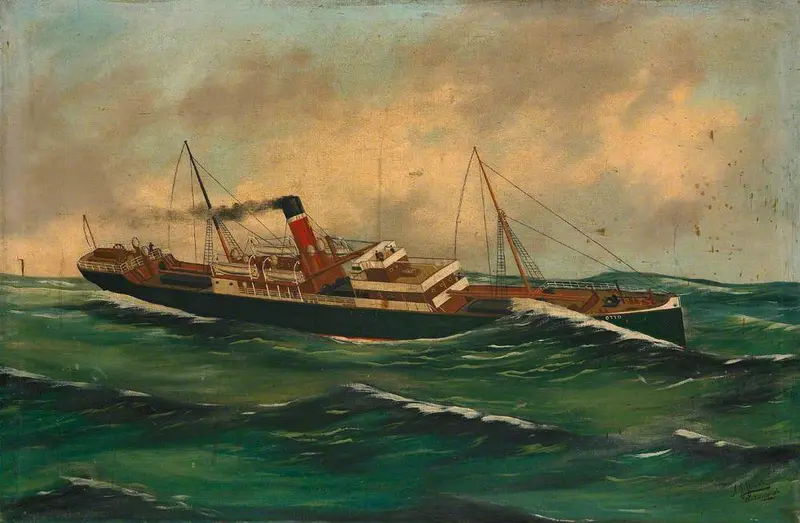
A black-hulled steamer cuts confidently through choppy blue waters, its prow thrusting forward as if eager to outpace the wind itself. The eye is drawn first to the sharp angle of the bow, where the name Marylebone is crisply lettered, and then up to the flurry of red-flagged masts and the single white funnel trailing a plume of smoke. The artist, A.
J. Jansen, has chosen a low vantage point, letting the ship loom large against a sky full of restless cloud, giving the vessel a sense of unstoppable momentum. In the distance, a tall-masted sailing ship lingers, a ghostly reminder of an era the steamer is swiftly leaving behind.
Every flag, every line of rigging, is rendered with the precision of someone who knows ships intimately—this is a portrait not just of a vessel, but of a moment when steam was rewriting the rules of travel and trade. Painted in 1913, SS Marylebone (Railway Steamer) belongs to a world on the brink of modernity, when railway companies commissioned paintings like this to celebrate their newest technological marvels. Such works were often created for boardrooms, shipping offices, or even as promotional material, capturing the pride of companies eager to display their reach and reliability. The presence of both steam and sail in the same frame speaks to a time of transition, when the romance of the clipper ship was giving way to the relentless efficiency of steam power.
Little is recorded about the journey of this specific painting or its artist beyond the basic facts, but its survival in a public collection today lets us glimpse the optimism and ambition of its age—inviting us to imagine the passengers and cargo carried across those painted waves.