SS Otto (Fair Weather) — History & Facts
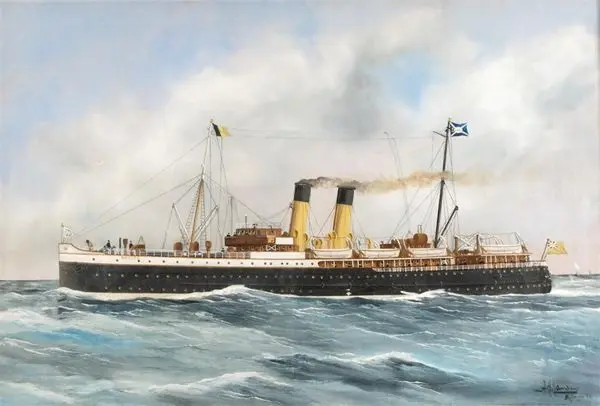
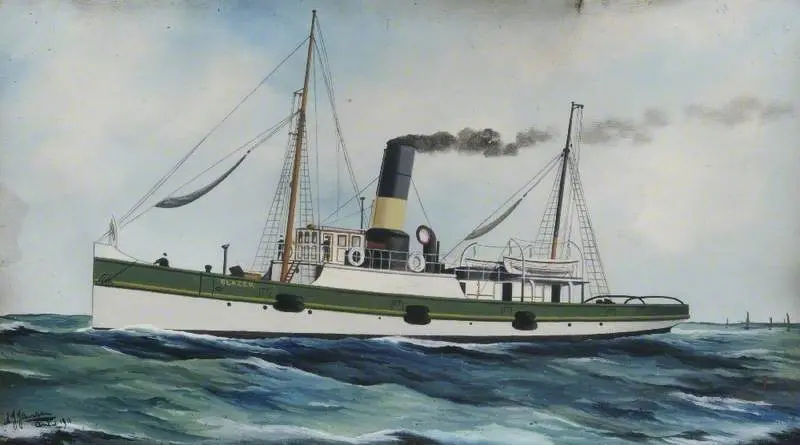
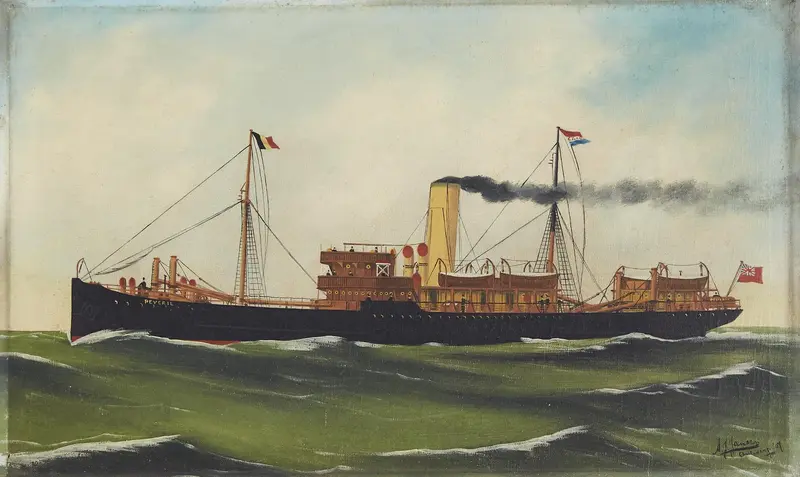
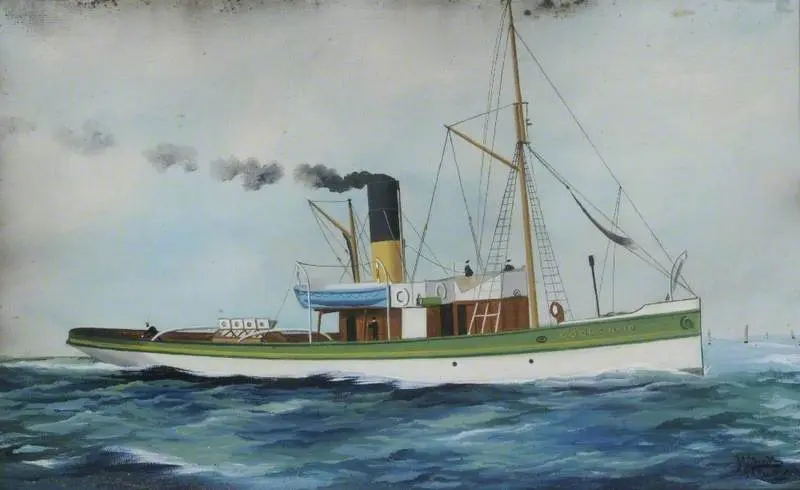
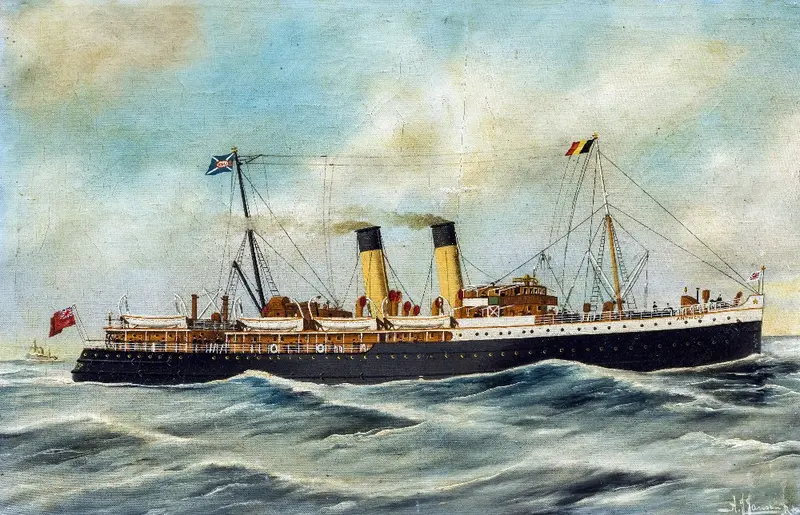
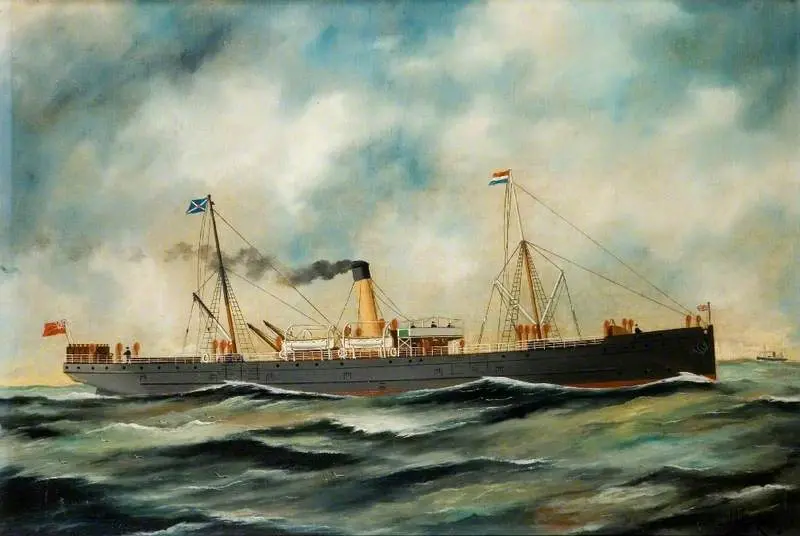
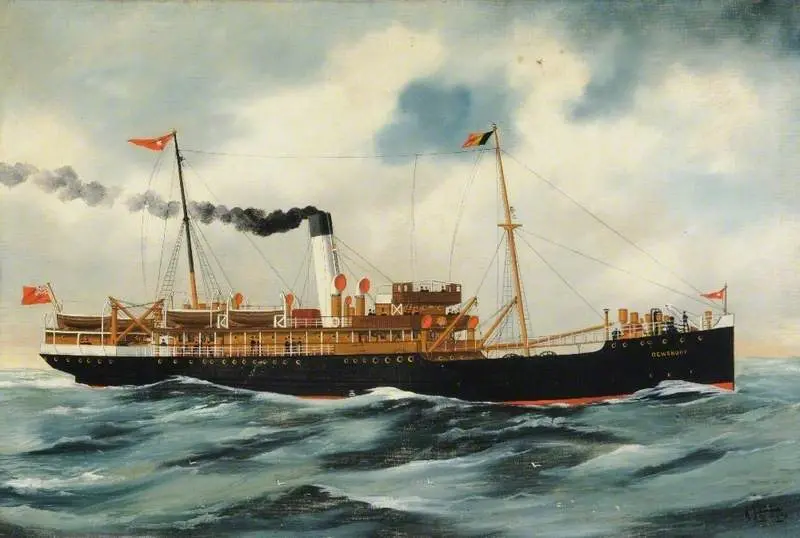
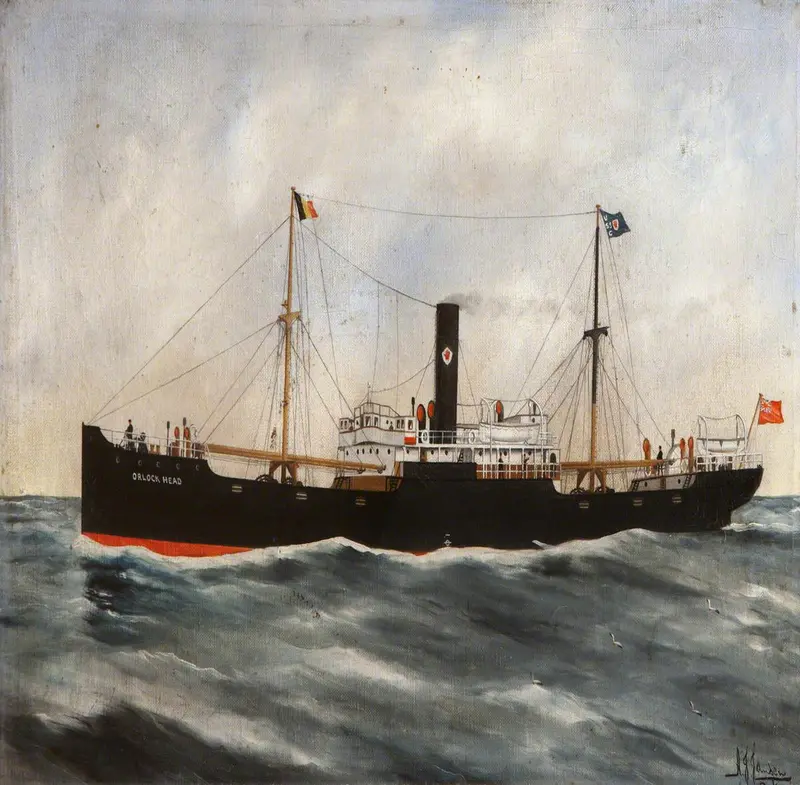
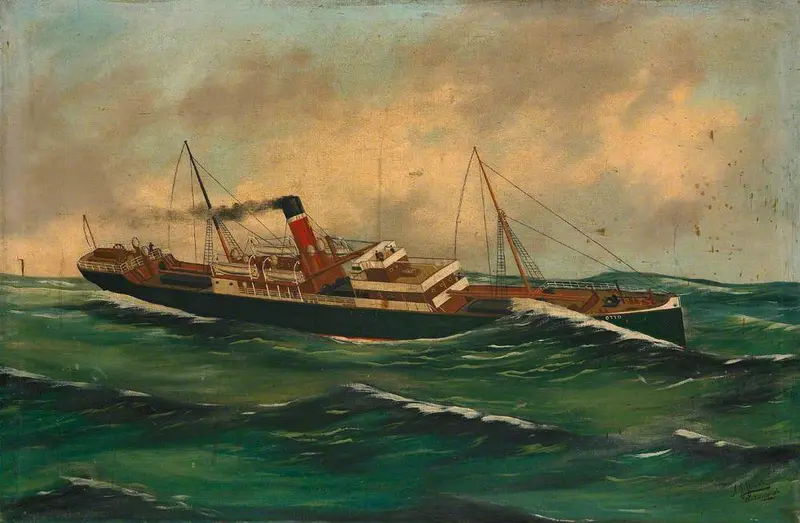
What first arrests the eye in SS Otto (Fair Weather) is the ship’s proud profile, crisply outlined against a pale, almost cloudless sky, as if the vessel itself were the protagonist of a quiet epic. The hull slices through the water with a sense of purpose, its deep green body capped by the bright red funnel and the fluttering flags that signal identity and allegiance. Every line of rigging, every porthole and deck detail, is rendered with a precision that speaks to both admiration and technical knowledge.
The artist, A. J. Jansen, invites us to linger on the ship’s solidity, the way the light glances off her surfaces, the suggestion of movement in the gentle swell.
This is not a scene of drama, but of steady progress—an image that celebrates the dignity of the working vessel. Painted in 1933, SS Otto (Fair Weather) belongs to a tradition of ship portraiture that flourished in the age of steam and steel. Such works were often commissioned by shipowners, captains, or shipping lines to commemorate a launch or celebrate a vessel’s service. The genre favored clarity and accuracy, but also a certain pride: the ship is often shown in profile, isolated, as if to fix it forever in the viewer’s memory.
While history has kept few traces of A. J. Jansen or this particular SS Otto, the painting now held in the Art UK collection stands as a testament to the era’s fascination with maritime progress.
The more you look, the more the ship seems to invite questions—about its voyages, its crew, and the world it once connected.