SS Rievaulx Abbey (Foul Weather) — History & Facts
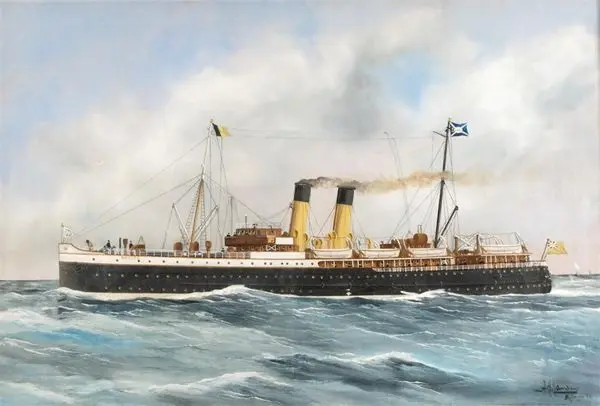
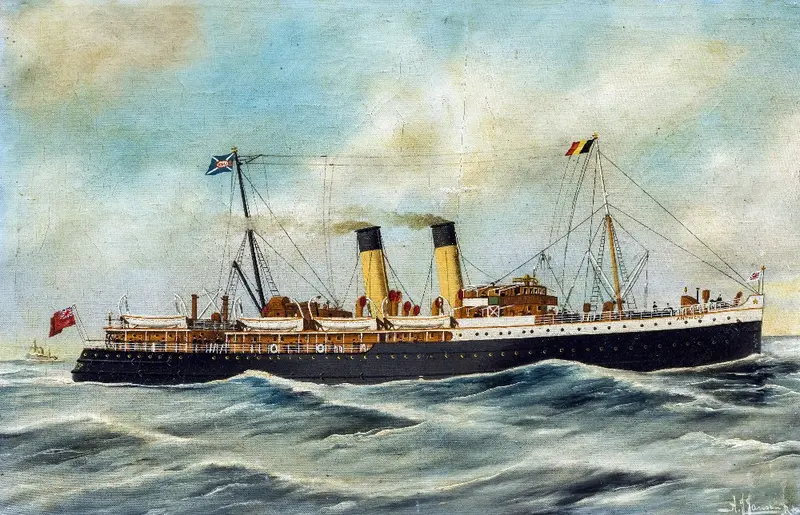
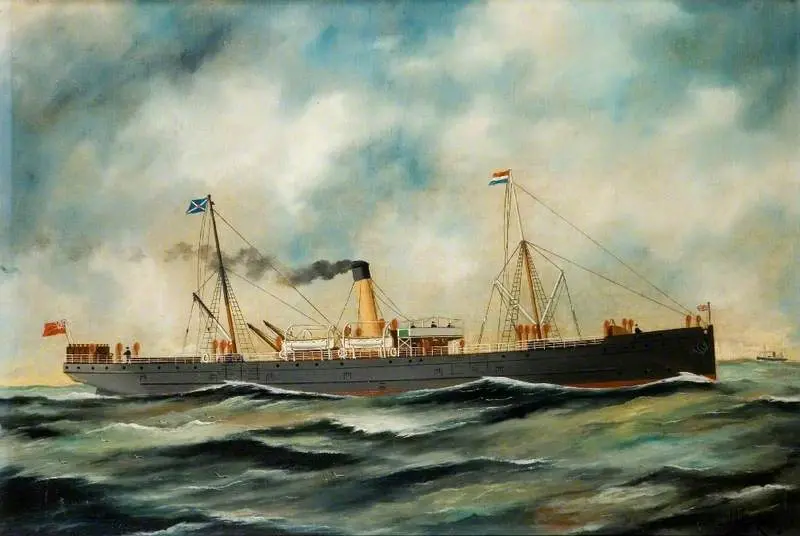
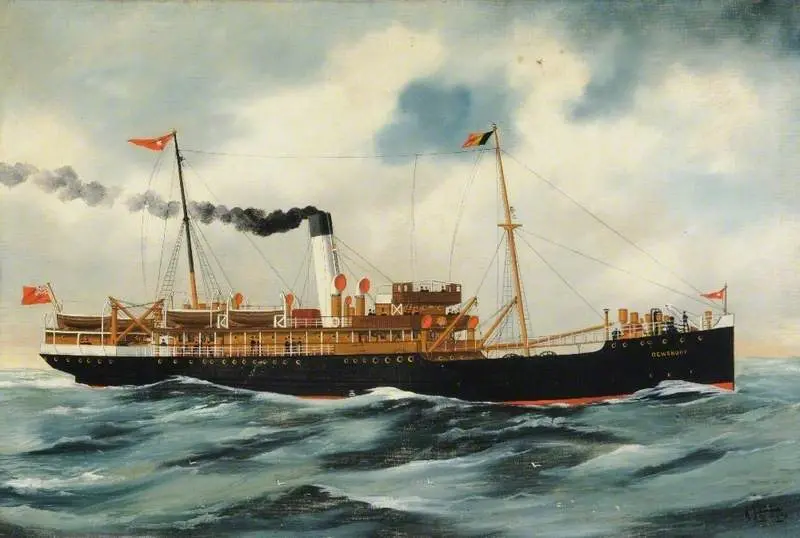
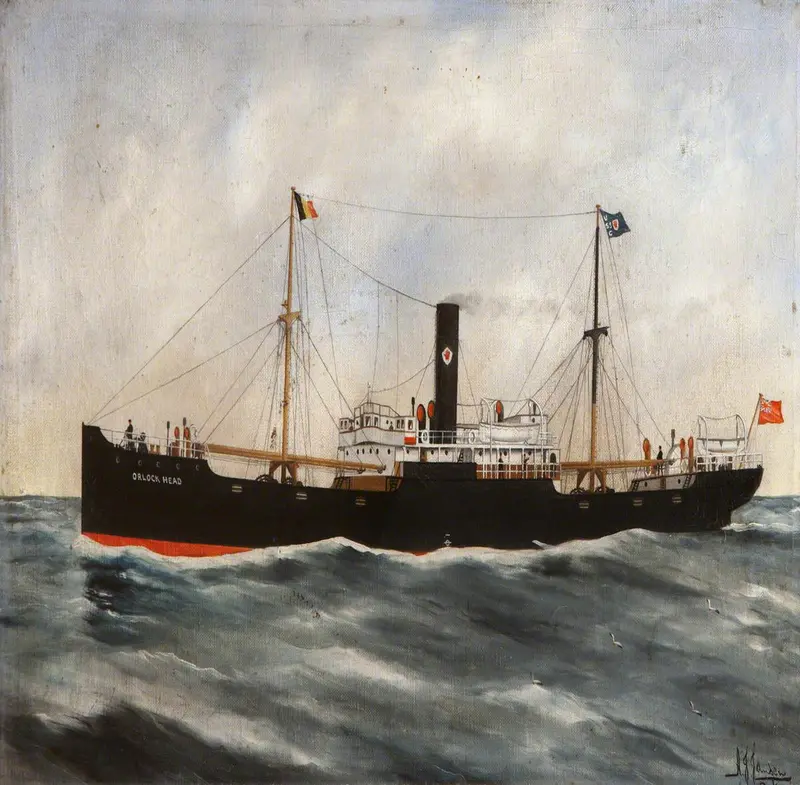
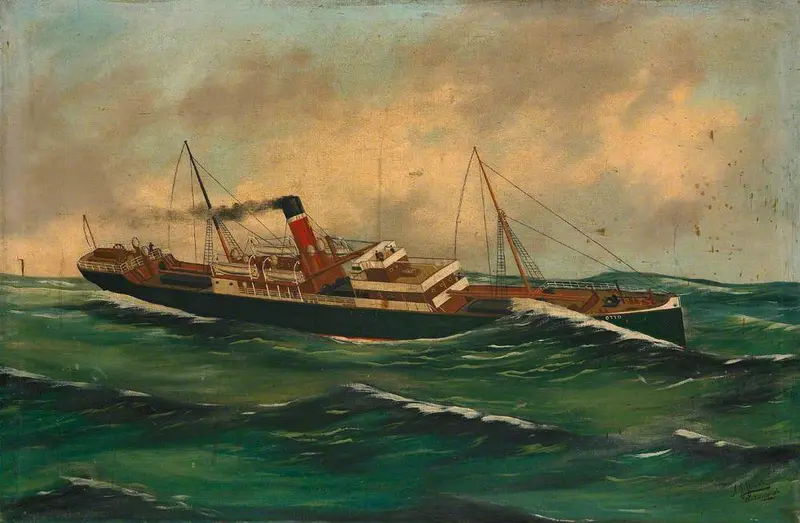
What first seizes the eye in SS Rievaulx Abbey (Foul Weather) is the ship’s determined tilt, slicing through a heaving sea under a restless sky. The vessel’s hull, sharply angled and braced against the rolling waves, draws us into the heart of a maritime ordeal. The painter, A.
J. Jansen, composes the scene so that the ship’s smokestack and rigging cut diagonally across the canvas, underscoring the sense of movement and challenge. The palette is dominated by the deep blues and greens of the water, offset by the stark, almost architectural precision of the ship’s superstructure.
Every detail — from the taut lines to the plume of smoke trailing behind — serves to heighten the tension between human engineering and the unpredictable power of the sea. Painted in 1908, this work belongs to a period when maritime art was both a record and a celebration of technological progress. The early twentieth century saw steamships like the SS Rievaulx Abbey become icons of commerce and national pride, often commissioned by shipping lines or shipbuilders to commemorate new vessels or dramatic voyages. While little is recorded about this particular painting’s origins or journey, its presence in a public collection today speaks to the enduring fascination with the drama and dignity of ships at sea.
In the era of A. J. Jansen, paintings like this bridged the worlds of industry and art, inviting viewers to imagine the stories of cargo, crew, and distant ports each time they return to the rolling waves on canvas.