
St. Peter — History & Facts
When El Greco painted St. Peter around 1610, he was nearing the end of his life in Toledo, far from his native Crete but at the height of his idiosyncratic style. This painting is one of several depictions of the apostle by El Greco, but each is distinct; scholars have long debated whether this version was intended for a specific chapel or as part of a series for private devotion.
The artist’s fascination with St. Peter is evident—no other apostle appears so frequently in his late works, perhaps reflecting the importance of the saint as the foundation of the Church during a time of religious upheaval. The scene captures St. Peter alone, caught in a moment of deep remorse and prayer after denying Christ three times, as told in the Gospels.
His hands are clasped tightly, his eyes raised in a mixture of hope and anguish, and his aged face is streaked with tears—a visual confession of guilt and longing for forgiveness. The keys, a traditional symbol of Peter’s authority, rest nearby, but El Greco shifts the focus away from power toward the vulnerability of repentance. The swirling, elongated forms and flickering light set the figure apart from the earth, a technique that distinguishes El Greco from the grounded naturalism of Caravaggio or the serene order of Raphael’s apostles. The precise early history of this St.
Peter remains uncertain, as is often the case with El Greco’s late works, many of which were created for local patrons or religious institutions in Toledo. Over the centuries, the painting’s attribution has never been seriously questioned, thanks to the unmistakable brushwork and palette. Today, it is recognized as a key example of El Greco’s mature period, when his style became even more expressive and personal.
The painting now hangs in a major collection, a testament to the enduring fascination with both the artist and his vision of the penitent apostle.
More Artworks by El Greco
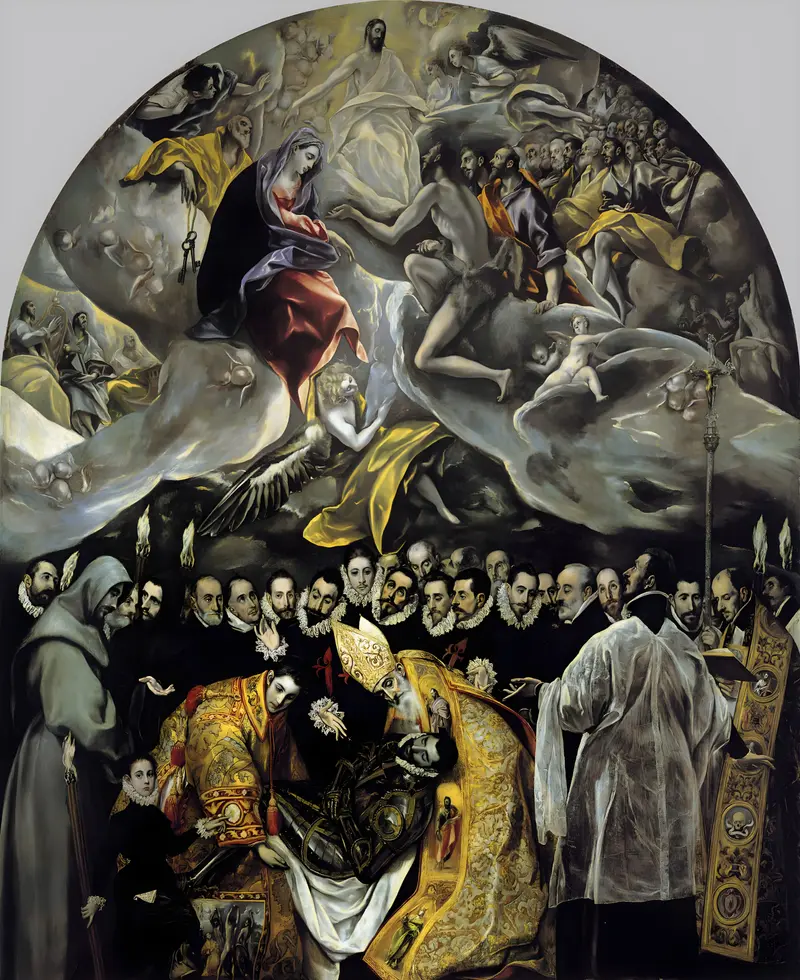
The Burial of the Count of Orgaz
El Greco

Portrait of an Apostle (Saint Philip)
El Greco

Saint Luke the Evangelist
El Greco

The Immaculate Conception
El Greco

The Feast in the House of Simon
El Greco

View of Toledo
El Greco

Saint Ildefonso
El Greco

The Disrobing of Christ
El Greco

The Vision of Saint John
El Greco

The Marriage of the Virgin
El Greco





