Staand en liggend schaap — History & Facts
Could beauty survive in a century of chaos? In Staand en liggend schaap, the delicate balance of nature and serenity emerges, whispering a timeless truth amidst the turmoil of the 17th century. Look to the left at the standing sheep, its woolly coat rendered with meticulous strokes, each fiber seemingly alive as it catches the soft glow of sunlight. Then shift your gaze to the right, where a recumbent companion reclines in tranquil repose, the gentle curvature of its body harmonizing with the undulating landscapes. Berchem's palette, rich with earthy tones and golden hues, evokes a sense of warmth, while the fine brushwork conveys the tender texture of the animals’ fleece and the lush grass beneath them. Yet, beneath this idyllic pastoral scene lies an intricate interplay of life and stillness.
The standing sheep, alert and poised, suggests vigilance in the face of potential threats, embodying a contrast to its relaxed counterpart. The surrounding landscape, expansive yet intimate, hints at both freedom and confinement, reflecting a world caught between serenity and the inevitability of change. The harmony between these creatures and their environment resonates with the viewer, evoking a meditative pause. During the years from 1648 to 1652, Berchem was immersed in the flourishing Dutch Golden Age, a period marked by artistic innovation amidst political unrest.
Working in Amsterdam, he engaged with the vibrant art community, influenced by the rising demand for pastoral scenes that celebrated nature’s beauty. This painting, a product of that era, encapsulates both an escape and a reflective commentary on the simplicity that persists even in chaotic times.
More Artworks by Nicolaes Pietersz Berchem
Browse all →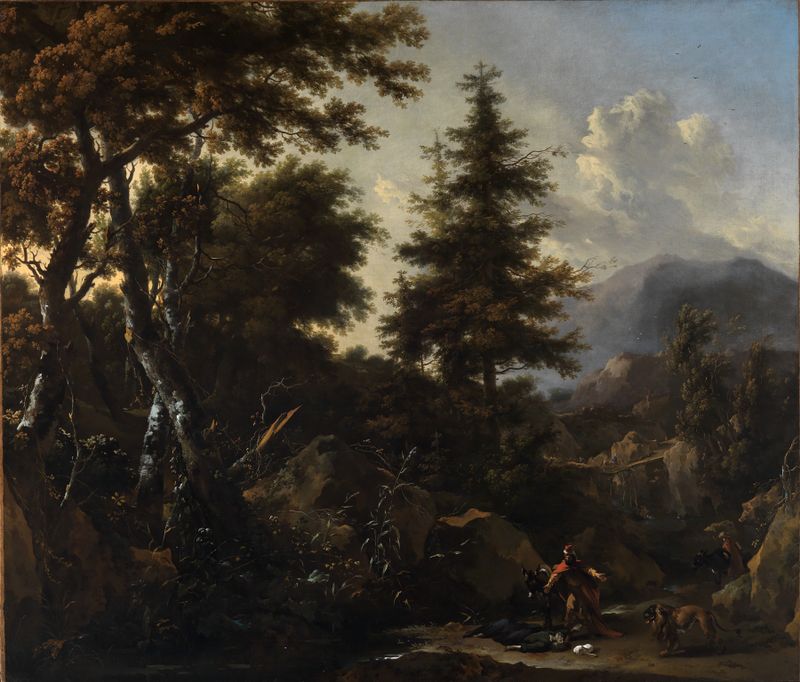
Schlucht im Bergwald mit alttestamentlicher Staffage
Nicolaes Pietersz Berchem
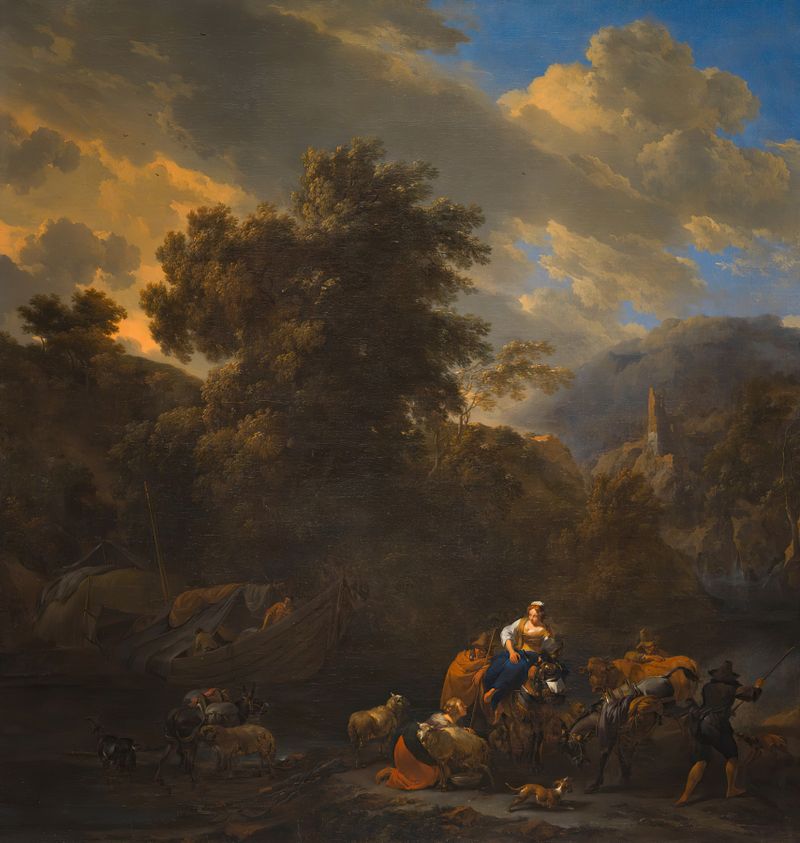
Italianate Landscape with Figures and Pack Animals on the Banks of a River
Nicolaes Pietersz Berchem
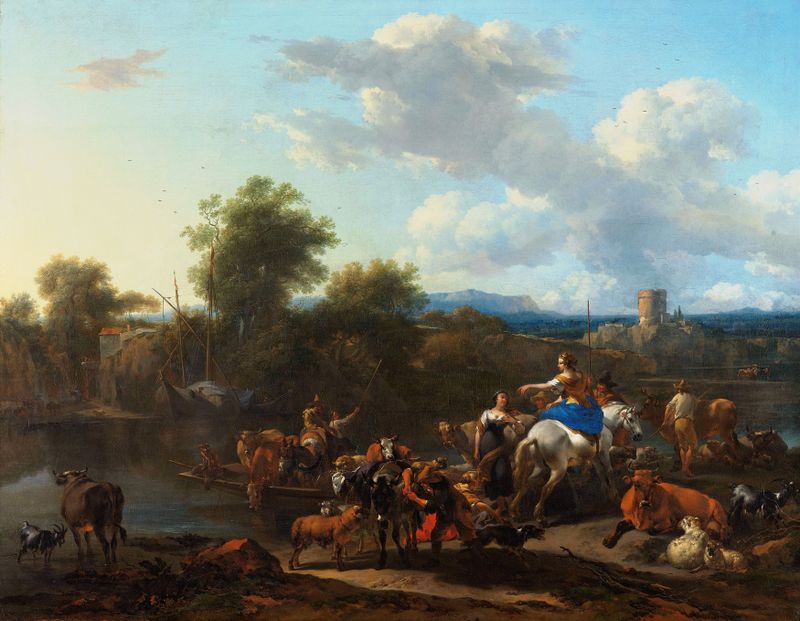
The Cattle Ferry
Nicolaes Pietersz Berchem
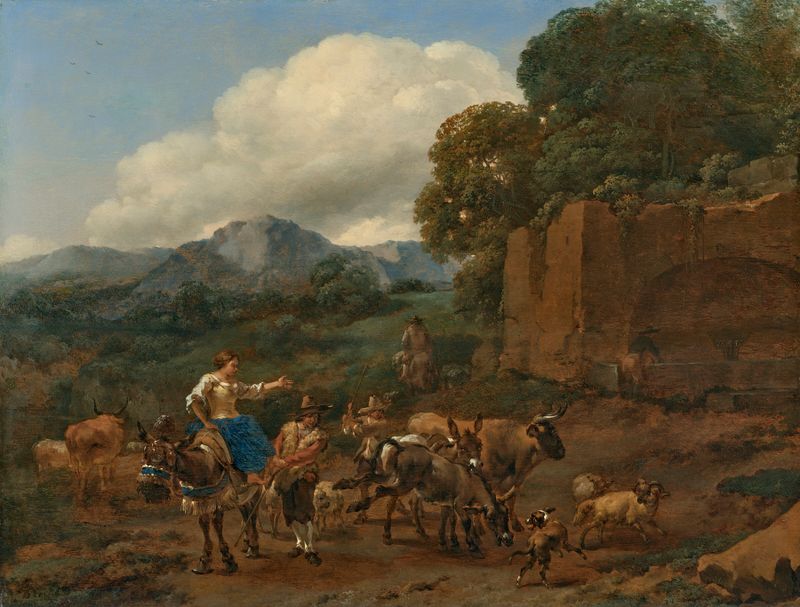
An Italianate landscape with a shepherdess on a mule and a shepherd, herding cattle, sheep, donkeys and dogs on a mountain track next to ruins
Nicolaes Pietersz Berchem
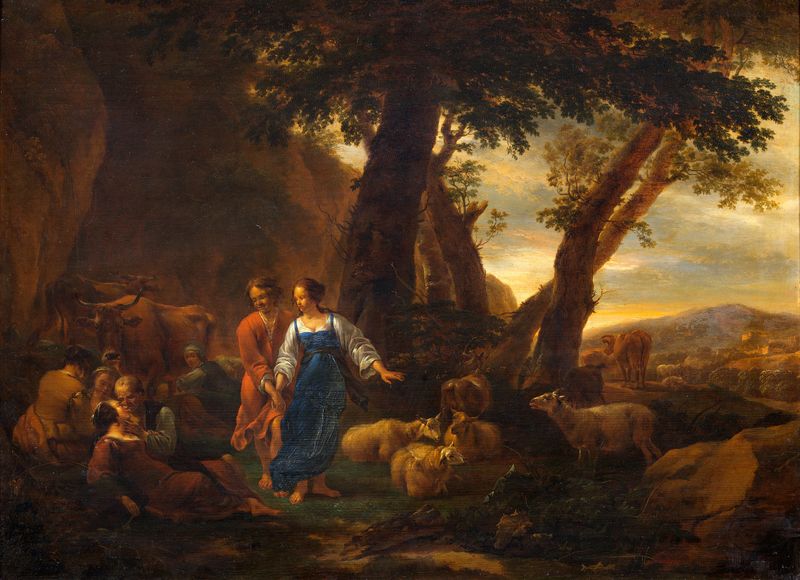
Landscape with Peasants and Cattle
Nicolaes Pietersz Berchem
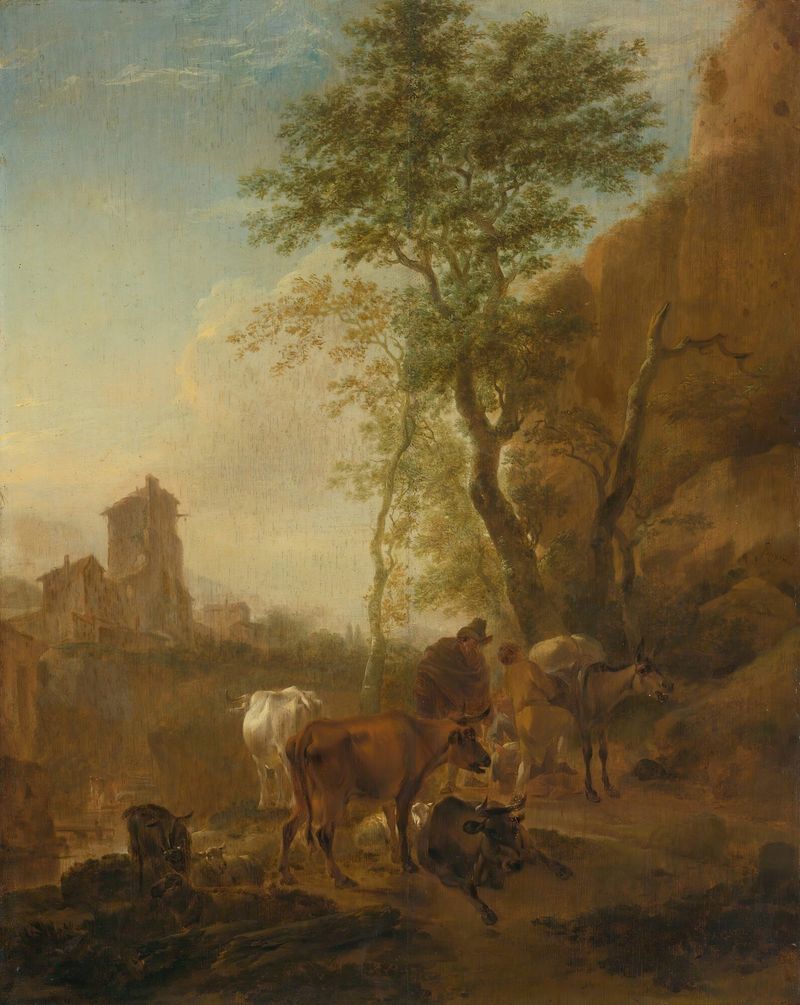
Italianate Landscape With Cows
Nicolaes Pietersz Berchem
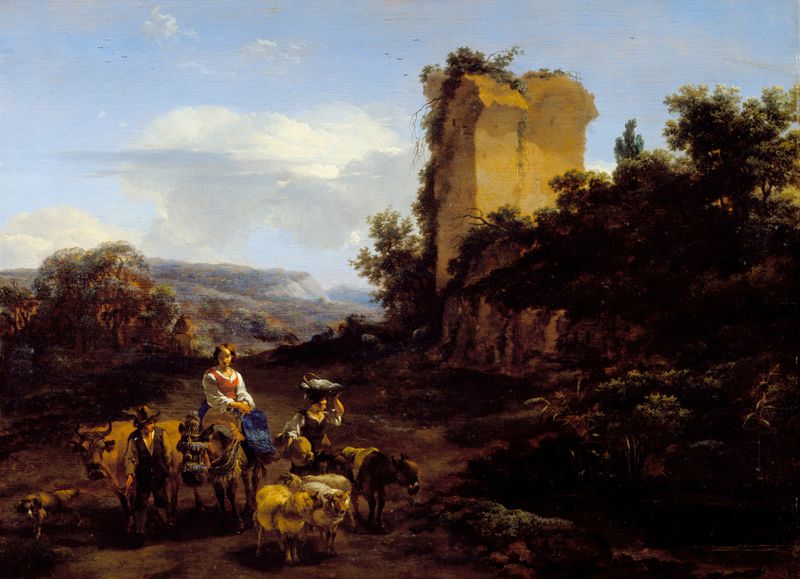
Landscape with Ruins and Travelers
Nicolaes Pietersz Berchem
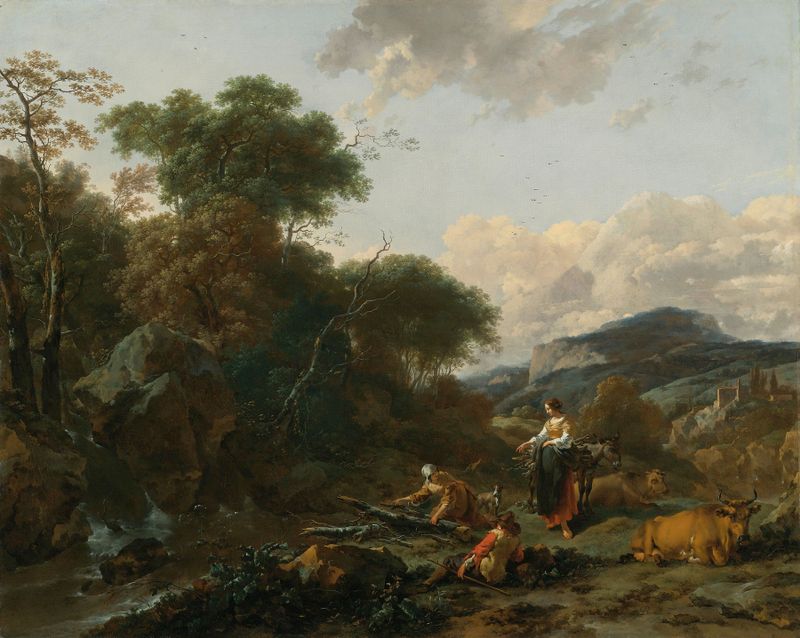
A Landscape With Figures
Nicolaes Pietersz Berchem
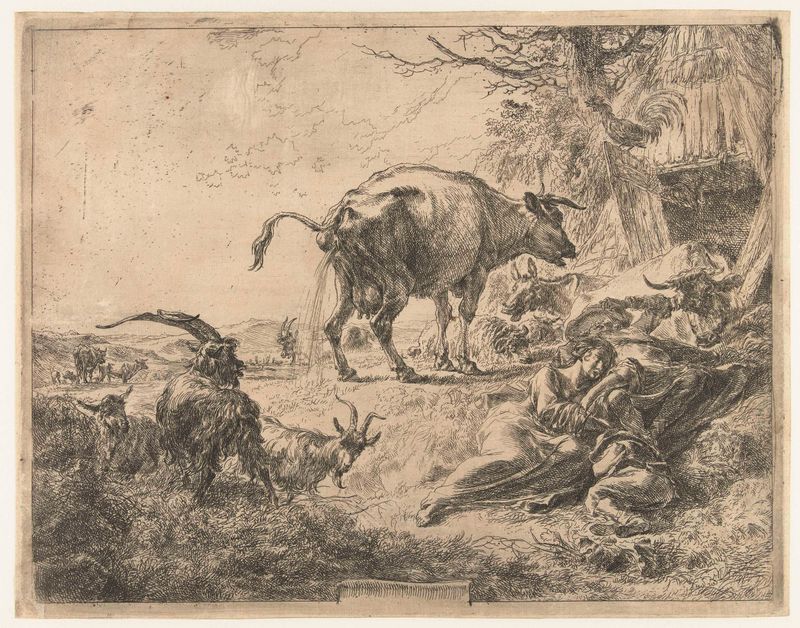
Slapende herdersfamilie en rustend vee
Nicolaes Pietersz Berchem
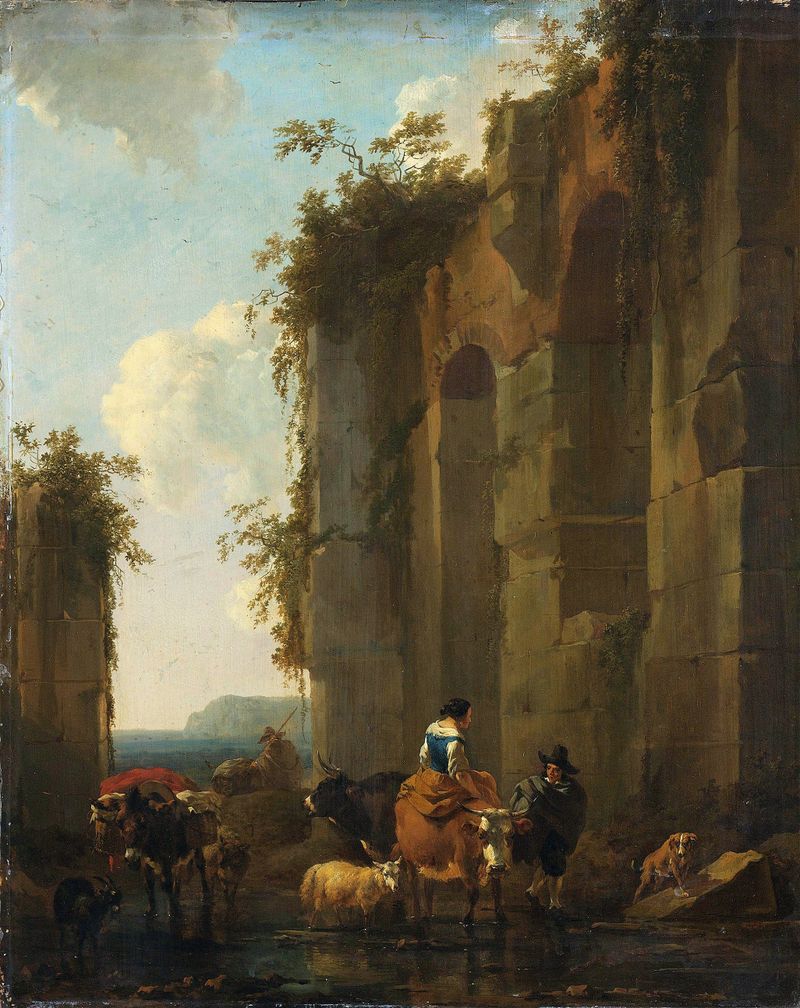
Ruins in Italy
Nicolaes Pietersz Berchem