Staande en liggende geit of bok — History & Facts
What if silence could speak through light? In Staande en liggende geit of bok, the stillness of the moment holds the promise of transformation, capturing the essence of both presence and absence. Look to the right at the standing goat, its posture proud yet relaxed, embodying a serene confidence. The gentle play of warm earth tones contrasts with the cooler hues in the background, suggesting a world both familiar and untamed. Notice how the light falls upon the animals, illuminating their forms and casting delicate shadows that ground them within their pastoral realm.
Each brushstroke reveals the meticulous attention to texture, from the coarse fur of the goat to the softness of the grass, inviting the viewer to immerse themselves in this tranquil tableau. Delve deeper into the palpable tension between the standing and the reclining figures, which resonates with notions of dominance and submission. The upright goat represents vitality and alertness, while the lying one signifies rest and contemplation. This juxtaposition reflects the cycle of life and the coexistence of strength and vulnerability.
The subtle interplay of light and shadow further emphasizes these contrasts, whispering of the transformation inherent in nature—an invitation to ponder the delicate balance between action and stillness. Created between 1648 and 1652, this work emerged during a pivotal time in the Dutch Golden Age, when artists were exploring the relationship between nature and everyday life. Nicolaes Pietersz Berchem, known for his pastoral scenes, painted in a period marked by economic prosperity and a burgeoning interest in realism. The tranquil depiction of animals not only showcases his skill but also reflects the era's appreciation for the beauty found in simple, unadorned moments.
More Artworks by Nicolaes Pietersz Berchem
Browse all →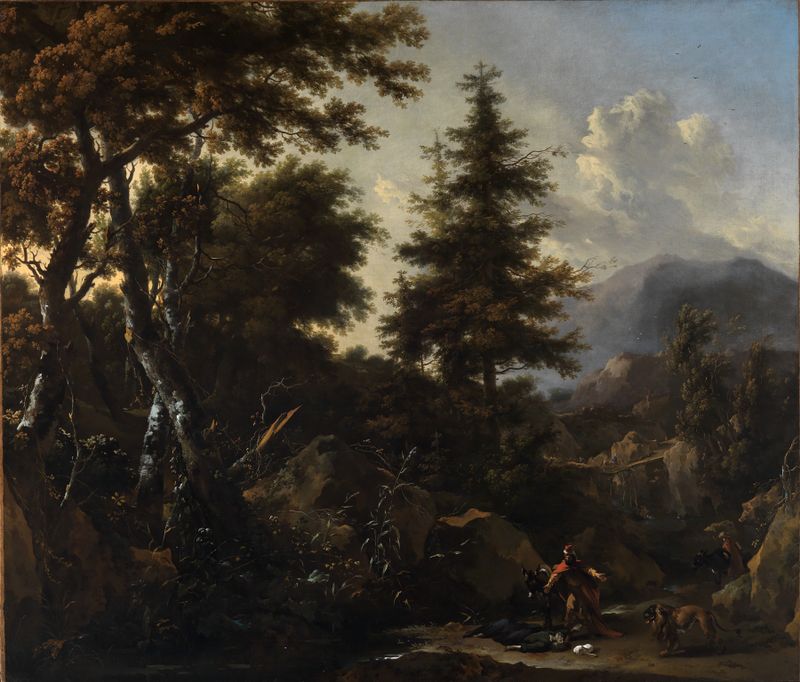
Schlucht im Bergwald mit alttestamentlicher Staffage
Nicolaes Pietersz Berchem
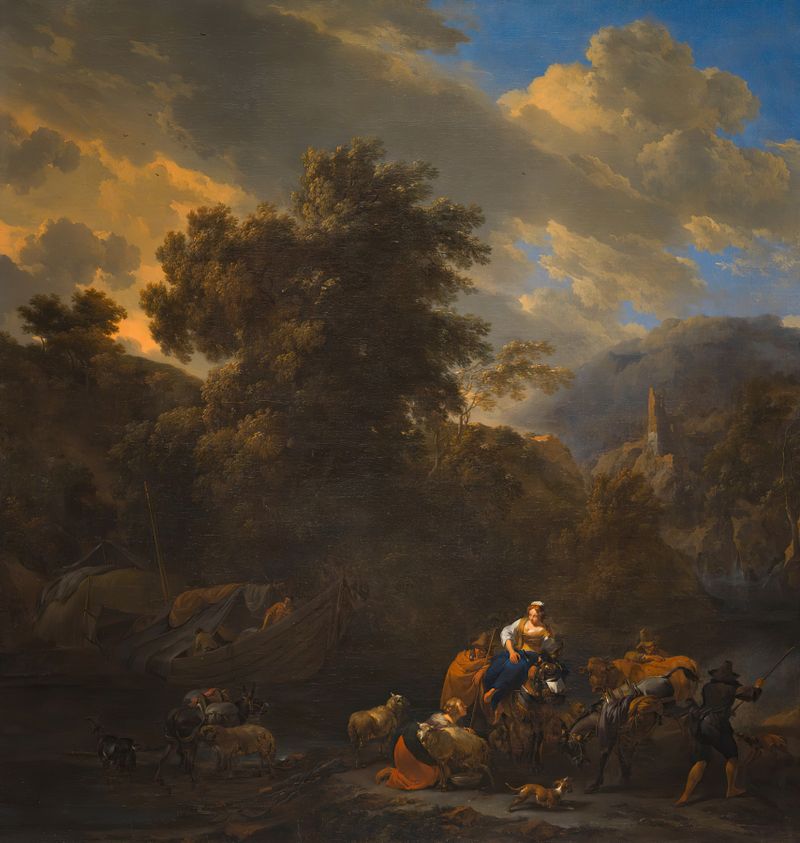
Italianate Landscape with Figures and Pack Animals on the Banks of a River
Nicolaes Pietersz Berchem
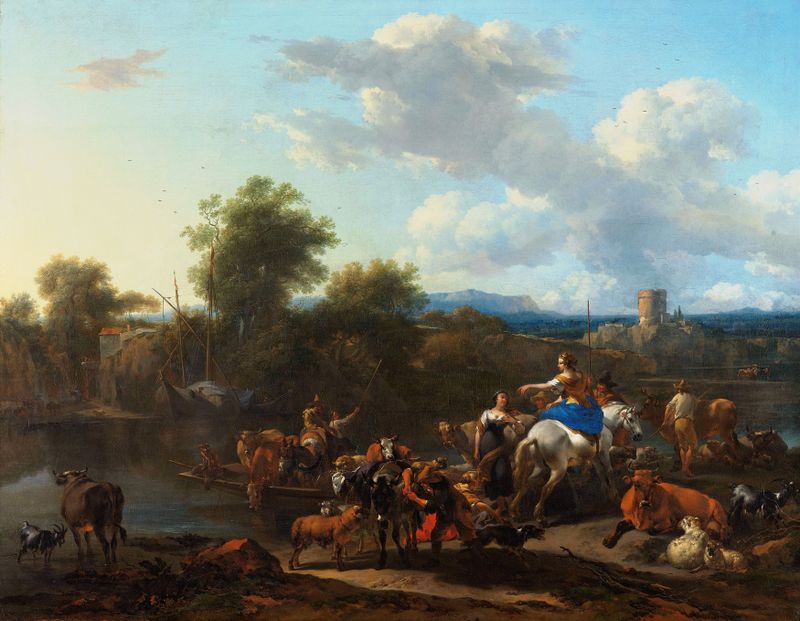
The Cattle Ferry
Nicolaes Pietersz Berchem
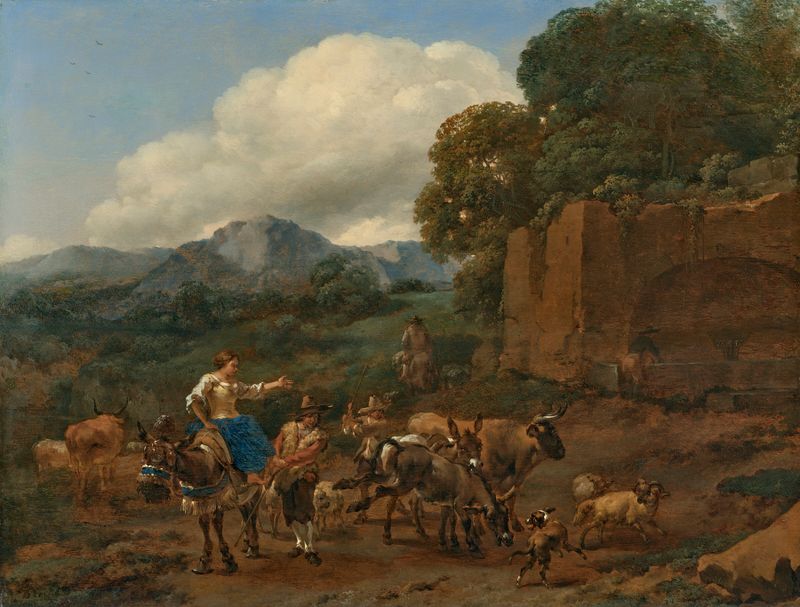
An Italianate landscape with a shepherdess on a mule and a shepherd, herding cattle, sheep, donkeys and dogs on a mountain track next to ruins
Nicolaes Pietersz Berchem
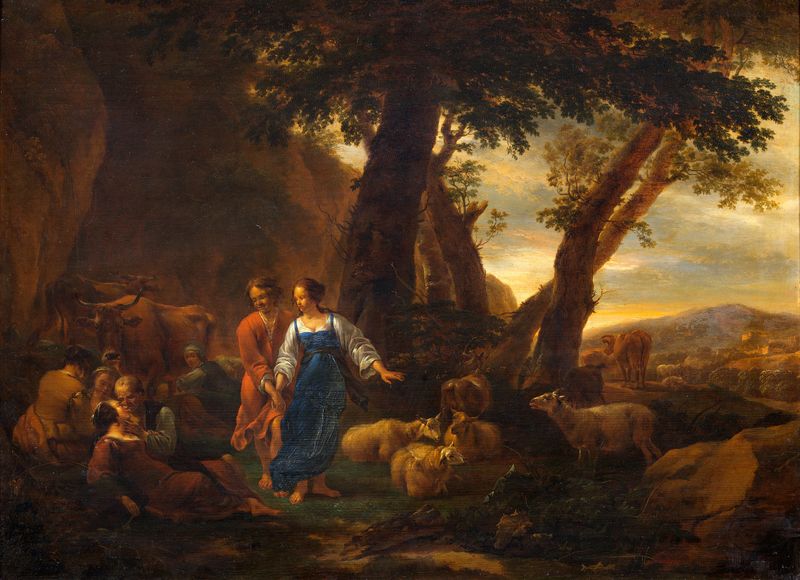
Landscape with Peasants and Cattle
Nicolaes Pietersz Berchem
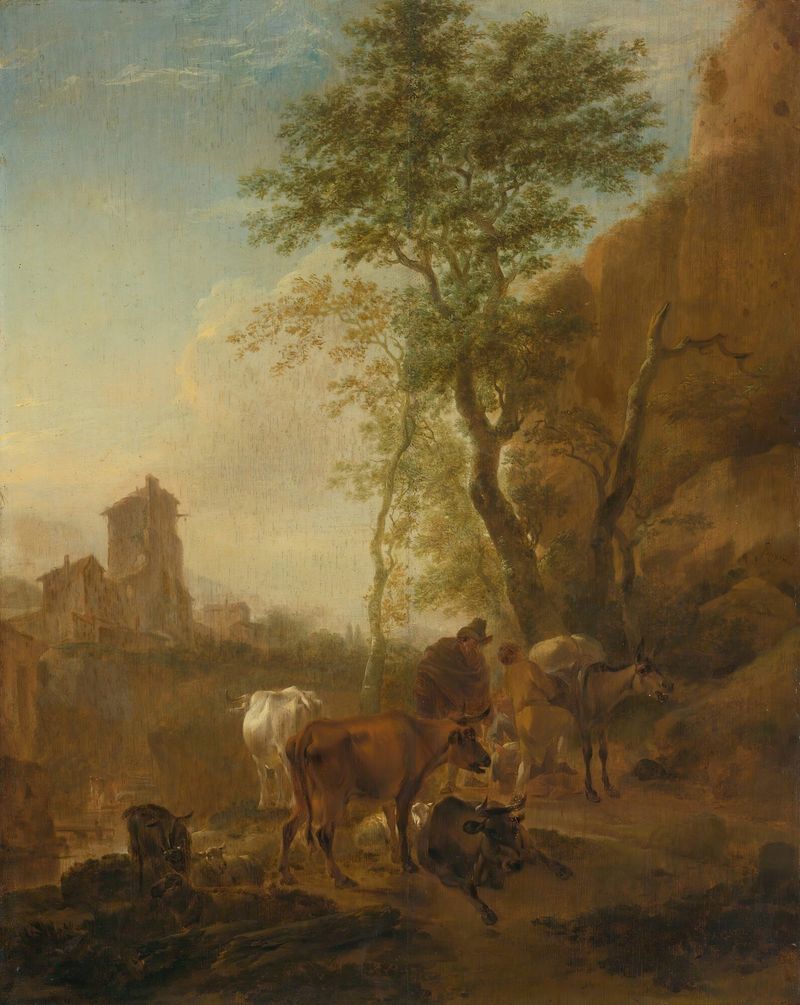
Italianate Landscape With Cows
Nicolaes Pietersz Berchem
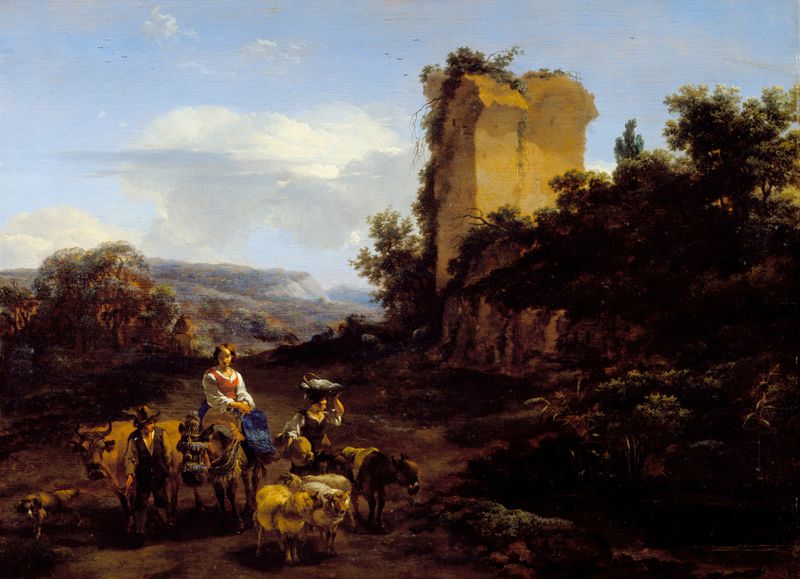
Landscape with Ruins and Travelers
Nicolaes Pietersz Berchem
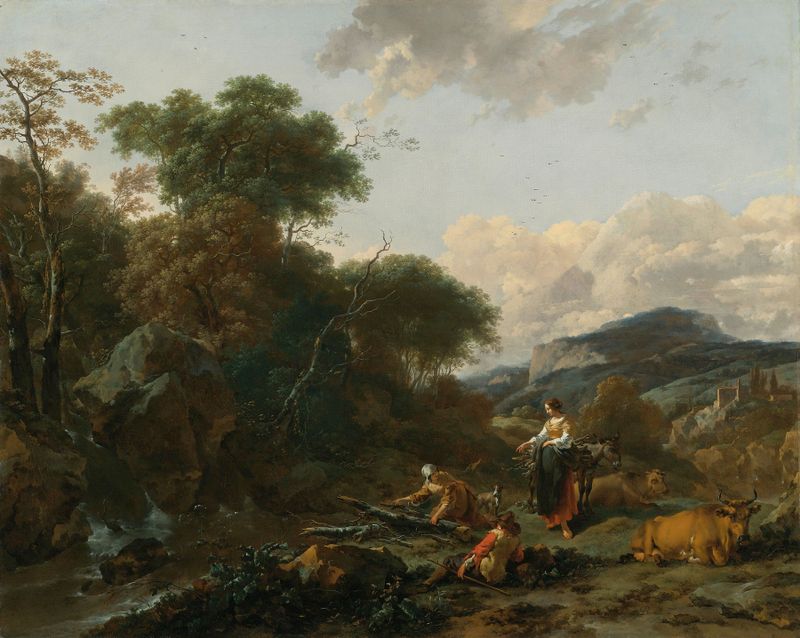
A Landscape With Figures
Nicolaes Pietersz Berchem
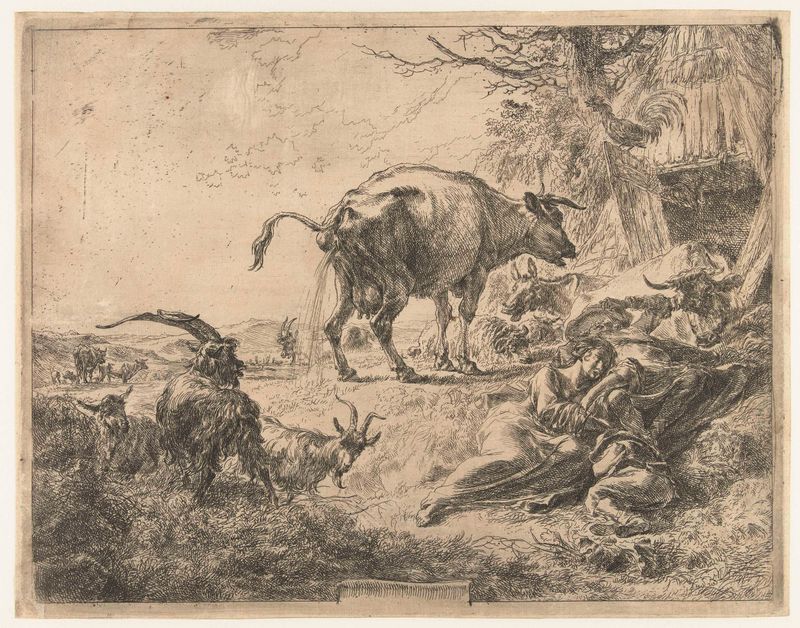
Slapende herdersfamilie en rustend vee
Nicolaes Pietersz Berchem
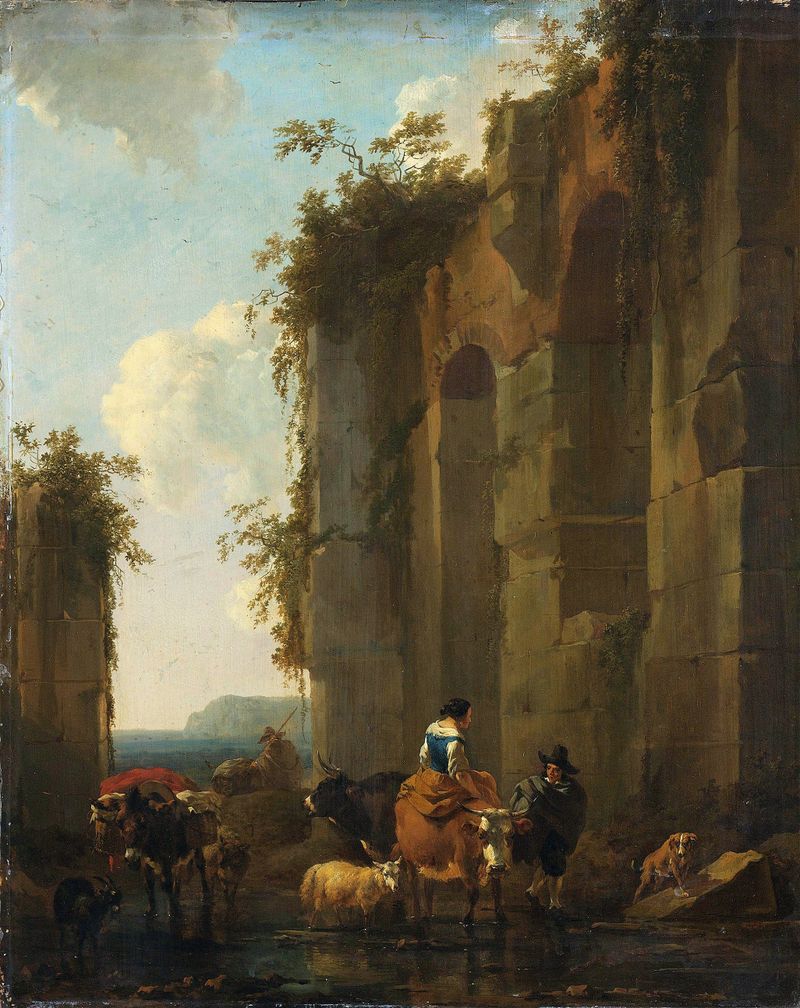
Ruins in Italy
Nicolaes Pietersz Berchem