
Stadsgezicht — History & Facts
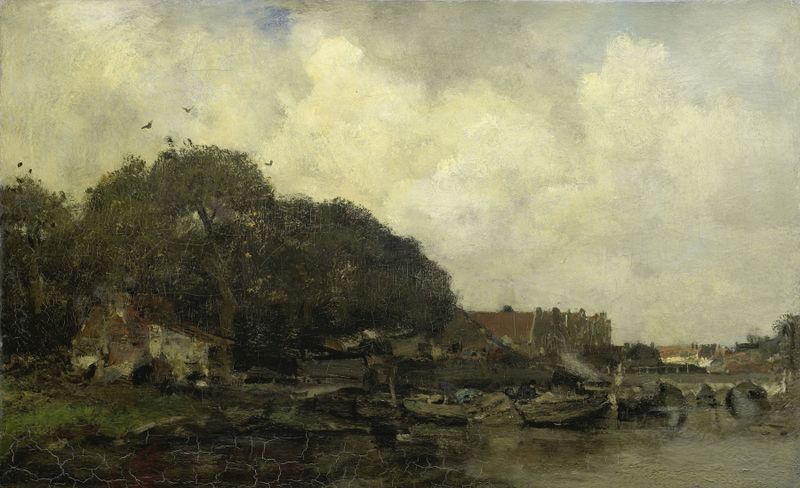
In the quietude of a cityscape, faith emerges through the lens of memory, capturing the essence of place like a whispered promise against the relentless march of time. To appreciate the artwork, focus on the horizon where the delicate brushstrokes depict the soft embrace of twilight. The shimmering water reflects the last blush of day, inviting the viewer to trace the path of gentle ripples that dance along the canal. Notice how the muted palette—blues, grays, and hints of ochre—simmers in a balance of serenity and melancholy, evoking a sense of nostalgia that lingers in the air. Beneath the surface, the interplay of light and shadow reveals deeper meanings.
The architectural forms rise steadily, yet there is an impermanence, a reminder of life’s fleeting beauty. The juxtaposition of the vibrant life captured in the boats along the water juxtaposes the stillness of the buildings, hinting at a hidden tension between movement and stasis, hope and resignation. Each detail, from the weathered façades to the shimmering reflections, resonates with a faith that time cannot erase. In 1898, the artist found himself in the heart of The Hague, a period marked by a growing interest in the natural world and urban life.
As a leading figure of the Hague School, he sought to convey not just the physicality of the city, but its spirit. This work emerged amidst a vibrant art community, grappling with both the past and emerging modernity, a time when the importance of capturing the essence of everyday life was paramount.
More Artworks by Jacob Maris
Browse all →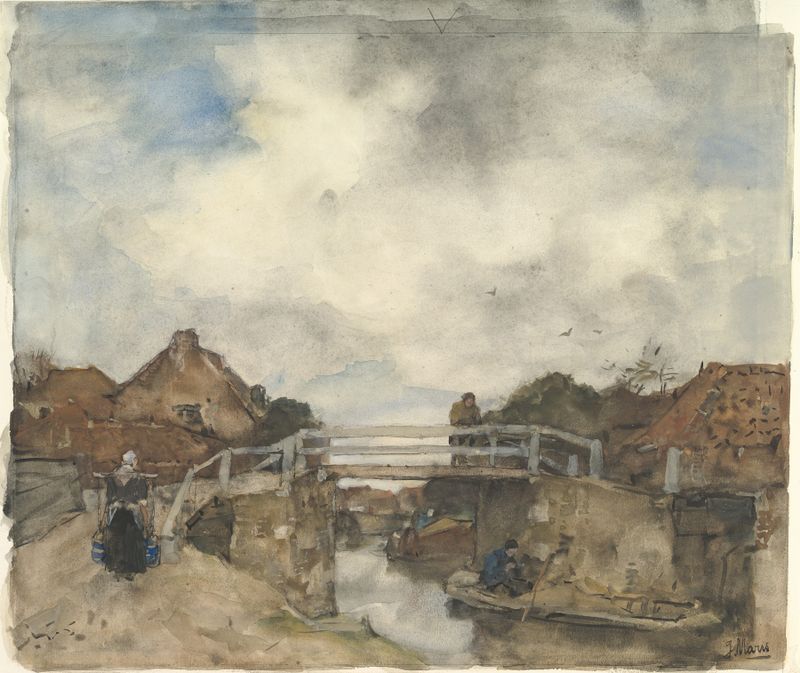
Dutch Canal, Rijswijk
Jacob Maris
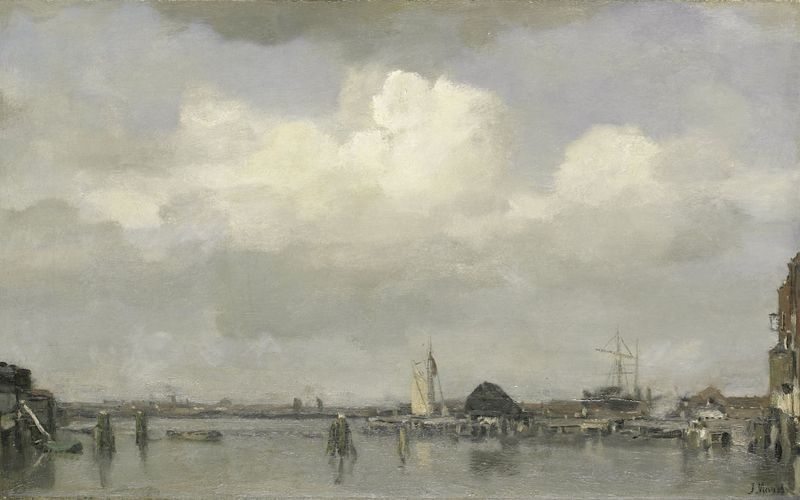
Havengezicht
Jacob Maris
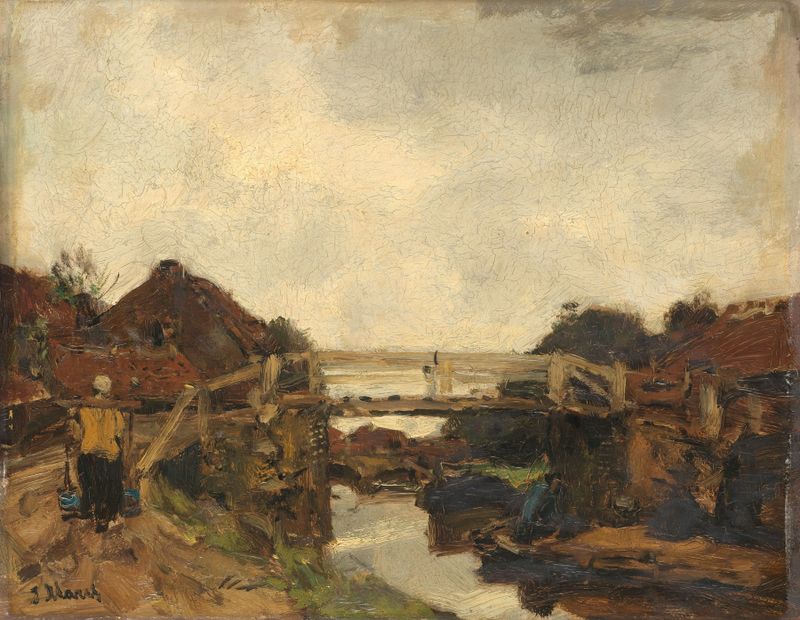
Wooden Bridge across a Canal at Rijswijk
Jacob Maris
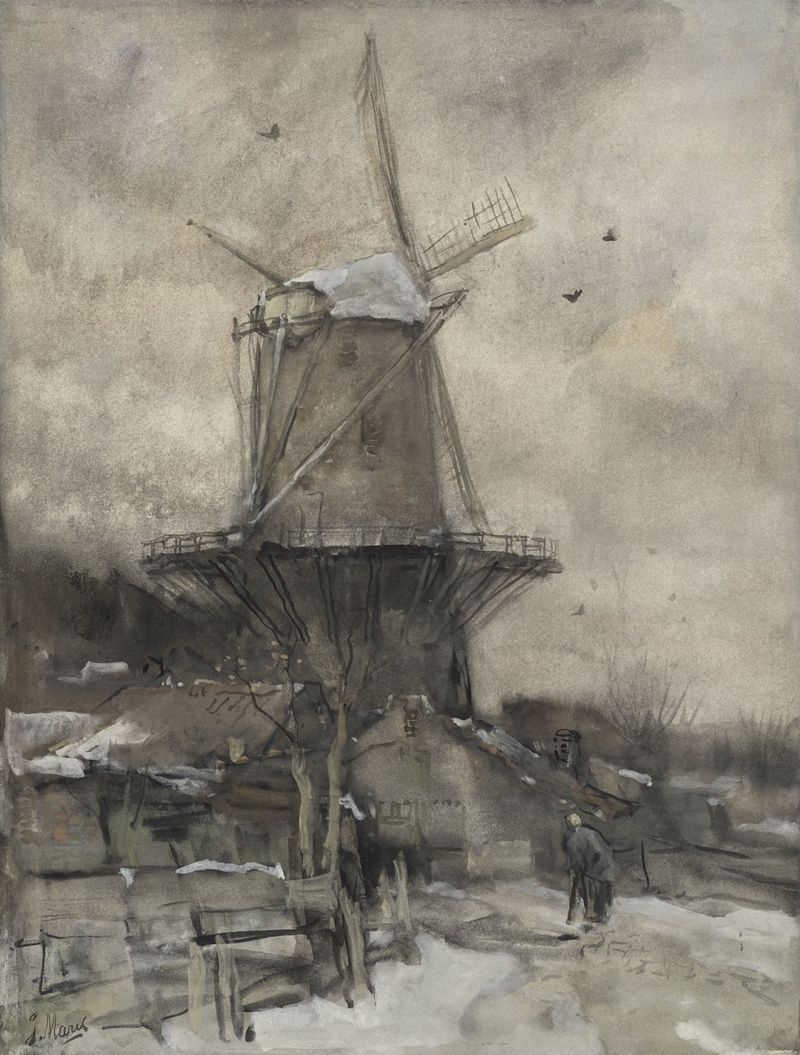
Een molen in de winter
Jacob Maris
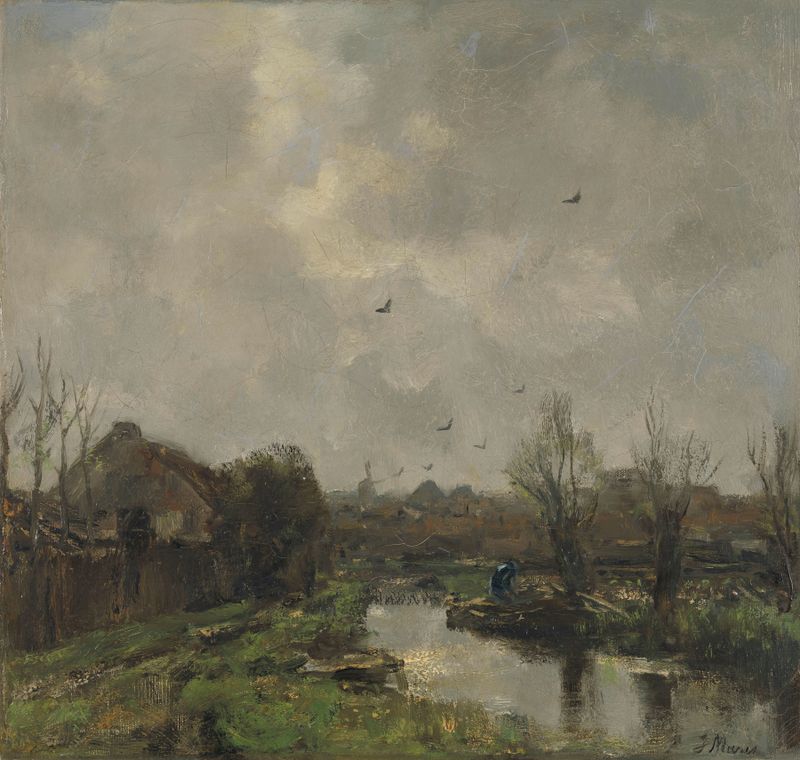
Landschap in de omgeving van Den Haag
Jacob Maris
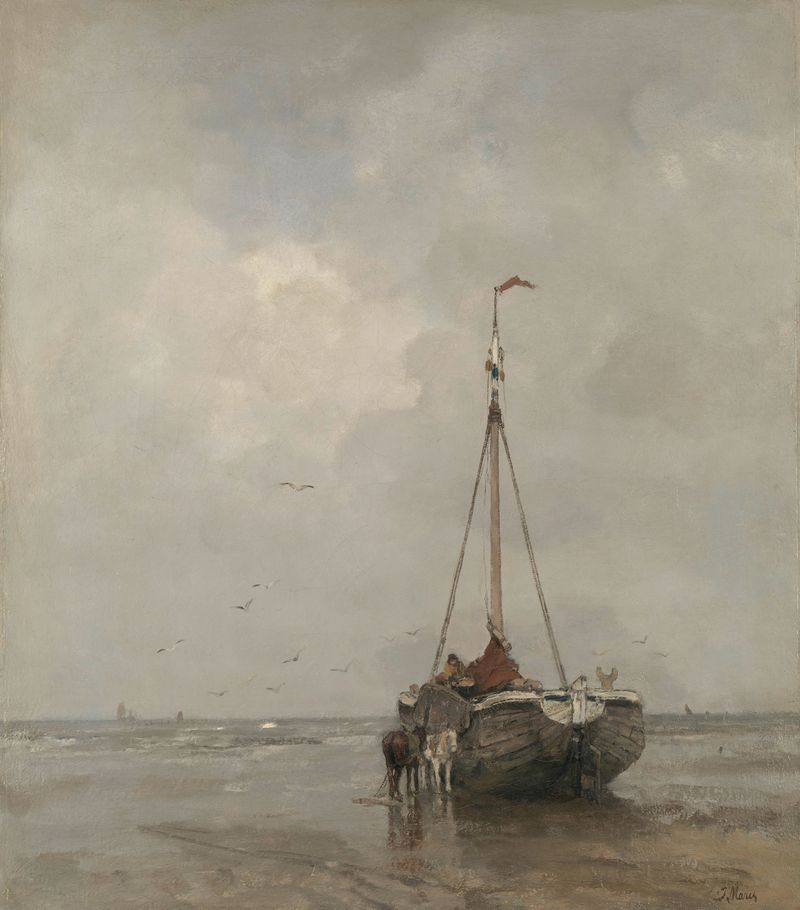
Bluff-bowed Fishing Boat on the Beach at Scheveningen
Jacob Maris
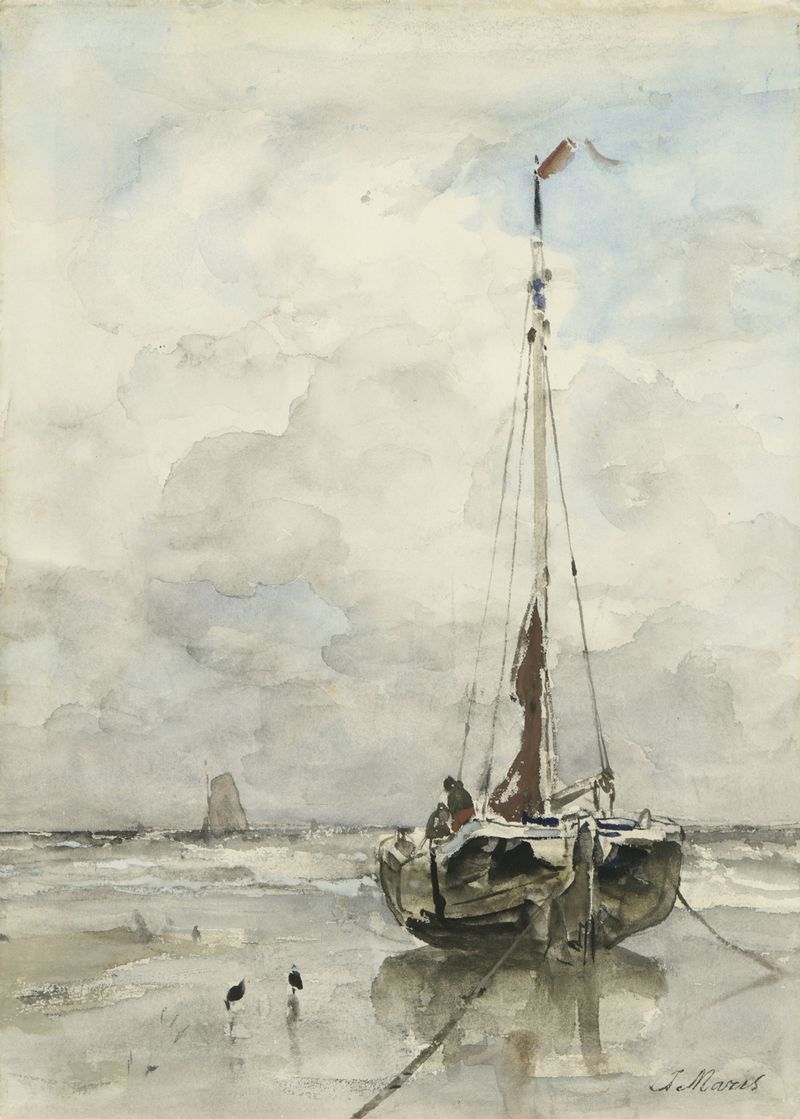
Visserspink aan het strand
Jacob Maris
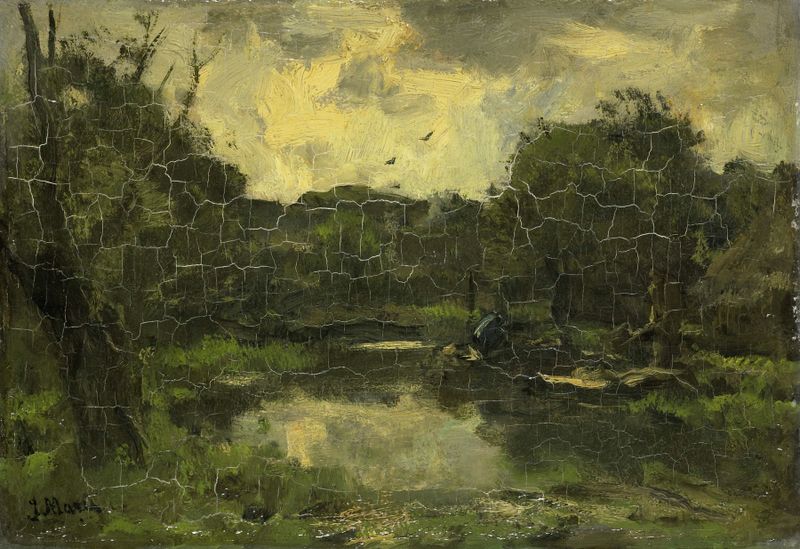
Landschap met schuit
Jacob Maris
Havengezicht
Jacob Maris
Schepen in de haven van Dordrecht
Jacob Maris





