Discover insights about this artwork
Starry Night — History & Facts
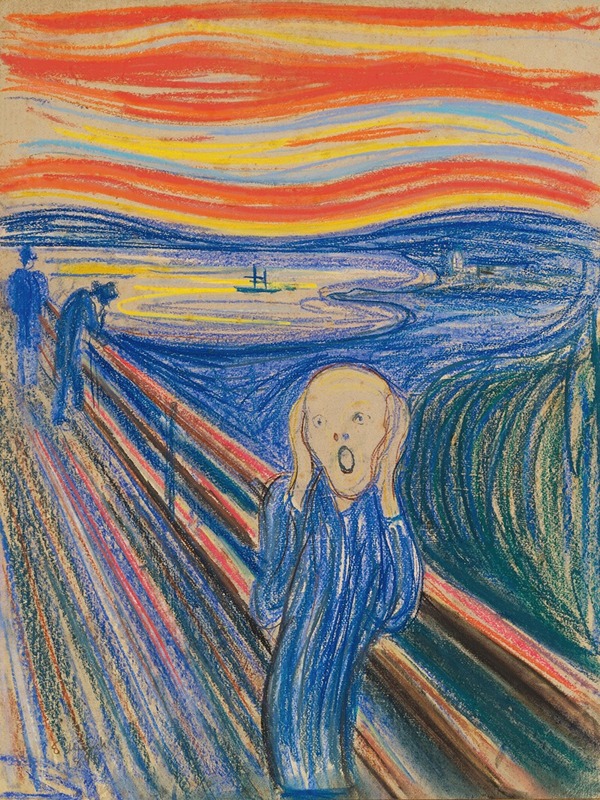
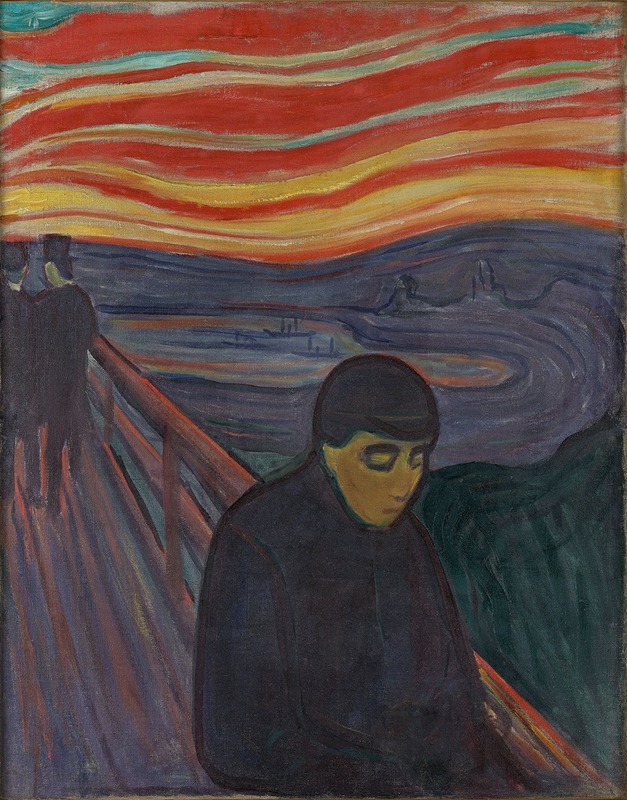
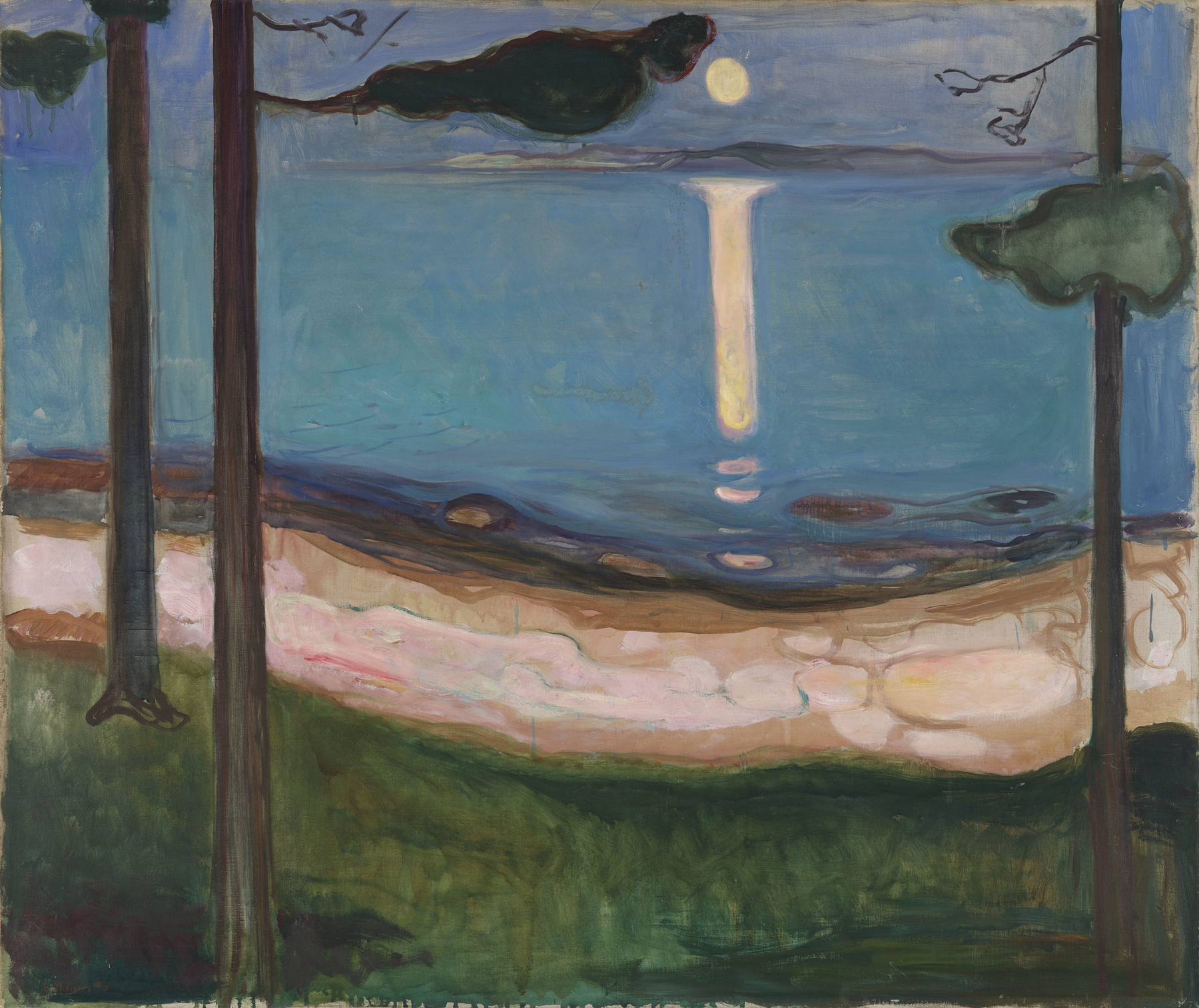
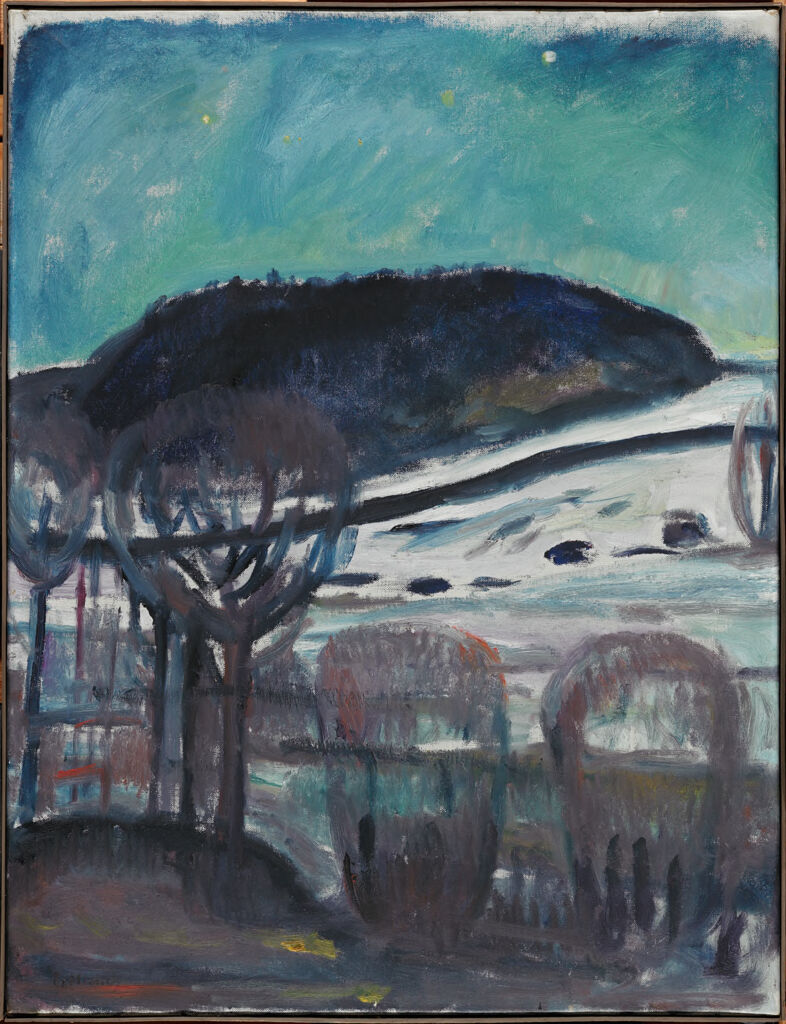
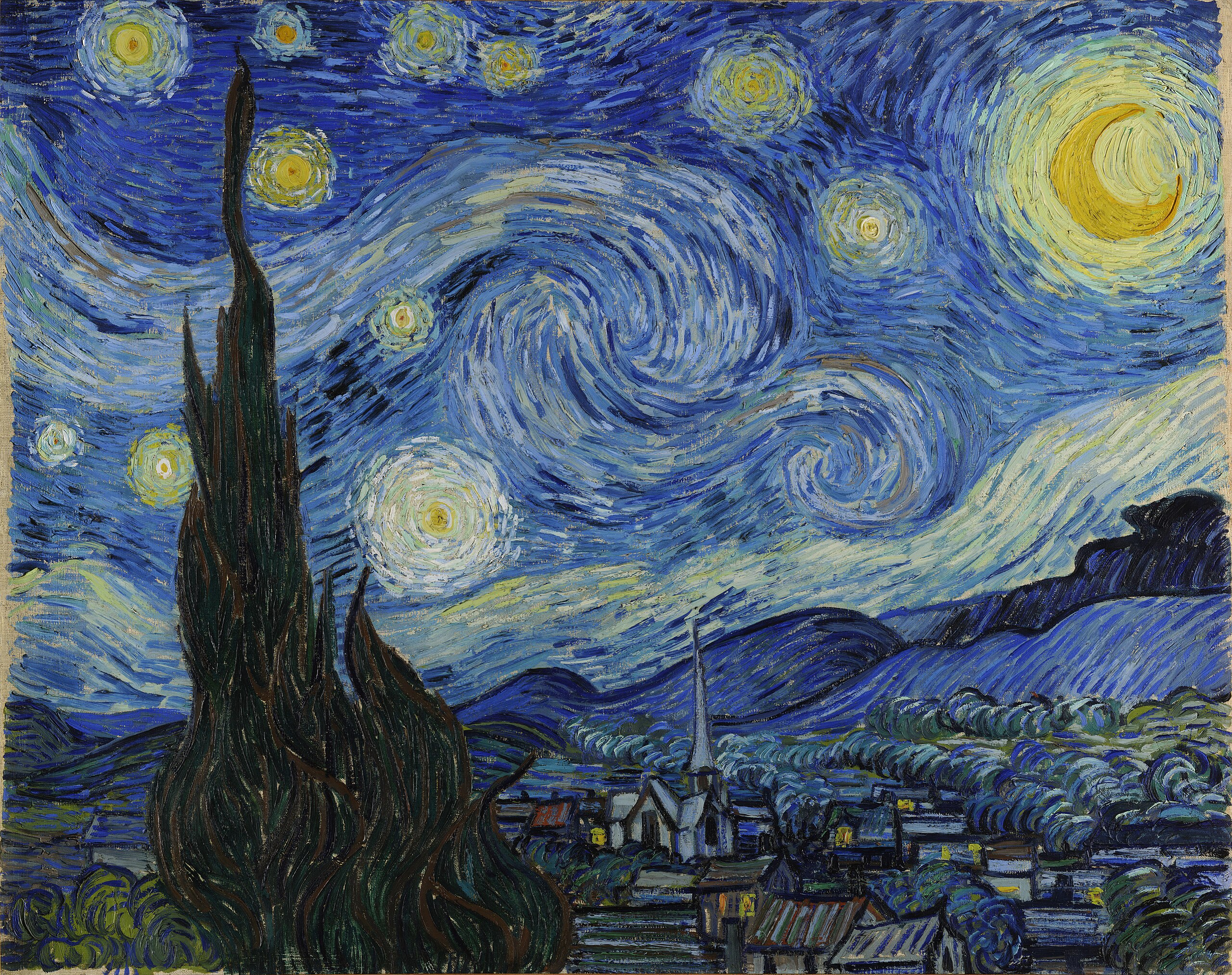
In Starry Night, Edvard Munch uses bold colors and swirling forms to create a dynamic night sky. The painting features vibrant blues and yellows, with stars that seem to pulse with energy. Below the sky, a quiet village rests, contrasting with the lively heavens above.
This interplay between the calm and the chaotic evokes a sense of wonder and introspection. The painting is executed in oil on canvas, a medium that allows for rich color and texture. Munch's brushwork is expressive, with visible strokes that add to the movement of the sky. The dimensions of the artwork are approximately 73.7 x 92.1 cm, making it a substantial piece to view.
The use of color and form exemplifies Munch's Post-Impressionist style. Edvard Munch was a Norwegian painter known for his emotional and psychological themes. Starry Night reflects his interest in the relationship between nature and human emotion. Interestingly, this work is often confused with Vincent van Gogh's famous painting of the same name, although they are distinct in style and execution.
Munch's version emphasizes a more turbulent sky, aligning with his exploration of existential themes.