Steamship Accrington — History & Facts
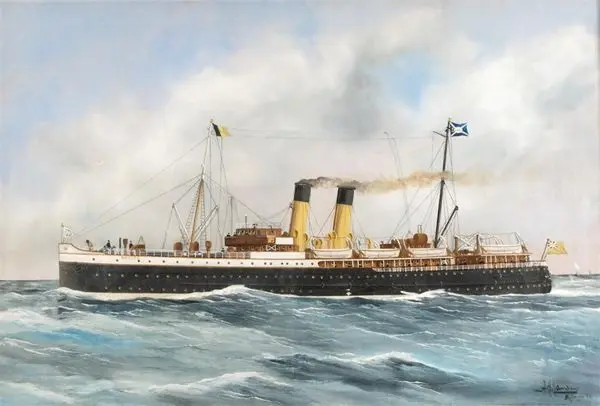
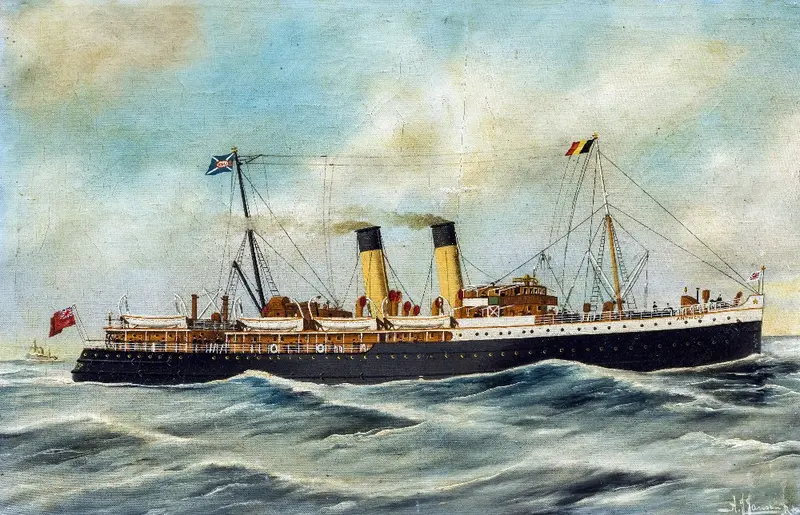
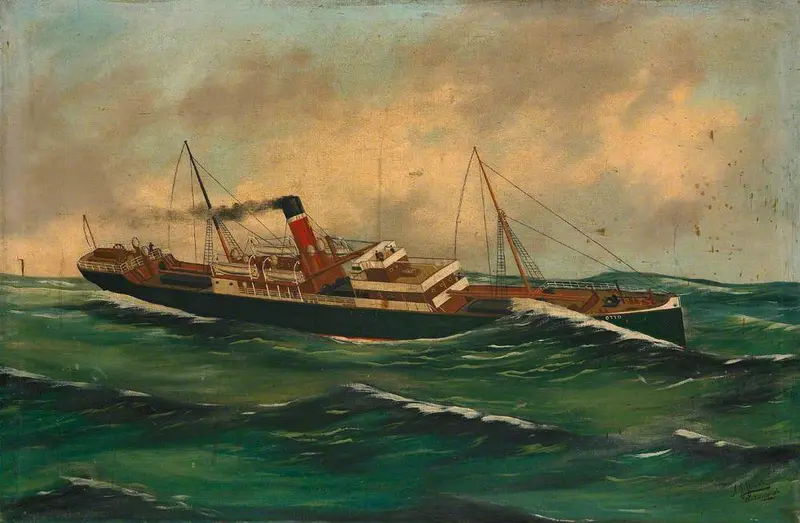
What first catches the eye in Steamship Accrington by A. J. Jansen is the ship’s proud silhouette, cutting across a restless sea under a sky brushed with pale light.
The vessel’s crisp black hull and ochre deckwork are rendered with a precision that suggests both admiration and technical knowledge, while the flags at mast and stern announce its identity and allegiance. A plume of smoke trails from the funnel, a sign of purposeful motion, and the low horizon grants the ship a sense of grandeur—isolated, yet commanding the vastness around it. Every line and rivet is picked out with care, inviting the viewer to linger over the details that mark this as a portrait rather than a mere record: the careful rigging, the lifeboats, the glint of brass. Painted in 1910, this work belongs to a tradition of marine portraiture that flourished in the age of steam, when shipping lines commissioned paintings to celebrate their latest achievements and reassure clients of their modernity and reliability.
The world that produced Steamship Accrington was one of industrial optimism, where the steamship symbolized progress and global connection. Such paintings were often hung in company offices or the homes of proud captains, and though history has kept few traces of A. J.
Jansen or the specific journey of this canvas, its presence in a modern auction collection is a reminder of the countless stories carried by ships and those who painted them. Look again at the ship’s steady advance, and imagine the world of 1910: a time when the horizon always promised something new.