Steamship SS Brussels, by A. J. Jansen — History & Facts
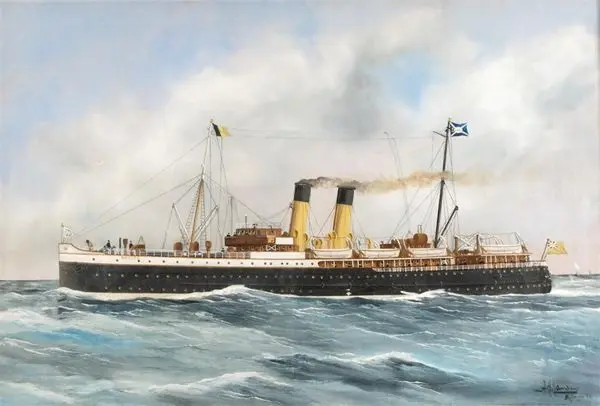
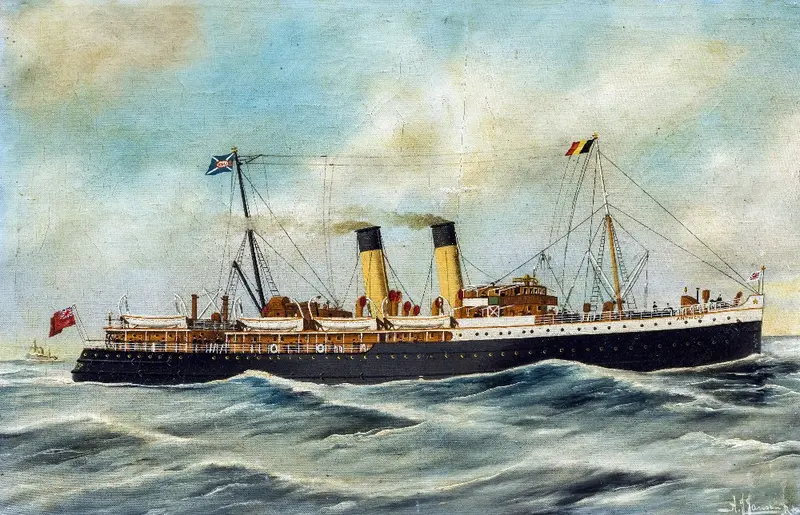
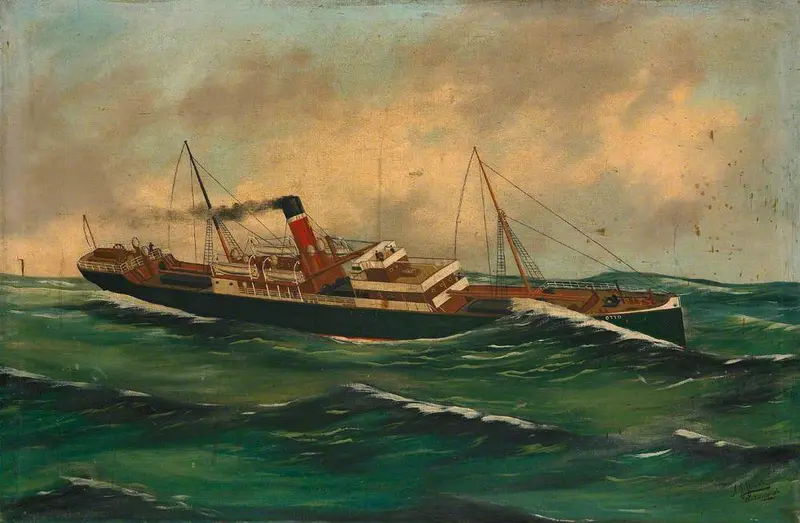
What first catches the eye in Steamship SS Brussels, by A. J. Jansen is the proud, almost theatrical profile of the vessel as it cuts through the waves, its black hull and golden funnels standing out against a restless sea and a sky swept with cloud.
The ship is rendered with a precision that speaks to both admiration and technical knowledge: every flag, lifeboat, and rail is crisply defined, and the plume of smoke trailing from the twin stacks signals the age of steam at full stride. The artist guides us along the ship’s length, from the fluttering house flags at the bow to the distant, almost ghostly outlines of a tall-masted sailing ship far astern—a quiet nod to the passing of one era and the rise of another. The low horizon gives the sky and sea equal weight, suggesting both the vulnerability and the ambition of these floating giants. Painted in 1912, this work belongs to a period when steamships were not just feats of engineering but emblems of national pride and commercial ambition.
Such portraits were often commissioned by shipping lines or captains to commemorate new vessels or mark significant voyages, and they served as both advertisement and keepsake. The SS Brussels, shown here with flags identifying its affiliations, is presented at a moment of calm mastery, a far cry from the drama of storms or disaster that sometimes haunt maritime art. Little is recorded about A.
J. Jansen or the precise story behind this painting, which was once sold alongside a version of the SS St Petersburg, but its presence in a modern collection is a reminder of how these images once bridged the worlds of commerce, travel, and art. The painting invites you to linger over every detail, imagining the lives and ambitions bound up in steel, smoke, and salt water.