
Still Life with Begonia — History & Facts
What first seizes the eye in Still Life with Begonia is the electric blue that floods the canvas, a blue so dense and saturated it seems to hum with energy. Against this vivid ground, the begonia’s orange blooms flare up, their petals outlined in dark, almost cartoonish lines that lend them an unexpected gravity. The tabletop is a riot of color: a coral-red cloth pools and twists, flanked by bowls and heaps of fruit, each orb edged in black as if the artist wanted every object to pulse with its own life.
The light here is not naturalistic; instead, it is the color itself that commands attention, flattening space and making every shape pop forward. The effect is theatrical, as if the begonia has been thrust onto a stage, its supporting cast of fruit and vessels arranged for maximum visual drama. Painted in 1911, this still life belongs to a moment when artists like Alexej von Jawlensky were breaking away from realism and searching for new ways to express emotion through color and form. The bold palette and simplified shapes speak to the influence of movements such as Fauvism and the early stirrings of German Expressionism, where color was liberated from the need to imitate nature.
Works like this were rarely made for grand patrons; instead, they were often painted for fellow artists, collectors, or simply as an exercise in pushing the boundaries of what painting could do. Today, Still Life with Begonia is preserved in the Bridgeman Art Library, a testament to a restless moment in European art when painters believed color itself could carry the weight of feeling. Look again at those orange blossoms and the electric blue behind them—Jawlensky asks us to see the world not as it is, but as it might feel.
More Artworks by Alexej von Jawlensky

Murnau
Alexej von Jawlensky
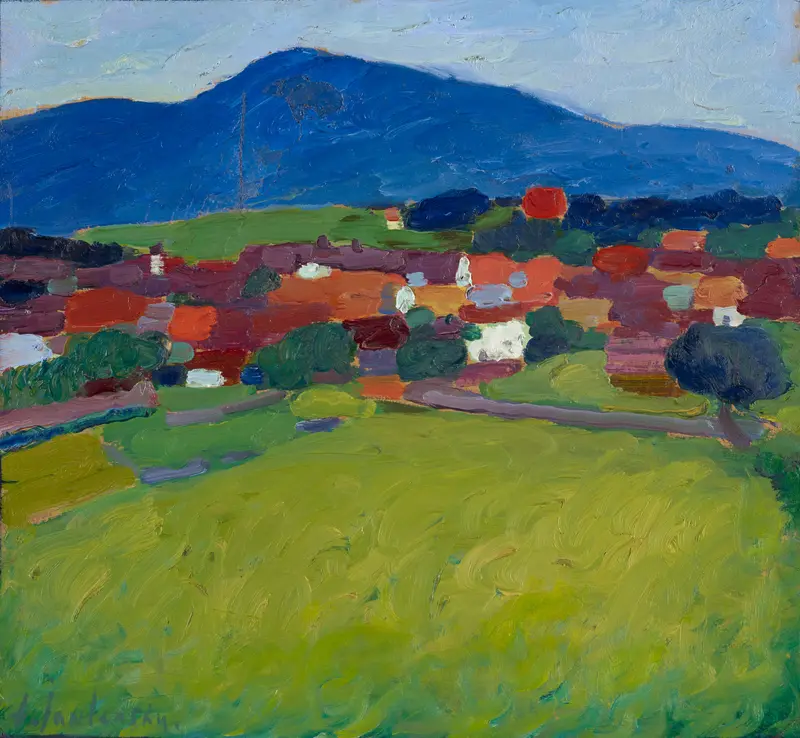
The Village Of Murnau
Alexej von Jawlensky
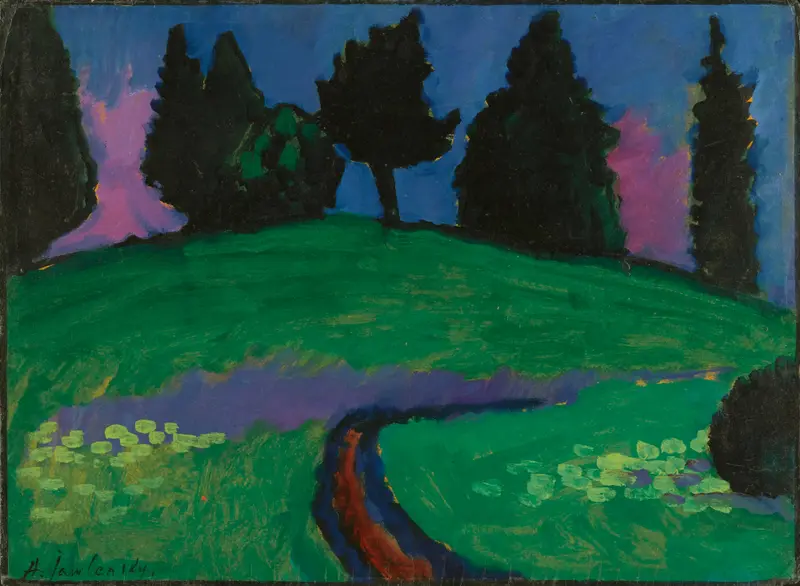
Dunkle Bäume über Grünem Hang (Dark Trees Over Green Slope)
Alexej von Jawlensky
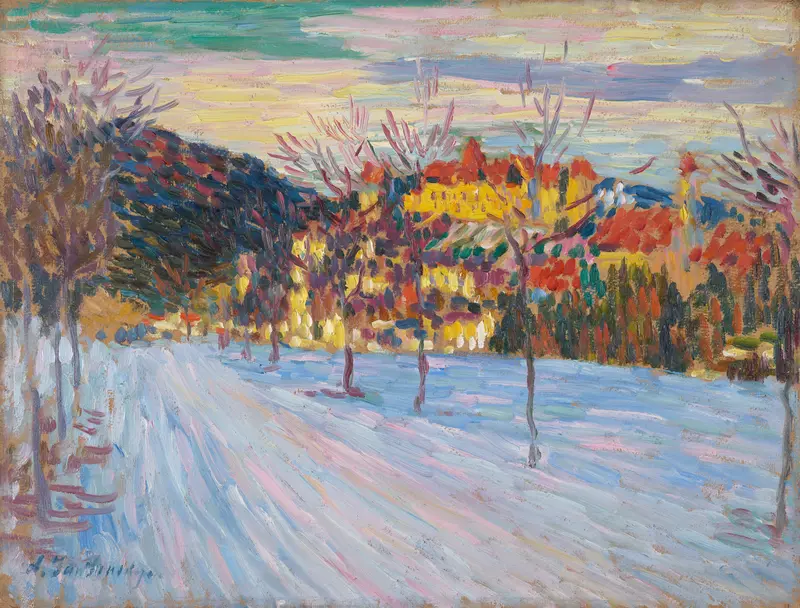
Füssen
Alexej von Jawlensky
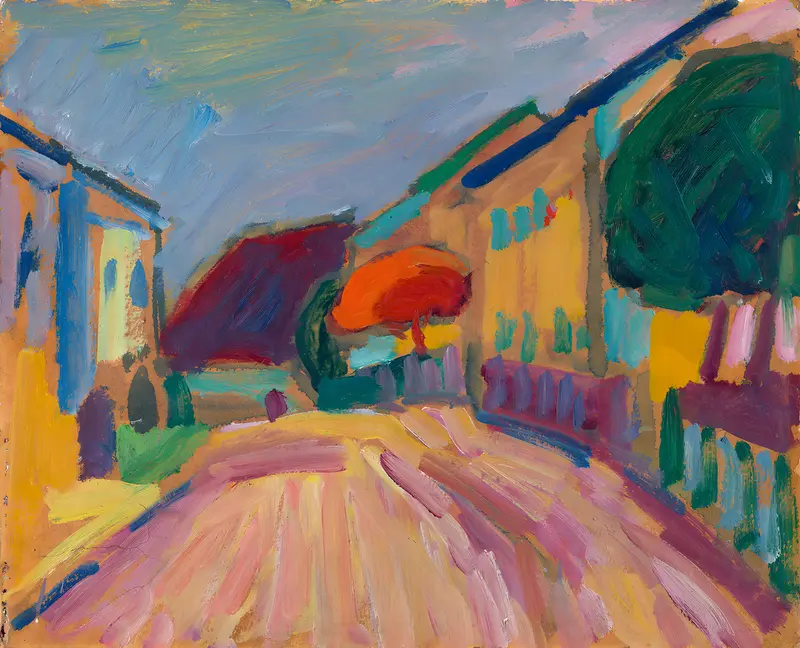
Sketch from Murnau
Alexej von Jawlensky
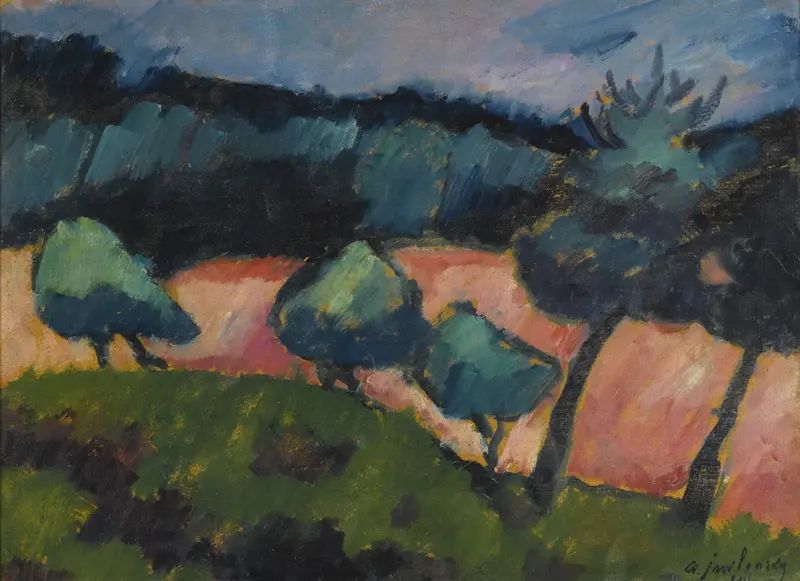
Bäume und Dünen in Prerow (Trees and dunes in Prerow)
Alexej von Jawlensky
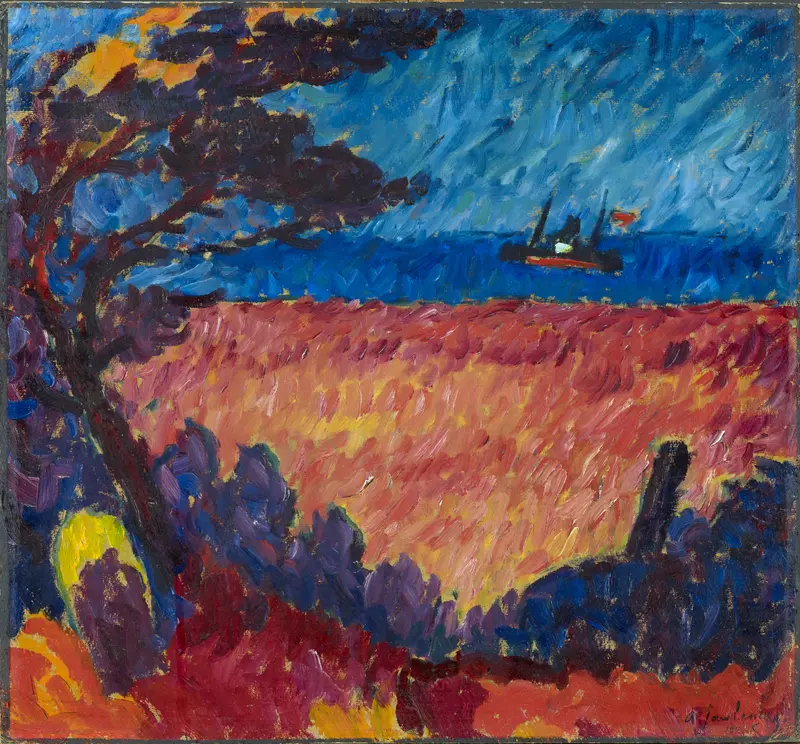
At The Baltic Sea
Alexej von Jawlensky
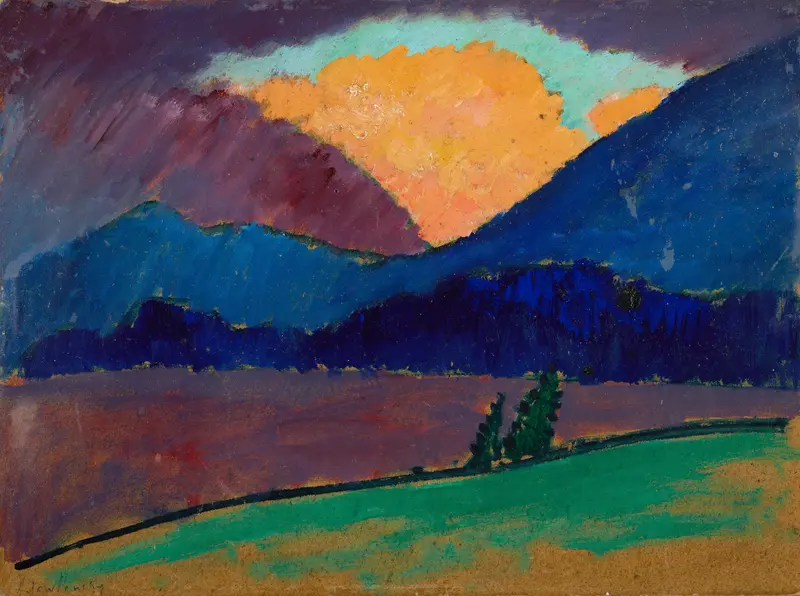
Summer evening in Murnau
Alexej von Jawlensky
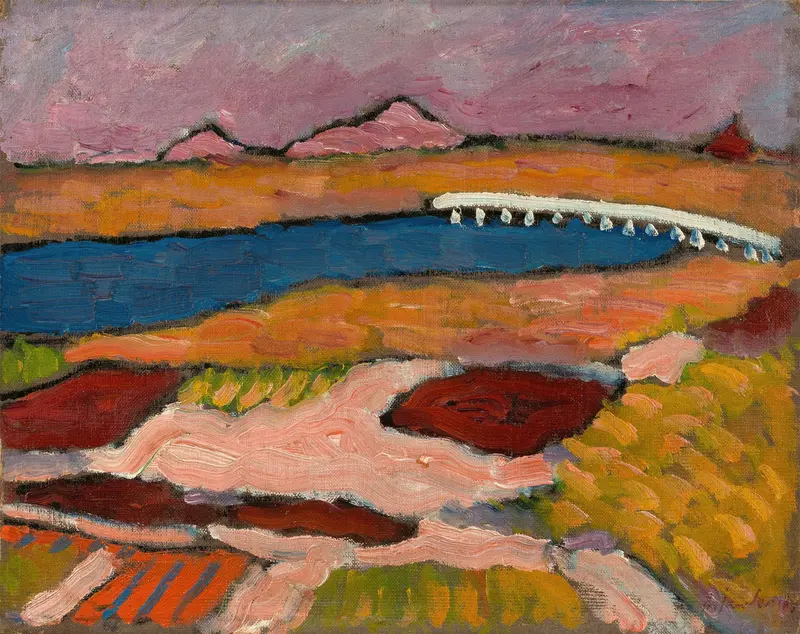
Prerow (Darß), Pommern
Alexej von Jawlensky
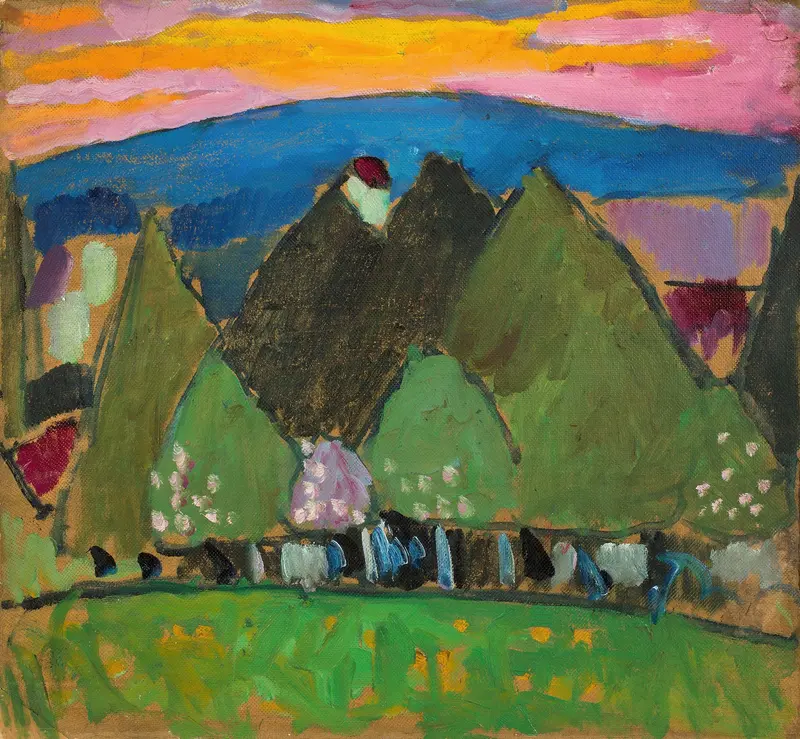
Landschaft mit Bäumen
Alexej von Jawlensky





