
Still Life with Game, Vegetables, Fruit and a Cockatoo — History & Facts
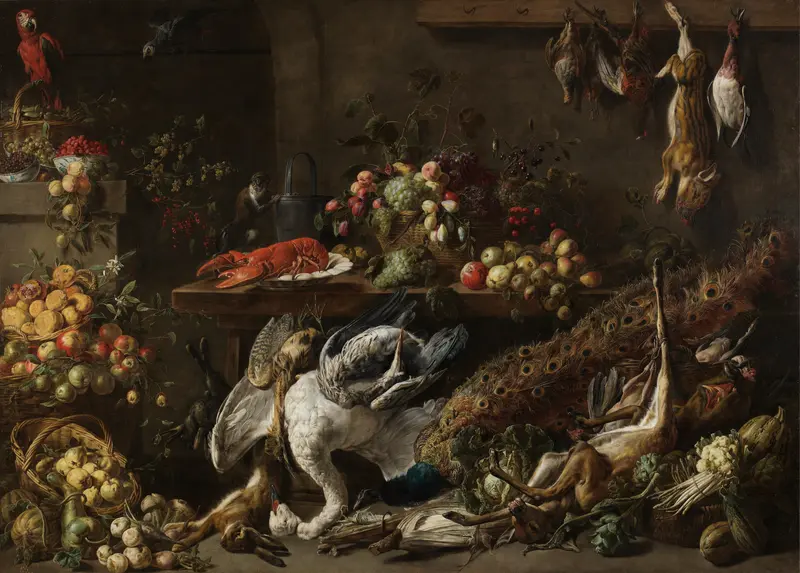
A white cockatoo presides over this lavish scene, its crest raised in curiosity or command as it surveys a world overflowing with life and death. The painter’s eye draws you first to the bird—exotic, almost regal—before letting you wander through the abundance that spills across the canvas: a chair heavy with figs, grapes, and cherries, a table crowded with the spoils of hunt and harvest, and a basket of apples and pears that seem ready to tumble into your hands. Light cuts diagonally from a hidden source, glancing off glossy fruit and the soft plumage of fowl, then deepening into the velvet shadows that frame the drama.
The ring of game suspended at center, with a hare hanging upside down, is a deliberate spectacle—a moment of stillness before the feast, where the bounty of nature is both celebrated and claimed. Painted in 1650, this work by Adriaen van Utrecht belongs to a world where still life was more than a display of technical bravura; it was a coded language of status, trade, and fleeting pleasure. In the thriving mercantile cities of the Dutch and Flemish Baroque, such paintings adorned the homes of prosperous burghers, signaling wealth and worldliness through the exotic and the familiar: imported birds, local produce, the fruits of both garden and gun. While history has kept few traces of this specific canvas beyond its date and presence in a digital collection, its sheer scale and detail speak to an era when painters competed to outdo nature—and each other—in richness and wit.
Every detail invites a second look: the cockatoo’s gaze, the glint of grapes, the artful disorder that is anything but accidental.
More Artworks by Adriaen van Utrecht
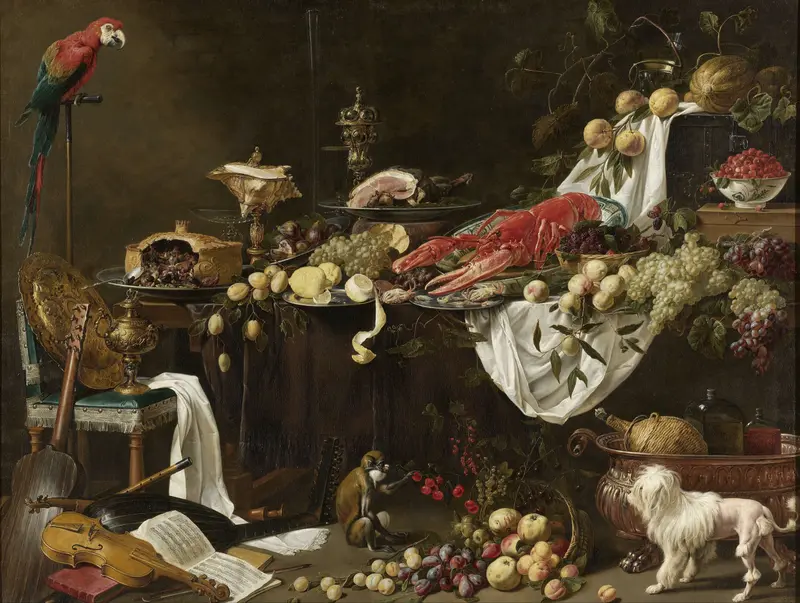
Banquet Still Life
Adriaen van Utrecht
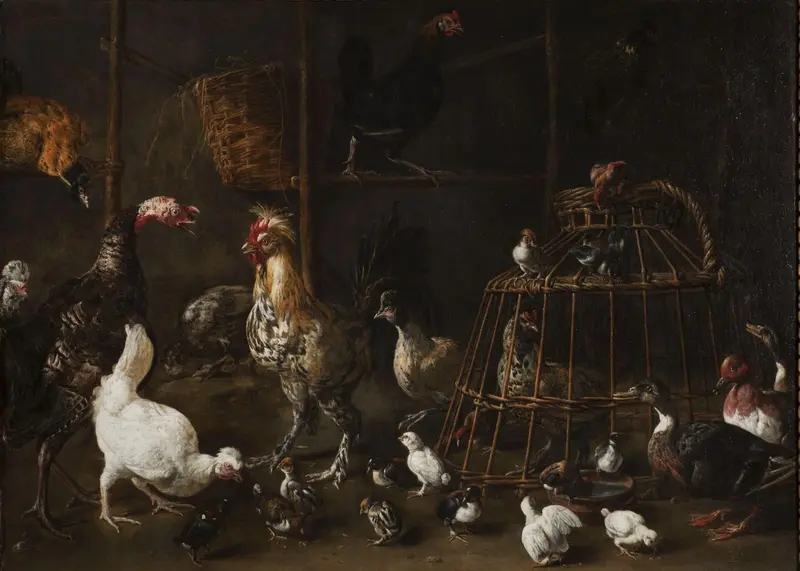
A barn interior with a turkey
Adriaen van Utrecht
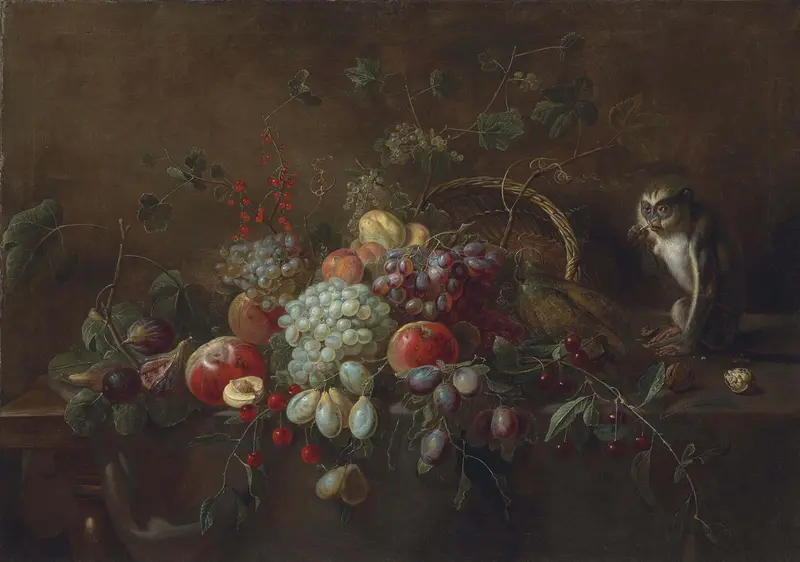
Grapes, apples, plums, figs and other fruit on a partly draped wooden table, a monkey eating walnuts by an upturned woven basket
Adriaen van Utrecht
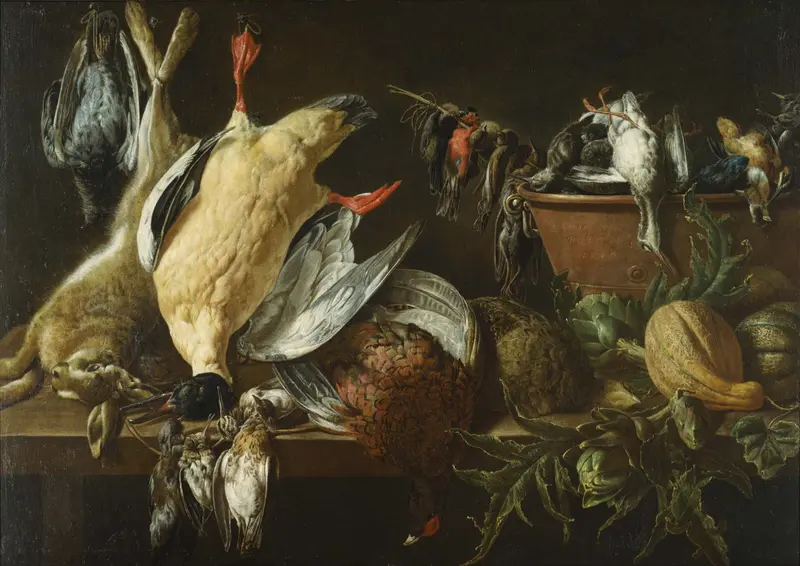
Still Life with Games and Vegetables
Adriaen van Utrecht
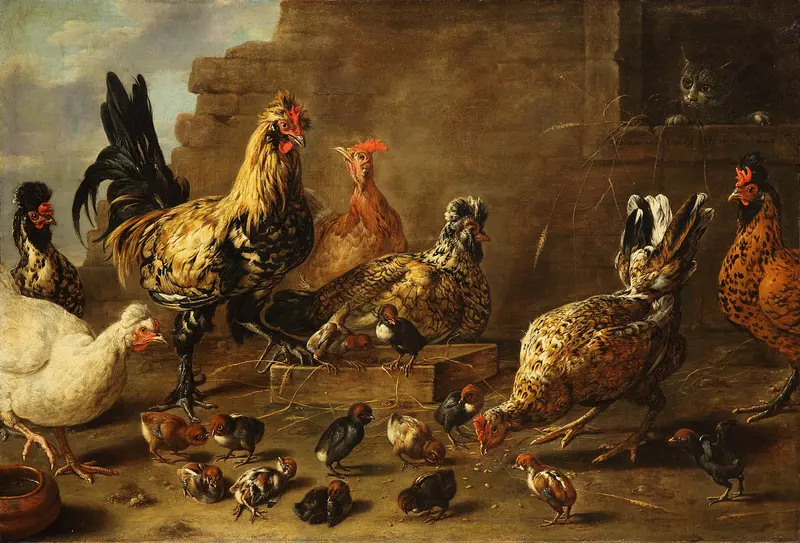
The chicken yard
Adriaen van Utrecht
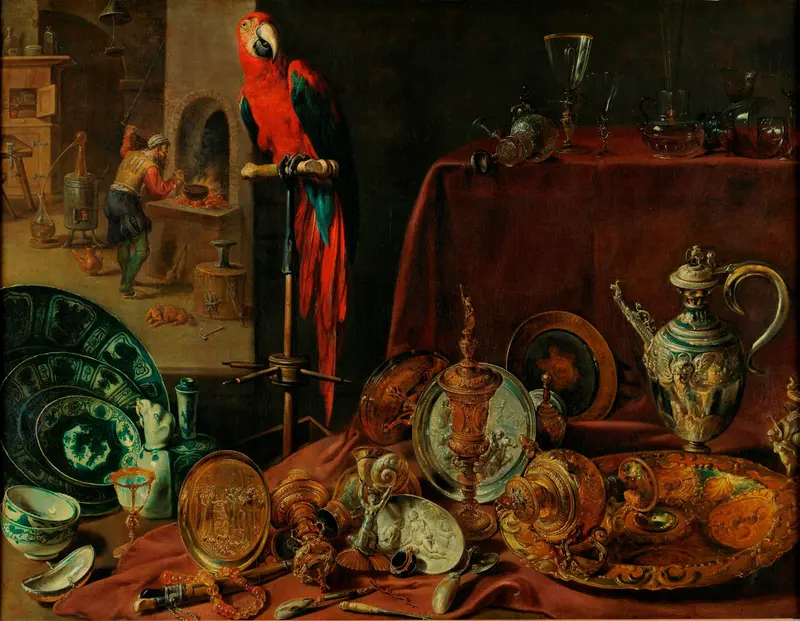
Still life with parrot, an allegory of fire
Adriaen van Utrecht
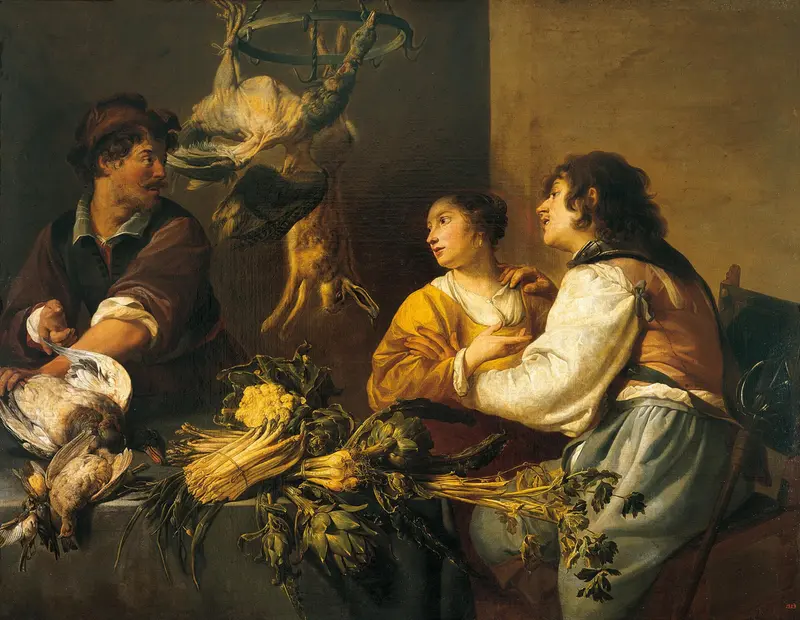
Kitchen
Adriaen van Utrecht
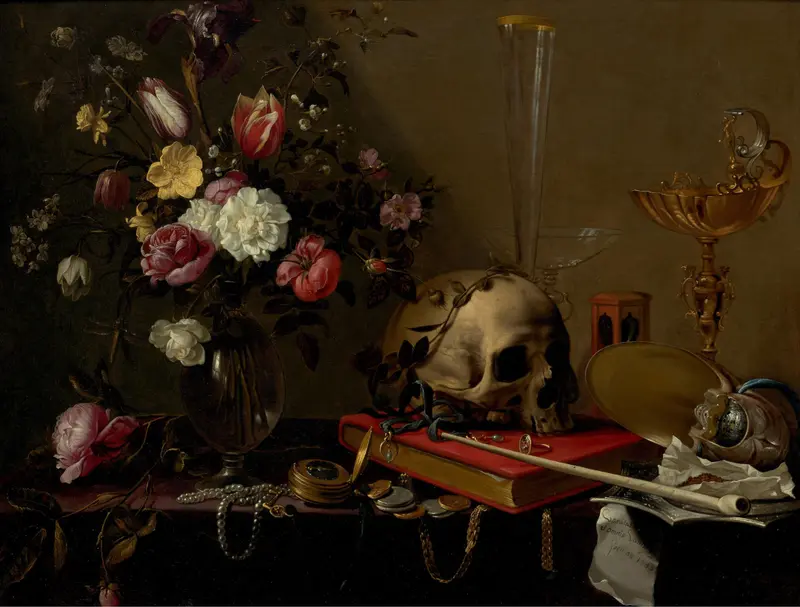
Vanitas - Still Life with Bouquet and Skull
Adriaen van Utrecht
A Larder
Adriaen van Utrecht
A Kitchen Still Life with Figures
Adriaen van Utrecht





