
Still life with sea urchins — History & Facts
What first draws the eye in Still life with sea urchins is not the glint of shell or the delicate netting, but the deep, almost inky darkness of the clustered sea urchins themselves. They spill from a rough-woven basket, their forms barely catching the ochre and rust tones that swirl through the background. One urchin, its underside exposed, flashes a starburst of red and white—a single note of brilliance in a composition otherwise built on shadow and earth.
The net’s thick rope and the scattered debris beneath hint at the world outside the frame: the labor of gathering, the hush after the catch, the tactile reality of the Mediterranean shore. Painted in 1858, this work by Adolphe Joseph Thomas Monticelli belongs to a period when still life painting was charged with new energy in France. Artists like Monticelli, working just before the Impressionists, reveled in texture and the play of light on humble objects, elevating the everyday to something worth lingering over. Such paintings were often destined for private homes, tokens of taste and reminders of nature’s bounty, but also quiet meditations on transience and touch.
This particular piece, documented as part of a private collection as of March 2017, stands as a testament to the era’s fascination with both the material and the mysterious—inviting the viewer to look again, and see how darkness can be made to glow.
More Artworks by Adolphe Monticelli

Portrait of a Lady
Adolphe Monticelli
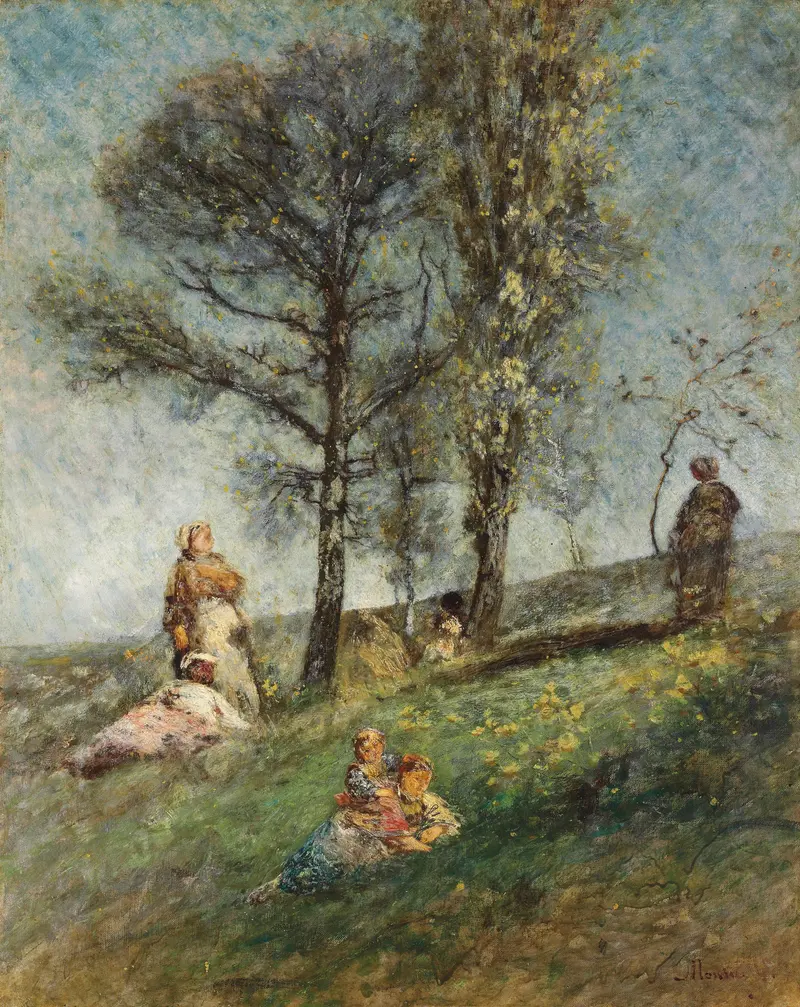
A Young Family Under Trees On A Hill
Adolphe Monticelli

Fête d'Après-Midi
Adolphe Monticelli
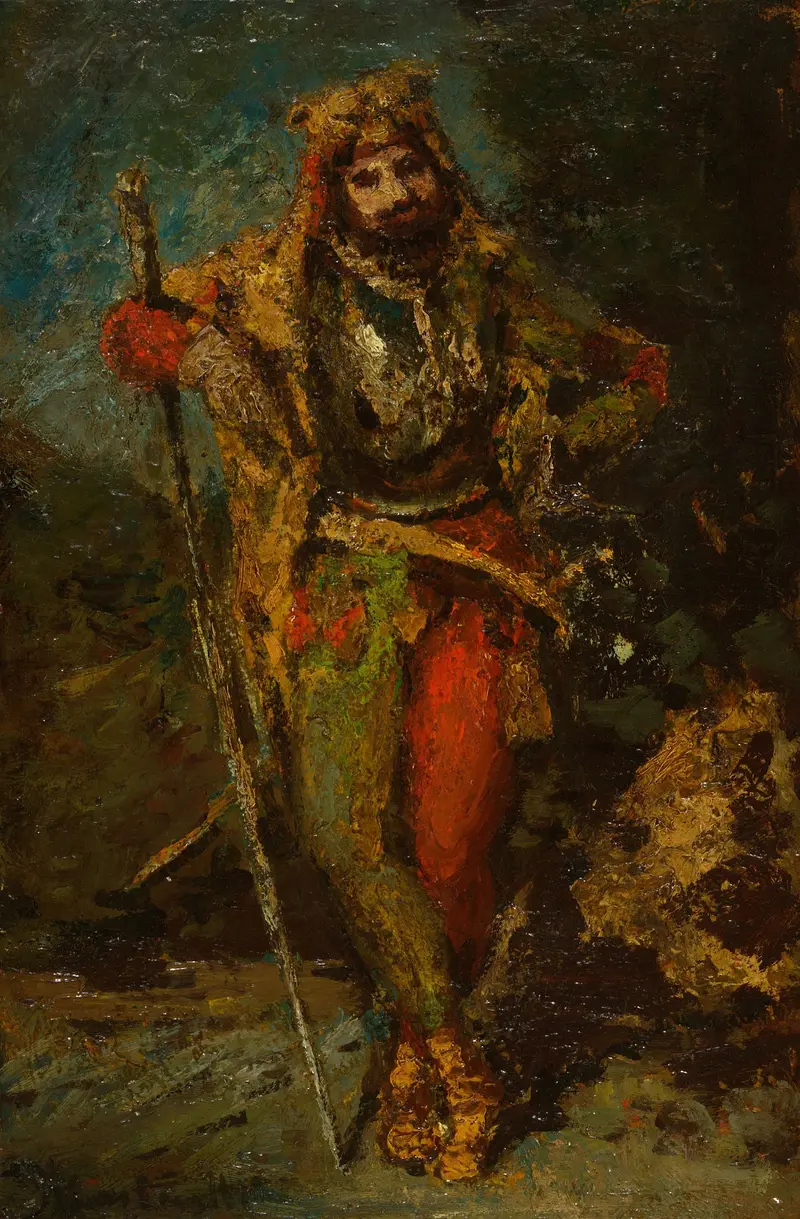
Mephisto from the Opera Faust
Adolphe Monticelli
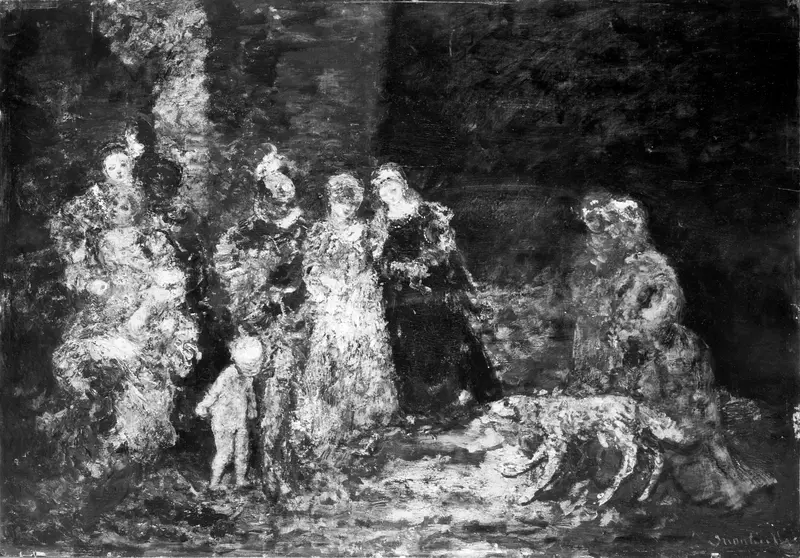
The Fairies
Adolphe Monticelli
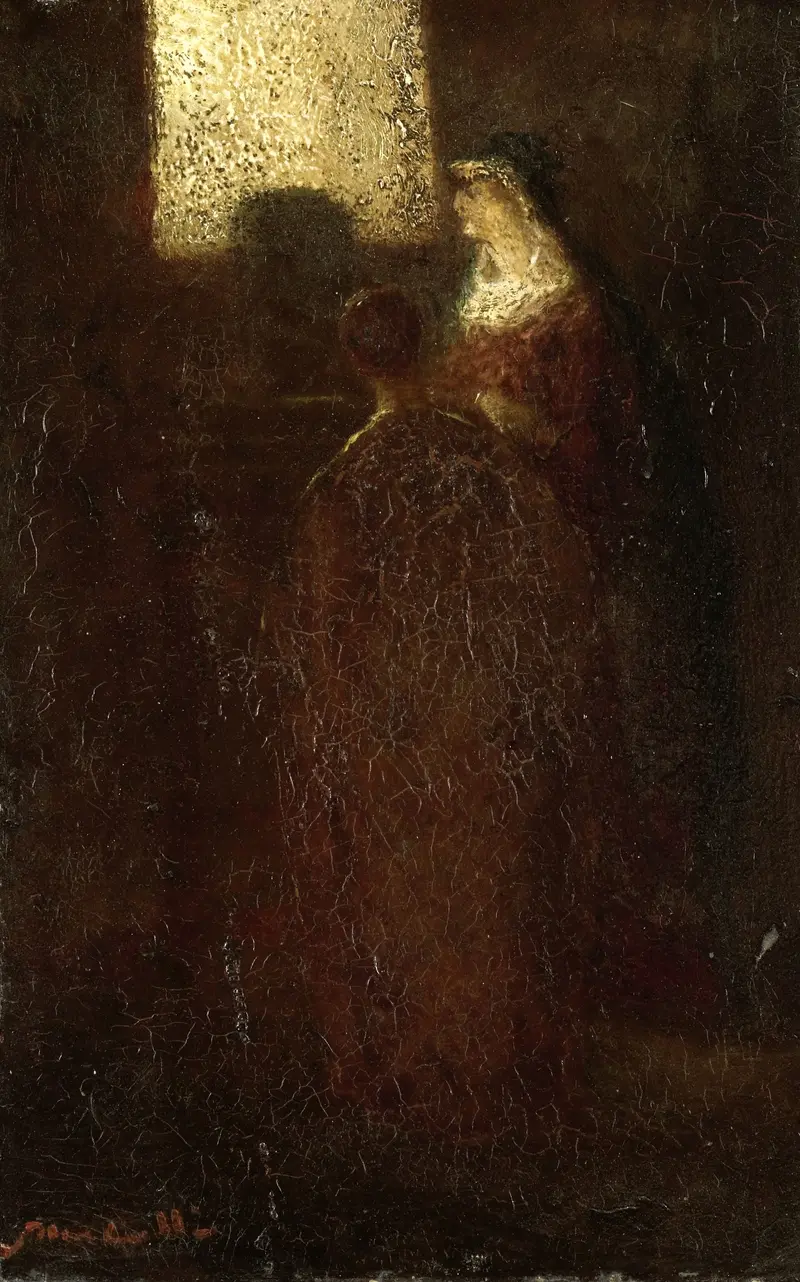
Aan het altaar
Adolphe Monticelli
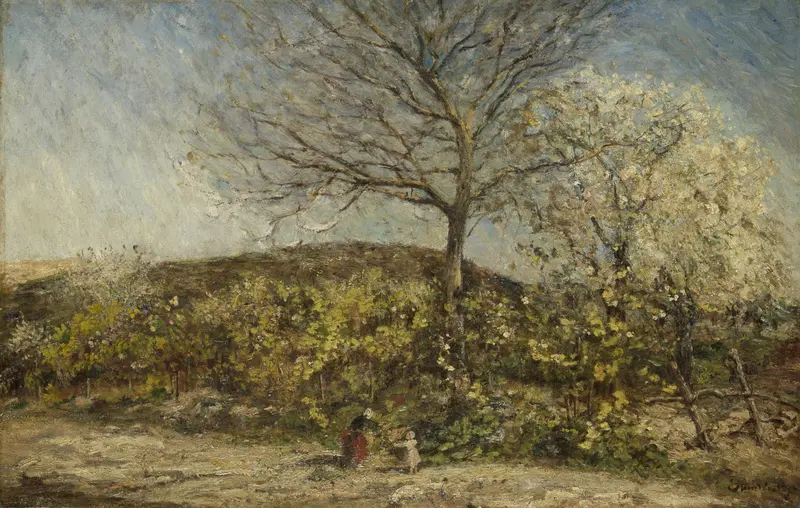
Landschap met bloeiende boomgaard
Adolphe Monticelli
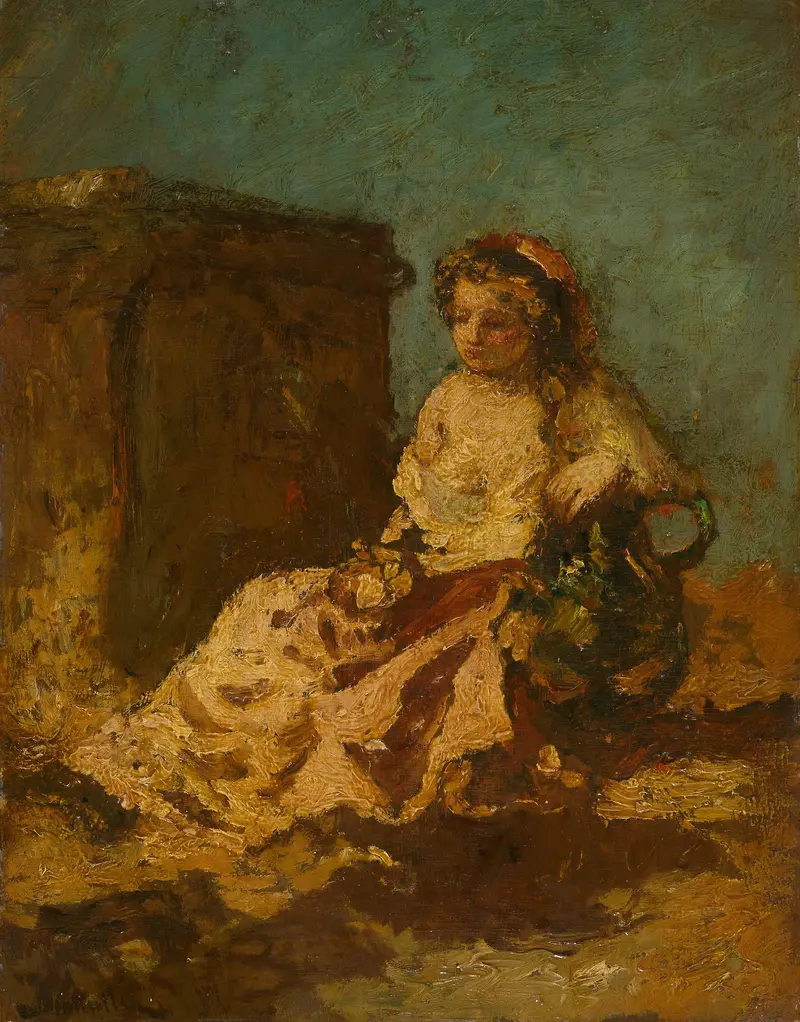
Meditation (Seated Woman)
Adolphe Monticelli
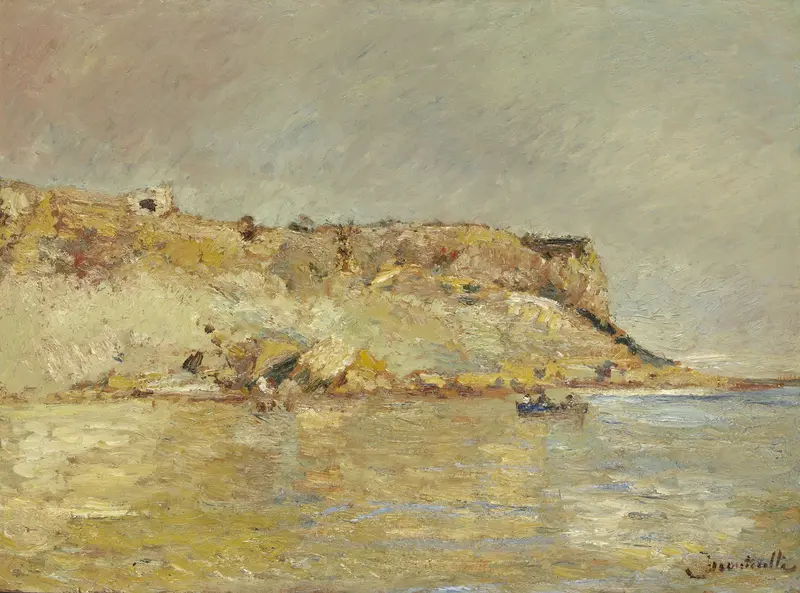
Coastal Mountains
Adolphe Monticelli

Landscape with Figures
Adolphe Monticelli





