Stiller Abend I — History & Facts
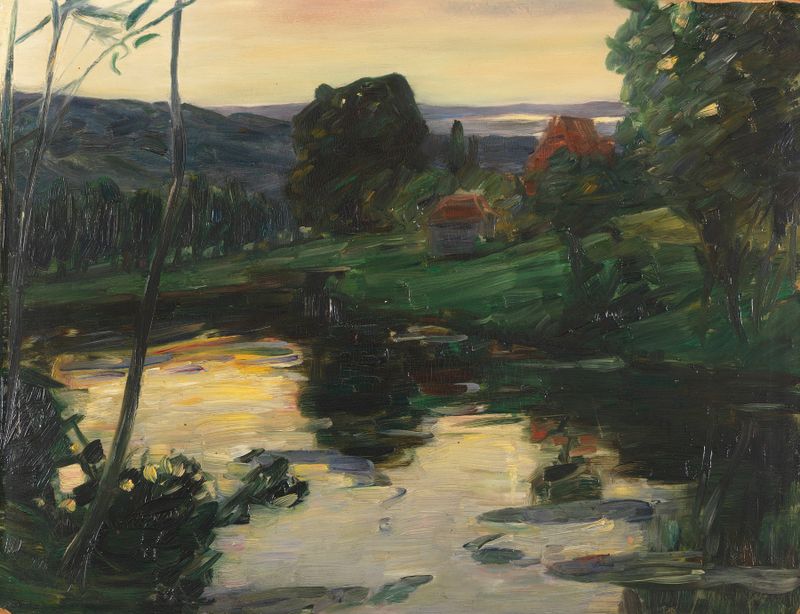
What if silence could speak through light? In Stiller Abend I, a tranquil evening unfolds, yet the stillness resonates deeply, echoing the unspoken connections between the figures and their environment. Look to the left at the gently flowing river, its surface reflecting the soft hues of twilight. The light glimmers, illuminating the cypress trees that frame the scene, while the delicate palette of blues and greens invites a sense of calm. The figures, positioned at the water's edge, are enveloped in an embrace of shadows and light, suggesting a moment suspended in time where the world around them fades away. In this work, the contrast between the lush greenery and the poignant stillness of the evening invites contemplation.
The silhouettes of the figures loom softly against the vibrant backdrop, hinting at a shared solitude that transcends spoken words. Putz's choice of color and composition evokes a deep emotional resonance, making the viewer acutely aware of the beauty found in silence and the bonds that remain unspoken. Created in 1911, this piece emerged during a period when Leo Putz was exploring the themes of intimacy and nature within his art. Living in Munich at the time, he was influenced by the burgeoning movement of Impressionism, which emphasized light and atmosphere.
The early 20th century was characterized by a growing interest in capturing fleeting moments, and this painting embodies that spirit, reflecting both personal and universal emotions experienced in quiet spaces.