
Stockyards, Chicago — History & Facts
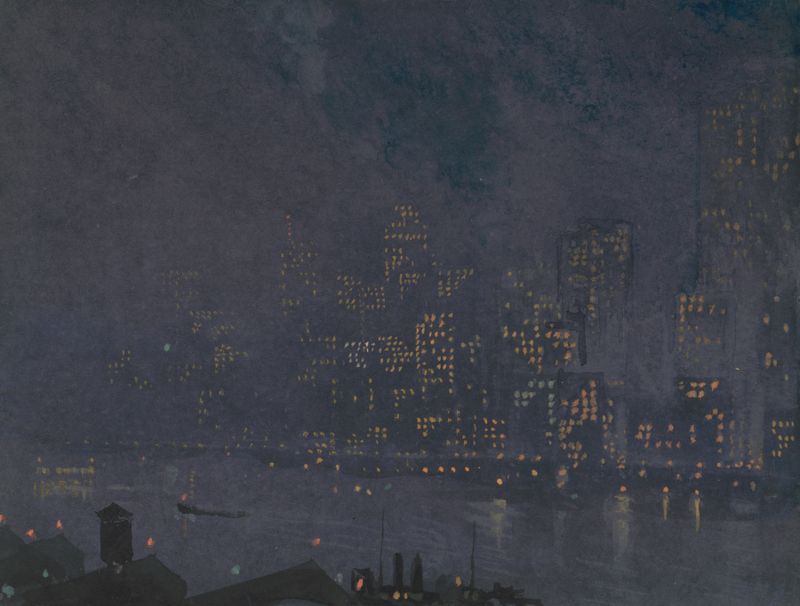
When did color learn to lie? In the realm of industrial landscapes, destiny weaves a narrative far beyond the smoke and shadows. Look closely at the swirling hues dominating the canvas. Notice how the muted grays and browns blend together to create an atmosphere thick with industry, while bursts of ochre and rust suggest the heavy, metallic heart of Chicago's stockyards. The uneven lines of the structures draw your gaze towards the horizon, where the sharp angles of the buildings contrast with the fluidity of the sky above, adding depth and a sense of foreboding. Pennell captures the unyielding essence of labor and the relentless march of progress, showcasing the tension between man and machine.
The stark division between the industrial foreground and the distant skyline hints at a world caught between aspiration and decay. Each stroke reveals the emotional weight of a city teetering on the edge of transformation, where the vibrancy of life pulses beneath layers of grime and wear. In 1910, Joseph Pennell painted this striking work during a time of flourishing industrialization in America. Living in a rapidly changing landscape, he aimed to document the evolution of urban life through his distinct etching and watercolor techniques.
During this period, artists began to grapple with themes of modernity, capturing the complexities of an expanding nation still finding its footing amidst the cacophony of progress.
More Artworks by Joseph Pennell
Browse all →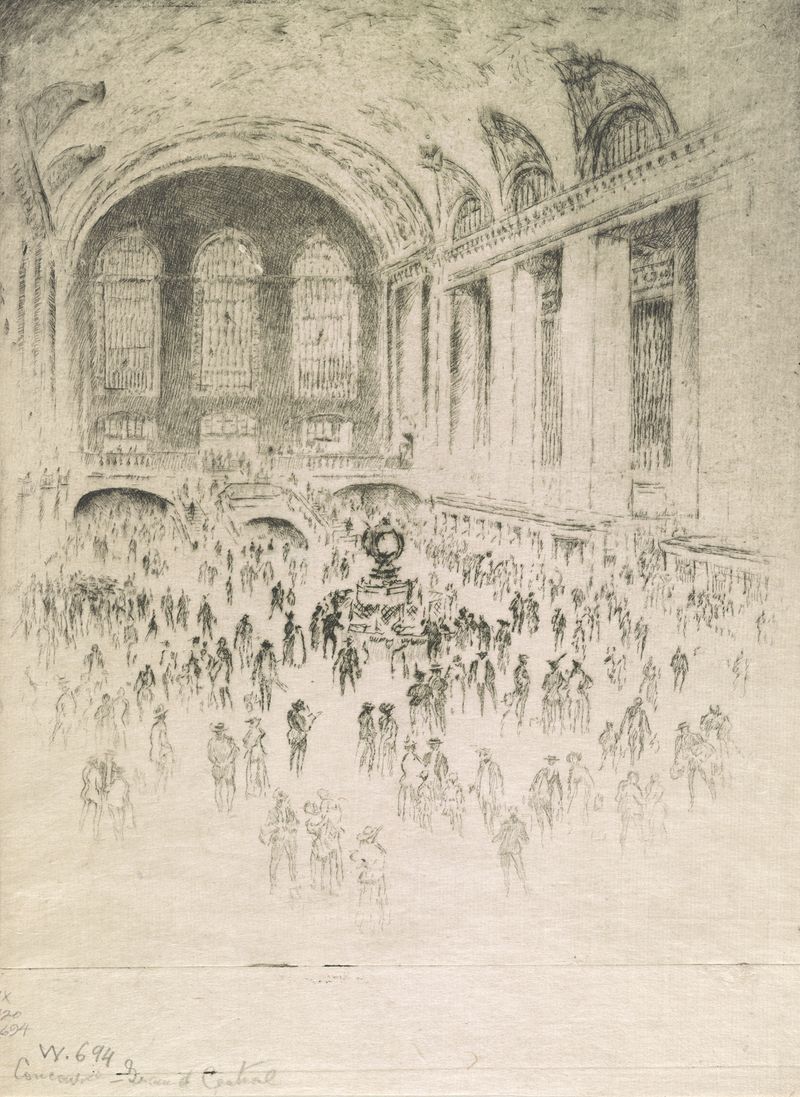
Concourse, Grand Central
Joseph Pennell
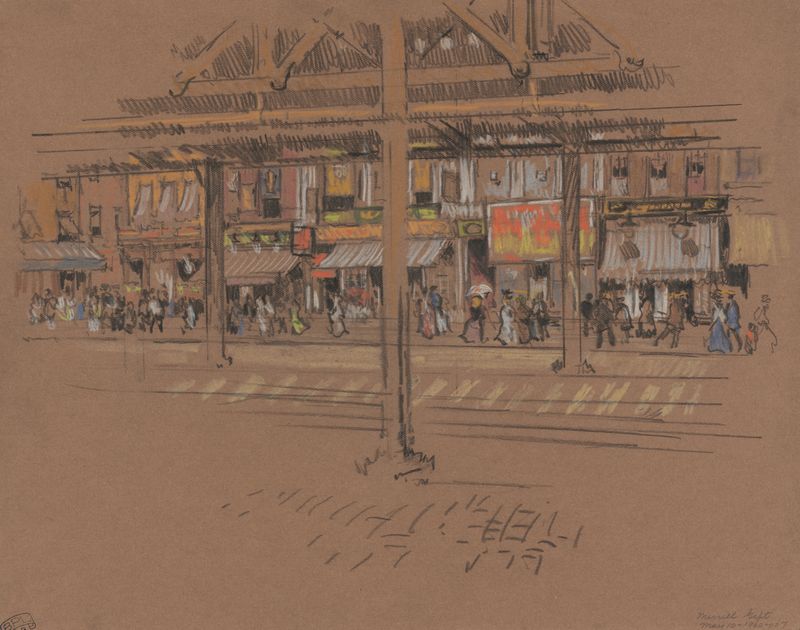
Sixth Avenue
Joseph Pennell
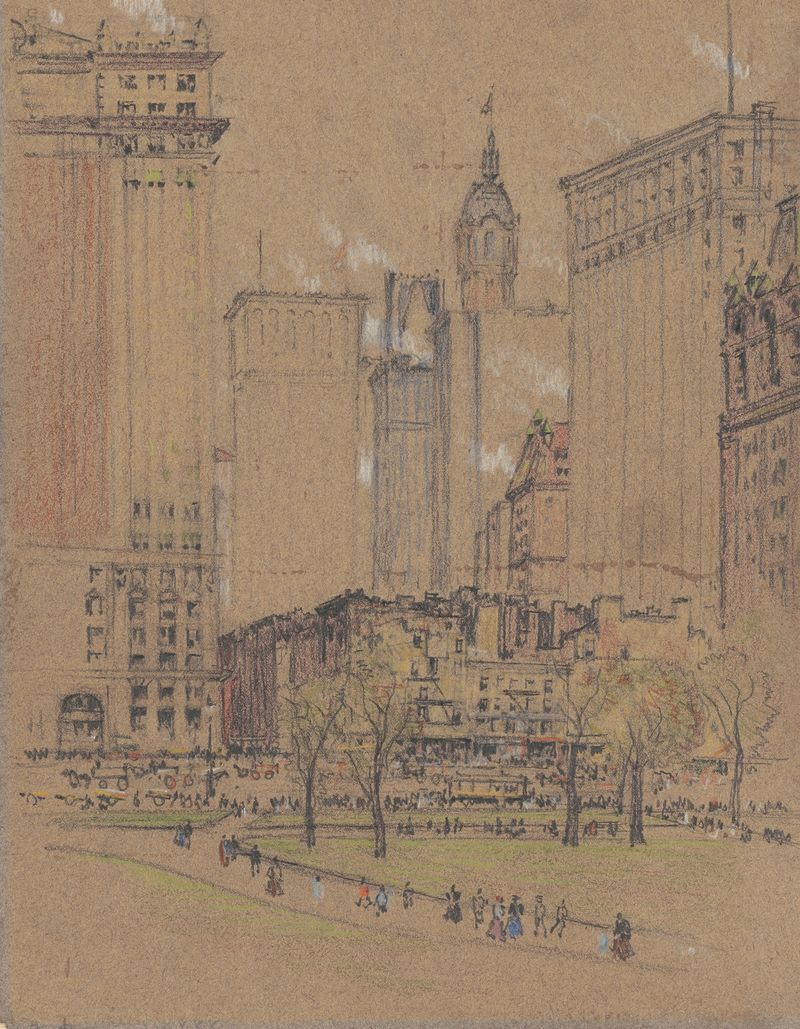
New York,the Old and the New
Joseph Pennell
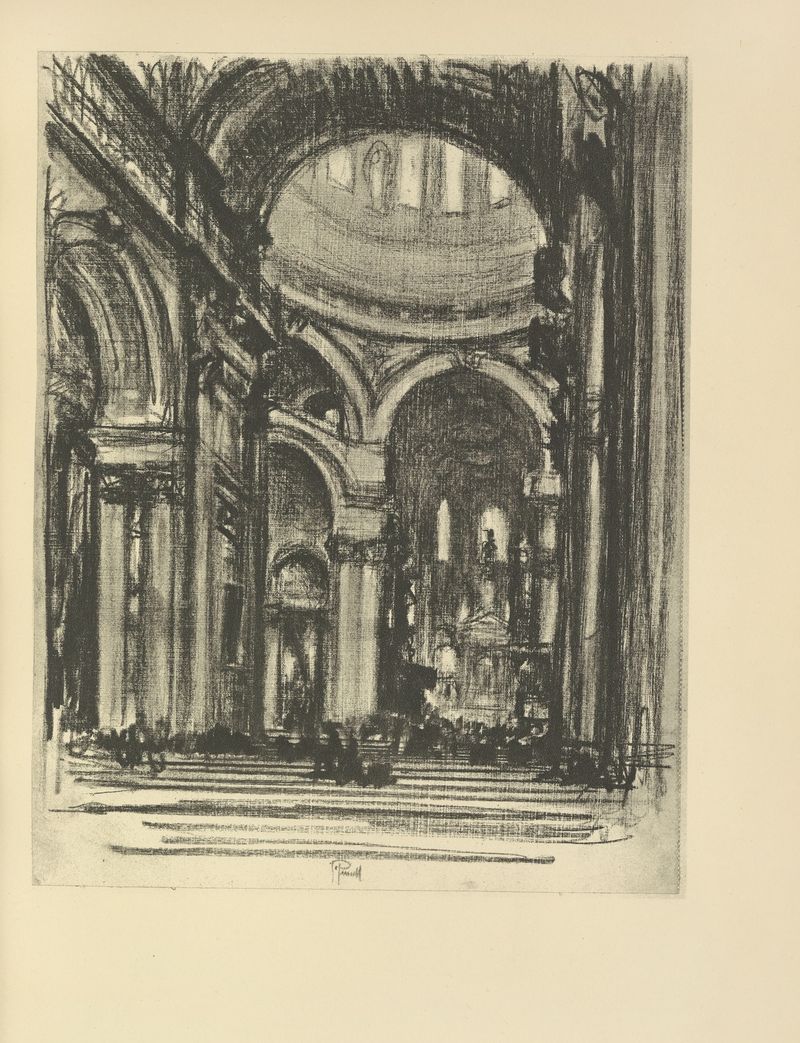
St. Paul’s, The Nave
Joseph Pennell
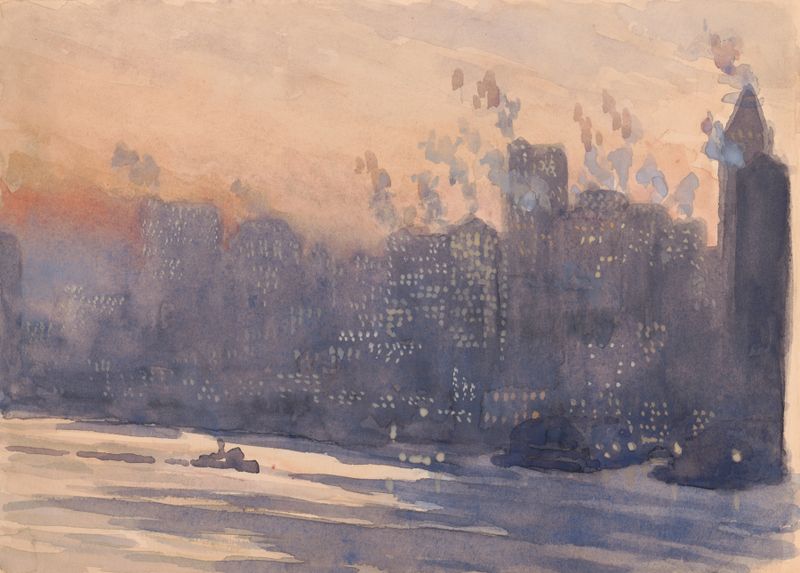
New York City harbor and skyline at night
Joseph Pennell
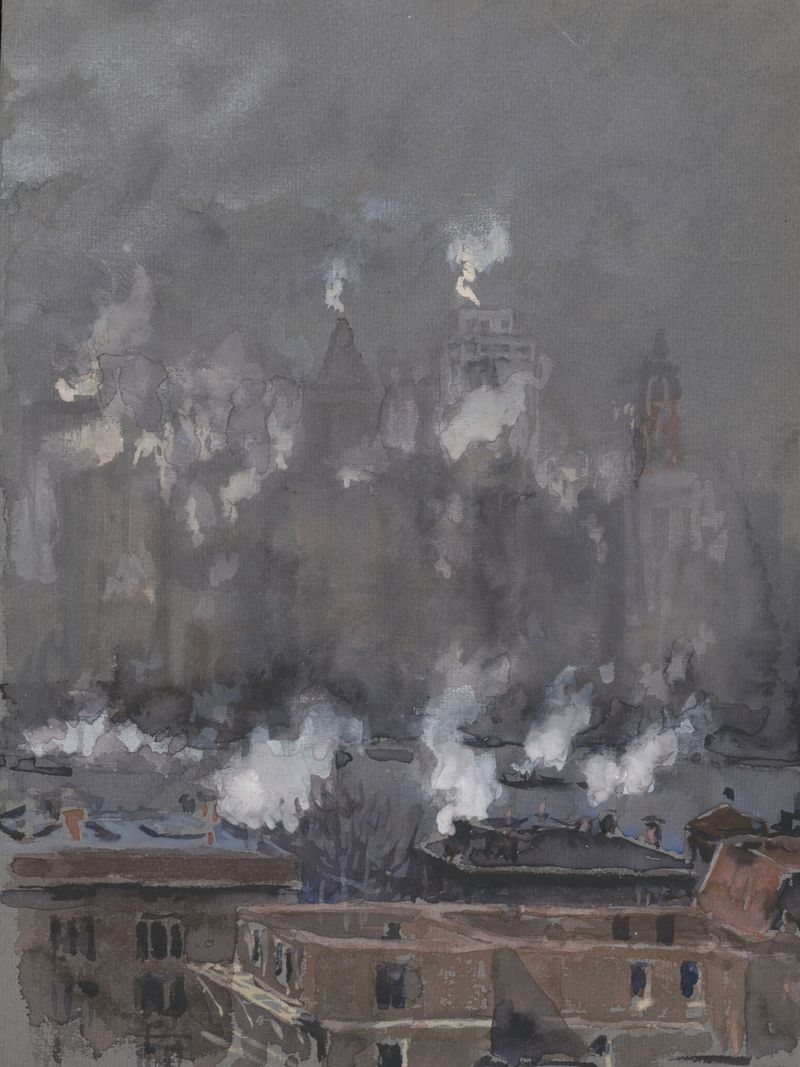
Smoke and fog on gray day, New York City
Joseph Pennell
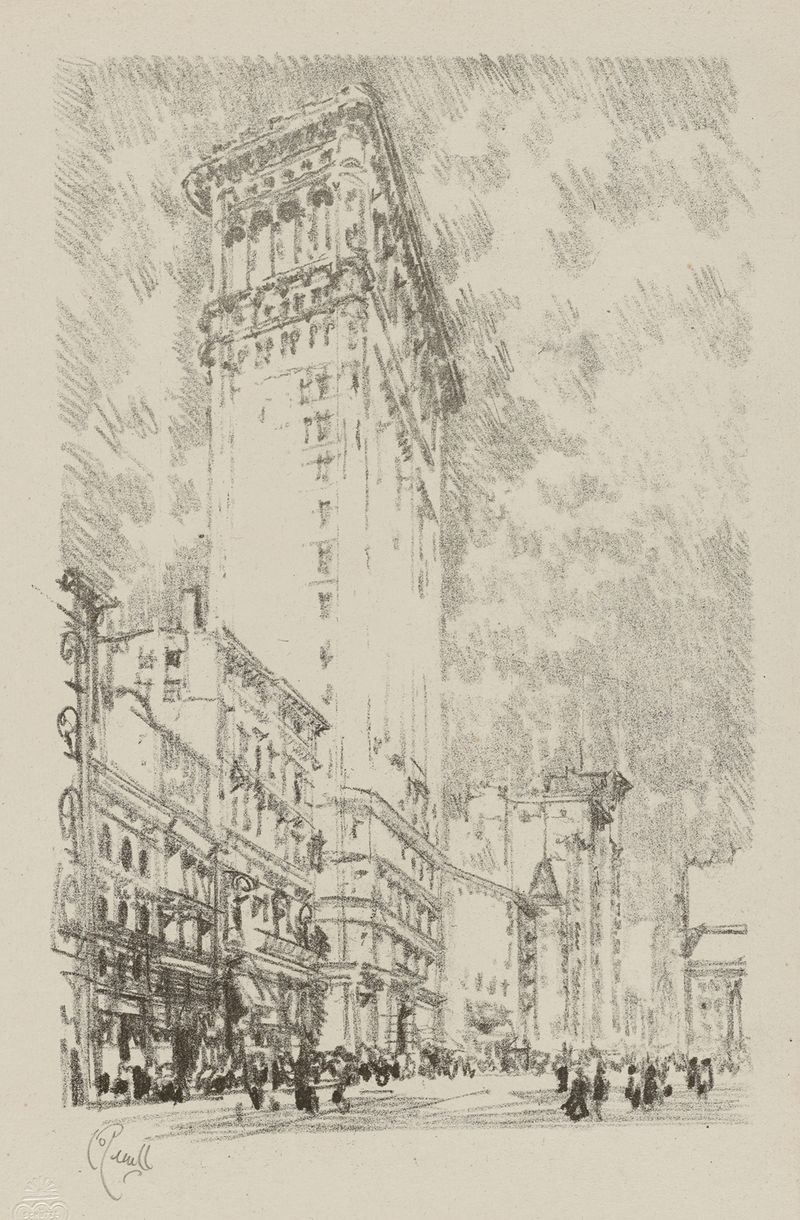
The Flat Iron
Joseph Pennell
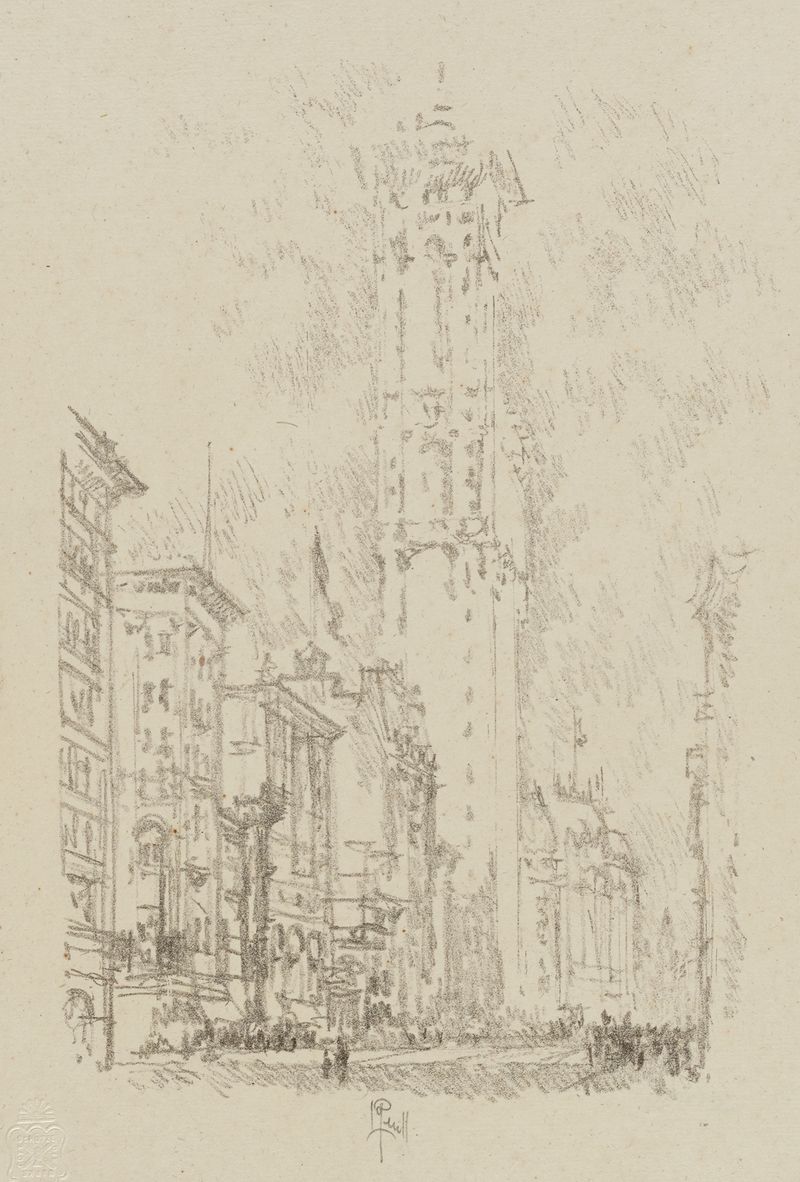
The Times Building
Joseph Pennell
Skyscrapers at night
Joseph Pennell

St. James’ Park
Joseph Pennell





