
Storm in the Mountains — History & Facts
Is this a mirror — or a memory? The interplay of light and shadow in a tempestuous landscape beckons one to explore the depths of both nature and the human spirit. Focus on the center of the canvas, where dark, swirling clouds converge, pregnant with the promise of rain. The painter’s meticulous brushwork captures the kinetic energy of the storm, each stroke echoing the wind’s ferocity. Notice how the vibrant greens of the mountains push against the ominous gray sky, their resilience illuminated by bursts of sunlight peeking through the tempest.
The juxtaposition of light and darkness creates an emotional tension, drawing the viewer into a world caught between chaos and clarity. Hidden within this tempest are themes of struggle and redemption. The foreboding clouds symbolize the weight of turmoil, while the illuminated peaks suggest hope and the possibility of calm after the storm. The movement captured in the scene speaks to the impermanence of nature itself—how the fierce winds can quickly give way to serenity.
It is a dance between fear and beauty, encapsulating the duality of human experience and the sublime power of the natural world. Frederic Edwin Church created Storm in the Mountains in 1847, during a period of burgeoning Romanticism and American landscape painting. Living in Hudson River School circles, he was influenced by his contemporaries’ fascination with the majestic American scenery. At this time, Church was refining his technique, exploring the dramatic contrasts of light and atmosphere that would define his career, all while grappling with the ideals of nature and its ability to evoke deep emotion.
More Artworks by Frederic Edwin Church
Browse all →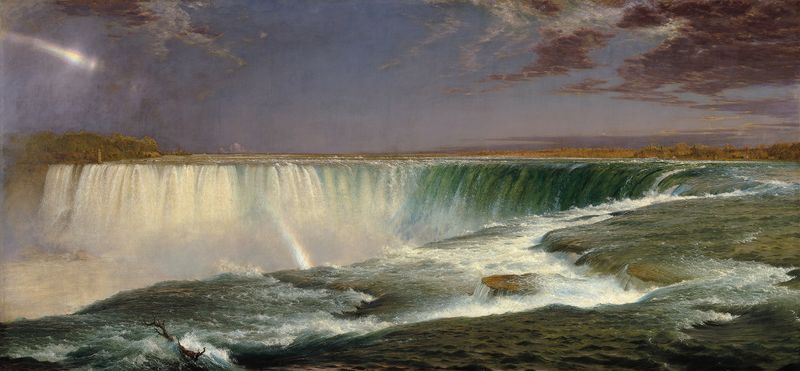
Niagara
Frederic Edwin Church
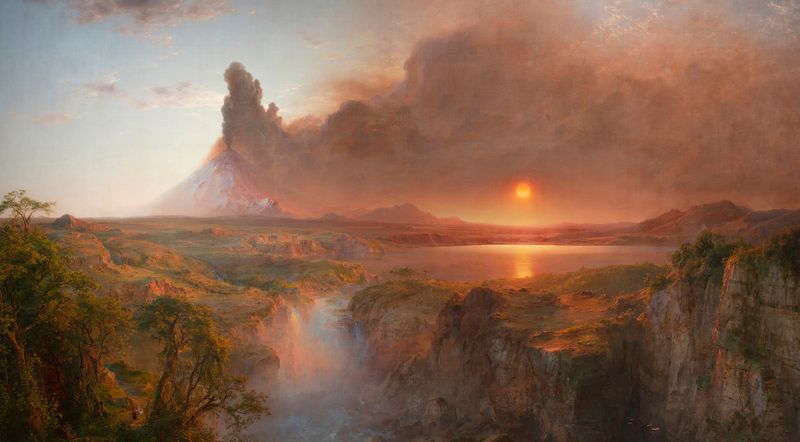
Cotopaxi
Frederic Edwin Church
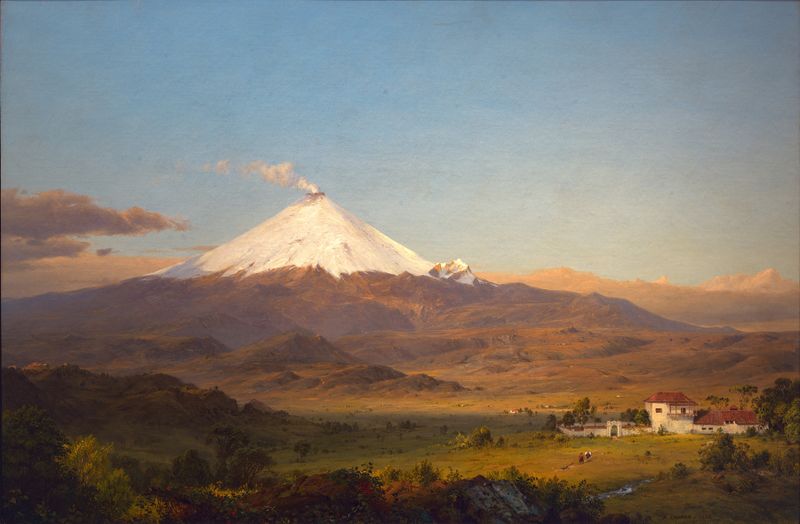
Cotopaxi
Frederic Edwin Church
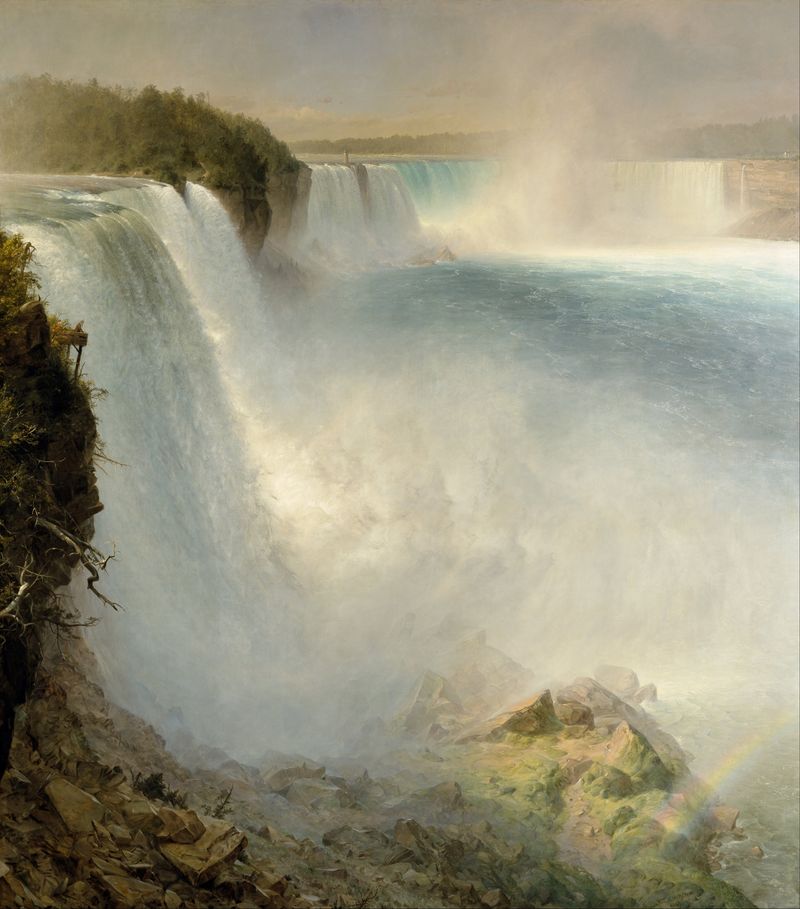
Niagara Falls, from the American Side
Frederic Edwin Church
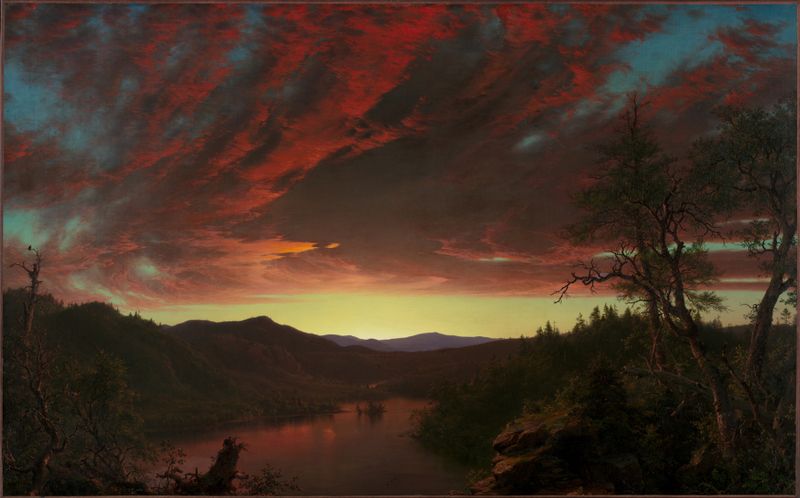
Twilight in the Wilderness
Frederic Edwin Church
Hudson Valley at Sunset
Frederic Edwin Church
The Hintersee, near Berchtesgaden, Bavaria
Frederic Edwin Church
Mountains near Baalbec
Frederic Edwin Church
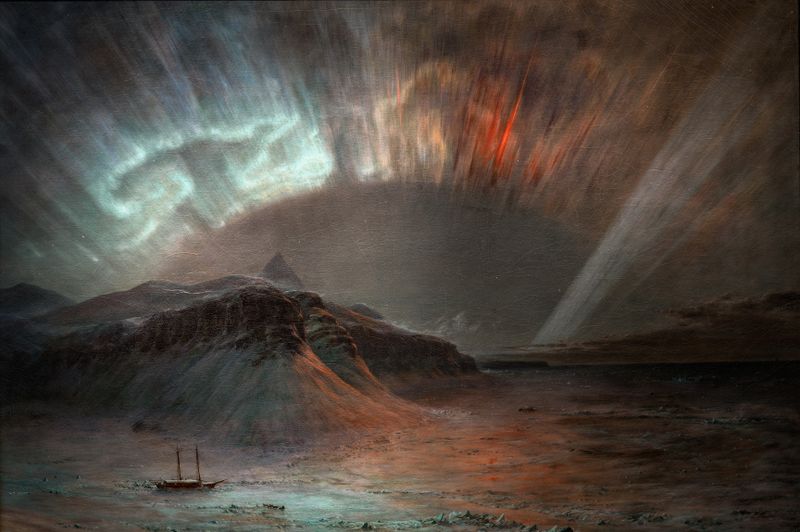
Aurora Borealis
Frederic Edwin Church
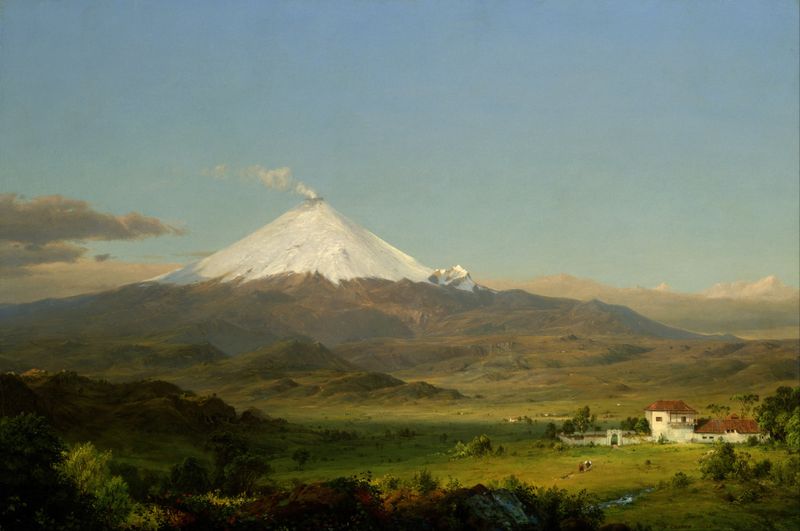
Cotopaxi
Frederic Edwin Church





